Chicken Coop Requirements: Getting the Specs Right

Chicken Coop Requirements: Getting the Specs Right
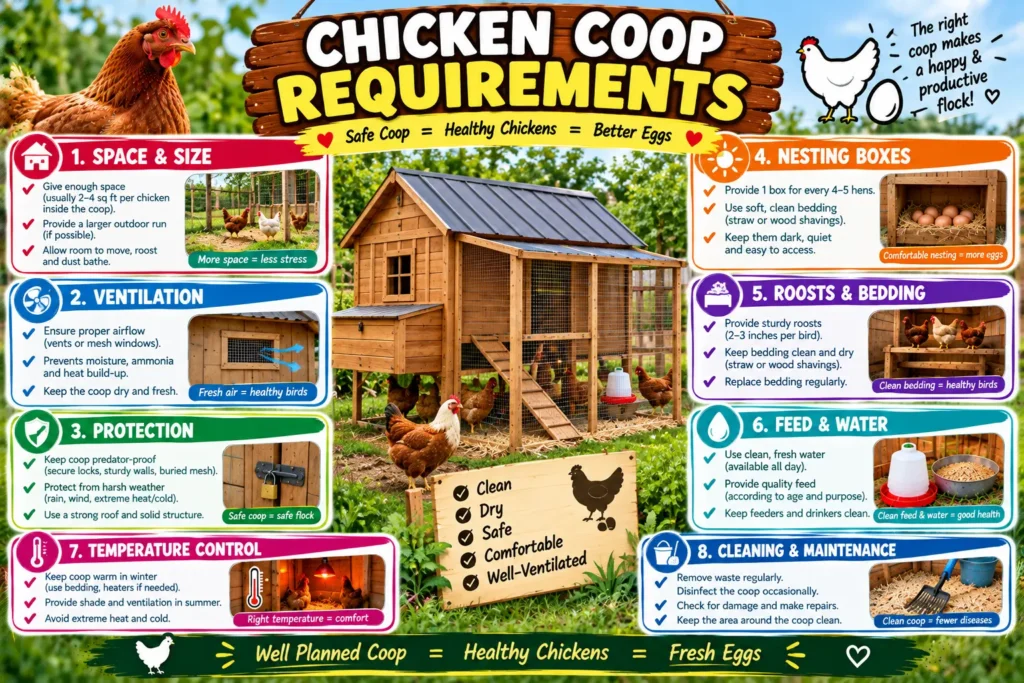
Chicken coop requirements come down to a handful of measurable specifics: space per bird, ventilation, nesting boxes, roosting bars, and predator-proofing. Getting these right from the start prevents most of the health and behavior problems that trace back to inadequate housing.
This guide covers what chickens need in a coop with actual numbers and reasoning behind them, rather than vague general advice, so you can plan or evaluate a coop with confidence.
Quick Answer: Chicken coop essentials include at least 3 to 4 square feet of interior space per standard hen, 8 to 10 square feet of outdoor run space per bird, one nesting box per 3 to 4 hens, roosting bars elevated above nesting boxes, and secure, predator-proof construction including buried perimeter fencing. Adequate ventilation without direct drafts on roosting birds rounds out the core requirements.
Table of Contents
Space Requirements
Interior Coop Space
At least 3 to 4 square feet per standard-sized hen is the widely cited minimum for interior coop space, with bantam breeds needing somewhat less and larger breeds benefiting from more.
Outdoor Run Space
If birds won’t free-range regularly, 8 to 10 square feet per bird in the run helps reduce overcrowding stress and the behavioral problems that come with it, including feather picking and aggression.
| Space Type | Minimum Per Standard Hen | Notes |
| Interior coop | 3–4 sq ft | More space reduces stress, especially in winter confinement |
| Outdoor run | 8–10 sq ft | Higher if birds don’t free-range at all |
| Free-range access | N/A | Reduces run space needs significantly |
Did You Know? Overcrowded coops don’t just cause stress; they also increase ammonia buildup from droppings, which can contribute to respiratory issues even in an otherwise well-ventilated structure.
Ventilation Requirements
Why Ventilation Matters So Much
Proper ventilation removes excess moisture, ammonia, and heat while still protecting birds from direct drafts, particularly on the roost where they spend the most stationary time.
How to Achieve Good Ventilation
- Vents positioned high on walls, above roosting height, to avoid direct drafts
- Cross-ventilation between opposite walls for consistent airflow
- Adjustable vents or windows to increase airflow in summer and reduce it in winter
| Ventilation Feature | Purpose |
| High wall vents | Removes moisture/ammonia without drafting roosting birds |
| Cross-ventilation | Consistent airflow throughout the structure |
| Adjustable openings | Seasonal flexibility |
Nesting Box Requirements
Ratio and Placement
One nesting box per 3 to 4 hens is generally sufficient, since hens will share and take turns even with a lower ratio than one box per bird. Boxes should be placed lower than roosting bars to discourage sleeping in them.
Nesting Box Dimensions
A standard nesting box is roughly 12x12x12 inches for standard breeds, slightly smaller for bantams and slightly larger for bigger breeds like Brahmas or Jersey Giants.
| Breed Size | Nesting Box Dimensions (Approximate) |
| Bantam | 10x10x10 inches |
| Standard | 12x12x12 inches |
| Large/giant breeds | 14x14x14 inches |
Roosting Bar Requirements
Space and Placement
Provide 8 to 10 inches of roosting bar space per standard hen, positioned higher than nesting boxes to satisfy chickens’ natural instinct to sleep at the highest available point.
Roosting Bar Material and Shape
A flat-topped or slightly rounded wooden bar, roughly 2 inches wide, allows hens to rest their feet flat, which supports better foot health than a narrow, rounded dowel.
Predator-Proofing Requirements
The Most Common Vulnerabilities
- Gaps or holes larger than 1/4 to 1/2 inch, which smaller predators can exploit
- Unburied perimeter fencing, allowing digging predators like foxes or raccoons underneath
- Weak latches that raccoons and other dexterous predators can open
- Inadequate overhead protection against aerial predators like hawks
Step-by-Step: Predator-Proofing a Coop and Run
- Use hardware cloth, not chicken wire, for all openings. Chicken wire doesn’t reliably stop determined predators.
- Bury fencing at least 12 inches deep, angled outward. This prevents digging predators from tunneling underneath.
- Install predator-proof latches. Simple hook latches are easily defeated by raccoons; use carabiner clips or double-step latches instead.
- Cover the run overhead if hawks are a concern in your area. Netting or hardware cloth overhead protects free-ranging or run-confined birds during the day.
- Inspect regularly for new gaps or weaknesses. Weather and general wear can create new vulnerabilities over time.
| Predator Type | Key Vulnerability | Prevention |
| Digging (fox, dog) | Unburied fence perimeter | Bury fencing 12+ inches, angled out |
| Climbing/dexterous (raccoon) | Weak latches, small gaps | Secure latches, hardware cloth |
| Aerial (hawk) | Open-top runs | Overhead netting or wire |
| Small (weasel, rat) | Gaps under 1 inch | Hardware cloth with small openings |
Warning: Predator losses remain one of the leading causes of backyard flock deaths, and most incidents trace back to a specific, identifiable gap in coop or run security rather than bad luck. Treat predator-proofing as an ongoing inspection task, not a one-time setup.
Read More: https://lashegg.com/how-often-to-clean-a-chicken-coop/
Flooring and Bedding Requirements
Common Flooring Options
| Flooring Type | Pros | Cons |
| Dirt/soil | Low cost, natural | Harder to keep clean, predator digging risk |
| Wood | Good insulation | Requires sealing, can rot over time |
| Concrete | Excellent predator protection, easy to clean | Higher cost, colder without adequate bedding |
Bedding Material Options
Pine shavings, straw, and the deep litter method (allowing bedding to build up and partially compost) are all common, effective choices, each with different maintenance requirements and seasonal benefits.
Additional Chicken Coop Essentials
Water and Feed Access
Position feeders and waterers to minimize contamination from droppings, ideally elevated slightly and away from roosting areas.
Lighting Considerations
Natural light through windows supports normal daily rhythms, while electrical access, if included, allows for supplemental lighting during shorter winter days.
Cleaning Access
Design the coop with human-sized access points for thorough cleaning, since a coop that’s difficult to clean tends to get cleaned less often, directly affecting flock health.
Common Mistakes to Avoid
- Underestimating space requirements, leading to overcrowding stress
- Using chicken wire instead of hardware cloth for predator protection
- Placing nesting boxes higher than roosting bars, encouraging sleeping in boxes
- Skipping buried perimeter fencing against digging predators
- Choosing ventilation that creates direct drafts on the roost
When to Call a Vet
Contact a poultry veterinarian if you notice recurring health issues, like frequent respiratory symptoms or persistent feather picking, that don’t resolve with other management changes, since inadequate coop conditions can sometimes contribute to or worsen underlying health problems a vet can help identify.
People Also Ask
What are the minimum chicken coop requirements for a small backyard flock? At least 3 to 4 square feet of interior space per hen, one nesting box per 3 to 4 birds, adequate roosting bar space, and secure predator-proofing cover the core minimums for most small flocks.
What do chickens need in a coop besides space? Beyond space, chickens need proper ventilation, roosting bars, nesting boxes, protection from predators, and clean, dry bedding to stay healthy and comfortable.
Is chicken wire enough for predator-proofing? No, chicken wire is designed to contain birds, not exclude predators; hardware cloth with smaller openings provides much more reliable protection.
How many nesting boxes do I need for chicken coop essentials? One nesting box per 3 to 4 hens is generally sufficient, since hens readily share boxes even with a lower ratio than one per bird.
Does coop size affect egg production? Yes, indirectly; overcrowded coops increase stress, which can reduce egg production, making adequate space one of several environmental factors that support consistent laying.
Final Thoughts
Chicken coop requirements come down to measurable specifics: adequate space, proper ventilation, the right nesting box and roosting bar setup, and genuinely predator-proof construction. Getting these details right from the start prevents many of the health and behavior issues that otherwise trace back to inadequate housing.
Use the specific numbers here as your planning or evaluation baseline, and reach out to a poultry veterinarian if recurring health issues suggest an environmental factor might be part of the picture.
5. FAQ
Q: What are the most important chicken coop requirements for beginners? A: Adequate space per bird, secure predator-proofing, and proper ventilation are the three most critical requirements to get right before bringing birds home.
Q: How much does it cost to meet basic chicken coop essentials? A: Costs vary widely based on materials and whether you build or buy, though a functional, secure coop for a small flock can often be achieved on a modest budget with careful planning.
Q: Can I use an existing shed to meet chicken coop requirements? A: Yes, with modifications for ventilation, nesting boxes, roosting bars, and predator-proofing, an existing structure can often be adapted successfully.
Q: Do chicken coop requirements change by climate? A: Yes, cold climates require more attention to insulation and draft-proofing, while hot climates prioritize ventilation and shade over insulation.
Q: How often should I inspect my coop for predator-proofing gaps? A: A thorough inspection every few months, plus after any severe weather, helps catch new vulnerabilities before a predator finds them first.Chicken coop requirements come down to a handful of measurable specifics: space per bird, ventilation, nesting boxes, roosting bars, and predator-proofing. Getting these right from the start prevents most of the health and behavior problems that trace back to inadequate housing.
This guide covers what chickens need in a coop with actual numbers and reasoning behind them, rather than vague general advice, so you can plan or evaluate a coop with confidence.
Quick Answer: Chicken coop essentials include at least 3 to 4 square feet of interior space per standard hen, 8 to 10 square feet of outdoor run space per bird, one nesting box per 3 to 4 hens, roosting bars elevated above nesting boxes, and secure, predator-proof construction including buried perimeter fencing. Adequate ventilation without direct drafts on roosting birds rounds out the core requirements.
Space Requirements
Interior Coop Space
At least 3 to 4 square feet per standard-sized hen is the widely cited minimum for interior coop space, with bantam breeds needing somewhat less and larger breeds benefiting from more.
Outdoor Run Space
If birds won’t free-range regularly, 8 to 10 square feet per bird in the run helps reduce overcrowding stress and the behavioral problems that come with it, including feather picking and aggression.
| Space Type | Minimum Per Standard Hen | Notes |
| Interior coop | 3–4 sq ft | More space reduces stress, especially in winter confinement |
| Outdoor run | 8–10 sq ft | Higher if birds don’t free-range at all |
| Free-range access | N/A | Reduces run space needs significantly |
Did You Know? Overcrowded coops don’t just cause stress; they also increase ammonia buildup from droppings, which can contribute to respiratory issues even in an otherwise well-ventilated structure.
Ventilation Requirements
Why Ventilation Matters So Much
Proper ventilation removes excess moisture, ammonia, and heat while still protecting birds from direct drafts, particularly on the roost where they spend the most stationary time.
How to Achieve Good Ventilation
- Vents positioned high on walls, above roosting height, to avoid direct drafts
- Cross-ventilation between opposite walls for consistent airflow
- Adjustable vents or windows to increase airflow in summer and reduce it in winter
| Ventilation Feature | Purpose |
| High wall vents | Removes moisture/ammonia without drafting roosting birds |
| Cross-ventilation | Consistent airflow throughout the structure |
| Adjustable openings | Seasonal flexibility |
Nesting Box Requirements
Ratio and Placement
One nesting box per 3 to 4 hens is generally sufficient, since hens will share and take turns even with a lower ratio than one box per bird. Boxes should be placed lower than roosting bars to discourage sleeping in them.
Nesting Box Dimensions
A standard nesting box is roughly 12x12x12 inches for standard breeds, slightly smaller for bantams and slightly larger for bigger breeds like Brahmas or Jersey Giants.
| Breed Size | Nesting Box Dimensions (Approximate) |
| Bantam | 10x10x10 inches |
| Standard | 12x12x12 inches |
| Large/giant breeds | 14x14x14 inches |
Roosting Bar Requirements
Space and Placement
Provide 8 to 10 inches of roosting bar space per standard hen, positioned higher than nesting boxes to satisfy chickens’ natural instinct to sleep at the highest available point.
Roosting Bar Material and Shape
A flat-topped or slightly rounded wooden bar, roughly 2 inches wide, allows hens to rest their feet flat, which supports better foot health than a narrow, rounded dowel.
Predator-Proofing Requirements
The Most Common Vulnerabilities
- Gaps or holes larger than 1/4 to 1/2 inch, which smaller predators can exploit
- Unburied perimeter fencing, allowing digging predators like foxes or raccoons underneath
- Weak latches that raccoons and other dexterous predators can open
- Inadequate overhead protection against aerial predators like hawks
Step-by-Step: Predator-Proofing a Coop and Run
- Use hardware cloth, not chicken wire, for all openings. Chicken wire doesn’t reliably stop determined predators.
- Bury fencing at least 12 inches deep, angled outward. This prevents digging predators from tunneling underneath.
- Install predator-proof latches. Simple hook latches are easily defeated by raccoons; use carabiner clips or double-step latches instead.
- Cover the run overhead if hawks are a concern in your area. Netting or hardware cloth overhead protects free-ranging or run-confined birds during the day.
- Inspect regularly for new gaps or weaknesses. Weather and general wear can create new vulnerabilities over time.
| Predator Type | Key Vulnerability | Prevention |
| Digging (fox, dog) | Unburied fence perimeter | Bury fencing 12+ inches, angled out |
| Climbing/dexterous (raccoon) | Weak latches, small gaps | Secure latches, hardware cloth |
| Aerial (hawk) | Open-top runs | Overhead netting or wire |
| Small (weasel, rat) | Gaps under 1 inch | Hardware cloth with small openings |
Warning: Predator losses remain one of the leading causes of backyard flock deaths, and most incidents trace back to a specific, identifiable gap in coop or run security rather than bad luck. Treat predator-proofing as an ongoing inspection task, not a one-time setup.
Flooring and Bedding Requirements
Common Flooring Options
| Flooring Type | Pros | Cons |
| Dirt/soil | Low cost, natural | Harder to keep clean, predator digging risk |
| Wood | Good insulation | Requires sealing, can rot over time |
| Concrete | Excellent predator protection, easy to clean | Higher cost, colder without adequate bedding |
Bedding Material Options
Pine shavings, straw, and the deep litter method (allowing bedding to build up and partially compost) are all common, effective choices, each with different maintenance requirements and seasonal benefits.
Additional Chicken Coop Essentials
Water and Feed Access
Position feeders and waterers to minimize contamination from droppings, ideally elevated slightly and away from roosting areas.
Lighting Considerations
Natural light through windows supports normal daily rhythms, while electrical access, if included, allows for supplemental lighting during shorter winter days.
Cleaning Access
Design the coop with human-sized access points for thorough cleaning, since a coop that’s difficult to clean tends to get cleaned less often, directly affecting flock health.
Common Mistakes to Avoid
- Underestimating space requirements, leading to overcrowding stress
- Using chicken wire instead of hardware cloth for predator protection
- Placing nesting boxes higher than roosting bars, encouraging sleeping in boxes
- Skipping buried perimeter fencing against digging predators
- Choosing ventilation that creates direct drafts on the roost
When to Call a Vet
Contact a poultry veterinarian if you notice recurring health issues, like frequent respiratory symptoms or persistent feather picking, that don’t resolve with other management changes, since inadequate coop conditions can sometimes contribute to or worsen underlying health problems a vet can help identify.
People Also Ask
What are the minimum chicken coop requirements for a small backyard flock? At least 3 to 4 square feet of interior space per hen, one nesting box per 3 to 4 birds, adequate roosting bar space, and secure predator-proofing cover the core minimums for most small flocks.
What do chickens need in a coop besides space? Beyond space, chickens need proper ventilation, roosting bars, nesting boxes, protection from predators, and clean, dry bedding to stay healthy and comfortable.
Is chicken wire enough for predator-proofing? No, chicken wire is designed to contain birds, not exclude predators; hardware cloth with smaller openings provides much more reliable protection.
How many nesting boxes do I need for chicken coop essentials? One nesting box per 3 to 4 hens is generally sufficient, since hens readily share boxes even with a lower ratio than one per bird.
Does coop size affect egg production? Yes, indirectly; overcrowded coops increase stress, which can reduce egg production, making adequate space one of several environmental factors that support consistent laying.
Final Thoughts
Chicken coop requirements come down to measurable specifics: adequate space, proper ventilation, the right nesting box and roosting bar setup, and genuinely predator-proof construction. Getting these details right from the start prevents many of the health and behavior issues that otherwise trace back to inadequate housing.
Use the specific numbers here as your planning or evaluation baseline, and reach out to a poultry veterinarian if recurring health issues suggest an environmental factor might be part of the picture.
5. FAQ
Q: What are the most important chicken coop requirements for beginners? A: Adequate space per bird, secure predator-proofing, and proper ventilation are the three most critical requirements to get right before bringing birds home.
Q: How much does it cost to meet basic chicken coop essentials? A: Costs vary widely based on materials and whether you build or buy, though a functional, secure coop for a small flock can often be achieved on a modest budget with careful planning.
Q: Can I use an existing shed to meet chicken coop requirements? A: Yes, with modifications for ventilation, nesting boxes, roosting bars, and predator-proofing, an existing structure can often be adapted successfully.
Q: Do chicken coop requirements change by climate? A: Yes, cold climates require more attention to insulation and draft-proofing, while hot climates prioritize ventilation and shade over insulation.
Q: How often should I inspect my coop for predator-proofing gaps? A: A thorough inspection every few months, plus after any severe weather, helps catch new vulnerabilities before a predator finds them first.