Chicken First Aid Kit: What Every Flock Owner Needs on Hand

Quick Answer: A solid chicken first aid kit covers four categories: wound care (saline, antiseptic, gauze), injury support (vet wrap, splint material), digestive and general health items (electrolytes, probiotics), and tools (nail clippers, tweezers, a carrier). Keep it stocked, labeled, and easy to grab in an emergency.
Injuries and health scares in a backyard flock rarely happen at a convenient time. A hawk strike, a bloody comb from pecking order squabbles, or a hen suddenly limping — these things happen fast, and having a chicken first aid kit ready means you’re treating the problem in minutes instead of scrambling to find supplies while a bird is bleeding or in shock.
This guide walks through exactly what belongs in a well-built kit, how to use each item, and which situations call for a vet instead of home treatment.
Table of Contents
Why a Dedicated Chicken First Aid Kit Matters
Household first aid supplies aren’t always safe or effective for poultry. Some human antiseptics are too harsh for a chicken’s skin, and dosing for medications differs significantly by species. A dedicated kit built specifically for chicken emergency situations means you’re not improvising with the wrong products when it matters most.
Did You Know? Chickens can go into shock from blood loss much faster than many mammals of similar size, partly due to their smaller overall blood volume. Fast, correct first response matters more than people expect.
Core Categories of Poultry First Aid Supplies
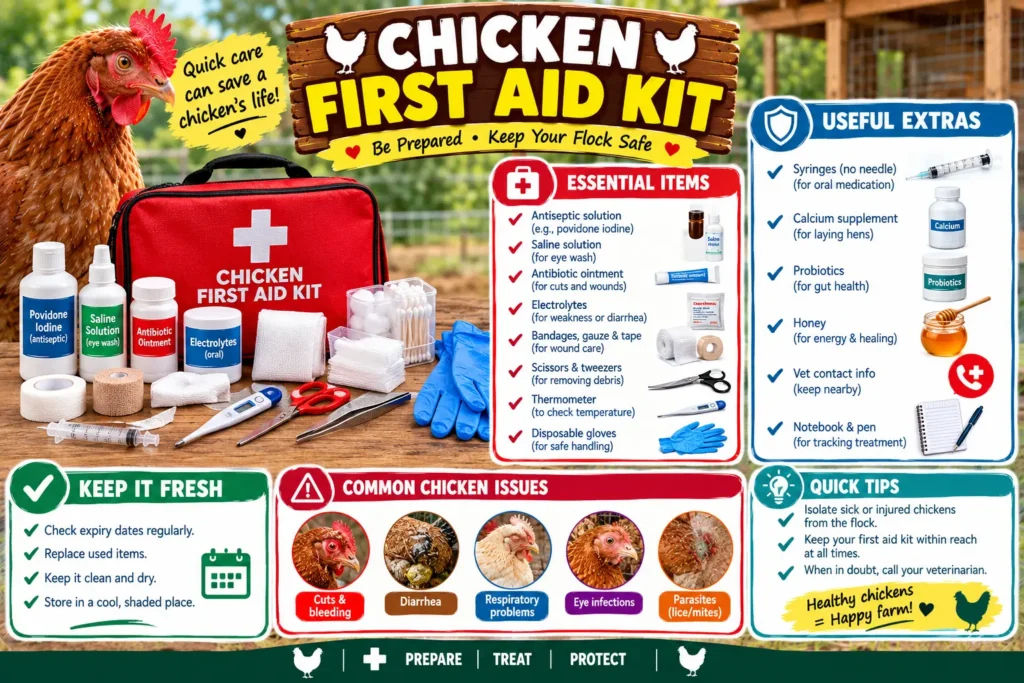
A well-stocked chicken first aid kit breaks down into four practical categories. Missing any one of them leaves a real gap.
1. Wound Care Supplies
| Item | Purpose |
| Saline solution | Flushing wounds and debris before treatment |
| Chlorhexidine or povidone-iodine | Poultry-safe antiseptic for cleaning wounds |
| Non-stick gauze pads | Covering wounds without sticking to feathers or skin |
| Vet wrap (self-adhesive bandage) | Securing gauze without tape sticking to feathers |
| Blood-stop powder | Stopping bleeding from broken blood feathers or minor cuts |
| Antibiotic ointment (poultry-safe) | Preventing infection in minor wounds |
Warning: A broken blood feather can bleed surprisingly heavily. Blood-stop powder or cornstarch applied with firm pressure is often the fastest way to control it, but a feather that keeps bleeding after treatment needs a vet’s attention.
2. Injury and Mobility Support
- Vet wrap or self-adhesive bandage for wing or leg support
- Popsicle sticks or tongue depressors for improvised splints
- Small scissors for trimming bandage material
- A soft towel for wrapping and restraining a bird safely during treatment
3. General Health and Digestive Supplies
- Poultry electrolyte and vitamin powder for stress or dehydration
- Probiotic supplement to support gut recovery after illness or antibiotics
- Plain, unflavored yogurt or a poultry-specific probiotic paste for acute digestive upset
- Diatomaceous earth or a labeled poultry dewormer, kept separate and clearly marked
4. Tools and Handling Equipment
- Blunt-tip tweezers for removing debris or splinters
- Small, sharp scissors dedicated to first aid use only
- Nail and beak trimmers
- A small flashlight or headlamp for nighttime coop checks
- A secure carrier or dog crate for isolating an injured or sick bird
- Disposable gloves
Chicken First Aid Kit Checklist
- Saline solution
- Poultry-safe antiseptic (chlorhexidine or diluted iodine)
- Non-stick gauze pads
- Vet wrap
- Blood-stop powder or cornstarch
- Poultry-safe antibiotic ointment
- Small scissors and tweezers
- Electrolyte and vitamin powder
- Probiotic supplement
- Nail and beak trimmers
- Disposable gloves
- Isolation carrier or crate
How to Use Your Chicken Emergency Kit
Knowing what’s in the kit only helps if you know how to use it under pressure.
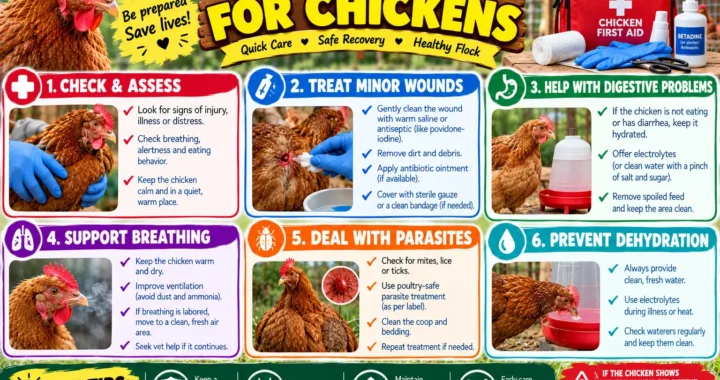
Step-by-Step: Treating a Minor Wound
- Restrain the bird gently, wrapping it in a towel to keep it calm
- Flush the wound with saline to remove debris
- Apply antiseptic to the cleaned area
- Cover with non-stick gauze if the wound is open, securing with vet wrap
- Isolate the bird from the flock temporarily, since blood attracts pecking from flockmates
- Monitor daily for swelling, discharge, or worsening redness
Step-by-Step: Managing a Bleeding Blood Feather
- Restrain the bird securely
- Apply blood-stop powder or cornstarch directly to the bleeding point
- Hold firm pressure for 60–90 seconds
- If bleeding continues after two attempts, treat this as a situation requiring veterinary care
Step-by-Step: Supporting a Bird in Shock or Distress
- Move the bird to a warm, quiet, dimly lit space
- Offer electrolyte water, not plain water, if the bird is alert enough to drink
- Avoid handling more than necessary
- Monitor breathing and responsiveness closely
Expert Tip: Keep a laminated quick-reference card inside the kit with these steps written out. In a real emergency, even experienced keepers can blank on the order of operations.
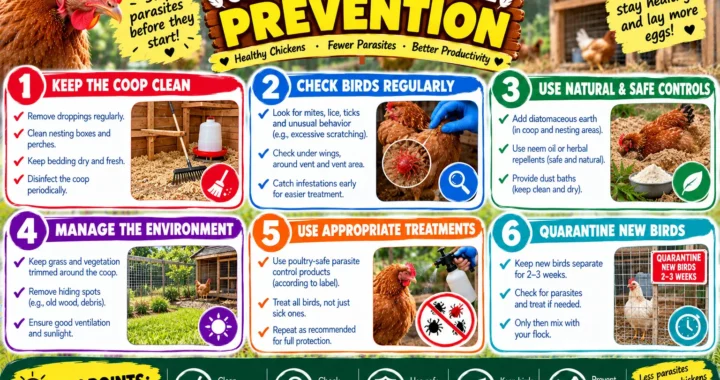
Read More: https://lashegg.com/chicken-parasite-prevention/
Common Chicken Emergencies and What Belongs in the Response
| Emergency | Immediate Response | Kit Items Used |
| Predator attack wound | Clean, control bleeding, isolate | Saline, antiseptic, gauze, vet wrap |
| Broken blood feather | Apply pressure with blood-stop powder | Blood-stop powder, gauze |
| Suspected broken leg or wing | Immobilize gently, isolate, limit movement | Vet wrap, splint material, carrier |
| Heat stress | Cool gradually, offer electrolytes | Electrolyte powder, shaded isolation space |
| Sudden lethargy or not eating | Isolate, offer electrolytes, monitor closely | Electrolyte powder, probiotic, carrier |
| Bloody droppings | Isolate, monitor, prepare for vet visit | Carrier, notes on symptoms for the vet |
Common Mistakes When Building a Chicken First Aid Kit
Common Mistakes
- Using human-only antiseptics or ointments not labeled safe for poultry
- Storing the kit somewhere hard to reach quickly during an emergency
- Forgetting to restock supplies after using them
- Not including any way to isolate an injured bird from the rest of the flock
- Assuming a first aid kit replaces veterinary care for serious injuries
Where to Keep Your Poultry First Aid Supplies
Store the kit in a clearly labeled, weatherproof container near the coop, not inside the house where minutes are lost retrieving it. Check expiration dates on antiseptics, ointments, and electrolyte powders every few months, and replace anything used immediately rather than waiting for a restocking day.
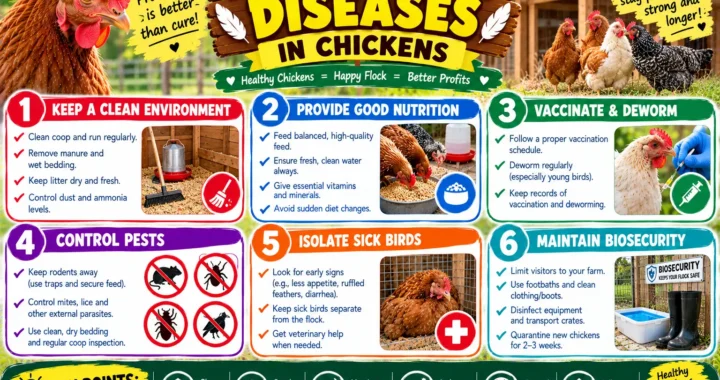
Pairing your first aid kit with a regular hands-on health check routine means you’re more likely to catch problems early, before a full emergency response is even needed.
Home Care vs. Veterinary Treatment
A chicken first aid kit is built for stabilizing a bird and managing minor issues, not for treating serious trauma, internal injuries, or advanced illness. Home treatment is appropriate for small wounds, minor bleeding, and general supportive care. Anything involving suspected fractures, deep puncture wounds, difficulty breathing, or a bird that isn’t responding to basic first aid needs a poultry veterinarian. egg
When to Call a Vet: Heavy or uncontrolled bleeding, visible bone, labored breathing, a bird that won’t stand or is unresponsive, or any wound that shows signs of infection after a day or two of home care all call for professional treatment rather than continued first aid.
Reputable sources like the Merck Veterinary Manual and university poultry extension programs are helpful for understanding general first aid principles, but they don’t replace hands-on veterinary evaluation when a bird’s condition is unclear or serious.
Frequently Asked Questions
What’s the most important item in a chicken first aid kit? Blood-stop powder is one of the most frequently used items, since minor bleeding from pecking injuries or broken feathers is one of the most common backyard flock emergencies.
Can I use human first aid supplies in a chicken emergency kit? Some items overlap safely, like plain saline and gauze, but antiseptics and ointments should be checked for poultry safety specifically, since some human formulations are too harsh for a chicken’s skin.
How often should I check and restock my poultry first aid supplies? Check the kit every few months for expired items, and restock immediately after using anything rather than waiting for a scheduled check.
Do I need a separate first aid kit for chicks? A general chicken first aid kit covers most chick needs too, though it’s worth adding a smaller isolation container and a heat source appropriate for chicks specifically.
What should I do if a chicken’s wound won’t stop bleeding? Apply firm pressure with blood-stop powder for 60–90 seconds. If bleeding continues after a second attempt, treat it as an emergency requiring veterinary care.
Is a chicken emergency kit worth it for a small flock of just a few birds? Yes. Flock size doesn’t change how quickly an injury can happen, and even a few birds benefit from having supplies ready rather than scrambling during an emergency.
Final Thoughts
A well-stocked chicken first aid kit turns a stressful emergency into a manageable situation. Cover the basics — wound care, injury support, general health supplies, and the right tools — keep everything labeled and easy to reach, and know the difference between what you can treat at home and what needs a vet. Keep watching your flock closely, restock supplies as you use them, and don’t hesitate to call a veterinarian when a bird’s condition goes beyond what basic first aid can handle.