How to Prevent Diseases in Chickens: Biosecurity Basics

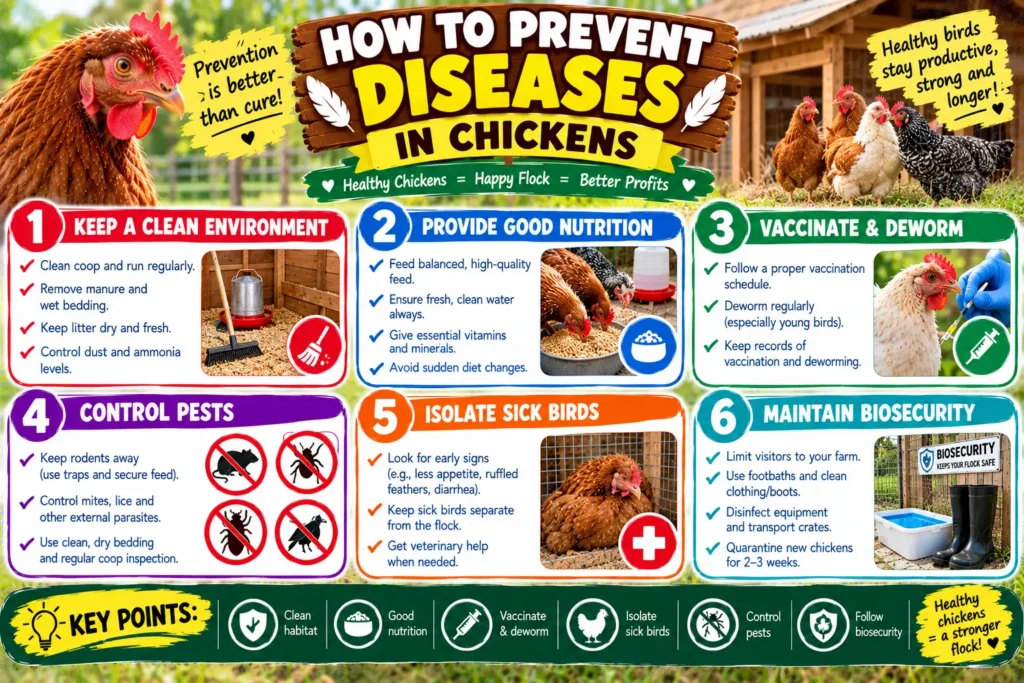
How to prevent diseases in chickens comes down mostly to biosecurity, the practical steps that keep pathogens from ever reaching your flock in the first place. Most backyard disease outbreaks trace back to one of a handful of predictable entry points: new birds, wild bird contact, contaminated equipment, or visitors moving between flocks.
This guide covers the full picture of chicken disease prevention, quarantine done properly, controlling contact with wild birds and rodents, sanitation systems, and where vaccination fits in, so you can build a genuinely protective routine rather than relying on luck.
Quick Answer: How to prevent diseases in chickens starts with strict quarantine for new birds, limiting contact with wild birds and rodents, maintaining clean water and coop conditions, and controlling who and what moves between your flock and others. A healthy flock depends more on consistently preventing exposure than on treating illness after it appears.
Table of Contents
Why Biosecurity Matters More Than Treatment
Prevention vs. Reaction
Many poultry diseases have limited or no effective treatment once established, particularly viral illnesses, making prevention through biosecurity the primary tool available rather than a backup plan. According to the USDA, biosecurity remains the single most effective defense against most significant poultry disease threats, including avian influenza.
How Diseases Actually Enter a Flock
| Entry Point | Examples |
| New birds | Illness not yet showing visible symptoms |
| Wild birds | Direct contact or contaminated droppings |
| Rodents | Physical disease vectors, contaminated feed |
| Visitors/equipment | Contamination carried from other flocks |
| Contaminated feed/water | Direct pathogen exposure |
Did You Know? Many serious poultry diseases can be carried without any visible symptoms for days to weeks, which is exactly why quarantine periods based on “the bird looks fine” alone are insufficient; time-based quarantine protects against this exact gap.
Quarantine: The Most Important Single Step
Proper Quarantine Protocol
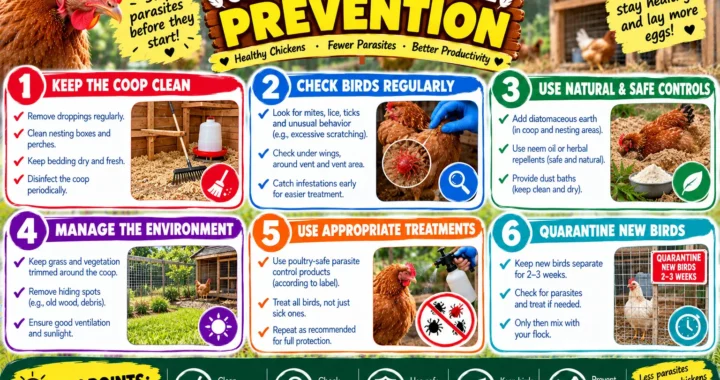
New birds, whether from a hatchery, a swap, or an auction, should be kept completely separate from an existing flock for a minimum of two to four weeks, with no shared equipment, water, or airspace.
Step-by-Step: Effective Quarantine
- House new birds in a fully separate space. Different building or a significant distance away, not just a separate pen within the same coop.
- Use entirely separate equipment. Feeders, waterers, and tools should never move between quarantine and the main flock during this period.
- Handle quarantined birds last in your daily routine. This prevents you from carrying contamination to your main flock afterward.
- Watch closely for any symptoms throughout the full period. Don’t shorten the quarantine window just because a bird looks healthy after a few days.
- Change clothes or wash hands thoroughly between handling groups. This simple step meaningfully reduces cross-contamination risk.
| Quarantine Element | Minimum Standard |
| Duration | 2–4 weeks |
| Physical separation | Complete, separate airspace if possible |
| Equipment | Entirely separate, no sharing |
| Observation | Daily, for the full period |
Controlling Wild Bird and Rodent Contact
Why Wild Birds Pose Real Risk
Wild waterfowl in particular can carry avian influenza and other pathogens without showing obvious illness, making direct or indirect contact, through shared water sources or droppings, a genuine transmission risk.
Practical Wild Bird Deterrents
- Cover feed and water sources to reduce wild bird access
- Avoid open water sources that attract wild waterfowl
- Keep feed stored securely, away from areas wild birds can access
Rodent Control
Rodents contaminate feed, carry disease, and can physically damage coop structures over time. Secure feed storage, prompt cleanup of spilled feed, and general coop maintenance all reduce rodent attraction.
| Hazard | Prevention Step |
| Wild bird contact | Covered feed/water, avoid open water sources |
| Rodent access | Secure feed storage, prompt spill cleanup |
| Contaminated droppings | Reduce shared space with wild birds |
Sanitation and Environmental Management
Coop Cleanliness
Regular coop cleaning, covered in dedicated detail elsewhere, directly supports disease prevention by reducing the bacterial and parasitic load your flock is regularly exposed to.
Water Quality
Clean, uncontaminated water access, also covered in depth separately, prevents one of the more common indirect disease transmission routes in backyard flocks.
Proper Ventilation
Good airflow, discussed fully in the coop ventilation guide, reduces ammonia buildup and moisture that can otherwise increase respiratory disease susceptibility.
Visitor and Equipment Biosecurity
Limiting Cross-Flock Contact
Anyone who has recently visited another flock, especially one with known health issues, poses a potential transmission risk through clothing, footwear, or hands.
Step-by-Step: Visitor Biosecurity
- Ask visitors about recent contact with other flocks. This simple question flags potential risk before it becomes exposure.
- Provide clean footwear or covers for visitors entering your coop area. This is standard practice on many commercial operations for good reason.
- Avoid borrowing equipment directly between flocks. If unavoidable, clean and disinfect thoroughly before use.
- Limit unnecessary visitor access to your coop. Fewer points of contact mean fewer opportunities for pathogen introduction.
| Biosecurity Measure | Risk Addressed |
| Visitor footwear protocol | Contamination carried on shoes |
| Equipment sourcing caution | Cross-flock equipment contamination |
| Limiting visitor access | General exposure reduction |
Vaccination: Where It Fits In
What Backyard Keepers Should Know
Some diseases, including Marek’s disease, have available vaccines commonly administered to chicks at hatcheries before purchase. For backyard flocks, vaccination decisions often depend on regional disease prevalence and flock purpose, making this a good topic to discuss directly with a poultry veterinarian familiar with your area.
When to Discuss Vaccination With a Vet
- Before adding chicks to an established flock
- If regional disease outbreaks have been reported
- If you’re establishing a flock in an area with known regional disease pressure
Common Mistakes to Avoid
- Skipping quarantine because new birds “look healthy”
- Allowing open water sources that attract wild waterfowl
- Sharing equipment between your flock and others without disinfection
- Neglecting rodent control until a visible infestation develops
- Assuming biosecurity only matters for large commercial operations
Warning
Diseases like avian influenza can spread rapidly and, in some cases, pose reporting obligations depending on your region. If you suspect a serious, unusual illness affecting multiple birds simultaneously, contact a veterinarian promptly, since some conditions require official reporting to agricultural authorities.
When to Call a Vet
Contact a poultry veterinarian if multiple birds show illness simultaneously, if you’re unsure about appropriate vaccination for your region and flock type, or if you need guidance establishing a biosecurity routine for a new or expanding flock. Prevention questions are just as valid a reason to consult a vet as active illness.
Read More: https://lashegg.com/chicken-biosecurity-guide/
People Also Ask
What is the single most important step in how to prevent diseases in chickens? Proper quarantine of new birds for at least two to four weeks is generally considered the single most impactful chicken disease prevention step, since it addresses one of the most common entry points for illness. egg
Can a healthy flock still get sick from wild birds? Yes, wild birds, particularly waterfowl, can carry diseases like avian influenza without obvious symptoms, making indirect contact through shared water or droppings a genuine risk even for well-managed flocks.
Do backyard chickens need vaccines for chicken disease prevention? Some vaccines, like those for Marek’s disease, are commonly given at the hatchery level, while broader vaccination decisions for backyard flocks depend on regional risk and are best discussed with a local poultry veterinarian.
How often should I review my flock’s biosecurity practices? Reviewing practices whenever you add new birds, hear about regional disease outbreaks, or notice a gap like inadequate rodent control keeps biosecurity genuinely effective rather than just a one-time setup.
Is biosecurity only necessary for large commercial flocks? No, backyard flocks benefit just as much from biosecurity practices, since disease doesn’t distinguish between flock size, and a healthy flock at any scale depends on consistent prevention.
Final Thoughts
How to prevent diseases in chickens comes down to consistent biosecurity: proper quarantine, controlling wild bird and rodent contact, good sanitation, and thoughtful management of visitors and equipment moving between flocks. These practices matter more than any single treatment once illness has already taken hold.
Build these habits into your regular routine rather than treating them as occasional extra steps, and reach out to a poultry veterinarian for guidance on vaccination or if you notice signs of illness affecting multiple birds at once.
5. FAQ
Q: How long should quarantine last as part of chicken disease prevention? A: A minimum of two to four weeks of complete separation, with no shared equipment or airspace, gives enough time for most illnesses to become visible before integration.
Q: What’s the biggest threat to a healthy flock that keepers often overlook? A: Wild bird and rodent contact is frequently underestimated compared to more obvious risks like new bird introduction, despite being a significant real-world transmission route.
Q: Can I fully prevent all disease in my flock through biosecurity alone? A: No approach eliminates all risk entirely, but thorough biosecurity practices significantly reduce the likelihood and severity of most preventable disease introductions.
Q: Does coop cleaning count as part of how to prevent diseases in chickens? A: Yes, regular cleaning and good sanitation directly support disease prevention by reducing pathogen and parasite load in the environment your flock lives in daily.
Q: Should I be worried about diseases from other people’s chickens? A: Yes, visitor and equipment biosecurity matters genuinely, since pathogens can travel on clothing, footwear, or borrowed equipment between separate flocks.