Best Waterer for Chickens: Choosing the Right System

The best waterer for chickens depends less on brand and more on matching the right system type, size, and material to your specific flock and climate. What works well for three backyard hens in a mild climate often isn’t the right choice for fifteen birds facing harsh winters.
This guide compares chicken waterer types in real depth, covers sizing so you buy the right capacity the first time, and explains what actually keeps chicken water clean over the long run.
Quick Answer: The best waterer for chickens for most backyard flocks is a horizontal nipple or cup system, since both keep water enclosed and dramatically reduce contamination compared to open founts. Size capacity to roughly 1 gallon per 3 to 4 adult hens for a system that doesn’t need refilling more than once daily, and consider a heated option in climates with regular freezing temperatures.
Table of Contents
Comparing Chicken Waterer Types in Depth
Open Founts (Gravity Waterers)
Traditional bell-shaped or bucket-style waterers that gravity-feed into an open basin. Inexpensive and simple, but the open water surface allows droppings, bedding, dirt, and algae to contaminate the supply relatively easily.
Nipple Waterers
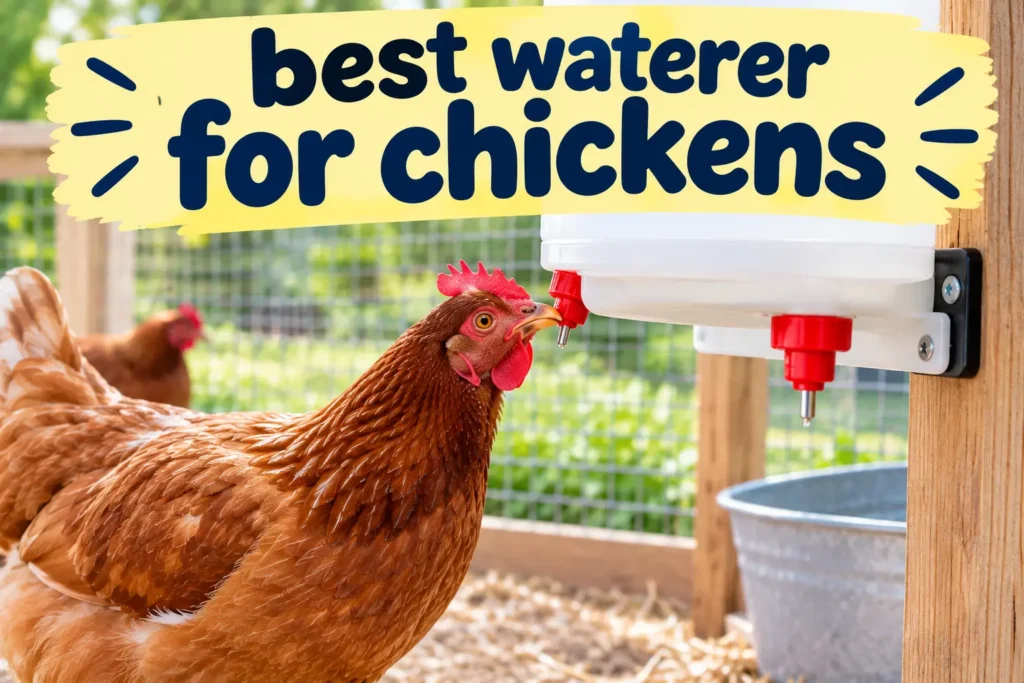
Water is dispensed through small valve mechanisms that release water only when a chicken pecks or presses them, keeping the entire supply enclosed and essentially eliminating basin contamination. Available in horizontal (side-mounted) and vertical (bottom-mounted) configurations.
Cup Waterers
Small cups attached to a supply line refill automatically as chickens drink from them. This offers a middle ground: mostly enclosed like nipple systems, but with a small standing water surface in each cup that still requires occasional cleaning.
Automatic/Float Valve Systems
Connected to a larger reservoir or hose line with a float valve maintaining water level automatically, these systems reduce refilling frequency significantly but require more complex initial setup.
Read More: https://lashegg.com/how-much-water-does-a-chicken-drink/
| Waterer Type | Contamination Risk | Setup Complexity | Refill Frequency |
| Open fount | Higher | Very low | Frequent |
| Nipple (horizontal/vertical) | Very low | Low to moderate | Low, with adequate reservoir |
| Cup waterer | Low to moderate | Low to moderate | Low, with adequate reservoir |
| Automatic float valve | Very low | Higher | Minimal, near-continuous |
Did You Know? Horizontal nipple waterers are generally easier for chickens to learn than vertical ones, since the pecking motion required more closely resembles their natural feeding behavior.
Sizing: How Much Capacity Do You Actually Need
The Basic Calculation
Plan for roughly 1 gallon of water capacity per 3 to 4 adult hens if you want to avoid refilling more than once daily under normal conditions, adjusting upward significantly for hot climates.
| Flock Size | Suggested Minimum Capacity |
| 3–4 hens | 1 gallon |
| 6–8 hens | 2 gallons |
| 12–15 hens | 3–4 gallons |
| 20+ hens | 5+ gallons or multiple stations |
Why Multiple Stations Often Beat One Large Unit
Even with adequate total capacity, spreading water access across two or more locations reduces competition and bullying around a single source, particularly relevant for larger or more socially complex flocks.
Material Comparison
Plastic
Lightweight, inexpensive, and widely available, though lower-quality plastic can crack in freezing temperatures and may degrade with UV exposure over time.
Metal (Galvanized)
More durable and long-lasting than plastic, particularly for larger capacity units, though heavier and typically more expensive upfront.
Specialized Poultry-Grade Plastics
Higher-quality plastics designed specifically for poultry equipment often include UV stabilizers and better cold tolerance than generic plastic containers repurposed for the task.
| Material | Durability | Cost | Cold Tolerance |
| Basic plastic | Lower | Low | Poor, can crack |
| Galvanized metal | High | Higher | Good |
| Poultry-grade plastic | Moderate to high | Moderate | Better than basic plastic |
Heated Waterers for Cold Climates
When They’re Worth the Investment
In climates with regular sub-freezing temperatures, a heated waterer or heated base eliminates the twice-daily manual water replacement that would otherwise be necessary throughout winter.
Heated Base vs. Integrated Heating
A heated base works with your existing waterer, while integrated units combine the heating element directly into the water container itself. Both work well; the choice often comes down to whether you want to keep existing equipment or replace it entirely.
| Option | Pros | Cons |
| Heated base | Works with existing waterer | Additional piece of equipment |
| Integrated heated waterer | All-in-one solution | Replaces existing equipment entirely |
Expert Tip
Always have a manual backup plan even with heated equipment installed. Power outages happen, and a simple backup waterer or plan for manual water replacement prevents a gap in access if your heated system loses power during genuinely cold weather.
Keeping Chicken Water Clean Regardless of Type
Placement Matters as Much as Waterer Choice
Position any waterer away from direct droppings exposure and out of direct sunlight, since both contamination and algae growth are heavily influenced by placement, independent of the waterer type itself.
Cleaning Frequency by Type
| Waterer Type | Recommended Cleaning Frequency |
| Open fount | Every 1–3 days |
| Nipple system | Weekly (reservoir), nipples rarely need attention |
| Cup waterer | Every few days for cups, less often for reservoir |
Step-by-Step: Setting Up for Easy Maintenance
- Choose an enclosed system if cleaning frequency is a priority. Nipple or cup systems reduce maintenance time considerably compared to open founts.
- Elevate the waterer to roughly back height of your birds. This reduces droppings and bedding contamination regardless of type.
- Position in shade. This slows algae growth and keeps water more palatable in hot weather.
- Establish a simple cleaning schedule matched to your chosen type. Build this into your existing daily or weekly routine rather than treating it separately.
Common Mistakes When Choosing a Waterer
- Undersizing capacity for larger flocks, leading to frequent, inconvenient refilling
- Choosing the cheapest open fount without considering the added cleaning burden over time
- Skipping a heated option in a genuinely cold climate, leading to daily frozen water struggles
- Placing waterers in direct sun, accelerating algae growth
- Relying on a single water station for a larger flock, increasing competition and bullying risk
Warning
Whatever type you choose, a malfunctioning or empty waterer can lead to dehydration within hours, especially in hot weather. Regardless of how automated or low-maintenance your system claims to be, daily visual confirmation that it’s actually working remains an essential habit.
When to Call a Vet
Contact a poultry veterinarian if a bird shows signs of dehydration despite what appears to be adequate waterer capacity and function, since this can occasionally point toward an access issue related to flock dynamics or an underlying health condition rather than the equipment itself.
People Also Ask
What is the best waterer for chickens in a small backyard flock? For 3 to 6 hens, a horizontal nipple system or cup waterer with 1 to 2 gallon capacity generally offers the best balance of cleanliness and low maintenance for a small setup.
Are nipple waterers really better than open founts? Yes, in terms of water cleanliness and reduced maintenance; nipple systems keep the entire water supply enclosed, dramatically reducing the contamination that open founts are prone to.
How many chicken waterer types should I have for a larger flock? Multiple stations, even with the same waterer type, generally work better than a single large unit for flocks of 15 or more birds, reducing competition and improving overall access. egg
Do I need a heated waterer if I only get occasional light freezes? Not necessarily; occasional light freezes can often be managed with manual water replacement, while consistent, prolonged sub-freezing temperatures make a heated option more worthwhile.
What’s the easiest way to keep chicken water clean without daily scrubbing? Choosing an enclosed nipple or cup system, combined with proper shaded placement, significantly reduces how often deep cleaning is actually needed compared to an open fount.
Final Thoughts
The best waterer for chickens comes down to matching system type, capacity, and material to your specific flock size and climate rather than chasing a single universally “best” product. Nipple and cup systems generally offer the cleanest water with the least maintenance, while proper sizing and placement matter regardless of which type you choose.
Consider your climate and flock size carefully before purchasing, and reach out to a poultry veterinarian if dehydration signs appear despite what looks like adequate waterer setup and function.
5. FAQ
Q: What’s the best waterer for chickens if I want the least maintenance? A: Horizontal nipple systems generally require the least ongoing maintenance, since the enclosed design prevents most of the contamination that requires frequent cleaning in open systems.
Q: Do chicken waterer types affect how quickly chickens learn to use them? A: Yes, open founts require no learning curve at all, while nipple systems, particularly vertical ones, may take chickens a few days to fully adopt.
Q: How do I keep chicken water clean in hot summer weather specifically? A: Shaded placement, more frequent cleaning, and considering a nipple or cup system over an open fount all help manage the accelerated algae growth and bacterial risk that comes with summer heat.
Q: Can I make a DIY chicken waterer instead of buying one? A: Yes, many keepers successfully build simple nipple-based systems using PVC pipe and purchased nipple valves, often at a lower cost than pre-made units.
Q: Is a bigger waterer always better for a small flock? A: Not necessarily; oversized capacity for a small flock can mean water sits longer before being consumed, potentially affecting freshness, so matching capacity reasonably closely to flock size is usually preferable.