Quarantine New Chickens: The Complete Guide to Doing It Safely

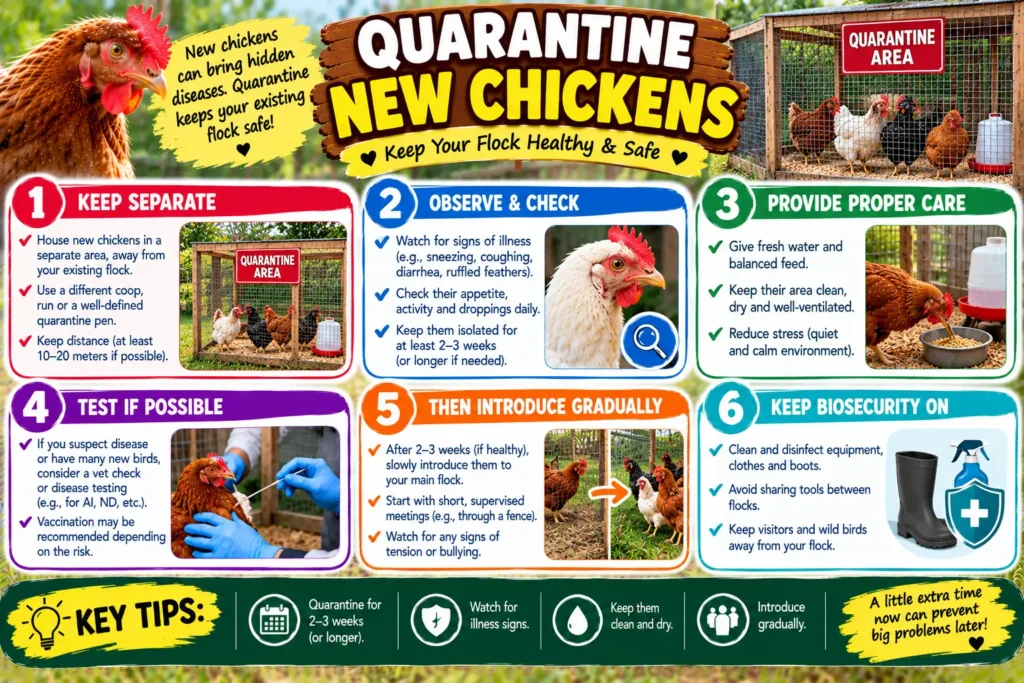
Bringing home new birds is exciting, but skipping quarantine is one of the fastest ways to wipe out an otherwise healthy flock. Learning how to quarantine new chickens properly protects every bird you already own from diseases and parasites that don’t always show obvious symptoms right away. This guide covers exactly how long to isolate new birds, what setup you need, and what warning signs mean a bird shouldn’t join your flock yet.
Table of Contents
Why You Need to Quarantine New Chickens
Chickens can carry infectious diseases and parasites without looking sick at all. A bird that seems perfectly healthy at pickup can be incubating something contagious, and by the time visible symptoms appear, your whole flock may already be exposed.
This is true even for birds from reputable breeders, hatcheries, swaps, or rescues. Stress from transport alone can trigger dormant infections to become active and contagious within days.
Quick Answer: Quarantine new chickens for a minimum of 30 days in a separate space, away from your existing flock’s air, water, and equipment, before introducing them.
What Diseases Quarantine Helps Prevent
- Respiratory illnesses such as infectious bronchitis and Mycoplasma gallisepticum (MG)
- External parasites, including mites and lice
- Internal parasites, including worms and coccidia
- Marek’s disease, which can remain latent for weeks
- Fowl pox and other viral infections
The USDA’s Defend the Flock biosecurity program specifically recommends isolating new and returning birds as one of the most effective ways backyard owners can prevent disease spread.
Read More: https://lashegg.com/how-to-introduce-new-chickens/
How Long to Quarantine New Chickens
Thirty days is the standard recommendation from most poultry extension programs, and it’s long enough for most common illnesses to show visible signs. Some university extension services recommend up to 4 to 6 weeks for flocks with a history of illness or for birds coming from unknown sources like auctions or swap meets.
| Source of New Birds | Recommended Quarantine Period |
| Trusted breeder, closed flock | 30 days |
| Hatchery (day-old chicks) | 2–3 weeks, mainly for observation |
| Swap meet, auction, or unknown source | 4–6 weeks |
| Show birds returning home | 2–3 weeks |
| Rescue or unknown health history | 4–6 weeks |
Setting Up a Quarantine Space for New Chickens
Location Matters More Than Comfort
The quarantine area needs to be physically separate from your main coop, ideally at least 30 feet away and positioned so airflow doesn’t travel from the new birds toward your existing flock. Respiratory pathogens can spread through shared air, not just direct contact.
What You’ll Need
- A separate enclosure, such as a spare coop, large dog crate, or wire kennel with a covered top
- Dedicated feeder and waterer, never shared with the main flock
- Fresh bedding that isn’t reused from the main coop
- A way to wash your hands or change clothes/boots between handling groups
- Good ventilation without direct airflow toward the existing coop
Expert Tip: Feed and care for your quarantined birds last in your daily routine, after you’ve already tended to the main flock. This prevents you from carrying anything back on your hands, clothes, or boots.
Common Mistakes When You Quarantine New Chickens
- Using the same coop with just a wire divider, which doesn’t stop airborne illness
- Skipping quarantine because the birds “look healthy”
- Handling new birds first, then the main flock, without washing up
- Cutting quarantine short because the birds seem bored or stressed
- Forgetting to quarantine birds returning from a poultry show
What to Watch For During Quarantine
Check quarantined birds daily for the following:
- Coughing, sneezing, or rattling breath sounds
- Discharge from the eyes or nostrils
- Swollen or discolored comb and wattles
- Lethargy, fluffed feathers, or reduced appetite
- Diarrhea or abnormal droppings
- Visible mites, lice, or excessive scratching
- Limping or swollen joints
Table: Quarantine Symptom Checklist and What It May Indicate
| Symptom | Possible Cause | Action |
| Sneezing, nasal discharge | Respiratory infection (MG, bronchitis) | Extend quarantine, consult a vet |
| Visible bugs on skin/feathers | Mites or lice | Treat before introducing to flock |
| Watery or bloody droppings | Coccidiosis or worms | Fecal test, treat as needed |
| Pale comb, lethargy | Anemia, parasites, or illness | Veterinary evaluation |
| Swollen joints, limping | Bacterial infection or injury | Isolate further, seek vet advice |
Warning: If any bird shows respiratory symptoms, restart the 30-day quarantine clock from the day symptoms fully resolve, not from the original start date.
Quarantine New Hens vs. New Roosters: Does It Differ?
The quarantine process itself doesn’t change based on sex. Roosters and hens need the same isolation period, the same daily health checks, and the same separate equipment. The main practical difference is that a new rooster introduced later may need closer supervision during integration due to territorial behavior, but that’s an integration issue, not a quarantine one.
Should You Deworm or Treat During Quarantine?
Many keepers use the quarantine period to proactively check for and treat parasites before introduction, rather than waiting for symptoms.
- A fecal float test through a vet or ag extension lab can confirm whether worming is needed.
- Preventive treatment for mites and lice is reasonable even without visible bugs, since eggs can be hard to spot.
- Avoid treating for illnesses you haven’t confirmed; unnecessary medication can mask real symptoms.
The Merck Veterinary Manual notes that subclinical parasite loads are common in poultry and can worsen once a bird is stressed by transport or a new environment, which is exactly why the quarantine window matters.
Did You Know?
Some respiratory pathogens in chickens can remain in a “carrier” state for the bird’s entire life. Even after quarantine, a carrier bird may occasionally shed the pathogen during stress, which is one reason biosecurity habits like separate equipment should continue beyond quarantine itself.
After Quarantine: What Comes Next
Once a bird has completed the full quarantine period with no symptoms, you can move toward introducing it to your flock. This should still be done gradually:
- Start with a see-but-don’t-touch setup for 1–2 weeks.
- Move to supervised daytime meetings on neutral ground.
- Finish with a nighttime roost introduction once daytime meetings go smoothly.
Quarantine and introduction are two separate stages. A bird that passes quarantine still needs a gradual introduction process to avoid pecking-order injuries.
When to Call a Vet
When to Call a Vet: Contact a poultry veterinarian if a quarantined bird shows labored breathing, discharge from the eyes or nostrils, sudden weight loss, bloody droppings, or any symptom that doesn’t improve within a few days. A vet can run diagnostics that aren’t possible with visual observation alone, and catching an issue during quarantine, rather than after introduction, can save your entire flock.
Frequently Asked Questions
How long should you quarantine new chickens?
A minimum of 30 days is standard, though birds from unknown sources like swap meets or auctions should be quarantined for 4 to 6 weeks.
Can you quarantine new chickens in the same coop as your flock?
No. Sharing the same coop, even with a divider, allows airborne pathogens to spread. New birds need a fully separate space with their own airflow.
Do baby chicks need to be quarantined too?
Chicks from a reputable hatchery generally pose lower risk than adult birds from unknown sources, but a 2–3 week observation period is still recommended before mixing them with any existing birds of any age.
What happens if you skip quarantine for new chickens?
Skipping quarantine risks introducing respiratory disease, parasites, or other illness into your entire flock, sometimes with no warning before multiple birds get sick.
Should I quarantine a chicken that’s been to a poultry show?
Yes. Show environments expose birds to many other flocks, so returning show birds should be quarantined for 2–3 weeks before rejoining your flock.