Basic First Aid for Chickens: What to Do When Injury Strikes

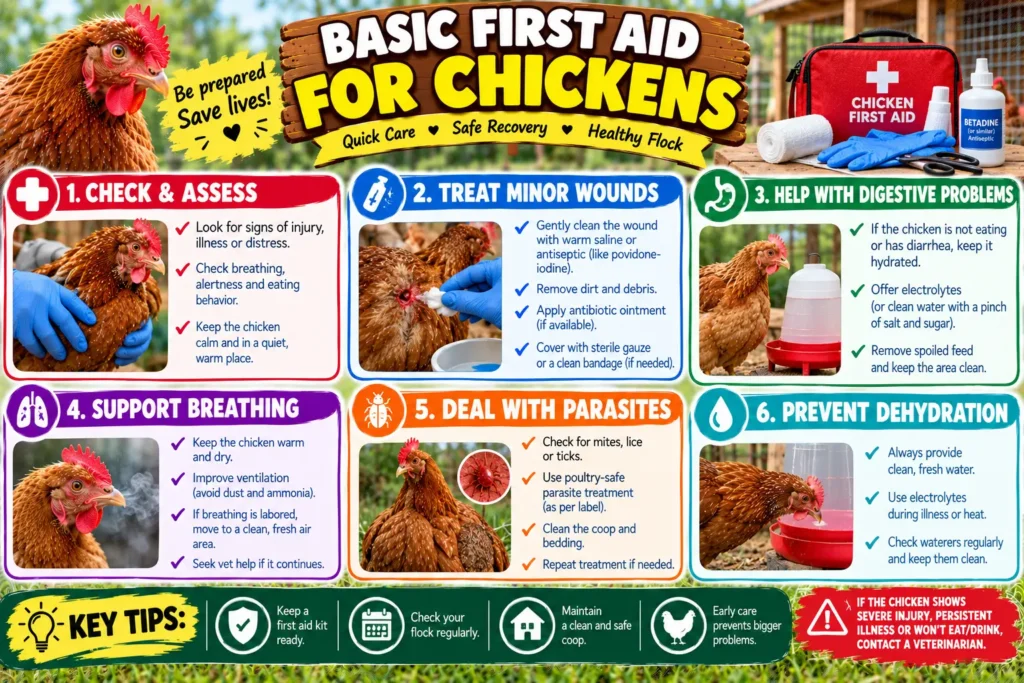
Quick Answer: Basic first aid for chickens starts with safe restraint, then addresses the most urgent problem first — stopping bleeding, supporting an injured limb, or managing shock. Clean wounds with saline, apply poultry-safe antiseptic, and isolate the bird from the flock while it heals.
An injured chicken needs calm, correct action within the first few minutes, not a scramble to figure out what to do. Whether it’s a predator attack, a fall, or a pecking-order injury, knowing basic first aid for chickens ahead of time means you’re treating the bird instead of panicking over it.
This guide walks through safe handling, the most common injuries backyard keepers encounter, and exactly how to respond to each one — plus where home care ends and a vet visit becomes necessary.
Table of Contents
Why Basic First Aid for Chickens Is a Skill Worth Learning
Chickens hide pain and injury as a survival instinct, which means visible distress often signals something more serious than it would in a more openly expressive animal. Acting quickly and correctly during the first minutes after an injury can meaningfully affect recovery, particularly with bleeding or shock.
Did You Know? Chickens have a lower pain threshold response outwardly than many animals, meaning a bird that seems only mildly bothered may actually be dealing with a more painful injury than its behavior suggests.
Safe Handling and Restraint Before Any Treatment
Before treating any injury, the bird needs to be calm and secure. A stressed, flapping chicken makes injured chicken care harder and riskier for both of you.
- Approach slowly and speak in a low, calm voice
- Cover the bird gently with a towel to reduce visual stimulation and calm it
- Tuck the wings against the body and hold the bird snugly, supporting the legs
- Keep the head accessible but controlled, since a distressed bird may peck
- Have a second person help hold the bird still if the injury requires two hands to treat
Expert Tip: Darkness has a calming effect on chickens. Dimming the room or covering the bird’s head loosely with a light cloth (not blocking breathing) often reduces struggling significantly during treatment.
Common Injuries and How to Respond
Cuts, Scratches, and Open Wounds
Chicken wound care starts the same way regardless of cause — predator attack, wire fencing, or pecking injuries from flockmates.
- Restrain the bird and part feathers to fully expose the wound
- Flush with saline solution to remove dirt and debris
- Clean gently with a poultry-safe antiseptic like diluted chlorhexidine
- Apply a thin layer of poultry-safe antibiotic ointment
- Cover with non-stick gauze and secure loosely with vet wrap if the wound is exposed to friction
- Isolate the bird until healed, since blood and open wounds attract pecking from flockmates
Warning: Never leave an injured, bleeding bird with the rest of the flock. Chickens are drawn to red and to open wounds, and pecking injuries can escalate quickly, sometimes fatally.
Bleeding Blood Feathers
A broken blood feather can look alarming because of how much it bleeds relative to the size of the injury.
- Restrain the bird securely
- Apply blood-stop powder or plain cornstarch directly to the bleeding shaft
- Hold firm, steady pressure for 60–90 seconds
- If bleeding hasn’t slowed after two attempts, the feather may need to be fully removed by a vet, since a partially broken feather can keep bleeding
Suspected Broken Bones or Limping
- Handle the bird as little as possible to avoid worsening the injury
- Gently check for obvious deformity, swelling, or a wing hanging unnaturally
- If a leg injury is suspected, isolate the bird on soft, flat bedding to limit further movement
- For a wing injury, a figure-eight wrap can immobilize it temporarily, but this is best learned from a vet or experienced keeper rather than attempted for the first time during an emergency
- Contact a poultry veterinarian for suspected fractures — accurate diagnosis usually requires an exam, and sometimes imaging
Frostbite (Cold Climates)
- Check combs, wattles, and feet during cold snaps for blackened or grayish tissue
- Warm the affected area gradually, never with direct high heat
- Do not rub or massage frostbitten tissue, as this can cause further damage
- Severe or blistering frostbite needs veterinary evaluation
Heat Stress
- Move the bird to shade or a cool, ventilated space immediately
- Offer cool (not ice-cold) water with electrolytes if the bird is alert
- Mist legs and feet with cool water to help lower body temperature gradually
- Avoid sudden cold-water immersion, which can cause shock
Shock
Shock can follow any significant injury, blood loss, or extreme stress event.
| Sign of Shock | What to Do |
| Cold to the touch, especially feet and comb | Move to a warm, quiet space |
| Rapid, shallow breathing | Minimize handling, reduce stimulation |
| Unresponsive or excessively lethargic | Offer electrolyte water if alert enough to drink |
| Pale comb or wattles | Monitor closely, prepare for a vet visit if no improvement |
Injured Chicken Care: Setting Up a Recovery Space
- Use a separate crate or dog carrier lined with soft, clean bedding
- Keep the space warm, quiet, and away from the rest of the flock’s activity
- Provide easy access to food and water without requiring the bird to stand or reach far
- Check on the bird every few hours during the first day, then at least twice daily after that
- Reintroduce to the flock gradually once fully healed, watching for renewed pecking
Common Mistakes
- Returning an injured bird to the flock too soon, before wounds are fully closed
- Over-handling an injured bird, which increases stress and can worsen shock
- Using human antiseptics or ointments not verified as poultry-safe
- Ignoring subtle signs of shock because the bird is still standing
- Waiting too long to isolate a bird with an open wound egg
First Aid Supplies Worth Having Ready
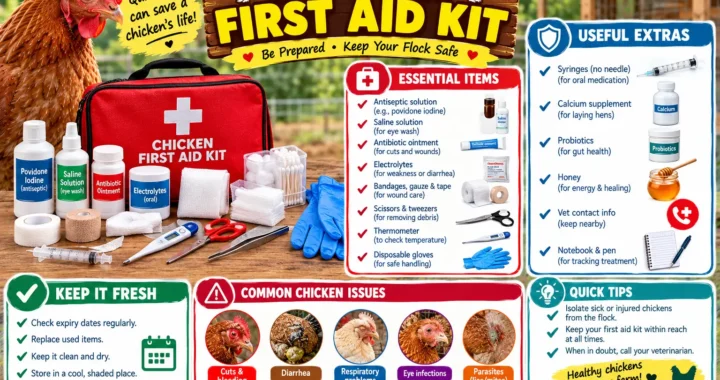
Basic first aid for chickens goes much faster when supplies are already gathered rather than searched for mid-emergency. A dedicated chicken first aid kit covers saline, antiseptic, gauze, vet wrap, blood-stop powder, and an isolation carrier — everything referenced throughout this guide.
Home Care vs. Veterinary Treatment
Home first aid is appropriate for minor wounds, small bleeding feathers, mild heat stress, and general supportive care during recovery. It is not a substitute for professional treatment when an injury is severe, unclear, or not improving.
When to Call a Vet: Uncontrolled bleeding, visible bone, a wing or leg held at an unnatural angle, labored breathing, or a bird that remains unresponsive after basic first aid all call for veterinary evaluation rather than continued home treatment.
Resources like the Merck Veterinary Manual and university poultry extension programs offer solid general guidance on injury response, but they don’t replace an in-person exam when a bird’s condition is serious or unclear.
Read More: https://lashegg.com/chicken-first-aid-kit/
Frequently Asked Questions
What is the first step in basic first aid for chickens? Safe restraint always comes first. A calm, properly held bird is far easier and safer to treat than one that’s stressed and struggling.
How do I stop a chicken’s wound from bleeding? Apply firm, direct pressure with blood-stop powder or cornstarch for 60–90 seconds. If bleeding continues after a second attempt, treat it as an emergency requiring a vet.
Is chicken wound care different from treating other pets? The core principles are similar — clean, protect, monitor — but products need to be poultry-safe specifically, and isolation from flockmates is a unique consideration since chickens will peck at wounds and blood.
How long should an injured chicken stay isolated? Until the wound is fully closed and healed, which is typically 1–2 weeks for minor injuries, though this varies by severity and the individual bird’s healing rate.
Can I give a chicken pain medication at home? No over-the-counter human pain medication is considered safe for chickens without veterinary guidance, since dosing and drug safety differ significantly between species.
What’s the biggest mistake people make with injured chicken care? Returning the bird to the flock too early is one of the most common mistakes, since even a partially healed wound can trigger renewed pecking from flockmates.
Final Thoughts
Basic first aid for chickens comes down to staying calm, restraining the bird safely, and treating the most urgent problem first — bleeding, shock, or an unstable injury. Clean wounds properly, isolate the bird while it heals, and keep supplies ready before you actually need them. Watch recovery closely, and if anything about the injury seems beyond basic home care — heavy bleeding, a suspected fracture, or a bird that isn’t improving — bring in a poultry veterinarian rather than waiting it out.