Lash Egg Treatment: What to Do When Your Hen Passes One

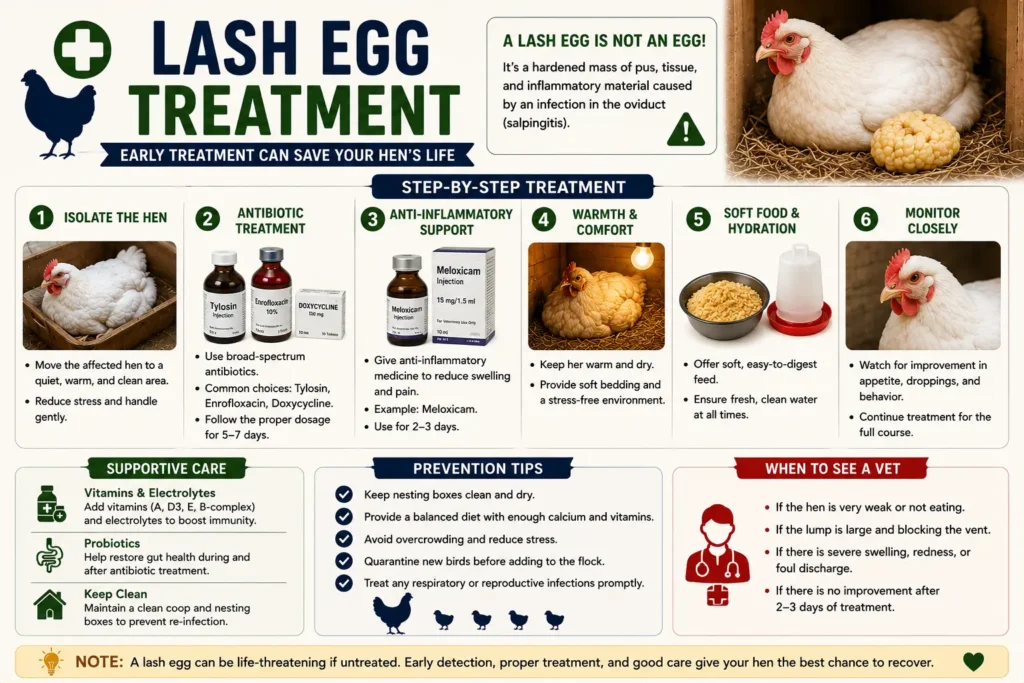
If you found a strange, rubbery, layered mass in your coop instead of a normal egg, you’re probably searching for lash egg treatment right now — and you need clear answers, not guesswork. A lash egg is not actually an egg. It’s a sign of infection inside your hen’s reproductive tract, and how you respond in the next few days can affect her recovery. This guide walks you through what a lash egg is, why it happens, and exactly what treatment for lash egg problems looks like at home and at the vet.
Table of Contents
Quick Answer
A lash egg is a mass of pus, dead tissue, and inflammatory material shaped like an egg, caused by salpingitis (infection or inflammation of the oviduct). Lash egg treatment usually requires antibiotics prescribed by a poultry veterinarian, along with supportive home care such as isolation, hydration, and rest. Mild cases sometimes resolve with supportive care alone, but recurring or severe cases need professional diagnosis.
What Is a Lash Egg?
A lash egg looks like an egg from a distance, but it’s built very differently. Instead of a shell around liquid yolk and white, it’s made of solidified pus, casein (a cheese-like protein), blood, and pieces of tissue that have been pushed out of the oviduct in layers, similar to how a real egg forms.
The name “lash egg” comes from old poultry-keeping slang, not from any medical term. Veterinarians call the underlying condition salpingitis — inflammation or infection of the oviduct, the tube where eggs form and travel before being laid.
Lash Egg vs. Normal Egg: Key Differences
| Feature | Normal Egg | Lash Egg |
| Shell | Hard, calcified | No true shell; rubbery or firm outer layer |
| Interior | Yolk and albumen (egg white) | Layers of pus, casein, blood, tissue debris |
| Smell | Neutral to slightly sulfurous | Often foul or rotten |
| Texture | Smooth, uniform | Lumpy, uneven, sometimes cheesy inside |
| Cause | Normal reproductive cycle | Bacterial infection (salpingitis) |
| Frequency | Daily or near-daily | Irregular, often a one-time or occasional event |
Did You Know?
Hens can pass a lash egg even if they seem otherwise healthy at first. The mass is the hen’s body walling off infection and pushing it out — a defense mechanism, not a random abnormality.
Read More:https://lashegg.com/when-should-you-worry-about-a-lash-egg/
What Causes a Lash Egg?
Understanding the cause matters because lash egg treatment depends heavily on what triggered the infection in the first place. Salpingitis usually starts with bacteria — most often E. coli — entering the reproductive tract.
Common contributing factors include:
- Bacterial infection, especially E. coli, Mycoplasma, or Salmonella species
- Reproductive stress from high egg production, especially in commercial laying breeds
- Internal laying, where a yolk drops into the abdominal cavity instead of moving down the oviduct
- Respiratory infections that spread to the reproductive tract
- Poor coop hygiene, which raises bacterial exposure
- Age, since older hens with worn-out reproductive systems are more prone to salpingitis
- Genetics, as some hybrid layer breeds bred for high egg output are more susceptible
Expert Tip
If one hen in your flock passes a lash egg, check the others for early signs too. Salpingitis isn’t contagious in the way a cold is, but shared risk factors — diet, hygiene, breed, and stress — often affect the whole flock at once.
Symptoms That Often Come With a Lash Egg
A lash egg rarely shows up alone. Watch for these signs in the days before and after you find one:
| Symptom | What It Suggests |
| Lethargy or hiding | General illness or pain |
| Reduced or stopped egg laying | Oviduct inflammation |
| Swollen or fluid-filled abdomen | Possible internal laying or fluid buildup |
| Foul-smelling discharge from the vent | Active infection |
| Loss of appetite | Systemic illness |
| Penguin-like posture (standing upright) | Abdominal swelling or discomfort |
| Pale comb and wattles | Advanced illness or blood loss |
| Diarrhea or watery droppings | Secondary gut involvement |
Warning
A hen showing several of these symptoms together — especially lethargy, appetite loss, and abdominal swelling — needs veterinary attention quickly. Salpingitis can progress to egg yolk peritonitis, which is life-threatening without treatment.
Is a Lash Egg a Medical Emergency?
Not always, but it should never be ignored. A single lash egg with no other symptoms and a hen that’s eating, drinking, and acting normally may simply need close monitoring. A lash egg paired with lethargy, swelling, or appetite loss is a different situation and points toward active, worsening infection.
When to Call a Vet
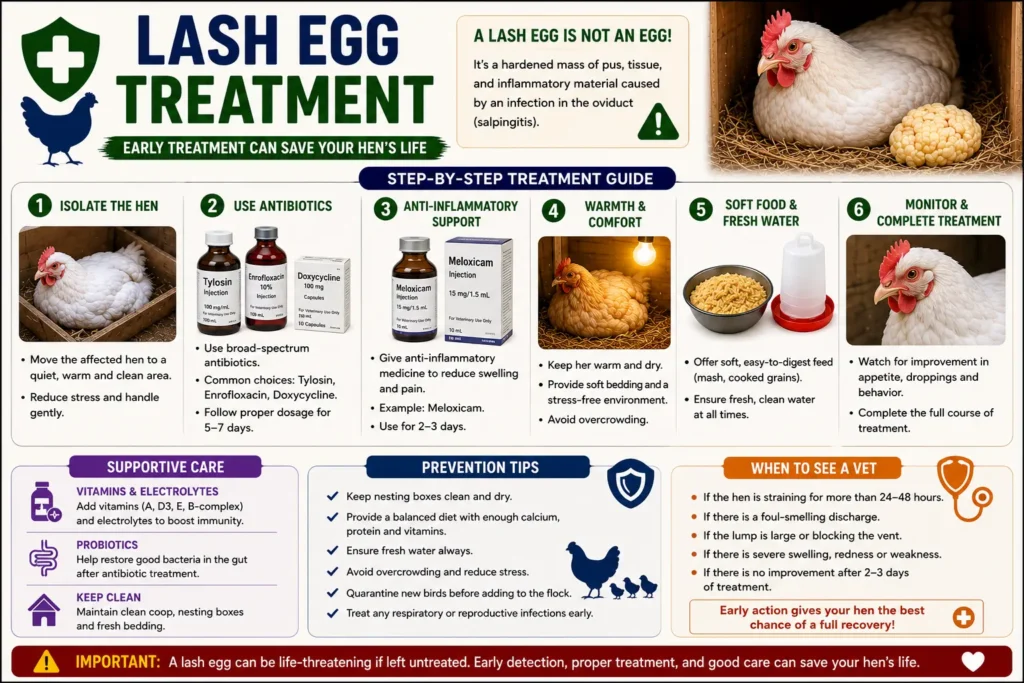
Contact an avian or poultry veterinarian if you notice:
- More than one lash egg within a few weeks
- Any drop in energy, appetite, or alertness
- A visibly swollen or firm abdomen
- Foul odor from the vent that persists
- No improvement within 48–72 hours of starting home supportive care
Lash Egg Treatment: Home Care and Veterinary Options
Effective lash egg treatment combines two tracks: supportive home care to keep the hen comfortable and stable, and medical treatment to address the underlying infection. Home care alone cannot cure bacterial salpingitis — it can only support the hen while the infection is addressed.
Home Care Steps for Lash Egg Treatment
- Isolate the hen in a clean, quiet space away from the flock to reduce stress and let her rest.
- Check hydration by offering fresh water, and add electrolytes if she seems weak.
- Offer easy-to-eat food, such as soft scrambled egg or soaked layer feed, if appetite is reduced.
- Keep her warm, especially if she’s lethargic, since sick hens regulate body temperature poorly.
- Clean the vent area gently with warm water if there’s discharge or crusting.
- Monitor droppings and behavior daily, and keep notes so you can report changes to a vet.
- Weigh her every day or two if possible, since weight loss is an early sign of decline.
Veterinary Treatment for Lash Egg Problems
A veterinarian will typically start with a physical exam and may recommend imaging, such as an X-ray or ultrasound, to check for internal laying or fluid buildup. Bloodwork can help confirm infection severity.
Common veterinary approaches include:
- Antibiotic therapy, chosen based on the suspected or confirmed bacteria
- Anti-inflammatory or pain medication to ease discomfort
- Fluid therapy for dehydrated or systemically ill hens
- Hormonal treatment in some cases, to temporarily pause egg production and give the oviduct time to heal
- Surgery, in severe or recurring cases, to remove damaged reproductive tissue
Home Care vs. Veterinary Treatment for Lash Egg
| Approach | What It Addresses | Limitations |
| Home care | Comfort, hydration, stress reduction | Does not treat bacterial infection directly |
| Veterinary antibiotics | Underlying bacterial cause | Requires exam and prescription |
| Hormonal therapy | Reduces reproductive strain | Used selectively, vet-directed only |
| Surgery | Severe or recurring salpingitis | Reserved for advanced cases |
Common Mistakes in Lash Egg Treatment
- Assuming a single lash egg means the hen is now “fine” without watching for more symptoms
- Giving over-the-counter antibiotics without a diagnosis, which can mask symptoms and cause resistance
- Waiting too long to seek care once lethargy or swelling appears
- Returning the hen to the flock before she’s stable, risking further stress
Recovery Timeline After Lash Egg Treatment
Recovery varies by severity, but here’s a general pattern many keepers see once treatment begins:
| Timeframe | What to Expect |
| Days 1–3 | Isolation, monitoring, start of any prescribed medication |
| Days 3–7 | Appetite and energy should begin improving if treatment is working |
| Weeks 2–4 | Egg laying may resume gradually, or stay paused if hormonal rest was recommended |
| Ongoing | Watch for recurrence, especially in high-production breeds |
Some hens recover fully and return to normal laying. Others may lay fewer eggs permanently or stop laying altogether if oviduct damage was significant. This depends on the extent of the infection and how early treatment began.
Preventing Future Lash Eggs
While not every case can be prevented, these habits lower the risk:
- Keep coop bedding clean and dry to reduce bacterial load
- Provide a balanced layer diet with adequate calcium
- Avoid overcrowding, which increases stress and disease spread
- Choose breeds less prone to reproductive strain if egg-heavy production isn’t your goal
- Watch older hens more closely, since age raises salpingitis risk
- Address respiratory illness promptly, since it can spread to the reproductive tract
Lash Eggs in Other Birds
Lash eggs are most commonly discussed in backyard chickens, but salpingitis can affect other egg-laying birds, including ducks, turkeys, and some pet birds. The underlying cause and general treatment approach are similar, though species-specific veterinary guidance is essential since anatomy and medication dosing differ.
Conclusion
A lash egg is uncomfortable to find, but it’s also useful information — it tells you your hen’s reproductive system needs attention. Effective lash egg treatment isn’t just one action; it’s a combination of watching for symptoms, providing supportive home care, and getting a veterinary diagnosis when signs point to infection. Keep monitoring your hen closely in the days after a lash egg appears, and don’t hesitate to involve a poultry-experienced vet if she shows any signs of decline. Early treatment for lash egg cases generally leads to better outcomes than waiting to see if things resolve on their own.
5. FAQ
What does a lash egg mean? A lash egg means your hen has or recently had salpingitis, an infection or inflammation of the oviduct. It’s a sign of a reproductive health issue, not a type of egg.
Can a hen recover from a lash egg without treatment? Some hens recover from a single mild episode with rest and supportive care alone. However, since salpingitis is often bacterial, veterinary treatment gives the best chance of full recovery and helps prevent recurrence.
What is the best lash egg treatment at home? Home lash egg treatment focuses on isolation, hydration, warmth, and monitoring. It supports the hen but doesn’t replace veterinary antibiotics when infection is present.
Is a lash egg contagious to other chickens? Salpingitis itself isn’t directly contagious like a virus, but the bacteria involved, along with shared stress and hygiene factors, can affect multiple hens in the same flock.
How do I know if my hen needs a vet for a lash egg? Watch for lethargy, appetite loss, abdominal swelling, foul odor, or a second lash egg. Any of these signs means it’s time to call a vet rather than wait.
Will a hen lay eggs again after a lash egg? Many hens return to laying, sometimes at a reduced rate, after successful treatment. Some stop laying permanently if the oviduct sustained significant damage.
What bacteria causes lash eggs in chickens? E. coli is the most commonly implicated bacteria, though Mycoplasma and Salmonella species have also been associated with salpingitis in poultry.
Can lash eggs happen more than once? Yes. Hens that have had one episode of salpingitis are at higher risk for recurrence, especially high-production layer breeds.