Can Pets Eat a Lash Egg? What Every Chicken Keeper Should Know

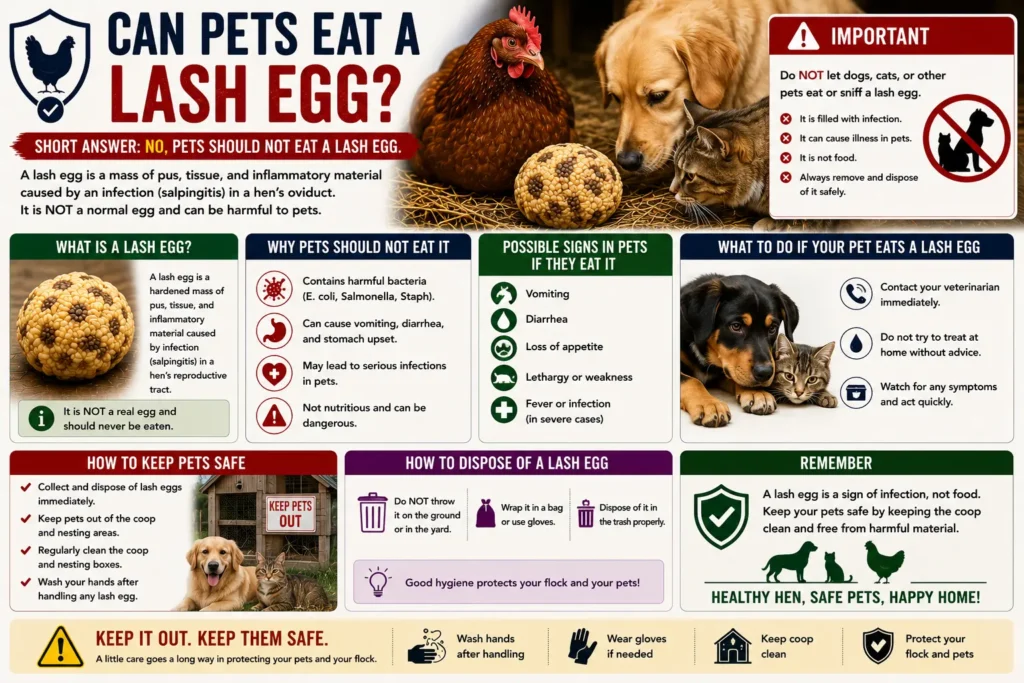
If you keep backyard chickens, you’ve probably had a moment of panic after finding a strange, rubbery, egg-shaped lump in the coop. So can pets eat a lash egg if your dog or cat gets to one first? The short answer is no — a lash egg is not real food, and letting a pet eat one can carry real health risks. It looks like an egg, but it’s actually a sign that one of your hens has an internal infection.
This guide breaks down exactly what a lash egg is made of, why dogs and cats should never eat one, what symptoms to watch for afterward, and how to protect both your flock and your household pets going forward.
Table of Contents
What Exactly Is a Lash Egg?
A lash egg isn’t an egg at all. It’s a mass of inflammatory material — pus, tissue debris, and sometimes egg white or yolk — that a hen’s body expels through the vent. Vets call this material “caseous exudate,” a cheese-like discharge that forms when the body walls off infection.
The mass often comes out layered, which is why it can resemble a soft-shelled egg from the outside. Cut one open, though, and you’ll usually find rings of solid, waxy material instead of yolk.
Why Is It Called a “Lash Egg” If Pets Can’t Eat It Like a Real Egg?
The name comes from “lashing,” an old term for the shedding of infected tissue. It has nothing to do with eyelashes and nothing to do with normal egg-laying. A hen that passes one is not laying an extra egg — she’s expelling infected material from her reproductive tract.
Read More: https://lashegg.com/should-you-isolate-a-chicken-with-a-lash-egg/
What Causes a Lash Egg in Chickens?
Lash eggs form because of salpingitis, an inflammation or infection of the oviduct (the tube that forms and moves eggs). According to the Merck Veterinary Manual, salpingitis is one of the most common reproductive disorders in laying hens and a leading cause of death in commercial and backyard flocks alike.
Common underlying causes include:
- Bacterial infection — most often E. coli, but Salmonella and other bacteria can also be involved
- Infectious bronchitis virus (IBV) — a respiratory virus that can damage the oviduct lining
- Egg drop syndrome or other reproductive viruses
- Stress or poor nutrition, which weaken immune defenses
- Age — older hens with irregular laying cycles are more prone to reproductive tract issues
How Common Is Salpingitis in Backyard Flocks?
Reproductive tract disease is one of the top causes of hen mortality in flocks that aren’t kept for commercial egg production, largely because backyard hens tend to live longer past their peak laying years, when reproductive tissue is more vulnerable to breakdown.
Can Pets Eat a Lash Egg? The Direct Answer
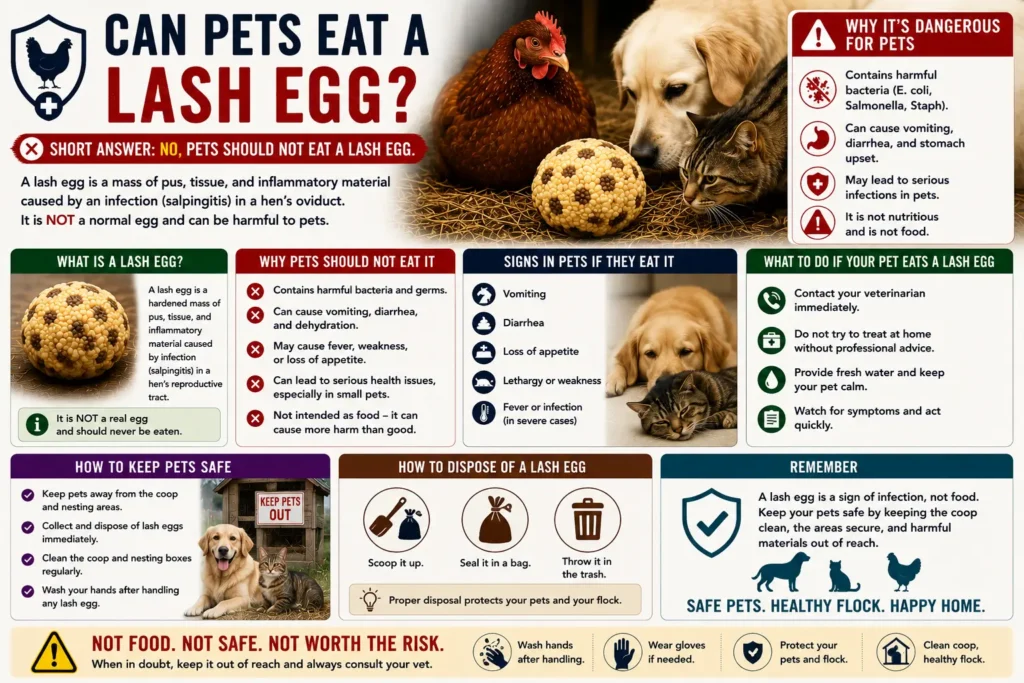
No. Pets should not eat a lash egg, and owners shouldn’t feed one to a dog or cat on purpose. A lash egg is essentially a ball of infected discharge, and eating it exposes your pet to whatever bacteria caused the original infection in the hen.
This is different from a normal, healthy chicken egg, which is generally safe for dogs and cats in moderation when cooked. A lash egg carries none of the nutritional benefits of a real egg and comes with added infection risk instead.
Quick Answer: A lash egg is infected reproductive discharge, not a real egg. Dogs and cats should never eat one, even though it can look like a soft-shelled egg from the outside.
Why Lash Eggs Are Unsafe for Dogs
Dogs are naturally curious around the coop, and a lash egg on the ground can look and smell interesting enough to eat. Here’s why that’s a problem.
Bacterial Exposure
Lash eggs commonly contain E. coli and other bacteria tied to the original infection. If a dog swallows one, those bacteria can potentially colonize the gut and cause vomiting, diarrhea, or more serious illness, especially in puppies, senior dogs, or dogs with weaker immune systems.
Digestive Upset
Even without an active bacterial infection taking hold, the waxy, dense texture of a lash egg is hard to digest. Dogs that eat one may experience vomiting, loose stool, or a lack of appetite within a day or two.
Choking or Blockage Risk
Lash eggs vary in size, and a larger one swallowed whole (especially by a small dog) can pose a choking hazard or, in rare cases, contribute to an intestinal blockage.
Why Lash Eggs Are Unsafe for Cats
Cats are less likely to raid a coop than dogs, but barn cats and free-roaming cats do sometimes encounter lash eggs.
- Cats are highly sensitive to bacterial gastrointestinal upset, and a small amount of infected material can trigger vomiting or diarrhea.
- Because cats groom themselves constantly, any bacteria on their paws or face after investigating a lash egg can be ingested even if they never eat the mass itself.
- Kittens and senior cats are at higher risk of complications from any bacterial exposure due to less robust immune defenses.
Dogs vs. Cats: Risk Comparison Table
| Factor | Dogs | Cats |
| Likelihood of eating a lash egg | High (dogs are drawn to coop debris) | Lower, but possible with barn cats |
| Main risk | Bacterial infection, digestive upset, choking | Bacterial infection, grooming-related ingestion |
| Symptoms to watch for | Vomiting, diarrhea, lethargy, loss of appetite | Vomiting, diarrhea, drooling, hiding |
| When to call a vet | Any symptoms lasting more than 24 hours | Any symptoms lasting more than 24 hours |
Symptoms to Watch For After a Pet Eats a Lash Egg
If your dog or cat gets into a lash egg before you can stop them, monitor closely for the next 24–48 hours.
- Vomiting — one episode may resolve on its own; repeated vomiting needs vet attention
- Diarrhea — especially if it contains blood or mucus
- Lethargy — a pet that suddenly seems tired or withdrawn
- Loss of appetite — skipping meals for more than one feeding
- Abdominal discomfort — a hunched posture, whining, or reluctance to be touched near the belly
- Fever — best confirmed by a vet, but a warm nose and lethargy together are worth checking
When to Call a Vet
Call your veterinarian right away if your pet shows repeated vomiting, bloody diarrhea, refuses food for more than 12–24 hours, or seems unusually weak. Puppies, kittens, senior pets, and any animal with an existing health condition should be seen sooner rather than later, since dehydration can set in quickly in smaller or more fragile animals.
What to Do If Your Pet Just Ate a Lash Egg
- Stay calm — a single lash egg is unpleasant but not automatically an emergency.
- Remove any remaining pieces from the pet’s reach immediately.
- Offer fresh water to help flush the digestive system.
- Withhold food for a few hours only if your vet or a pet poison helpline advises it.
- Watch closely for 24–48 hours for any of the symptoms listed above.
- Call your vet or an animal poison control line if symptoms appear or if you’re unsure, especially with young, senior, or immunocompromised pets.
Warning: Never induce vomiting in a dog or cat without direct guidance from a veterinarian or a certified animal poison control service. Doing so incorrectly can cause additional harm.
Common Mistakes Chicken Keepers Make
- Assuming a lash egg is harmless because it looks like a shell. It isn’t a shell — it’s tissue and discharge.
- Leaving the mass in the coop or run where pets can reach it. Lash eggs should be removed and disposed of promptly, not left to break down naturally.
- Not isolating the hen that produced it. Salpingitis often needs veterinary evaluation, and an affected hen may need to be separated from the flock.
- Feeding coop scraps to dogs without checking them first. Not everything that falls in a coop is food, for hens or for household pets.
Did You Know?
A hen can appear completely normal in behavior and still pass a lash egg, since the underlying infection is internal and doesn’t always cause visible illness right away. That’s one reason regular flock health checks matter, even when hens seem fine.
How to Tell a Lash Egg Apart From a Real Egg
| Feature | Real Egg | Lash Egg |
| Shell | Hard, calcified shell | No true shell; rubbery or waxy outer layer |
| Interior | Yolk and albumen (egg white) | Layers of pus, tissue, and cellular debris |
| Smell | Mild or neutral | Often foul or sulfur-like |
| Color | White, brown, blue, or green depending on breed | Yellowish, tan, or grayish, sometimes streaked |
| Safe for pets to eat | Yes, in moderation, when cooked | No |
Should You Get the Hen Checked by a Vet?
Yes. Salpingitis rarely resolves on its own, and hens that produce one lash egg often produce more over time if the underlying infection isn’t addressed. A poultry-experienced veterinarian can examine the hen, and in some cases prescribe antibiotics or recommend supportive care. Severe or chronic cases sometimes require humane euthanasia if the hen’s quality of life has significantly declined, which is a conversation best had directly with a vet familiar with backyard poultry.
Expert Tip
Keep a simple log of any hen that produces a lash egg, including the date and any other symptoms you notice, such as reduced appetite or a droopy comb. This history is genuinely useful information for a vet trying to diagnose the underlying cause.
Preventing Future Lash Eggs and Pet Exposure
- Reduce flock stress through consistent feeding, adequate space, and stable social groups.
- Support immune health with a complete, age-appropriate layer feed.
- Vaccinate against infectious bronchitis where it’s a known regional risk, based on your vet’s recommendation.
- Inspect the coop daily so any lash egg is found and removed before pets or wildlife can get to it.
- Fence off the coop and run from household dogs if your dog is prone to scavenging.
- Wash hands after handling coop debris before touching pets, since cross-contamination between coop and household is a real transmission path.
Frequently Asked Questions
Can pets eat a lash egg without getting sick? It’s possible for a pet to eat a lash egg and show no symptoms at all, but this is not something to rely on. The material can carry bacteria, and even a healthy pet can develop vomiting or diarrhea after exposure.
Is a lash egg poisonous to dogs? A lash egg isn’t a toxin in the traditional sense, but it can contain infectious bacteria that cause illness similar to food poisoning in dogs.
Can cats get sick from a lash egg? Yes. Cats can develop vomiting, diarrhea, or general digestive upset after contact with or ingestion of a lash egg, particularly if they later groom themselves.
What does a lash egg smell like? Most lash eggs have a noticeably foul or sulfur-like odor, which is one clue that distinguishes them from a normal egg that simply has an odd shape.
Should I throw away a lash egg or show it to a vet? If you keep chickens and want a diagnosis for the underlying cause, it’s worth showing it to a poultry veterinarian or at least describing it in detail, since the appearance can help narrow down the likely infection. Otherwise, dispose of it away from pets and wildlife.
Can a hen keep laying normal eggs after producing a lash egg? Some hens continue to lay normal eggs afterward, while others stop laying temporarily or permanently depending on how much damage the infection caused to the oviduct. A vet check is the only reliable way to know the outlook for a specific hen.
Is it common for backyard chickens to produce a lash egg? It isn’t extremely common, but it isn’t rare either, especially in hens over two years old or hens that have had a respiratory illness in the past.
Final Thoughts
A lash egg looks alarming, and for good reason — it’s a visible sign of infection inside your hen, not a normal part of egg-laying. When it comes to whether pets can eat a lash egg, the safest approach is to treat it the same way you’d treat any other infected material: keep it away from dogs, cats, and other animals entirely. If your pet does manage to eat one, monitor them closely over the next day or two and contact your veterinarian if any symptoms appear. And if one of your hens produces a lash egg, don’t ignore it — a vet visit for the hen is the best next step toward figuring out what’s going on and preventing it from happening again.