Lash Egg vs Fairy Egg: How to Tell Them Apart

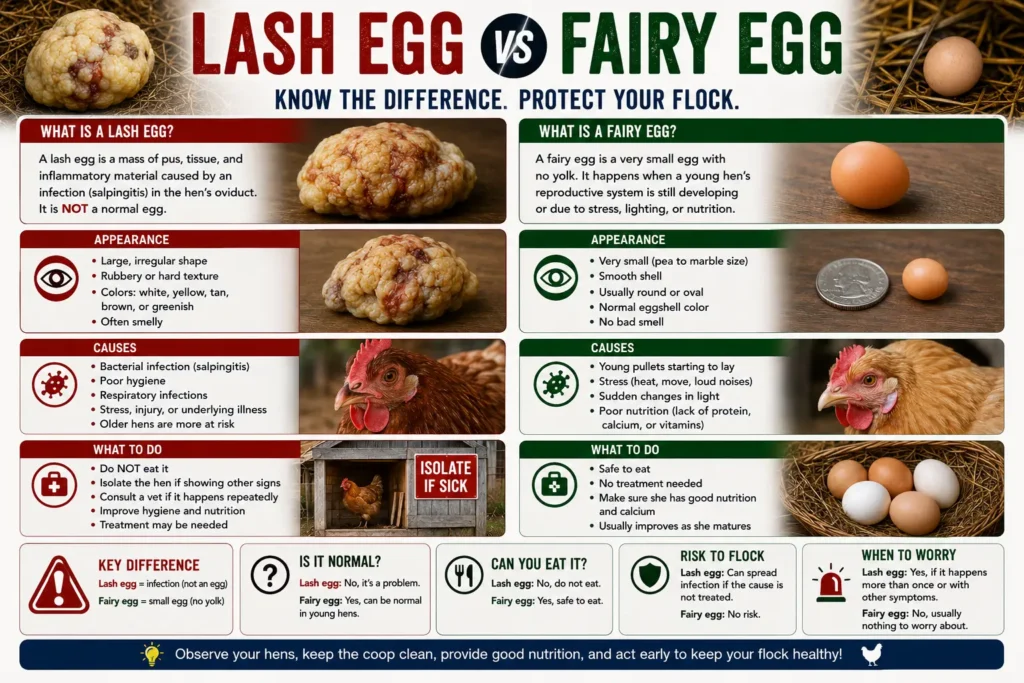
Find something small and strange where your hens lay, and the lash egg vs fairy egg question is usually the first thing chicken keepers search. Both look unusual. Both can show up with no warning. But they come from very different places inside a hen’s body, and only one of them is a health emergency.
A fairy egg is a tiny, often yolkless egg formed by a normal hiccup in the laying process. A lash egg is a mass of infected tissue and discharge, not a real egg at all. Knowing which one you’re holding changes what you should do next.
Table of Contents
What Is a Fairy Egg?
A fairy egg, also called a wind egg or a cock egg, is a miniature egg that a hen occasionally lays. It usually has a shell, sometimes a bit of albumen (egg white) inside, and rarely any yolk.
Fairy eggs form when a piece of tissue, a blood clot, or even a stray reproductive cell drops into the oviduct and gets treated like a yolk would be. The hen’s body wraps it in albumen, membrane, and shell, just like a normal egg, only much smaller.
Read More:https://lashegg.com/can-pets-eat-a-lash-egg/
Is a Fairy Egg Harmful to the Hen?
No. A fairy egg is generally harmless and doesn’t signal disease on its own. It’s most common in young hens just starting to lay, and in older hens whose reproductive systems are slowing down.
What Is a Lash Egg?
A lash egg is where the lash egg vs fairy egg comparison changes tone. It isn’t an egg at all — it’s a solid or layered mass of pus, tissue debris, and inflammatory material that a hen expels from the vent.
Vets call this material caseous exudate, a cheese-like discharge the body produces to wall off infection. According to the Merck Veterinary Manual, this is a hallmark of salpingitis, an infection or inflammation of the oviduct, and one of the leading causes of reproductive illness in laying hens.
Why Do People Confuse a Lash Egg With a Real Egg?
The layered, rounded shape of a lash egg can resemble a soft-shelled or malformed egg from the outside. Cut one open, though, and the resemblance ends. Instead of yolk, you’ll typically find rings of solid, waxy, yellowish material with a strong, often foul odor.
Quick Answer: A fairy egg is a small, harmless true egg with little or no yolk. A lash egg is infected discharge from the oviduct and is a sign your hen needs veterinary attention.
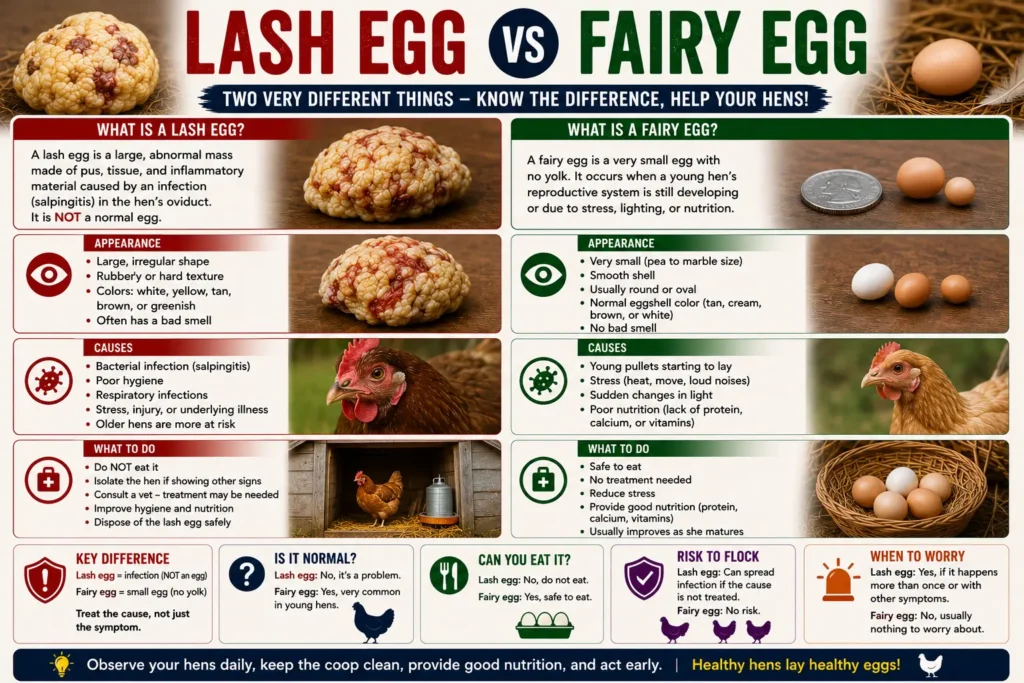
Lash Egg vs Fairy Egg: Side-by-Side Comparison
| Feature | Fairy Egg | Lash Egg |
| What it actually is | A tiny true egg | A mass of infected tissue and discharge |
| Shell present? | Yes, usually hard and complete | No true shell; rubbery or waxy outer layer |
| Size | Much smaller than a normal egg | Varies, often similar in size to a normal egg |
| Smell | Neutral, like a normal egg | Often foul or sulfur-like |
| Cause | Stray tissue mistaken for a yolk | Salpingitis (oviduct infection or inflammation) |
| Health concern? | Rarely a concern | Almost always signals infection |
| Vet visit needed? | Not usually, unless frequent | Yes, recommended |
| Safe to feed to pets | Same as a regular egg, in moderation, cooked | No — should be disposed of, not fed to pets |
What Causes Each One: A Closer Look
Causes of a Fairy Egg
- A young hen’s reproductive system still adjusting to regular laying
- An older hen with a slowing or irregular laying cycle
- A one-off disruption in the oviduct, such as stress or a minor hormonal shift
- Occasionally, a random bit of tissue triggering the “wrap it in shell” reflex
Causes of a Lash Egg
- Bacterial infection, most commonly E. coli, along with Salmonella and other bacteria in some cases
- Infectious bronchitis virus (IBV), which can damage the lining of the oviduct
- Chronic stress or poor nutrition, which weaken a hen’s immune defenses
- Age-related reproductive decline, especially in hens well past peak laying years
Symptoms That Go Along With Each
A fairy egg typically comes and goes with no other symptoms. Your hen eats, drinks, and behaves normally before and after.
A lash egg is different. Watch for these signs in a hen that has passed one:
- Reduced appetite or picking at food
- A droopy or pale comb
- Lethargy or reluctance to move around the coop
- A swollen or firm abdomen
- Reduced or stopped egg-laying afterward
- Foul odor around the vent area
When to Call a Vet
Call a poultry-experienced veterinarian if a hen passes a lash egg, especially if she also shows lethargy, appetite loss, or a swollen belly. Salpingitis rarely resolves without treatment, and repeated lash eggs usually mean the infection is ongoing rather than improving on its own.
How to Diagnose Which One You Found
- Check for a true shell. A fairy egg has one; a lash egg does not.
- Cut it open carefully (wearing gloves) and look for yolk versus layered tissue.
- Smell it. A fairy egg smells like a normal egg. A lash egg often smells foul.
- Watch the hen for a day or two afterward for any of the symptoms listed above.
- When unsure, photograph it and consult a vet or an experienced poultry extension service rather than guessing.
Expert Tip: Keep a small log any time a hen lays something unusual, noting the date, appearance, and her behavior that day. This history is genuinely useful if you ever need a vet’s opinion.
Common Mistakes Chicken Keepers Make
- Assuming any small or odd egg is automatically a lash egg. Most oddly shaped or tiny eggs are fairy eggs and aren’t cause for alarm.
- Ignoring a lash egg because the hen “seems fine.” Salpingitis can be internal and slow-moving, with no obvious symptoms at first.
- Feeding either one to pets without checking it first. A fairy egg is fine, cooked, in the same way a normal egg is. A lash egg should never be fed to a dog or cat, since it can carry the same bacteria responsible for the hen’s infection.
- Not isolating a hen that repeatedly produces lash eggs, which can leave her more vulnerable to further infection or complications.
Did You Know?
A hen can lay a fairy egg her entire life with zero health consequences, while a single lash egg is often just the first visible sign of an infection that’s been developing internally for a while. That gap between “visible” and “internal” is exactly why regular flock health checks matter.
Can Fairy Eggs or Lash Eggs Be Eaten?
A fairy egg is a real egg, just a smaller one, and can be cooked and eaten the same way a normal egg would be, by humans or as an occasional treat for a dog or cat.
A lash egg is not food. It’s expelled infectious material, and eating it — by a person or a pet — risks exposure to whatever bacteria caused the hen’s infection in the first place. Dispose of a lash egg away from pets, wildlife, and other flock members.
Warning: Never feed a lash egg to a dog, cat, or any other animal, even cooked. Cooking does not reliably eliminate every risk tied to infected tissue, and it isn’t worth testing on a pet’s digestive system.
Recovery and Outlook
| Scenario | Typical Outlook |
| Hen lays an occasional fairy egg | No treatment needed; often resolves on its own as laying regulates |
| Hen lays a single lash egg, otherwise appears healthy | Vet exam recommended; may respond well to treatment if caught early |
| Hen lays repeated lash eggs | Often indicates chronic or advanced salpingitis; requires veterinary management |
| Hen shows lethargy, appetite loss, and a lash egg | Should be seen by a vet promptly; some advanced cases have a guarded outlook |
A poultry veterinarian can examine the hen, and depending on findings, may recommend antibiotics, supportive care, or in severe or chronic cases, a conversation about quality of life. There’s no reliable home remedy for salpingitis, so professional evaluation is the right next step rather than waiting to see if it resolves.
Preventing Reproductive Issues in Your Flock
- Reduce stress with consistent routines, enough space per bird, and stable social groups
- Feed a complete, age-appropriate layer diet to support reproductive and immune health
- Ask your vet about infectious bronchitis vaccination if it’s a known risk in your region
- Inspect nesting boxes daily so you catch anything unusual early
- Separate any hen showing symptoms until you can get a vet opinion
- Avoid overbreeding or over-laying hybrid hens bred for high egg output, since these breeds are more prone to reproductive strain over time
Frequently Asked Questions
What is the main difference between a lash egg vs fairy egg? A fairy egg is a small, true egg with little or no yolk, and it’s generally harmless. A lash egg is a mass of infected tissue and discharge from the oviduct, and it usually means the hen has an infection called salpingitis.
Can a hen lay both a fairy egg and a lash egg at different times? Yes. These are unrelated conditions. A hen can lay a fairy egg as a young or older layer with no health issue, and separately develop salpingitis later in life that produces a lash egg.
Is a fairy egg safe to eat? Yes, a fairy egg is a real egg and can be eaten the same way a normal egg would be, once cooked.
Do I need to see a vet for a fairy egg? Not usually. A single, occasional fairy egg is not a concern. Frequent fairy eggs alongside other symptoms are worth mentioning to a vet.
How can I tell a lash egg from a deformed but normal egg? A deformed but normal egg will still have a true, calcified shell and a recognizable yolk and white inside. A lash egg lacks a true shell and contains layered tissue instead of yolk, often with a foul smell.
What does a lash egg mean for the rest of my flock? Salpingitis itself isn’t typically contagious in the way a respiratory illness is, but if an underlying cause like infectious bronchitis is circulating in your flock, other hens may be at risk too. It’s worth monitoring the whole flock, not just the affected hen.
Should I be worried if my hen lays a fairy egg for the first time? A first-time fairy egg on its own usually isn’t a reason for concern, especially in a young hen just starting to lay or an older hen nearing the end of her laying years.