Lash Egg in Ducks: What Waterfowl Keepers Need to Know

Most information about strange, rubbery lumps in the nesting area focuses on chickens, which makes it harder to find a straight answer if you’ve spotted a lash egg in ducks instead. The good news is the underlying problem works the same way across poultry species. The details of how it shows up in ducks, though, are worth understanding on their own.
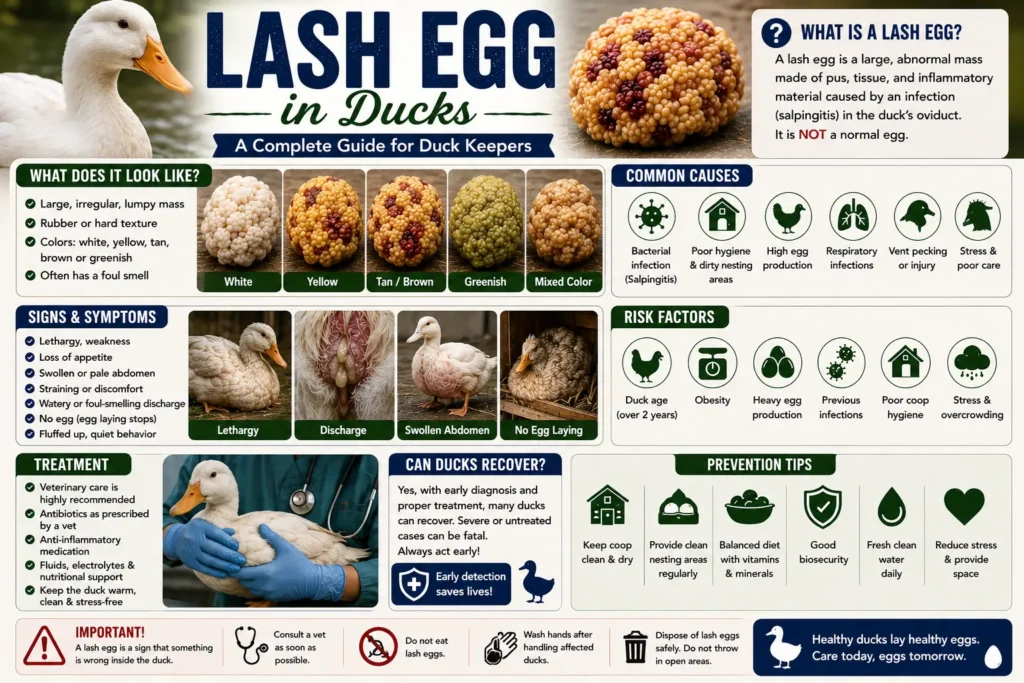
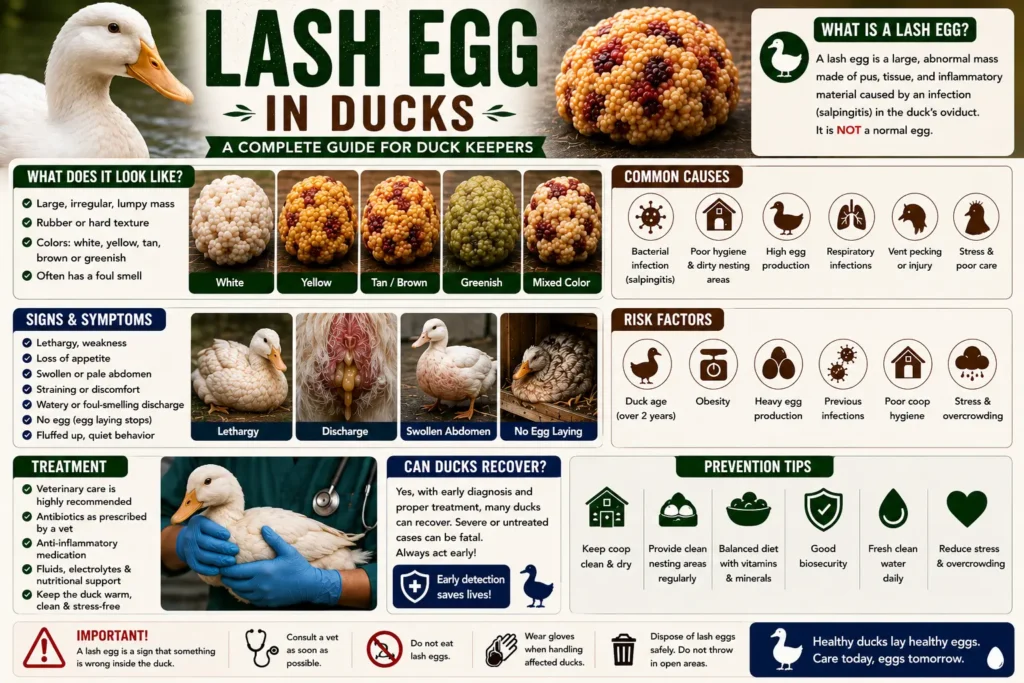
A lash egg in ducks is not a real egg. It’s a mass of infected tissue and discharge that a duck’s body expels when the oviduct becomes inflamed or infected. This guide walks through what causes it in waterfowl, how to recognize the signs, and what steps to take next.
Table of Contents
What Is a Lash Egg in Ducks?
A duck lash egg is a mass of pus, tissue debris, and inflammatory material passed through the vent. Vets call this material caseous exudate, a thick, cheese-like discharge the body produces to contain an infection.
The layered way it forms is why it can resemble a soft-shelled or misshapen egg from the outside. Cut one open, though, and you’ll typically find solid, waxy material instead of yolk, often with a strong odor.
Read More: https://lashegg.com/lash-egg-in-chickens/
Is a Lash Egg the Same in Ducks as in Chickens?
Largely, yes. The underlying process, salpingitis, or infection and inflammation of the oviduct, works similarly across poultry species. What differs is how often it shows up, what tends to trigger it, and how ducks tend to behave when they’re unwell, since waterfowl often mask illness differently than chickens do.
Quick Answer: A lash egg in ducks is a mass of infected tissue from an inflamed oviduct, not a real egg. It signals salpingitis and calls for veterinary evaluation, ideally from a vet experienced with waterfowl.
What Causes a Lash Egg in Ducks?
Salpingitis in ducks can stem from several overlapping causes, many of which mirror what’s seen in chickens, with a few waterfowl-specific factors layered in.
Common Causes
- Bacterial infection, including E. coli and, in waterfowl specifically, Riemerella anatipestifer, a bacterium strongly associated with duck illness
- Viral infections that damage the reproductive tract lining
- Poor water hygiene, since ducks spend significant time in water and are more exposed to waterborne bacteria than chickens
- Overcrowding or high stress, which weakens immune defenses
- Nutritional gaps, particularly inadequate protein or vitamin intake during peak laying periods
- Age-related reproductive decline, as with any laying female bird
Why Water Access Matters for Duck Reproductive Health
Ducks that swim in dirty, stagnant, or heavily soiled water face more exposure to the kinds of bacteria linked to salpingitis than ducks with access to clean water sources. This is one of the clearer differences between raising ducks and raising chickens when it comes to preventing reproductive illness.
Symptoms of a Lash Egg in Ducks
Ducks are known for hiding illness well, since they’re prey animals that instinctively avoid showing weakness. Still, watch for these signs around the time a lash egg appears:
- Reduced appetite
- Lethargy or reduced time spent swimming or foraging
- A drop in egg-laying
- A swollen or firm lower abdomen
- Discharge or an unusual odor near the vent
- Reluctance to move around normally
When to Call a Vet
Contact a veterinarian experienced with waterfowl if your duck passes a lash egg, especially alongside lethargy, reduced appetite, or a swollen abdomen. Not every avian vet has extensive duck-specific experience, so it’s worth asking directly when you call, since duck physiology and common illnesses differ somewhat from chickens.
How Vets Diagnose the Cause
- Physical exam, checking body condition, abdominal swelling, and overall alertness
- History review, including laying patterns, water source quality, and recent behavior changes
- Imaging, such as radiographs or ultrasound, to assess the reproductive tract
- Lab testing, including bloodwork or culturing discharge to identify the specific bacteria involved
- Response to treatment, since improvement after antibiotics can help confirm a bacterial cause
Expert Tip: If you keep both ducks and chickens, note which species produced the lash egg and describe your water setup to the vet. Waterfowl-specific bacteria are common enough that this detail can meaningfully narrow down the likely cause.
Treatment Options for Ducks
| Treatment Approach | What It Involves | When It’s Used |
| Antibiotics | Prescribed based on suspected or confirmed bacterial cause | Early to moderate cases with a likely infection |
| Supportive care | Fluids, nutrition support, clean water access, stress reduction | Alongside other treatments, in most cases |
| Water hygiene improvements | Cleaning or replacing pond and pool water regularly | Ongoing management and prevention |
| Dietary adjustment | Ensuring adequate protein and vitamins during laying season | Prevention and recovery support |
| Surgery | Oviduct-related surgery in select cases | Severe, recurrent, or non-responsive cases |
There’s no dependable home remedy for salpingitis in ducks. A vet familiar with waterfowl medicine is the best resource for choosing the right treatment path, since duck-specific dosing and care differ from standard chicken protocols.
What to Do If Your Duck Passes a Lash Egg
- Remove and dispose of it away from other animals, including pets and the rest of your flock.
- Check your duck’s water source for cleanliness and refresh it if needed.
- Observe your duck closely over the next 24–48 hours.
- Note her appetite, activity level, and any discharge.
- Separate her if she’s showing other symptoms, to reduce stress and simplify monitoring.
- Schedule a vet visit, ideally with a waterfowl-experienced veterinarian.
Warning: Never feed a lash egg to a dog, cat, or any other animal, regardless of species. It’s infected material, and eating it risks exposing a pet to the bacteria behind the original infection.
Lash Egg in Ducks vs. Chickens: Quick Comparison
| Factor | Ducks | Chickens |
| Common bacterial causes | E. coli, Riemerella anatipestifer, other waterborne bacteria | E. coli, Salmonella |
| Major environmental risk factor | Poor water hygiene | Coop hygiene and overcrowding |
| Illness-hiding behavior | Strong, ducks often mask symptoms well | Present, but somewhat less pronounced |
| Vet availability | Fewer vets with deep waterfowl experience | More widely available poultry-specific care |
| Underlying condition | Salpingitis | Salpingitis |
Common Mistakes Duck Keepers Make
- Assuming duck care advice is identical to chicken care. Waterfowl have distinct risk factors, especially around water hygiene.
- Overlooking water cleanliness as a factor in reproductive health, when it’s one of the more significant preventable risks for ducks specifically.
- Waiting too long to seek care because ducks tend to hide illness well until symptoms are more advanced.
- Assuming any local poultry vet has duck-specific experience. It’s worth asking directly, since not all avian vets see many waterfowl cases.
Did You Know?
Ducks can look completely normal in the water even while dealing with a significant internal infection, since swimming doesn’t require the same visible strain that walking or standing might for a sick land bird. That’s part of why behavior on land, appetite, and time spent resting matter more than swimming activity alone when judging a duck’s health.
Recovery and Outlook
| Scenario | Typical Outlook |
| Single lash egg, duck otherwise active and eating well | Good chance of improvement with prompt veterinary care |
| Repeated lash eggs | Suggests chronic salpingitis; needs ongoing management |
| Lash egg with lethargy or reduced appetite | More advanced; needs prompt evaluation |
| Untreated, progressing infection | Can become serious without treatment |
Ducks that receive early veterinary attention generally have a good chance of recovery. Chronic or advanced cases require more intensive, ongoing care, and outcomes vary based on how quickly the infection is caught and treated.
Preventing Lash Eggs in Your Duck Flock
- Keep pool and pond water clean, changing it regularly to reduce bacterial buildup
- Feed a complete, species-appropriate diet with adequate protein during laying season
- Reduce overcrowding in housing and water areas
- Monitor older ducks more closely, since age raises the risk of reproductive tract issues
- Watch for subtle behavior changes, since ducks often hide illness until it’s more advanced
- Separate any duck showing symptoms promptly for closer observation and reduced stress
- Build a relationship with a vet who has waterfowl experience, before you need one in an emergency
Frequently Asked Questions
What does a lash egg in ducks mean? It means your duck has salpingitis, an infection or inflammation of the oviduct. The lash egg is the visible mass of infected tissue her body has expelled, not a separate condition or a normal part of laying.
Is a lash egg in ducks the same thing as in chickens? The underlying condition, salpingitis, is the same across poultry species. The specific bacteria involved and some risk factors, like water hygiene, differ somewhat between ducks and chickens.
What bacteria commonly cause a duck lash egg? E. coli is common across poultry, while Riemerella anatipestifer is a bacterium more specifically associated with illness in waterfowl and is worth mentioning to your vet.
Can dirty water cause a lash egg in ducks? Poor water hygiene increases bacterial exposure and can contribute to the kind of infection that leads to salpingitis and, eventually, a lash egg.
Should I see a regular vet or a waterfowl specialist for a duck lash egg? A veterinarian with specific waterfowl experience is ideal, since duck physiology and common illnesses differ somewhat from chickens. It’s reasonable to ask a clinic directly about their duck experience before booking.
Can my duck keep laying normally after a lash egg? Some ducks continue laying normally afterward, while others slow down or stop, depending on how much damage the infection caused. A vet exam is the most reliable way to understand the outlook for a specific duck.
Is it safe to let my duck keep swimming after passing a lash egg? This depends on her overall condition. A vet can advise on activity level, since some cases benefit from rest while others tolerate normal activity, including swimming, without issue.
Final Thoughts
A lash egg in ducks points to the same underlying problem seen in chickens: an infection or inflammation of the oviduct that needs professional attention. The details, from waterborne bacteria to how well ducks hide illness, make waterfowl-specific knowledge genuinely useful here. If your duck passes a lash egg, clean up promptly, watch her closely over the next couple of days, and reach out to a vet, ideally one with waterfowl experience. Quick attention gives her the best chance at a full recovery.