Bloody Lash Egg: Why Blood Changes the Picture

A regular lash egg is concerning enough on its own, but a bloody lash egg tends to send chicken keepers straight into panic mode, and for good reason. Blood mixed into that mass of tissue and discharge often points to a more advanced or more aggressive stage of the underlying infection than a lash egg without blood.
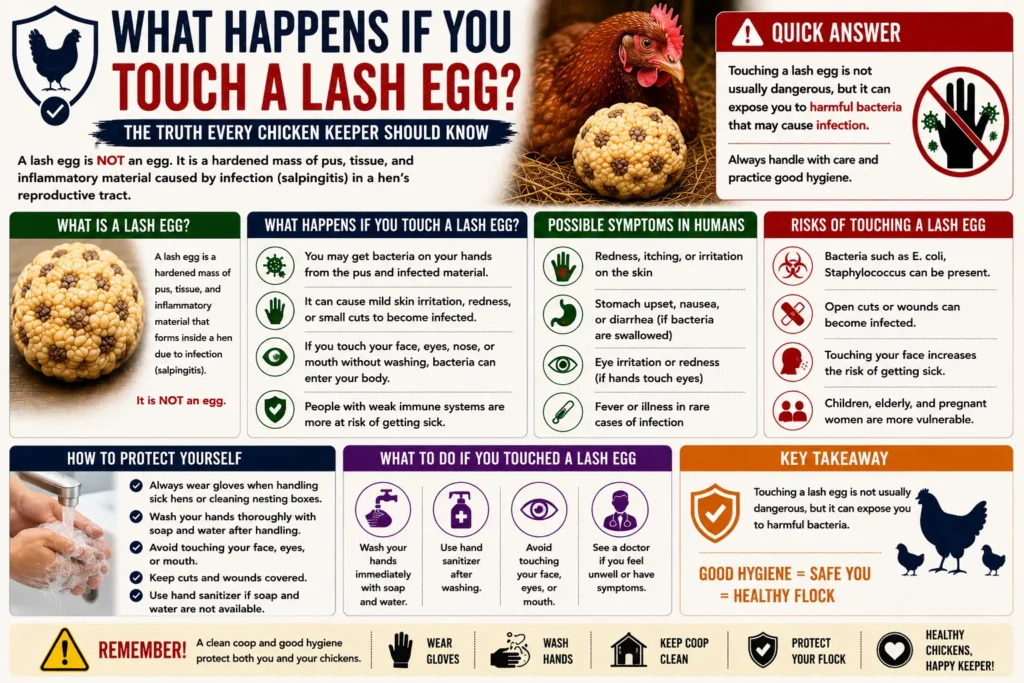
A lash egg is a mass of infected material a hen expels from an inflamed oviduct. When blood shows up in it, that usually means the infection has caused enough tissue damage or irritation to cause bleeding, which is a sign this needs veterinary attention sooner rather than later.
Table of Contents
What Is a Lash Egg, and Why Does Blood Appear in Some Cases?
A lash egg forms when salpingitis, an infection or inflammation of the oviduct, produces enough caseous exudate (a thick, cheese-like inflammatory material) for the hen’s body to expel it. According to the Merck Veterinary Manual, salpingitis is one of the leading causes of reproductive illness in laying hens.
Blood can appear in this material for a few reasons, most of which point to more significant tissue involvement than a straightforward lash egg without blood.
Read More:https://lashegg.com/lash-egg-in-ducks/
Common Reasons for a Bloody Lash Egg
- More advanced or aggressive infection, causing damage to blood vessels within the inflamed tissue
- Tissue erosion, where prolonged inflammation has worn away or damaged the oviduct lining
- Concurrent trauma, such as minor injury during straining or passage of the mass
- A more severe underlying cause, such as a more invasive bacterial strain or a co-occurring viral infection
- Chronic, repeated salpingitis, where ongoing tissue damage accumulates over multiple episodes
Is a Bloody Lash Egg Always More Serious Than a Regular One?
Generally, yes, though “more serious” doesn’t automatically mean an emergency in every case. Blood is a sign of active tissue damage, and it tends to correlate with more advanced or more aggressive infection compared to lash eggs without visible blood. That’s exactly why a bloody lash egg deserves a prompt vet visit rather than a wait-and-see approach.
Quick Answer: A bloody lash egg usually means the underlying infection has caused more tissue damage than a typical lash egg. It’s a stronger signal that veterinary care is needed soon, not something to monitor from a distance for long.
Bloody Lash Egg vs. Regular Lash Egg: Key Differences
| Feature | Regular Lash Egg | Bloody Lash Egg |
| Appearance | Waxy, layered, yellowish or tan | Similar, but streaked or mixed with visible blood |
| What it suggests | Active salpingitis (oviduct infection) | Salpingitis with additional tissue damage or bleeding |
| Severity | Serious, needs vet attention | Often more advanced; needs prompt vet attention |
| Associated symptoms | Reduced appetite, lethargy, drop in laying | Same, often with more pronounced lethargy or abdominal discomfort |
| Urgency | Vet visit recommended within a day or two | Vet visit recommended as soon as possible |
Symptoms That Often Come With a Bloody Lash Egg
- Reduced or absent appetite
- Noticeable lethargy or reluctance to move
- A pale, dull, or droopy comb
- A swollen or firm lower abdomen
- A more significant drop in egg-laying than seen with typical salpingitis
- Visible discomfort or straining around the vent
When to Call a Vet
Call a poultry-experienced veterinarian as soon as possible if your hen passes a bloody lash egg. This is a stronger warning sign than a standard lash egg, and it’s worth treating with more urgency, especially if she also shows lethargy, appetite loss, or a swollen abdomen. Don’t wait several days to see if things improve on their own.
How Vets Evaluate a Bloody Lash Egg
- Physical exam, checking abdominal condition, comb color, hydration, and overall alertness
- History review, including how many lash eggs have appeared, whether blood has shown up before, and recent behavior changes
- Imaging, such as radiographs or ultrasound, to assess the extent of oviduct involvement
- Lab testing, including bloodwork or culturing the discharge to identify the bacteria involved and check for signs of more widespread infection
- Assessment of blood loss, since ongoing or repeated bloody lash eggs can contribute to anemia in more severe cases
Expert Tip: If you notice blood in a lash egg, take a clear photo before disposing of it and note how much blood was present compared to the tissue itself. This detail helps a vet judge severity more accurately than a verbal description alone.
Treatment Options
| Treatment Approach | What It Involves | When It’s Used |
| Antibiotics | Prescribed based on suspected or confirmed bacterial cause | Most cases with an active infection |
| Supportive care | Fluids, nutrition support, stress reduction | Especially important if blood loss or lethargy is significant |
| Anti-inflammatory or pain management | Vet-prescribed medication to ease discomfort | Cases with visible pain or significant inflammation |
| Surgery | Oviduct-related surgery in select cases | Severe, recurrent, or non-responsive cases |
| Euthanasia | A humane option discussed with a vet | Advanced, chronic cases with poor quality of life |
There’s no reliable home remedy for a bloody lash egg. Given the added tissue damage involved, a vet’s evaluation matters even more here than with a standard lash egg, since blood loss and infection severity both need to be assessed directly.
What to Do If You Find a Bloody Lash Egg
- Remove and dispose of it safely, away from pets and other flock members.
- Photograph it before disposal, noting the amount and appearance of blood.
- Isolate the hen to reduce stress and make close monitoring easier.
- Check for other symptoms, including appetite, comb color, and activity level.
- Contact a vet promptly, rather than waiting to see if she improves on her own.
- Keep her warm, calm, and hydrated while you arrange veterinary care.
Warning: Never attempt to treat a bloody lash egg with home remedies alone, and never feed it to pets. The blood signals active tissue damage that needs a professional assessment, and the material itself remains infected tissue, not food.
Common Mistakes Chicken Keepers Make
- Assuming a little blood isn’t a big deal. Even a small amount of blood in a lash egg suggests more tissue involvement than a typical case.
- Waiting to see if it happens again before calling a vet. A bloody lash egg is a stronger signal than a regular one and deserves quicker action.
- Focusing only on the blood and missing other symptoms. Appetite, comb color, and energy level all matter for a full picture of severity.
- Delaying care because the hen seems otherwise active. Some hens mask discomfort well even with significant internal tissue damage.
Did You Know?
Chickens are prey animals, and their instinct to hide illness can mean a hen with a bloody lash egg still looks reasonably alert and active, even when the underlying infection is more advanced than it appears. That’s part of why the presence of blood itself, not just how the hen is behaving, should raise your level of concern.
Recovery and Outlook
| Scenario | Typical Outlook |
| Bloody lash egg, hen alert with mild symptoms, treated promptly | Reasonable chance of improvement with veterinary care |
| Bloody lash egg with lethargy, appetite loss, or repeated episodes | More advanced; requires more intensive veterinary management |
| Bloody lash egg left untreated | Risk of worsening infection, blood loss, or chronic illness |
Because a bloody lash egg often reflects a more advanced stage of salpingitis, recovery timelines and outcomes vary more widely than with a standard lash egg. Prompt veterinary care gives the hen the best chance at a good outcome.
Preventing Salpingitis and Reducing the Risk of a Bloody Lash Egg
- Vaccinate against infectious bronchitis where it’s a known regional risk, based on your vet’s guidance
- Feed a complete, age-appropriate layer diet to support immune and reproductive health
- Reduce flock stress through consistent routines, adequate space, and stable social groups
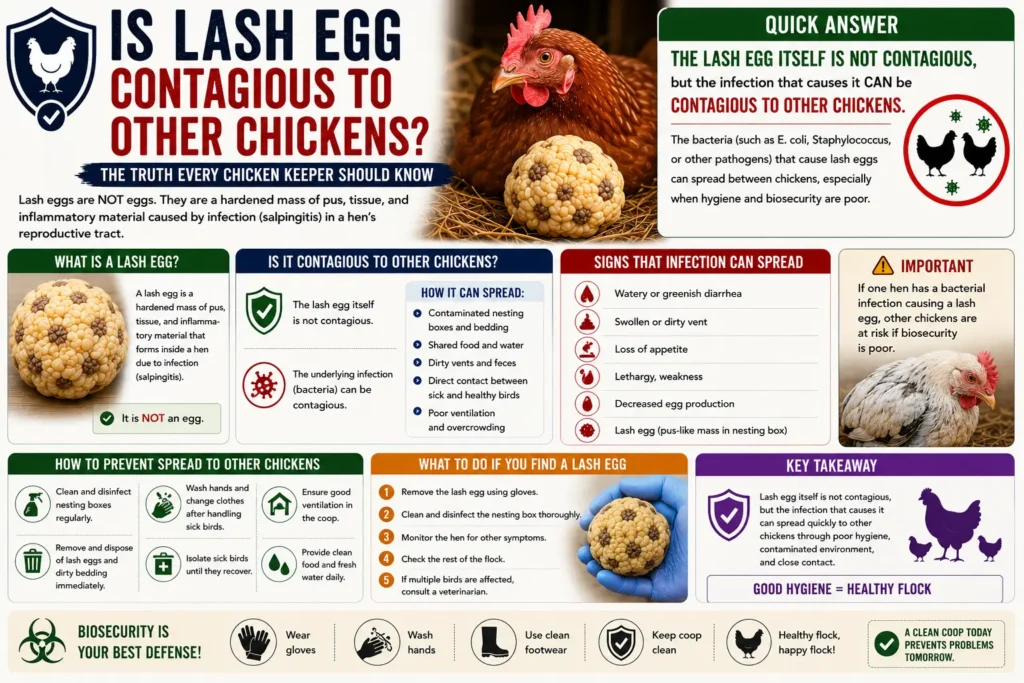
- Maintain good coop hygiene to lower bacterial exposure
- Address any lash egg promptly, rather than waiting for symptoms to escalate to the point of visible blood
- Monitor older hens more closely, since age is a known risk factor for reproductive tract disease
Frequently Asked Questions
What does a bloody lash egg mean? It usually means the underlying oviduct infection, salpingitis, has caused enough tissue damage to produce visible bleeding, which often points to a more advanced case than a typical lash egg.
Is a bloody lash egg an emergency? It’s not always an immediate life-threatening emergency the way egg binding can be, but it’s a stronger warning sign than a regular lash egg and deserves prompt veterinary attention rather than a wait-and-see approach.
Can a bloody lash egg happen without any other symptoms? It’s possible, especially early on, since hens often hide illness well. Even without other visible symptoms, the presence of blood is enough reason to seek veterinary care.
What’s the difference between blood in a lash egg and blood in a normal egg? Blood in a normal egg is often a minor, common occurrence tied to the shell gland or a small blood vessel rupture during formation, and it’s usually not concerning on its own. Blood in a lash egg reflects active tissue damage tied to infection and carries more weight as a warning sign.
Can diet or supplements fix a bloody lash egg? No. This requires veterinary evaluation and, in most cases, treatment such as antibiotics. Diet supports overall prevention, but it can’t resolve an active infection causing tissue damage.
Should I isolate a hen after finding a bloody lash egg? Yes. Isolating her reduces stress, makes it easier to monitor her closely, and limits the chance that an underlying contagious cause, if present, spreads to other hens.
How urgently should I get my hen to a vet after a bloody lash egg? As soon as reasonably possible, ideally within the same day or the next, especially if she also shows lethargy, appetite loss, or a swollen abdomen.
Final Thoughts
A bloody lash egg is your hen’s body sending a louder signal than a typical lash egg, one that usually points to more advanced tissue damage from an ongoing infection. Don’t wait to see if things improve on their own. Isolate the hen, watch her closely, and get her to a vet as soon as you reasonably can. Early, decisive action gives her the best chance at recovering fully from what’s happening inside her.