Red Lash Egg: What It Means When a Chicken Passes One

A red lash egg can be alarming for any chicken keeper. If your hen suddenly lays a strange red, bloody, rubbery, or tissue-like mass instead of a normal egg, it may indicate a serious reproductive tract problem rather than a true egg.
In most cases, a red lash egg is not an egg at all. It is a collection of inflammatory tissue, pus, blood, and cellular debris that forms inside the oviduct, often due to a condition called salpingitis. While some hens recover, others may require veterinary attention depending on the severity of the underlying disease.
Understanding what causes a red lash egg, what it looks like, and how to respond can help protect both the affected hen and the rest of your flock.
Table of Contents
Quick Answer: What Is a Red Lash Egg?
Quick Answer
A red lash egg is an abnormal mass made of blood, pus, tissue, and inflammatory material that forms inside a hen’s reproductive tract. The red color typically comes from bleeding or damaged tissue within the oviduct. It is commonly associated with salpingitis, internal laying, or severe reproductive infections.
Read More:https://lashegg.com/bloody-lash-egg/
What Is a Lash Egg?
A lash egg is not a real egg.
Unlike a normal egg that contains a yolk, albumen, shell membranes, and a shell, a lash egg develops when inflammatory material accumulates inside the oviduct.
These masses may contain:
- Pus
- Blood
- Oviduct tissue
- Fibrin
- Cellular debris
- Egg material
- Bacteria
Veterinarians often describe lash eggs as caseous masses because they contain thick, cheese-like inflammatory exudate.
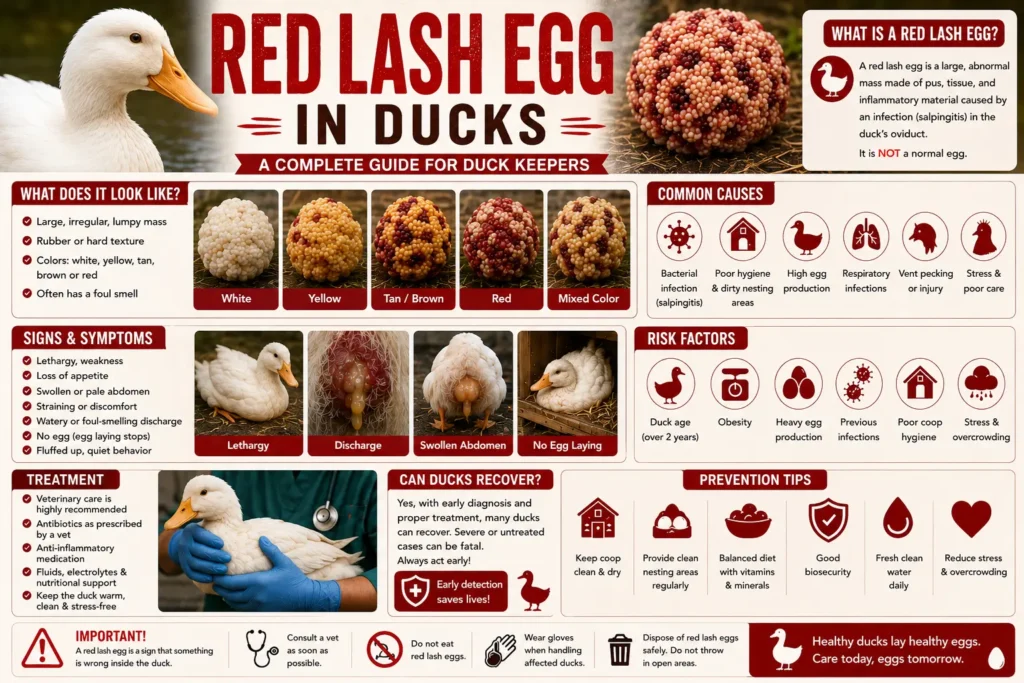
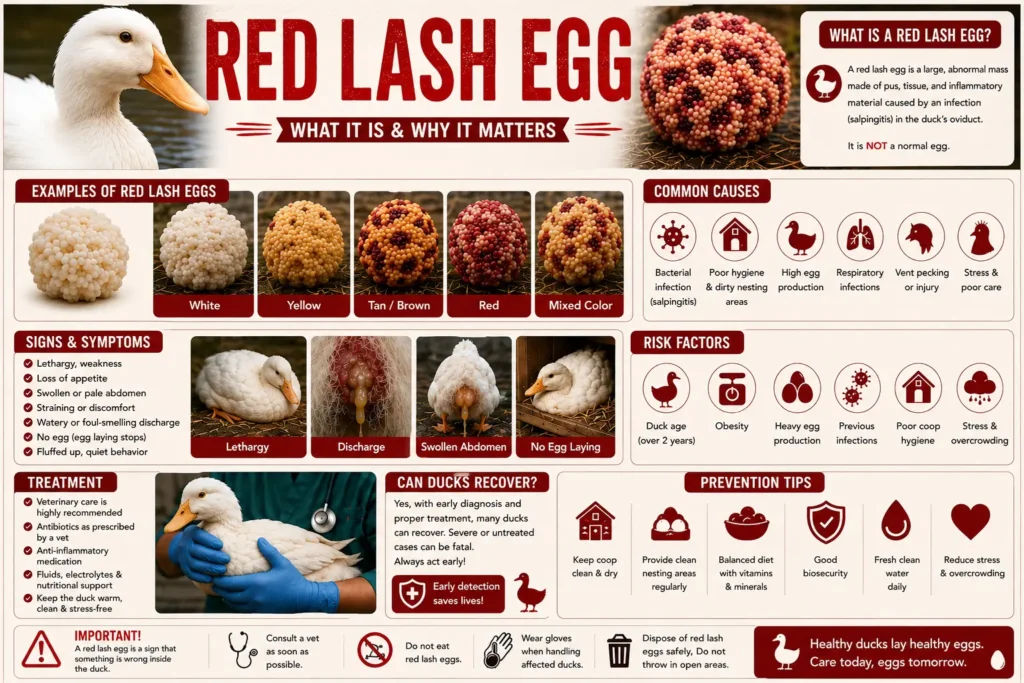
The appearance varies widely. Some are yellow, tan, brown, or white, while others appear red or dark red.
What Does a Red Lash Egg Look Like?
A red lash egg often stands out because of its unusual color and texture.
Common Appearance
| Feature | Description |
| Color | Bright red, dark red, maroon, reddish-brown |
| Texture | Rubbery, fleshy, firm, or cheese-like |
| Shape | Oval, irregular, cylindrical, or egg-shaped |
| Surface | Smooth, wrinkled, layered, or bloody |
| Size | Small marble-sized mass to larger than an egg |
Some poultry keepers mistake a red lash egg for:
- A blood clot
- A ruptured egg
- An organ fragment
- Internal tissue
- A malformed egg
The presence of blood is often what creates the distinctive red coloration.
Red Colored Lash Egg vs Normal Egg
| Feature | Red Colored Lash Egg | Normal Egg |
| Shell | Usually absent | Present |
| Yolk | Usually absent | Present |
| Blood Content | Often significant | Minimal |
| Texture | Rubbery or tissue-like | Smooth shell |
| Cause | Disease process | Normal reproduction |
| Edible | No | Yes |
Why Is a Lash Egg Red?
Blood Vessel Damage
The most common reason for a red appearance is bleeding within the reproductive tract.
Inflammation can damage delicate blood vessels inside the oviduct, causing blood to mix with inflammatory material.
Oviduct Tissue Shedding
In severe reproductive disease, portions of the oviduct lining may detach and become incorporated into the mass.
This tissue often appears dark red or reddish-brown.
Internal Injury
Trauma to the reproductive tract may contribute to blood accumulation and the formation of a red-colored mass.
Advanced Infection
Bacterial infections can trigger extensive inflammation and tissue destruction, resulting in a red colored lash egg containing blood, pus, and necrotic material.
Causes of a Red Lash Egg in Chickens
Salpingitis
Salpingitis is the leading cause of lash eggs.
This condition involves inflammation and infection of the oviduct.
Common bacterial organisms include:
- Escherichia coli (E. coli)
- Salmonella species
- Pasteurella species
- Mycoplasma species
When infection persists, the body produces inflammatory material that may eventually be expelled as a lash egg.
Internal Laying
Internal laying occurs when yolks fail to enter the oviduct properly and are deposited into the abdominal cavity.
This can trigger inflammation and secondary infection.
Egg Yolk Peritonitis
Egg yolk peritonitis develops when egg contents leak into the abdominal cavity.
The resulting inflammation can contribute to reproductive tract disease and lash egg formation.
Reproductive Tract Tumors
Although less common, tumors can damage reproductive tissues and lead to abnormal masses.
Chronic Reproductive Disease
Older laying hens often experience age-related reproductive problems that increase the likelihood of lash eggs.
Risk Factors That Increase the Chances of a Red Lash Egg
Several factors can contribute to reproductive infections and inflammation.
Age
Hens older than two years generally have a higher risk.
High Egg Production
Commercial hybrids bred for intense laying may experience greater reproductive stress.
Obesity
Excess body weight can negatively affect reproductive health.
Poor Nesting Conditions
Dirty nesting boxes may increase exposure to harmful bacteria.
Vent Injuries
Vent pecking and injuries create entry points for infection.
Respiratory Disease
Certain respiratory pathogens can spread and affect the reproductive tract.
Symptoms That Often Occur With a Red Lash Egg
A lash egg is often only one sign of a larger health problem.
Common Symptoms
- Reduced egg production
- Soft-shelled eggs
- Misshapen eggs
- Lethargy
- Weight loss
- Poor appetite
- Abdominal swelling
- Penguin-like posture
- Labored breathing
- Dirty vent feathers
- Pale comb and wattles
Warning Signs of Severe Disease
Warning
If a hen is struggling to breathe, cannot stand, has a swollen abdomen, or stops eating, immediate veterinary attention is recommended.
Can a Chicken Recover After Passing a Red Lash Egg?
Yes, some chickens recover.
However, recovery depends largely on the underlying cause.
Better Prognosis
Recovery is more likely when:
- The infection is detected early
- The hen remains active
- Appetite remains normal
- Veterinary treatment begins quickly
Poorer Prognosis
Outcomes tend to be worse when:
- Infection is chronic
- The abdomen is swollen
- Internal laying is severe
- Egg yolk peritonitis develops
- Multiple lash eggs are produced
How Veterinarians Diagnose the Cause
A lash egg alone does not provide a complete diagnosis.
Veterinarians evaluate the bird and determine the underlying condition.
Diagnostic Methods
| Test | Purpose |
| Physical exam | Assess overall health |
| Abdominal palpation | Check swelling and masses |
| Ultrasound | Visualize reproductive tract |
| Radiographs (X-rays) | Detect abnormalities |
| Bacterial culture | Identify infectious organisms |
| Necropsy | Confirm diagnosis after death |
Expert Tip
Expert Tip
If possible, save the abnormal mass in a sealed container and show photographs to your veterinarian. This may help guide diagnosis.
How Is a Red Lash Egg Treated?
Treatment depends entirely on the underlying disease process.
Veterinary Treatment Options
A veterinarian may recommend:
- Antibiotics
- Anti-inflammatory medications
- Supportive care
- Fluid therapy
- Nutritional support
- Hormonal suppression of egg production
- Surgical intervention in rare cases
Treatment Goals
The primary goals are:
- Control infection.
- Reduce inflammation.
- Improve comfort.
- Prevent complications.
Home Care for a Chicken That Passed a Lash Egg
Home care should support veterinary recommendations rather than replace them.
Provide a Clean Environment
Reduce bacterial exposure by:
- Cleaning nesting boxes
- Replacing bedding
- Improving ventilation
Monitor Food and Water Intake
Ensure the bird remains hydrated and continues eating.
Reduce Stress
Stress can weaken immune function.
Consider separating the affected hen if flock members are bullying her.
Observe Daily
Watch for:
- Additional lash eggs
- Reduced appetite
- Swelling
- Changes in droppings
- Difficulty walking
Common Mistakes Chicken Keepers Make
Common Mistakes
- Assuming a lash egg is a normal egg abnormality.
- Ignoring signs of infection.
- Treating without identifying the cause.
- Waiting too long to seek veterinary advice.
- Failing to monitor flock health after the event.
Is a Red Lash Egg Contagious?
The lash egg itself is not contagious.
However, the infection causing it may be associated with bacteria that can spread through the environment.
Biosecurity Measures
- Clean feeders and waterers.
- Practice good coop sanitation.
- Quarantine sick birds when appropriate.
- Avoid introducing new birds without observation periods.
Can Humans Catch Anything From a Lash Egg?
The risk is generally low when proper hygiene is used.
Safe Handling Practices
- Wear disposable gloves.
- Wash hands thoroughly afterward.
- Disinfect surfaces.
- Dispose of the material safely.
Did You Know?
Did You Know?
Many lash eggs contain inflammatory material rather than actual egg contents, which is why they often look completely different from a normal egg.
Should You Eat Eggs From a Hen That Produced a Red Lash Egg?
Many poultry veterinarians recommend caution.
If a hen is experiencing an active reproductive infection, eggs produced during illness are generally not considered ideal for consumption.
Consult a poultry veterinarian for guidance based on the specific diagnosis and treatment plan.
When to Call a Vet About a Red Lash Egg
When to Call a Vet
Contact a veterinarian if:
- The hen passes multiple lash eggs.
- There is obvious blood loss.
- Egg production suddenly stops.
- Abdominal swelling develops.
- The bird becomes lethargic.
- Appetite declines.
- Breathing becomes difficult.
- You suspect salpingitis or internal laying.
Early intervention often improves outcomes.
Preventing Lash Eggs and Reproductive Infections
Prevention focuses on reducing infection risk and supporting reproductive health.
Improve Coop Hygiene
- Remove wet bedding.
- Clean nesting boxes regularly.
- Control moisture.
Support Nutrition
Provide:
- Balanced layer feed
- Adequate calcium
- Clean water
- Proper vitamin supplementation when recommended
Manage Body Condition
Avoid obesity through balanced feeding and exercise opportunities.
Reduce Disease Exposure
Vaccination and flock health management programs can reduce certain infectious risks.
Monitor Older Hens
Older birds should be checked regularly for reproductive problems.
Veterinary and Scientific Resources
Information about reproductive disorders in poultry is supported by veterinary references and educational resources from:
- USDA poultry health guidance
- Merck Veterinary Manual
- MSD Veterinary Manual
- University poultry extension programs
- AVMA educational resources
- Peer-reviewed poultry medicine research
These sources consistently identify salpingitis and reproductive tract inflammation as major causes of lash egg formation.
Internal Links to Read on LashEgg.com
Consider linking naturally to related resources:
- What Is a Lash Egg?
- Lash Egg vs Normal Egg
- Lash Egg Symptoms in Chickens
- Salpingitis in Backyard Hens
- Internal Laying Explained
- Egg Yolk Peritonitis Guide
- How to Prevent Lash Eggs
- Lash Egg Treatment Options
- Chicken Reproductive Disorders
- Caring for a Sick Hen
- When to Isolate a Chicken
- Best Diet for Healthy Egg Production
Final Thoughts
A red lash egg is often a sign that something serious is happening inside a hen’s reproductive tract. While the appearance can be frightening, the real concern is the underlying condition causing the mass to form.
Salpingitis, internal laying, egg yolk peritonitis, and other reproductive disorders are among the most common causes. Prompt observation, good flock management, and veterinary evaluation can greatly improve a hen’s chances of recovery.
If your chicken passes a red lash egg, monitor her closely for additional symptoms and seek professional veterinary advice whenever signs of illness persist or worsen.
FAQ
What is a red lash egg?
A red lash egg is an abnormal mass made of blood, inflammatory tissue, pus, and cellular debris expelled from a hen’s reproductive tract. It is usually associated with salpingitis or other reproductive disorders.
Why is my chicken’s lash egg red?
The red color typically comes from blood, damaged tissue, inflammation, or bleeding inside the oviduct.
Is a red colored lash egg a real egg?
No. A red colored lash egg is not a true egg. It lacks the normal structures found in eggs and is instead composed of inflammatory material.
Can chickens survive after passing a red lash egg?
Some chickens recover, especially when the underlying cause is identified and treated early. Others may experience chronic reproductive disease requiring veterinary care.
Is a red lash egg contagious?
The lash egg itself is not contagious, but infections contributing to its formation may spread under poor sanitation conditions.
Should I isolate a chicken that passed a red lash egg?
Isolation may be helpful if the bird is weak, being bullied, or showing signs of infectious disease. Consult a veterinarian for flock-specific recommendations.
What causes repeated lash eggs?
Repeated lash eggs often indicate ongoing reproductive tract disease such as chronic salpingitis, internal laying, or egg yolk peritonitis.
Can stress cause a red lash egg?
Stress alone usually does not cause lash eggs, but it can weaken immune defenses and contribute to conditions that increase reproductive health problems.