Causes of Salpingitis in Chickens: What Actually Triggers It

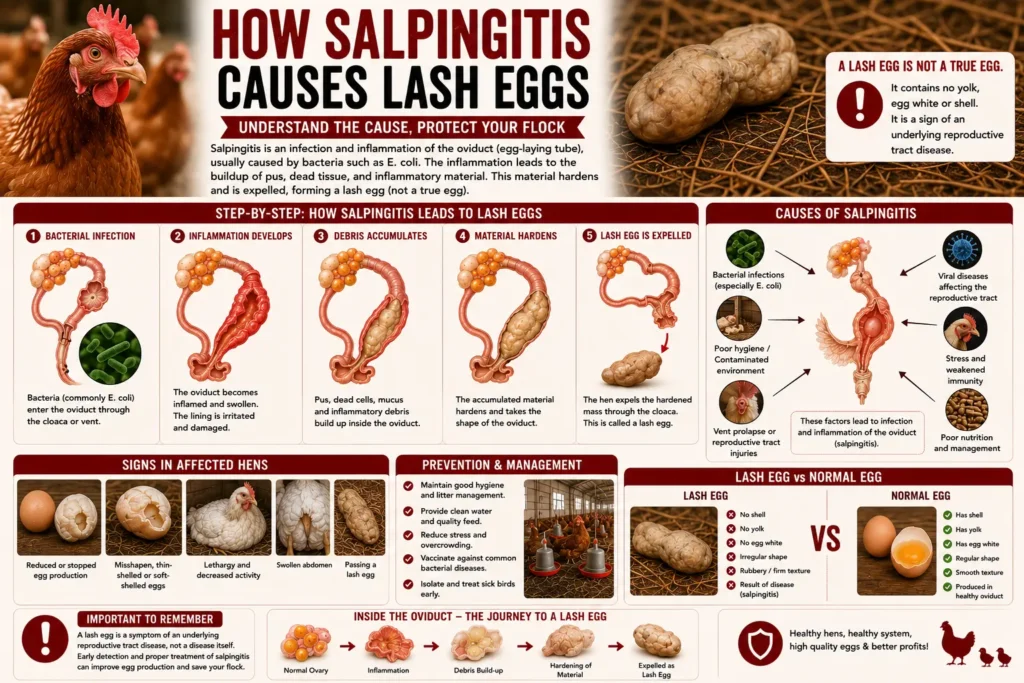
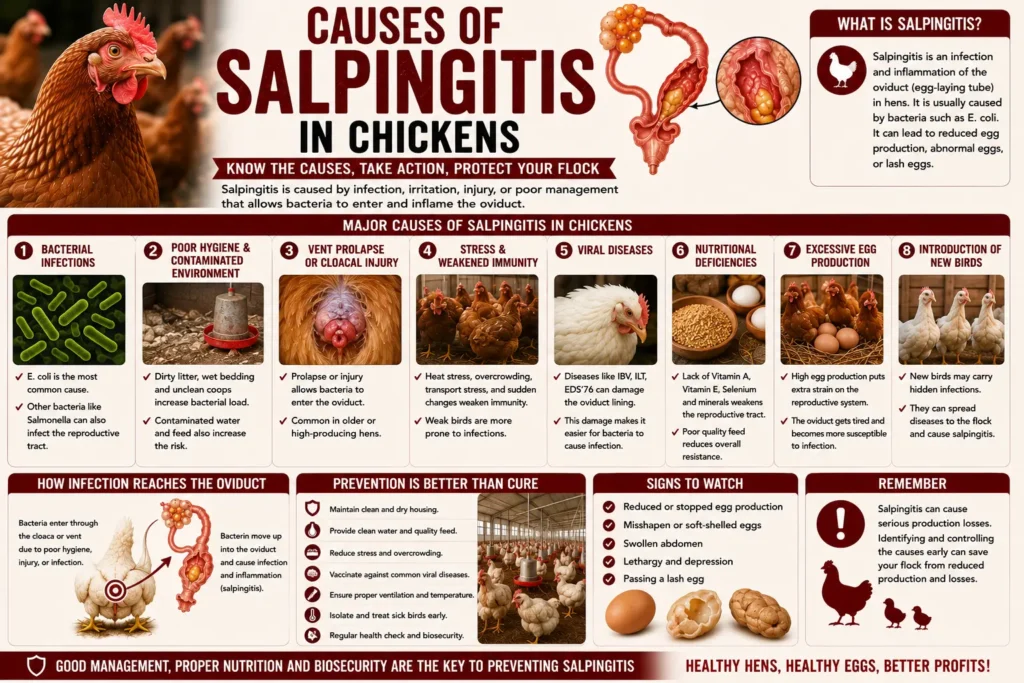
The causes of salpingitis in chickens usually come down to one core problem: bacteria reaching the oviduct and overwhelming the hen’s natural defenses. But that simple explanation hides a lot of contributing factors, from genetics to coop hygiene, that make some hens far more vulnerable than others.
This guide breaks down every known and suspected cause of salpingitis in laying hens, explains how each one contributes to disease, and outlines what flock owners can do to reduce the risk. Understanding these causes is the first step toward preventing a reproductive disease that remains one of the leading causes of death in adult laying hens.
Table of Contents
What Salpingitis Actually Is, Briefly
Salpingitis is inflammation or infection of the oviduct, the tube where a hen’s egg is formed over roughly 24–26 hours. When this tissue becomes infected, egg formation breaks down, sometimes producing a lumpy, layered mass called a lash egg instead of a normal egg. Understanding the causes of salpingitis in chickens starts with understanding how bacteria typically reach this normally protected tissue.
The Primary Cause: Bacterial Infection
Ascending Infection from the Cloaca
The most common root cause is bacteria traveling upward from the cloaca, the shared opening for the reproductive, digestive, and urinary systems in birds, into the oviduct itself. Because the oviduct opens directly into this shared space, it’s constantly exposed to whatever bacteria are present nearby.
Which Bacteria Are Usually Involved?
Research on poultry reproductive disease consistently identifies a handful of bacteria as the main culprits behind this kind of bacterial infection.
| Bacteria | Notes |
| E. coli | Most commonly isolated bacteria in salpingitis cases |
| Salmonella species | Can cause both reproductive and systemic illness |
| Pasteurella multocida | Linked to fowl cholera and secondary oviduct infection |
| Mycoplasma gallisepticum | Often damages tissue first, allowing secondary infection |
| Staphylococcus species | Less common but documented in some cases |
Did You Know? E. coli is naturally present in a healthy hen’s gut and environment in small amounts. Salpingitis usually develops not because the bacteria are unusually dangerous, but because they find an opportunity to enter tissue they don’t normally reach.
Underlying and Contributing Causes
Bacteria alone don’t always cause salpingitis. In most cases, an underlying factor weakens the hen’s defenses or increases her exposure first.
Read More: https://lashegg.com/how-salpingitis-causes-lash-eggs/
1. High Egg Production
Hens that lay eggs frequently undergo more ovulation cycles, and each cycle briefly opens a route for bacteria near the vent to move upward. Commercial hybrid layers, bred for near-daily laying, show this pattern more than slower-laying heritage breeds.
2. Prior Respiratory Disease
Some respiratory infections travel through the body in ways that damage the lining of the oviduct early on. Infectious bronchitis virus is particularly well documented for causing lasting reproductive tract damage in young pullets, even after the initial respiratory illness clears.
3. Mycoplasma Infections
Beyond respiratory symptoms, Mycoplasma gallisepticum and related species can directly affect reproductive tissue, weakening its resistance to secondary bacterial infection later.
4. Age
Hens over two years old face a higher risk, since reproductive tissue naturally becomes less resilient with repeated egg-laying cycles over time.
5. Genetics and Breed
Commercial layer breeds selectively bred for maximum egg output show measurably higher rates of oviduct disease in flock health studies compared to slower-laying or heritage breeds.
6. Poor Coop and Nest Box Hygiene
Dirty, damp bedding increases the bacterial load around the vent area, directly raising the odds of an ascending infection reaching the oviduct.
7. Egg Yolk Peritonitis
When a released yolk fails to enter the oviduct properly and falls into the abdominal cavity, the resulting inflammation frequently accompanies or contributes to salpingitis, since both conditions involve breakdown of normal reproductive function.
8. Nutritional Deficiencies
Inadequate protein, vitamin, or mineral intake can weaken a hen’s general immune response, making it harder for her body to clear a minor bacterial presence before it becomes a full infection.
9. Environmental and Physical Stress
Overcrowding, predator stress, extreme temperatures, and abrupt changes in routine all raise stress hormone levels, which can suppress immune function and make infection more likely.
10. Concurrent Illness
Hens already fighting another illness, parasite load, or systemic infection have fewer immune resources available to prevent bacteria from establishing themselves in the oviduct. This is especially true for internal parasites, which can quietly drain a hen’s condition over weeks before any obvious symptoms appear, leaving her more vulnerable to a secondary reproductive infection during that window.
11. Water Quality
Contaminated or poorly maintained water sources can introduce additional bacteria into a hen’s system and, over time, add to her overall bacterial exposure. Clean, fresh water isn’t just a comfort factor — it directly affects how much bacterial load a hen’s immune system has to manage day to day.
The Role of the Immune System in Preventing Infection
A hen’s immune system is normally very effective at keeping small numbers of bacteria near the vent from ever becoming a problem. Local immune defenses in the cloaca and lower reproductive tract act as a first line of protection, filtering out most bacteria before they can travel further.
Salpingitis develops when this defense is overwhelmed, either by a larger bacterial load than usual or by a weakened immune response. This is why so many of the causes of salpingitis in chickens listed above — stress, poor nutrition, age, and prior illness — share one thing in common: they all reduce the immune system’s ability to do its normal job.
Secondary Infections
In some cases, an initial mild infection triggers a secondary, more serious bacterial infection once the oviduct tissue is already inflamed and vulnerable. This is one reason mild reproductive symptoms, like occasional soft-shelled eggs, shouldn’t be dismissed if they continue for more than a few days, since they can sometimes signal an oviduct already under stress.
Warning: A hen recovering from any illness, including respiratory infections, is at higher short-term risk for developing salpingitis. Extra attention to her hygiene, nutrition, and stress levels during recovery can help lower this risk.
How These Causes Interact
Salpingitis in chickens rarely has a single, isolated cause. Most cases involve a combination — for example, an older, high-producing hen kept in a damp coop with heavy bacterial load is at far higher risk than a young hen in a clean, low-stress environment, even though both are technically exposed to the same bacteria in their environment.
Quick Answer: The causes of salpingitis in chickens are almost always a combination of bacterial exposure (usually E. coli) and an underlying factor — like age, high egg production, prior respiratory disease, or poor hygiene — that weakens the oviduct’s natural defenses.
Comparing Common Contributing Factors
| Factor | How It Increases Risk | Most Affected Hens |
| High egg production | More ovulation cycles, more exposure | Commercial hybrid layers |
| Prior respiratory illness | Damages oviduct lining early | Young pullets recovering from illness |
| Poor hygiene | Raises bacterial load near vent | Any flock with dirty nest boxes |
| Age | Tissue resilience declines | Hens over 2 years old |
| Nutritional deficiency | Weakens general immune defense | Poorly fed or unbalanced-diet flocks |
| Stress | Suppresses immune function | Overcrowded or predator-exposed flocks |
Signs That Suggest a Cause-Related Pattern
Sometimes the cause behind a specific case becomes clearer by looking at the pattern of symptoms across a flock.
- Multiple hens affected around the same time often points to a shared cause, like a respiratory outbreak or contaminated environment.
- Only older hens affected often points to age-related tissue changes as a contributing factor.
- A single hen affected in an otherwise healthy flock more often points to an individual factor, like that hen’s own high production rate or a localized hygiene issue.
Expert Tip: Keeping simple flock records — age, breed, laying rate, and any illness history — makes it much easier for a veterinarian to identify likely contributing causes if salpingitis develops later.
Bacterial Infection vs. Other Reproductive Disease Triggers
Not every reproductive disease in hens starts with bacteria. It helps to see how salpingitis compares to other common triggers of reproductive trouble.
| Condition | Primary Trigger | Bacterial Involvement? |
| Salpingitis | Ascending bacterial infection | Yes, primary cause |
| Egg Yolk Peritonitis | Yolk misplacement into abdomen | Often secondary, not primary |
| Egg Binding | Physical obstruction (size, calcium) | No, usually mechanical |
| Prolapse | Tissue strain during laying | Can lead to secondary infection |
| Soft-Shelled Eggs | Nutritional or hormonal | No, usually not bacterial |
Can Salpingitis Be Caused by Something Other Than Infection?
While bacterial infection is by far the leading cause, a small number of cases involve inflammation without a clearly identified bacterial trigger, sometimes linked to chronic irritation, prior physical trauma to the oviduct, or underlying reproductive tract abnormalities. These cases are less common and typically require veterinary diagnostics to fully understand.
When to Call a Vet: If a hen shows repeated signs of reproductive illness — swelling, lash eggs, reduced laying, or lethargy — a veterinarian can help identify the likely cause and rule out less common triggers through physical exam, imaging, or lab testing.
Reducing the Causes of Salpingitis in Chickens
Improve Hygiene
- Clean nest boxes and bedding on a regular schedule
- Keep the coop dry to reduce bacterial growth
- Provide enough nest boxes to prevent overcrowded, soiled bedding
Manage Nutrition
- Feed a complete, balanced layer ration
- Provide consistent access to clean water
- Avoid abrupt feed changes that stress the digestive and immune systems
Reduce Stress
- Avoid overcrowding
- Minimize predator exposure and loud disturbances
- Introduce new birds gradually, with a quarantine period first
Monitor and Prevent Illness
- Keep vaccinations current for respiratory diseases linked to later oviduct damage
- Quarantine sick or new birds promptly
- Watch for early signs like soft-shelled eggs or reduced laying, which can signal developing reproductive trouble
Step-by-Step: Lowering Flock-Wide Risk
- Assess current coop hygiene and fix any damp or overcrowded areas.
- Review the flock’s diet against layer feed nutritional standards.
- Identify and separate any hens showing early respiratory or reproductive symptoms.
- Reduce known stressors, like overcrowding or predator access.
- Keep ongoing records of egg production to catch subtle declines early.
Common Mistakes Owners Make
- Assuming salpingitis only affects “unlucky” hens rather than looking at hygiene and management
- Ignoring mild respiratory symptoms because they seem to clear up on their own
- Overcrowding coops without realizing the stress impact on reproductive health
- Not adjusting management as hens age past their peak laying years
- Treating a suspected case without ever addressing the underlying contributing cause
FAQ
Q: What are the main causes of salpingitis in chickens? The main causes of salpingitis in chickens are bacterial infection — most often from E. coli — combined with contributing factors like high egg production, age, prior respiratory illness, poor hygiene, and stress.
Q: Is salpingitis always caused by a bacterial infection? Bacterial infection is the leading cause in the large majority of cases, though a small number of cases involve inflammation from other triggers, such as prior tissue trauma, which a veterinarian can help identify.
Q: Can stress alone cause salpingitis in chickens? Stress alone rarely causes salpingitis directly, but it suppresses immune function, making it easier for bacteria that are already present to establish an infection in the oviduct.
Q: Does diet affect the causes of salpingitis in chickens? Yes. Poor nutrition weakens a hen’s general immune defenses, which can make it harder for her body to clear a minor bacterial presence before it develops into a full infection.
Q: Are certain chicken breeds more prone to salpingitis? Yes. Commercial hybrid layers bred for high, consistent egg production show higher documented rates of oviduct disease compared to slower-laying heritage breeds.
Q: Can a respiratory infection lead to salpingitis later? Yes. Some respiratory infections, including infectious bronchitis virus, can damage the oviduct lining in young pullets, creating a vulnerability that shows up as salpingitis months or years afterward.
Q: How can I reduce the risk of salpingitis in my flock? Good nest box hygiene, balanced nutrition, reduced overcrowding, and prompt attention to respiratory illness all help lower the overall risk of reproductive disease in a laying flock.