What Bacteria Cause Salpingitis in Laying Hens?

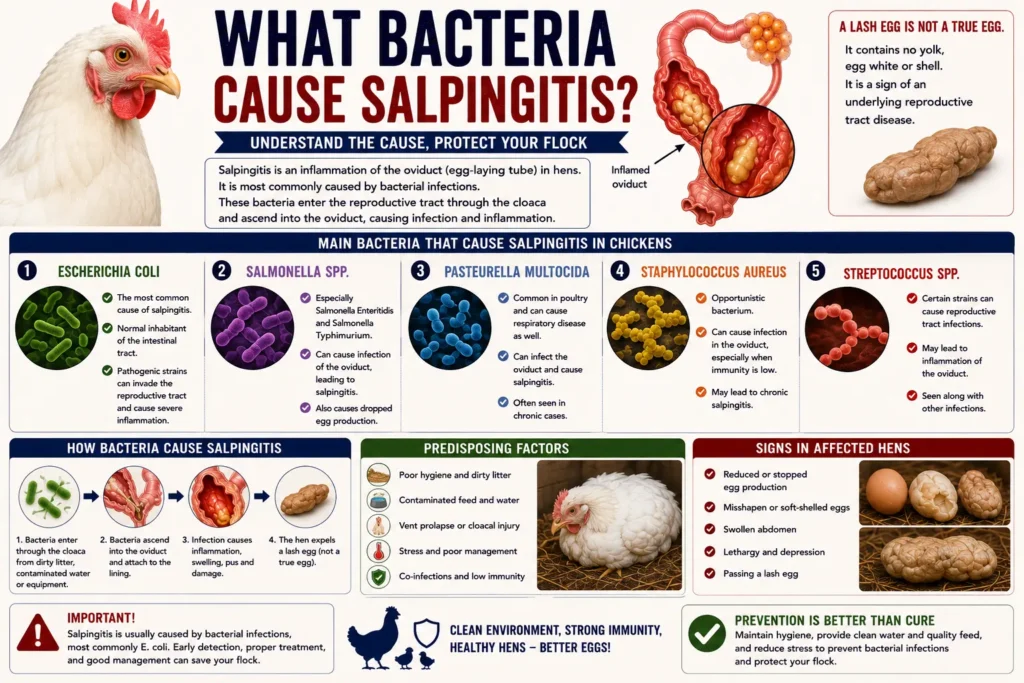
What bacteria cause salpingitis is one of the first questions flock owners ask once a vet mentions this diagnosis. The short answer is that several bacteria can trigger it, but E. coli is by far the most common culprit found in infected oviducts, followed by Salmonella and a handful of other species.
This guide walks through each bacteria linked to salpingitis, how they typically reach the oviduct, and why identifying the specific bacteria matters for effective treatment. Understanding the biology behind this reproductive disease helps flock owners respond faster and make better treatment decisions with their veterinarian.
Table of Contents
Why Bacteria Are the Leading Cause of Salpingitis
Salpingitis is inflammation or infection of the oviduct, the tube where a hen’s egg is formed. In the large majority of documented cases, this inflammation starts with a bacterial infection rather than a virus, fungus, or unrelated inflammatory process. The oviduct opens directly into the cloaca, the shared exit for the digestive, urinary, and reproductive systems in birds, which gives bacteria a direct, short pathway to reach reproductive tissue.
Ascending Infection: The Main Route
Most cases begin as an ascending infection, meaning bacteria travel upward from the cloaca and lower reproductive tract into the oviduct itself, rather than arriving through the bloodstream. This is why hygiene and vent-area cleanliness play such a large role in prevention.
The Main Bacteria That Cause Salpingitis
1. E. coli (Escherichia coli)
E. coli is consistently identified as the most frequently isolated bacteria in cases of salpingitis in laying hens, according to poultry pathology research. It’s a normal inhabitant of the intestinal tract and environment in small amounts, but given the chance to enter the oviduct, it can trigger significant inflammation and infection.
Why E. coli Is So Common: Because E. coli is everywhere in a coop environment — in droppings, dust, and damp bedding — hens are constantly exposed to small amounts. Salpingitis develops less because the bacteria itself is unusual and more because it finds an opportunity, often linked to stress, age, or hygiene issues.
Read More:https://lashegg.com/causes-of-salpingitis-in-chickens/
2. Salmonella Species
Several Salmonella species, including Salmonella enteritidis, have been linked to reproductive tract infections in hens. Unlike E. coli, Salmonella infections can sometimes also affect internal organs more broadly and, in some strains, carry food safety implications for eggs.
3. Staphylococcus Species
Staphylococcus bacteria are documented less frequently than E. coli or Salmonella but do appear in some salpingitis cases, sometimes as a secondary infection after the oviduct lining is already compromised.
4. Pasteurella multocida
This bacteria is best known for causing fowl cholera, a serious systemic disease in poultry. In some cases, it can also settle in the oviduct and contribute to salpingitis, particularly in flocks already dealing with a fowl cholera outbreak.
5. Mycoplasma gallisepticum
While Mycoplasma is more commonly associated with chronic respiratory disease in poultry, it can also affect reproductive tissue directly or weaken the oviduct lining, making it more vulnerable to secondary bacterial infection from E. coli or other species.
6. Other Less Common Bacteria
Occasional cases involve other opportunistic bacteria, particularly in hens with an already weakened immune system or an existing wound or irritation near the vent.
Comparing the Bacteria Behind Salpingitis
| Bacteria | How Common | Typical Route | Notes |
| E. coli | Most common | Ascending from cloaca | Normally present in low numbers; opportunistic |
| Salmonella | Fairly common | Ascending or systemic | Some strains carry food safety concerns |
| Staphylococcus | Less common | Secondary infection | Often follows existing tissue damage |
| Pasteurella multocida | Uncommon | Systemic (fowl cholera) | Linked to broader flock outbreaks |
| Mycoplasma gallisepticum | Indirect contributor | Respiratory/reproductive | Weakens tissue, enables secondary infection |
Did You Know? Culturing the exact bacteria involved isn’t just academic — it directly affects which antibiotic is likely to work, since different bacteria respond differently to different drug classes.
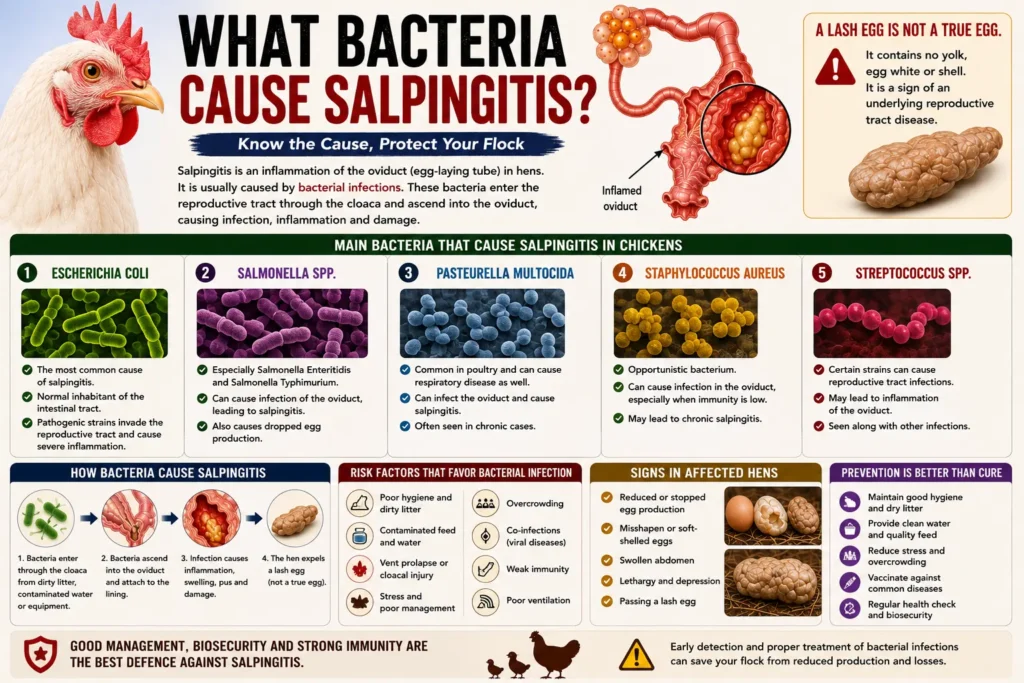
How These Bacteria Actually Infect the Oviduct
Step 1: Bacterial Exposure Near the Vent
Bacteria like E. coli are present in droppings, dust, and damp bedding near the vent area at essentially all times in a normal coop environment.
Step 2: An Opportunity Arises
A weakened immune system, a recent respiratory infection, high production stress, or simple age-related tissue changes create a window where bacteria can move past the body’s normal defenses.
Step 3: Bacteria Travel Upward
Bacteria travel from the cloaca into the vagina and further up the oviduct, an ascending infection pathway that’s well documented in poultry pathology literature.
Step 4: Infection Establishes and Inflames Tissue
Once established, the bacteria trigger an immune response, causing inflammation, pus formation, and disruption of normal egg-forming layers — sometimes resulting in a lash egg.
Quick Answer: What bacteria cause salpingitis most often is E. coli, entering the oviduct through an ascending infection from the cloaca, usually after some other factor — like stress, age, or illness — weakens the hen’s natural defenses.
Does the Type of Bacteria Change the Symptoms?
In general, the visible symptoms of salpingitis — reduced laying, a swollen abdomen, a lash egg, lethargy — look fairly similar regardless of which bacteria is responsible. However, some patterns are worth noting.
- Salmonella-related cases may sometimes involve broader systemic illness beyond just the oviduct
- Pasteurella-related cases often appear alongside other fowl cholera symptoms, like sudden death or swollen wattles
- Mycoplasma-related cases frequently follow a period of respiratory symptoms weeks or months earlier
Because symptoms overlap so heavily, a veterinarian’s diagnostic workup — including culture and sensitivity testing — is the only reliable way to confirm exactly which bacteria is involved in a specific case.
Antibiotic Resistance and Why It Matters
Bacteria that cause salpingitis, particularly E. coli, can develop resistance to certain antibiotics over time, especially in flocks where antibiotics have been used repeatedly without lab confirmation of what’s actually being treated. This is a growing concern across poultry medicine generally, not just in cases of reproductive infection.
What Resistance Means for Your Flock
When bacteria become resistant to a drug, that antibiotic stops working effectively against future infections, even in a different hen. This is one of the strongest arguments for culture and sensitivity testing whenever it’s accessible, rather than defaulting to the same antibiotic every time a hen shows symptoms.
How Veterinarians Approach This
Many veterinarians reserve certain antibiotic classes for confirmed, resistant infections and use narrower-spectrum options first when possible. Following a vet’s specific dosing and duration instructions, rather than stopping early once symptoms improve, also helps reduce the chance of partially treated bacteria developing resistance.
Warning: Stopping antibiotic treatment early, even if a hen appears to be feeling better, can allow surviving bacteria to develop resistance and cause a more difficult-to-treat relapse later.
Bacterial Salpingitis in Backyard vs. Commercial Flocks
Backyard flocks and commercial operations both deal with the same core group of bacteria, but the risk factors differ somewhat between the two settings. Backyard flocks tend to see more variation in hygiene and stress management from one coop to the next, while commercial operations face higher bird density, which can increase how quickly bacteria spread through a shared environment if hygiene protocols slip.
University extension poultry programs and veterinary researchers studying both settings consistently point to the same core prevention strategies: reducing bacterial load in the environment, supporting immune health through nutrition, and addressing respiratory illness early, regardless of flock size.
Diagnosis: Identifying the Specific Bacteria
Why Identification Matters
Different bacteria respond to different antibiotics. Treating a Salmonella infection with an antibiotic that only works well against Staphylococcus, for example, wastes valuable time while the infection continues to progress.
Diagnostic Steps
- Physical exam — assessing abdominal swelling and general condition
- Culture and sensitivity testing — collecting fluid or discharge to grow and identify the exact bacteria, then testing which antibiotics are effective against it
- Bloodwork — checking white blood cell counts and general health markers
- Radiographs or ultrasound — visualizing internal changes in the oviduct
- Necropsy — in cases of death, examining the oviduct directly, sometimes alongside tissue culture, to confirm the responsible bacteria
When to Call a Vet: If a hen shows signs of salpingitis — reduced laying, a lash egg, abdominal swelling, or lethargy — a veterinarian can run diagnostic testing to identify the exact bacteria involved and select the most effective treatment, rather than guessing.
Treatment Based on the Bacteria Involved
Why Guesswork Antibiotics Are Risky
Warning: Using a random over-the-counter antibiotic without knowing which bacteria is present can fail to clear the infection, allow it to worsen, and contribute to antibiotic resistance in the flock’s bacterial environment over time.
The Ideal Treatment Process
- Veterinary exam and sample collection
- Culture and sensitivity testing to identify the bacteria and effective drugs
- Targeted antibiotic treatment based on those results
- Supportive care — fluids, a calm environment, and monitoring
- Follow-up evaluation to confirm the infection has cleared
Supportive Home Care
- Isolate the affected hen to reduce stress and monitor her closely
- Ensure constant access to clean food and water
- Keep her in a quiet, low-stress space during recovery
- Track symptoms daily and report changes to your veterinarian
Expert Tip
If culture testing isn’t accessible in your area, ask your veterinarian about broad-spectrum antibiotic options that are effective against the most common bacteria linked to salpingitis, such as E. coli, while still monitoring closely for improvement.
Preventing Bacterial Salpingitis
Reduce Bacterial Exposure
- Clean nest boxes and bedding regularly to lower bacterial load near the vent
- Keep the coop dry, since damp conditions favor bacterial growth
- Provide adequate nest box space so hens aren’t standing in soiled bedding
Support Immune Function
- Feed a complete, balanced layer ration
- Provide constant access to clean water
- Minimize overcrowding and unnecessary stress
Address Respiratory Health Early
- Watch for early signs of respiratory illness, since conditions linked to Mycoplasma gallisepticum can set the stage for later reproductive infection
- Keep vaccination status current where recommended by a poultry veterinarian
- Quarantine new or sick birds before introducing them to the main flock
Common Mistakes Owners Make
- Assuming all salpingitis cases involve the same bacteria and require the same treatment
- Skipping culture testing when it’s available, leading to ineffective treatment
- Overlooking early respiratory symptoms that could later contribute to reproductive infection
- Reusing leftover antibiotics from a different illness without veterinary guidance
- Not maintaining consistent nest box hygiene, allowing bacterial load to build up over time
FAQ
Q: What bacteria cause salpingitis most often? E. coli is the bacteria most frequently linked to salpingitis in laying hens, typically entering the oviduct through an ascending infection from the cloaca.
Q: Can Salmonella cause salpingitis in chickens? Yes. Several Salmonella species have been documented as a cause of salpingitis, and some strains also carry broader food safety considerations for eggs.
Q: Is Staphylococcus a common cause of salpingitis? Staphylococcus is a less common cause compared to E. coli and Salmonella, and it often appears as a secondary infection after the oviduct tissue is already compromised by another issue.
Q: How do bacteria that cause salpingitis reach the oviduct? Most bacteria reach the oviduct through an ascending infection, traveling from the cloaca upward into the reproductive tract, rather than through the bloodstream.
Q: Can a respiratory bacteria like Mycoplasma cause salpingitis? Mycoplasma gallisepticum can weaken or damage the oviduct lining, making it more vulnerable to a secondary bacterial infection that then leads to salpingitis.
Q: Do I need to know the exact bacteria before treating salpingitis? Identifying the exact bacteria through culture and sensitivity testing gives the best chance of choosing an effective antibiotic, though a veterinarian may start supportive or broad-spectrum treatment while waiting on results in urgent cases.
Q: Are eggs from a hen with bacterial salpingitis safe to eat? Eggs from other healthy hens in the flock are generally still safe to eat, since salpingitis is an individual bird’s internal infection. A lash egg or any visibly abnormal egg from an affected hen should never be eaten.