Can Stress Cause Salpingitis? Understanding the Real Connection

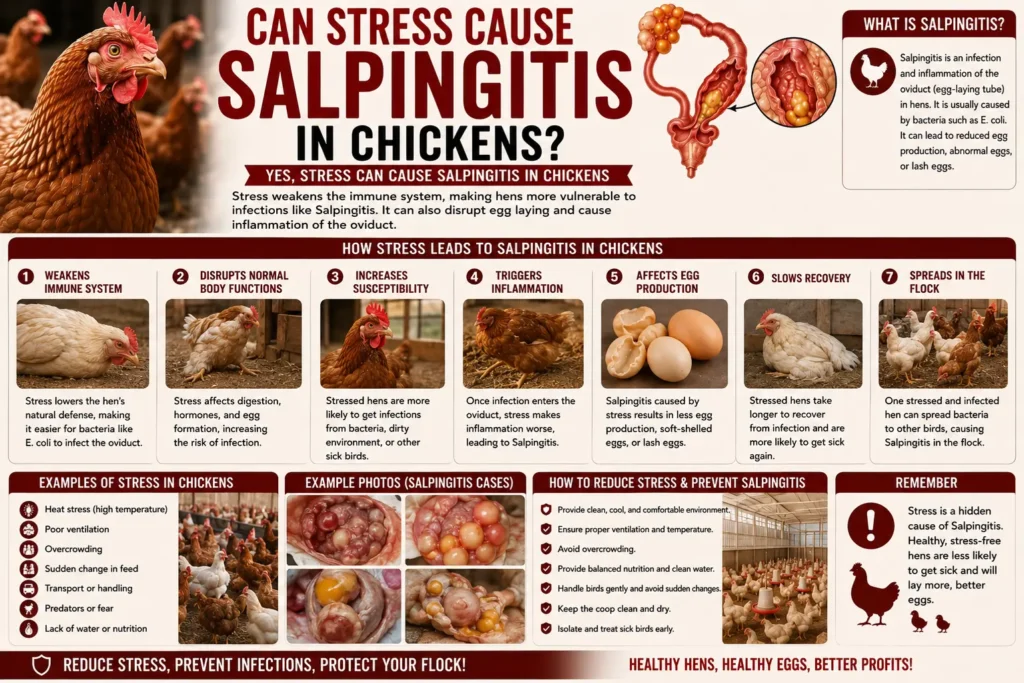
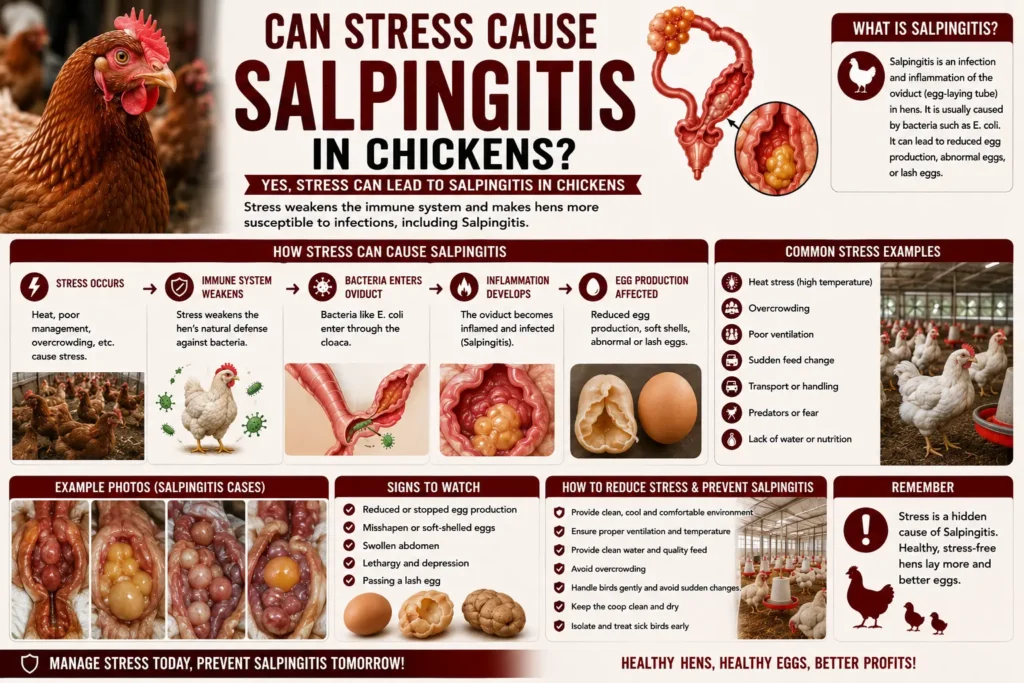
If you keep laying hens, you’ve probably heard that stress causes almost every health problem in the flock — including salpingitis. So can stress cause salpingitis directly, or is something else going on? The honest answer is that stress alone rarely causes salpingitis, but it plays a real supporting role by weakening a hen’s defenses and making infection more likely.
Salpingitis is inflammation or infection of the oviduct, the tube that forms and moves the egg. It’s one of the most common causes of death in backyard and commercial laying hens, and it’s frequently misunderstood. Owners often want a single cause, but the reality is more layered — and understanding that layer by layer is the best way to protect your birds.
Quick Answer: Stress does not directly cause salpingitis. It weakens the immune system and disrupts normal egg-laying rhythm, which creates conditions where bacteria (usually E. coli) can more easily infect the oviduct.
What This Article Covers
This guide walks through the biology of salpingitis, exactly how stress fits into the picture, the warning signs to watch for, how vets diagnose and treat it, and what you can do to lower your flock’s risk. It draws on veterinary poultry medicine sources, including the Merck Veterinary Manual and university extension research, so you get an accurate, non-alarmist picture instead of forum guesswork.
Table of Contents
What Is Salpingitis in Laying Hens?
Salpingitis is inflammation of the oviduct, most often triggered by a bacterial infection that travels up from the cloaca or spreads from the intestines. The oviduct is the long tube where the yolk picks up albumen, shell membranes, and finally a hard shell before the egg is laid.
When this tube becomes infected, it can fill with a thick, cheese-like material called caseous exudate. This material is made of clumped white blood cells and can partially or completely block the oviduct, stopping normal egg passage. Left untreated, it’s frequently fatal.
Read More:https://lashegg.com/what-bacteria-cause-salpingitis/
Why It’s Called “Egg Yolk Peritonitis” in Advanced Cases
When infection is severe, the oviduct can rupture or a yolk can be released into the abdominal cavity instead of moving down the tube. This leads to a related, often more dangerous condition called egg yolk peritonitis, where the abdomen fills with infected fluid and yolk material. Many hens diagnosed with advanced salpingitis are actually dealing with both conditions together.
Can Stress Cause Salpingitis? Breaking Down the Real Mechanism
This is the core question, so it deserves a direct, detailed answer instead of a vague one.
Stress is not an infectious agent. It cannot introduce bacteria into the oviduct on its own. What stress does is change the hen’s internal environment in ways that make an existing bacterial threat far more dangerous.
How Stress Weakens a Hen’s Defenses
- Elevated cortisol suppresses immunity. Chronic stress raises corticosterone (the avian stress hormone), which reduces white blood cell activity and slows the immune response to bacteria already present in the gut or environment.
- Stress disrupts the laying cycle. Irregular ovulation or delayed egg passage gives bacteria more time to travel up the reproductive tract before an egg “flushes” it out.
- Stress reduces gut barrier integrity. A stressed gut lining is more permeable, allowing bacteria like E. coli to translocate more easily toward the reproductive tract.
- Stress changes behavior in ways that increase exposure. Birds under social or environmental stress may spend more time in soiled bedding or near a dirty nest box, increasing bacterial contact near the vent.
Expert Tip: Think of stress as the condition that lowers a hen’s defenses, not the bullet that causes the disease. The bacteria are the bullet. Stress just opens the door.
Types of Stress Linked to Reproductive Health Problems
| Stress Type | Examples | How It Affects the Oviduct |
| Environmental stress | Heat waves, overcrowding, poor ventilation | Raises cortisol, reduces immune response |
| Social stress | Pecking order conflict, new flock introductions | Chronic cortisol elevation over weeks |
| Nutritional stress | Low-quality feed, calcium deficiency | Weakens shell formation, slows egg passage |
| Reproductive stress | Overproduction from high-output breeds, forced molting | Repeated strain on oviduct tissue |
| Predator or noise stress | Dogs, loud machinery, sudden disturbances | Acute cortisol spikes, disrupted laying rhythm |
This is why stress in laying hens is worth taking seriously even when a bird looks otherwise healthy. It’s rarely the sole cause of illness, but it consistently shows up as a contributing factor in flocks with recurring reproductive problems.
What Actually Causes Salpingitis?
Understanding the direct causes helps put stress into proper context.
Bacterial Infection (Primary Cause)
Escherichia coli (E. coli) is the most commonly identified bacteria in salpingitis cases, according to veterinary poultry pathology sources. Other bacteria, including Salmonella species and Mycoplasma, can also be involved, sometimes as secondary invaders after a viral infection.
Ascending Infection from the Cloaca
Because the oviduct opens near the vent, bacteria from droppings or a dirty environment can travel upward, especially if the vent tissue is irritated or the hen is straining.
Prior Reproductive Tract Damage
Egg binding, previous internal laying episodes, or trauma from difficult passage of a soft-shelled or oversized egg can damage oviduct tissue, making it more vulnerable to infection afterward.
Age and Overproduction
Hens bred for extremely high egg output, especially past two to three years of heavy laying, show higher rates of reproductive tract disease. The tissue simply wears down from repeated strain.
Underlying Viral Infections
Respiratory viruses such as infectious bronchitis virus can damage the oviduct lining early in a hen’s life, creating lasting vulnerability that shows up as salpingitis months or years later.
Salpingitis Causes at a Glance
| Cause Category | Direct or Contributing? | Typical Trigger |
| Bacterial infection (E. coli, Salmonella) | Direct | Ascending infection, contaminated environment |
| Chronic stress | Contributing | Immune suppression, disrupted laying rhythm |
| Viral damage (e.g., infectious bronchitis) | Contributing | Early-life respiratory infection |
| Overproduction / genetics | Contributing | High-output breeds, prolonged heavy laying |
| Poor nutrition | Contributing | Calcium or protein deficiency |
| Prior reproductive trauma | Contributing | Egg binding, internal laying |
Signs and Symptoms of Salpingitis
Salpingitis symptoms can be subtle at first, which is part of why it’s often caught late.
- Reduced or stopped egg laying
- Soft-shelled, misshapen, or shell-less eggs
- A swollen, fluid-filled abdomen (“penguin stance” — standing more upright)
- Lethargy and reduced appetite
- Pale or dull comb and wattles
- Foul-smelling discharge from the vent
- Straining or vent picking by other hens
- Sudden death in advanced or ruptured cases
Did You Know?
Some hens with salpingitis continue eating and behaving almost normally until the disease is well advanced, because birds instinctively hide signs of illness to avoid predators. This is a survival trait, but it makes early detection genuinely difficult for owners.
When to Call a Vet
When to Call a Vet: Contact an avian or poultry veterinarian promptly if you notice a swollen abdomen, a hen standing upright like a penguin, a sharp drop in egg production combined with lethargy, or any foul odor near the vent. These signs can indicate advanced salpingitis or egg yolk peritonitis, both of which progress quickly without treatment.
Home observation is useful for catching early symptoms, but salpingitis cannot be reliably diagnosed or treated without professional veterinary evaluation. A vet can use abdominal palpation, ultrasound, or in some cases exploratory surgery to confirm the diagnosis and rule out other causes of abdominal swelling, such as ascites or tumors.
How Vets Diagnose Salpingitis
- Physical examination. The vet checks body condition, abdominal fluid buildup, and vent health.
- Abdominal palpation. Gentle palpation can reveal fluid or a mass consistent with an impacted oviduct.
- Ultrasound imaging. This helps distinguish fluid-filled salpingitis from solid masses or reproductive tumors.
- Radiographs (X-rays). Useful for identifying retained eggs or significant abdominal distension.
- Bloodwork. Elevated white blood cell counts can support an infection diagnosis.
- Exploratory surgery or necropsy. In severe or fatal cases, this confirms the diagnosis and identifies the exact bacteria involved.
Treatment Options for Salpingitis
Treatment depends heavily on how advanced the disease is when it’s caught.
Early-Stage Treatment
- Antibiotics prescribed by a veterinarian based on culture and sensitivity testing
- Supportive care: hydration, warmth, and a low-stress recovery environment
- Anti-inflammatory medication, when appropriate, under veterinary guidance
- Dietary adjustments to reduce reproductive strain, sometimes including reduced light exposure to pause laying
Advanced-Stage Treatment
- Surgical removal of impacted material or, in some cases, the oviduct itself (salpingohysterectomy)
- Drainage of abdominal fluid in cases with egg yolk peritonitis
- Long-term antibiotic therapy with close monitoring
- Hormonal implants in some clinical settings to suppress egg production and allow healing
Home Care vs. Veterinary Treatment
| Aspect | What You Can Do at Home | What Requires a Vet |
| Monitoring | Track laying patterns, weight, behavior | Diagnostic imaging and bloodwork |
| Comfort care | Quiet space, easy access to food/water | Prescription antibiotics |
| Nutrition | Balanced layer feed, calcium supplementation | Treating underlying infection |
| Emergency signs | Recognizing penguin stance, lethargy | Surgery or fluid drainage |
Warning: Never give antibiotics to a hen without veterinary guidance. Incorrect dosing can worsen antibiotic resistance in your flock and delay effective treatment.
Common Mistakes Owners Make
- Assuming stress alone explains a sick hen and delaying veterinary care while waiting for “recovery.”
- Confusing egg binding with salpingitis. They can look similar but need different treatment approaches.
- Ignoring early drops in egg quality, like soft shells, which can be an early warning sign.
- Overcrowding nest boxes, which increases vent contamination and social stress simultaneously.
- Skipping calcium supplementation, which weakens shell strength and increases oviduct strain.
Reducing Stress in Laying Hens to Support Reproductive Health
Since stress in laying hens is a genuine risk factor, not the direct cause, prevention should target both stress reduction and bacterial exposure.
Environmental Management
- Keep coop temperatures stable; extreme heat is one of the most common stress triggers in laying flocks.
- Provide at least one nest box per four to five hens to reduce competition.
- Ensure strong ventilation without direct drafts.
- Keep stocking density reasonable to avoid overcrowding stress.
Nutritional Support
- Feed a complete layer ration with adequate calcium (roughly 3.5–4% of diet for most laying breeds).
- Avoid sudden feed changes, which can add digestive and physiological stress.
- Provide consistent access to clean water, since dehydration compounds stress hormone levels.
Flock Management
- Introduce new birds gradually and in neutral territory to reduce pecking-order stress.
- Maintain a predictable daily routine; unpredictability itself is a stressor for hens.
- Limit handling and disruption during molting or peak laying periods.
Hygiene Practices
- Clean nest boxes and bedding regularly to reduce ascending bacterial infection risk.
- Monitor for vent pecking and treat promptly, since open wounds near the vent increase infection risk.
- Quarantine new or sick birds before introducing them to the main flock.
Salpingitis Recovery: What to Expect
Recovery outcomes vary widely depending on how early treatment starts.
| Stage at Diagnosis | Typical Outlook | Recovery Time |
| Early, mild infection | Good with prompt antibiotics | 1–3 weeks |
| Moderate, chronic infection | Guarded; may reduce future laying | Several weeks to months |
| Advanced with peritonitis | Poor without surgery | Variable; surgical cases need extended recovery |
| Ruptured oviduct | Often fatal without emergency intervention | Not applicable |
Even hens that recover fully from salpingitis may lay fewer eggs afterward, since the oviduct tissue can retain some scarring. This is normal and not necessarily a sign of ongoing illness.
Salpingitis vs. Other Reproductive Problems
Owners often confuse salpingitis with other conditions. This table helps clarify the differences.
| Condition | Main Cause | Key Symptom Difference |
| Salpingitis | Bacterial infection of oviduct | Foul discharge, caseous material, gradual decline |
| Egg binding | Egg stuck in oviduct | Straining, sudden onset, often no discharge |
| Egg yolk peritonitis | Yolk released into abdomen | Severe abdominal swelling, often follows salpingitis |
| Reproductive tumors | Abnormal cell growth | Slower onset, may not respond to antibiotics |
| Ascites | Fluid buildup, often heart/liver related | No connection to laying pattern |
Frequently Asked Questions (People Also Ask)
Can stress cause salpingitis in chickens? Stress does not directly cause salpingitis, but it weakens immune defenses and disrupts the laying cycle, making a hen more vulnerable to the bacterial infections that do cause it.
What is the main cause of salpingitis in hens? Bacterial infection, most often E. coli, is the primary direct cause. It typically travels up the oviduct from the cloaca or spreads from the intestines.
Is salpingitis in hens contagious to other chickens? Salpingitis itself is not typically considered contagious between hens in the same way a respiratory virus is, but shared unsanitary conditions can expose multiple hens to the same bacterial source.
Can a hen recover from salpingitis without a vet? Mild cases occasionally resolve, but salpingitis has a high fatality rate without proper diagnosis and antibiotic treatment. Veterinary care significantly improves outcomes.
How do I know if my hen has salpingitis or is just egg bound? Egg binding usually appears suddenly with visible straining and no discharge, while salpingitis tends to develop gradually with reduced laying, lethargy, and sometimes foul-smelling discharge.
Does stress in laying hens ever go away on its own? Short-term stress from a single event, like a loud noise, usually resolves once the trigger is removed. Chronic stress from overcrowding or poor nutrition needs active management to resolve.
Can diet prevent salpingitis? Diet alone cannot prevent salpingitis, since bacterial infection is the direct cause, but proper calcium and protein levels support oviduct strength and reduce contributing stress.
5. FAQ Section (Expanded)
Can stress cause salpingitis directly, with no bacteria involved?
No. Every documented case of salpingitis involves bacterial infection or, less commonly, viral tissue damage. Stress functions as a risk amplifier, not an independent cause.
What breeds are most at risk for salpingitis?
High-production breeds such as commercial hybrid layers tend to show higher rates, largely due to the physical strain of frequent egg laying combined with genetic selection for output over longevity.
Can salpingitis be prevented completely?
It cannot be prevented with total certainty, since bacterial exposure is difficult to eliminate entirely. Reducing stress in laying hens, maintaining hygiene, and supporting nutrition lowers risk significantly.
Is salpingitis more common in older hens?
Yes. Risk increases with age and cumulative laying history, since oviduct tissue naturally weakens after years of repeated use.