Preventing Salpingitis in Chickens: A Practical Guide for Keepers

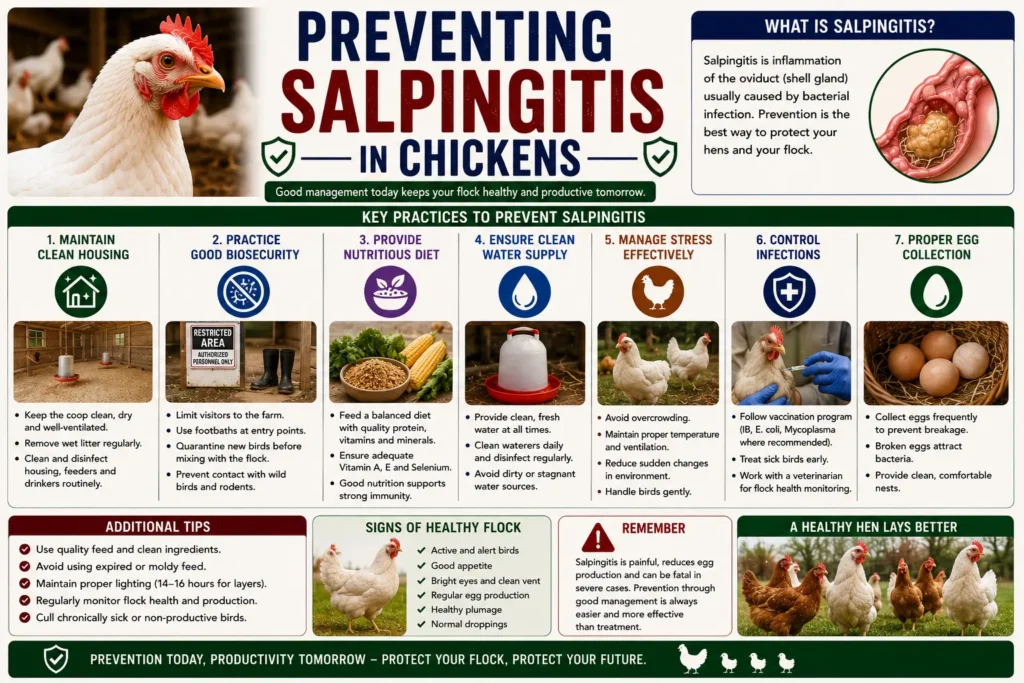
Preventing salpingitis in chickens is far easier than treating it once a hen’s oviduct is already infected. Salpingitis is inflammation of the reproductive tract, usually caused by bacteria that travel up from the vent, and it’s one of the leading causes of illness and death in laying hens over two years old. The good news is that several proven prevention tips can meaningfully lower your flock’s risk.
This guide covers the practical, everyday changes that make the biggest difference — nutrition, sanitation, stress reduction, and early detection — so you can protect your flock before symptoms ever appear.
Table of Contents
Quick Answer
Preventing salpingitis in chickens relies on good nest box hygiene, balanced nutrition, stress reduction, weight management, and catching early warning signs like soft-shelled eggs before they progress. No single step guarantees prevention, but combining these habits significantly lowers risk.
Why Prevention Matters More Than Treatment
Once salpingitis takes hold, treatment options narrow quickly. Mild, early cases can sometimes resolve with antibiotics, but advanced cases with a firm mass in the oviduct often carry a poor prognosis, according to veterinary pathology data on reproductive disease in layers. That’s the core reason preventing salpingitis in chickens deserves more attention than most backyard resources give it.
Prevention also costs far less than treatment. A vet visit for suspected salpingitis, including diagnostics and possible surgery, can run into hundreds of dollars, while most prevention tips involve simple management changes you’re likely already close to making.
Read More: https://lashegg.com/long-term-effects-of-salpingitis/
Did You Know?
High-production hybrid layer breeds, bred to lay eggs at a much higher rate than heritage breeds, face a higher lifetime risk of reproductive disease, including salpingitis, simply because their reproductive tracts work harder for longer.
The Main Causes Behind Salpingitis Risk
Understanding what triggers salpingitis makes prevention tips make more sense. Most cases trace back to one or more of these factors:
| Risk Factor | Why It Matters |
| Bacterial exposure (E. coli, Salmonella) | Bacteria can travel from the vent into the reproductive tract |
| Overweight body condition | Excess fat tissue is linked to higher reproductive disease rates |
| High-stress environment | Stress hormones can suppress immune function |
| Poor nest box sanitation | Dirty, damp bedding increases bacterial load near the vent |
| Egg breakage inside the oviduct | Broken shell material can trigger inflammation and infection |
| Age | Older hens have laid thousands of eggs, increasing cumulative tract stress |
| Genetics/breed | High-production layers face elevated risk |
| Prior respiratory infection | Some pathogens can spread from the respiratory tract to the reproductive tract |
Prevention Tips: Nutrition and Body Condition
Diet plays a bigger role in preventing salpingitis in chickens than most keepers realize. A poorly balanced diet stresses the reproductive system in ways that show up months later.
- Feed a complete, age-appropriate layer feed with balanced calcium and protein
- Avoid excessive treats and scratch grains that dilute nutritional balance
- Monitor body condition regularly — overweight hens face measurably higher reproductive disease risk
- Provide oyster shell as a separate calcium source rather than mixing it directly into feed, so hens can self-regulate intake
- Ensure consistent access to clean water, since dehydration affects overall organ function, including reproductive health
Expert Tip
Weigh a sample of your flock monthly if you can. Catching gradual weight gain early makes it much easier to adjust feed before it becomes a reproductive health risk.
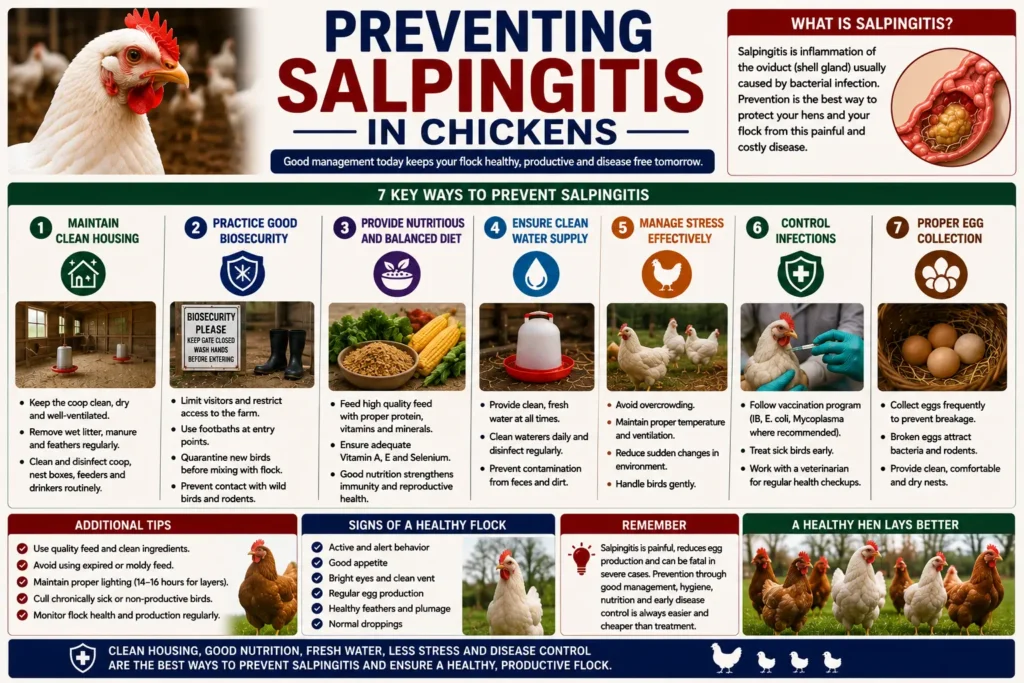
Prevention Tips: Coop and Nest Box Hygiene
Bacteria that cause salpingitis often originate in a dirty environment before working their way into a hen’s reproductive tract. Sanitation is one of the most controllable prevention tips available to any keeper.
- Clean nest boxes weekly, more often if bedding becomes damp or soiled.
- Use absorbent, dry bedding material such as pine shavings or straw.
- Keep the coop floor dry — moisture supports bacterial growth.
- Wash egg-laying surfaces periodically with a poultry-safe disinfectant.
- Remove broken eggs from nest boxes immediately to reduce bacterial buildup.
Common Mistakes Keepers Make
- Letting nest box bedding go weeks without changing
- Assuming a clean-looking coop means low bacterial load, when damp spots can hide beneath surface bedding
- Overfeeding treats without adjusting layer feed portions, leading to weight gain
- Ignoring soft-shelled eggs as “just a calcium thing” instead of a possible early warning sign
- Skipping quarantine for new birds, which can introduce new bacterial strains to the flock
Prevention Tips: Reducing Flock Stress
Chronic stress suppresses immune function, making hens more vulnerable to the bacteria that cause salpingitis. Preventing salpingitis in chickens means paying attention to the everyday stressors most keepers overlook.
- Provide adequate space per bird to reduce overcrowding and competition
- Offer shade, ventilation, and cooling options during hot weather
- Predator-proof the coop and run to reduce chronic anxiety in the flock
- Maintain a consistent daily routine for feeding and coop access
- Introduce new birds gradually and in a separate space to avoid social stress and disease transfer
Warning
Sudden, severe stress — like a predator attack or extreme heat event — can trigger a spike in reproductive illness risk even in an otherwise healthy flock. Watch your hens more closely for a week or two following any major stress event.
Prevention Tips: Managing High-Risk Hens
Some hens carry higher baseline risk due to age, breed, or prior reproductive issues. Extra attention for these birds is one of the most effective prevention tips available.
| Risk Group | Extra Prevention Steps |
| Hens over 3 years old | More frequent body condition checks; watch for laying pattern changes |
| High-production hybrid breeds | Consider light management to moderate laying rate |
| History of soft-shelled or misshapen eggs | Monitor closely; consider a vet check if the pattern continues |
| Prior salpingitis episode | Ongoing monitoring for recurrence; adjust diet if no longer laying regularly |
| Overweight hens | Gradual, vet-guided weight management rather than sudden diet changes |
Early Detection: The Other Half of Prevention
Preventing salpingitis in chickens isn’t only about stopping the infection before it starts. Catching early signs before the disease progresses is just as important, since early-stage cases have a meaningfully better outcome than advanced ones.
Early Warning Signs to Watch For
- Soft-shelled, thin-shelled, or oddly shaped eggs
- A drop in laying frequency without an obvious cause like molting or season change
- Mild abdominal swelling
- Slight decrease in appetite or activity level
- A lash-shaped mass found in the nest box
When to Call a Vet
If you notice a pattern of abnormal eggs, a swollen abdomen, or reduced appetite lasting more than a day or two, contact a poultry-experienced vet. Early evaluation is one of the most effective prevention tips for stopping mild salpingitis before it becomes a chronic, harder-to-treat infection.
Vaccination and Genetics: What Role Do They Play?
There’s no widely available vaccine specifically for salpingitis, since it’s typically caused by opportunistic bacteria rather than a single preventable pathogen. However, keeping vaccination current for other poultry diseases, such as Marek’s disease, supports overall immune health, which indirectly helps a hen’s body resist secondary infections like salpingitis.
Choosing breeds with lower egg-production intensity, such as many heritage breeds, can also reduce lifetime reproductive tract strain compared to high-output hybrid layers, though this is a longer-term flock planning decision rather than a quick fix.
Building a Prevention Routine
Consistency matters more than any single action. A simple monthly and weekly routine covers most of the prevention tips in this guide without becoming overwhelming.
Weekly:
- Clean and refresh nest box bedding
- Check for soft-shelled or abnormal eggs
- Observe flock behavior for stress signs
Monthly:
- Weigh a sample of hens to track body condition
- Deep-clean the coop and disinfect surfaces
- Review egg production trends for unexplained drops
Ongoing:
- Maintain quarantine protocols for new birds
- Keep a simple flock health log
- Build a relationship with a poultry-experienced vet before you need one
People Also Ask
Can salpingitis in chickens be completely prevented? Not with complete certainty, since it often involves opportunistic bacteria already present in most environments. However, consistent prevention tips like good sanitation, balanced nutrition, and stress reduction significantly lower the risk.
What foods help prevent salpingitis in chickens? No specific food prevents salpingitis directly, but a balanced, age-appropriate layer feed with proper calcium and protein supports overall reproductive health and immune function, which helps reduce risk.
Are certain chicken breeds more prone to salpingitis? Yes. High-production hybrid layers, bred for maximum egg output, tend to show higher rates of reproductive disease, including salpingitis, compared to many heritage breeds that lay less frequently.
Does reducing egg production help prevent salpingitis? Some keepers use light management to slow laying rate in older or high-risk hens, based on the idea that less reproductive tract strain may lower risk, though this isn’t a guaranteed prevention method and should be discussed with a vet for older or previously affected hens.
How often should I check my flock for early salpingitis symptoms? Weekly egg checks and general behavior observation are usually enough for most flocks. Hens with a prior history of salpingitis or those over three years old benefit from closer, more frequent monitoring.
Final Thoughts
Preventing salpingitis in chickens comes down to a handful of consistent habits: clean nest boxes, balanced nutrition, manageable body weight, lower flock stress, and paying attention to early warning signs. None of these prevention tips guarantee your flock will never see a case, but together they meaningfully reduce the risk and improve the odds of catching any problem early. Keep monitoring your hens’ eggs and behavior, and don’t hesitate to bring in a poultry-experienced vet the moment something looks off.