Fairy Egg vs Lash Egg: What’s the Difference and Why It Matters

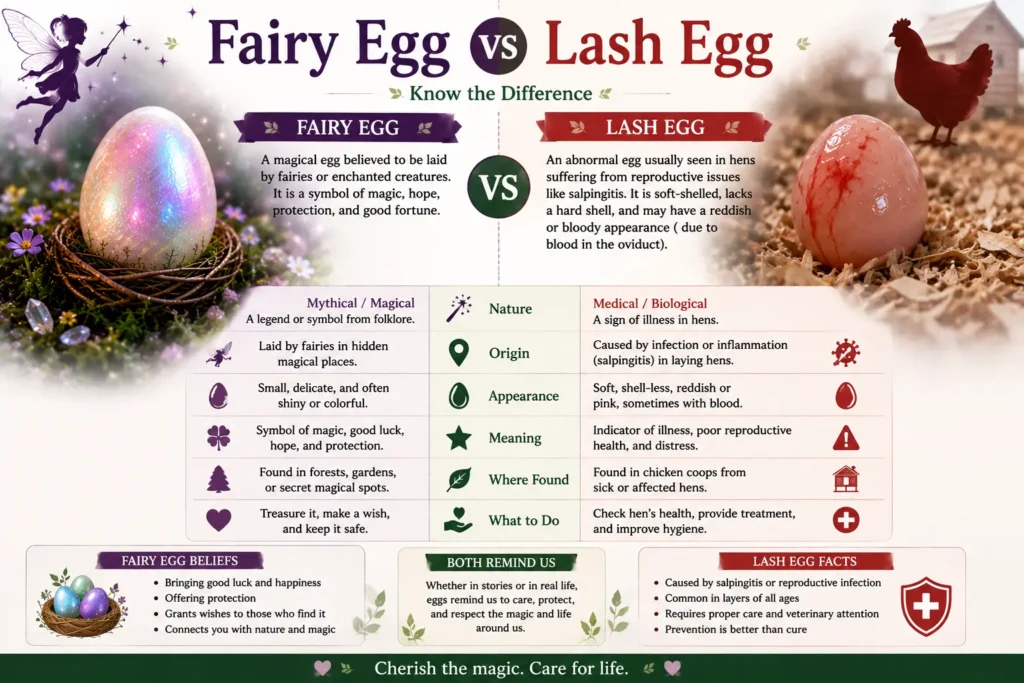
You reach into the nesting box expecting a normal egg, and instead you find something strange. Before you decide whether to shrug it off or call your vet, you need to settle the fairy egg vs lash egg question, because these two look similar at a glance but mean completely different things for your hen. One is a harmless quirk of her laying cycle. The other is a warning sign of infection that needs attention. This guide walks you through exactly how to tell them apart.
Table of Contents
Fairy Egg vs Lash Egg: The Core Difference
A fairy egg is a genuine, tiny chicken egg — a normal shell wrapped around little or no yolk, formed the same way any egg is formed. A lash egg is not an egg at all. It’s a mass of pus, tissue, and sometimes bits of yolk or shell, produced when a hen’s oviduct becomes infected and inflamed, a condition called salpingitis.
Quick Answer: Fairy eggs are safe and normal. Lash eggs are a sign of active infection and always warrant veterinary attention. If you’re comparing lash egg vs fairy egg and you’re not sure which one you’re holding, treat it as a lash egg until you know otherwise.
Read More: https://lashegg.com/can-you-eat-a-fairy-egg/
Why People Confuse Them
Both can look small, misshapen, or unusual next to a standard egg, which is exactly why the fairy egg vs lash egg mix-up happens so often among newer chicken keepers. A fairy egg’s odd shape comes from her body handling a small ovulation error. A lash egg’s odd shape comes from infected material being pushed out through the same passageway a real egg would travel.
What Is a Fairy Egg?
A fairy egg is an unusually small egg, sometimes no bigger than a large marble, with a full shell but little to no yolk inside. Backyard keepers also call these “wind eggs,” “dwarf eggs,” or “cock eggs” from old folklore that blamed roosters for laying them.
They typically happen when:
- A young pullet lays her first few eggs before her cycle stabilizes
- An older hen’s reproductive system starts slowing down
- A stray bit of tissue gets mistaken for a yolk and triggers the normal egg-forming process
- Stress, heat, or a diet gap briefly disrupts a hen’s laying rhythm
A fairy egg is safe to eat, and finding one every so often is not a health concern.
What Is a Lash Egg?
A lash egg is the byproduct of salpingitis, an infection or inflammation of the oviduct — the tube that carries a developing egg from the ovary to the vent. Instead of a normal shell, a lash egg is typically a rubbery, cheese-like, or layered lump made of hardened pus, dead tissue, and sometimes fragments of yolk, membrane, or shell mixed in.
What Causes Salpingitis and Lash Eggs?
Salpingitis usually stems from a bacterial or viral infection that reaches the reproductive tract. Common contributors include:
- Bacterial infections — E. coli, Salmonella, Mycoplasma gallisepticum, and Pasteurella multocida are frequently involved.
- Viral infections — infectious bronchitis, Newcastle disease, and avian influenza can all damage the oviduct and lead to secondary infection.
- Dirty nesting conditions — soiled bedding, damp coops, and poor ventilation raise bacterial exposure.
- Vent pecking or injury — breaks in the skin near the vent give bacteria an entry point.
- Overproduction and obesity — hens bred or fed for very high egg output carry added strain on the reproductive tract.
- Stress-related immune suppression — chronic stress lowers a hen’s ability to fight off infection before it takes hold.
H3: Fairy Egg vs Lash Egg Symptoms in the Hen Herself
The egg itself is only part of the picture. Watching the hen who laid it tells you far more.
| Sign | Fairy Egg (Hen) | Lash Egg (Hen) |
| Activity level | Normal | Often lethargic, sits more than usual |
| Appetite | Normal | May be reduced |
| Abdomen | Normal | Sometimes visibly swollen |
| Egg production | Normal or briefly reduced | Often drops noticeably |
| Comb and wattles | Normal color | May turn pale or droop |
| Odor | None | Often foul-smelling discharge |
| Overall demeanor | Business as usual | Fluffed feathers, hunched posture |
Fairy Egg vs Lash Egg: Side-by-Side Comparison
| Feature | Fairy Egg | Lash Egg |
| What it actually is | A tiny, real egg | Pus, tissue, and infection debris |
| Shell | Normal, complete shell | Often no true shell, or an irregular one |
| Texture | Same as a regular egg | Rubbery, cheesy, or layered |
| Smell | Normal | Often foul or sour |
| Cause | Youth, age, stress, ovulation mishap | Bacterial or viral oviduct infection (salpingitis) |
| Safe to eat | Yes | No |
| Health concern | None, typically | Serious, needs veterinary care |
| Frequency | Occasional, random | Signals an ongoing infection |
| Hen’s condition | Usually normal | Often lethargic, reduced appetite, possible swelling |
How to Physically Tell Them Apart
- Check the shell. A fairy egg has a real, intact shell like any other egg. A lash egg often lacks a proper shell or has an irregular, lumpy surface.
- Check the texture when opened. A fairy egg contains egg white and maybe a small yolk. A lash egg reveals layers of firm, waxy, or cheese-like material.
- Check the smell. A fairy egg smells like a normal fresh egg. A lash egg often has a strong, unpleasant odor.
- Check the hen. A hen that laid a fairy egg usually acts completely normal afterward. A hen that laid a lash egg often shows other symptoms of illness.
Warning: Never eat what you suspect is a lash egg. Even if part of it looks egg-like, the mass as a whole is infection material and is not food-safe.
Fairy Egg vs Lash Egg: Diagnosis and When to Call a Vet
A fairy egg needs no diagnosis — a quick look confirms what it is, and no treatment is required. A lash egg is different. Because salpingitis can range from a mild, resolving case to a life-threatening one, professional evaluation matters.
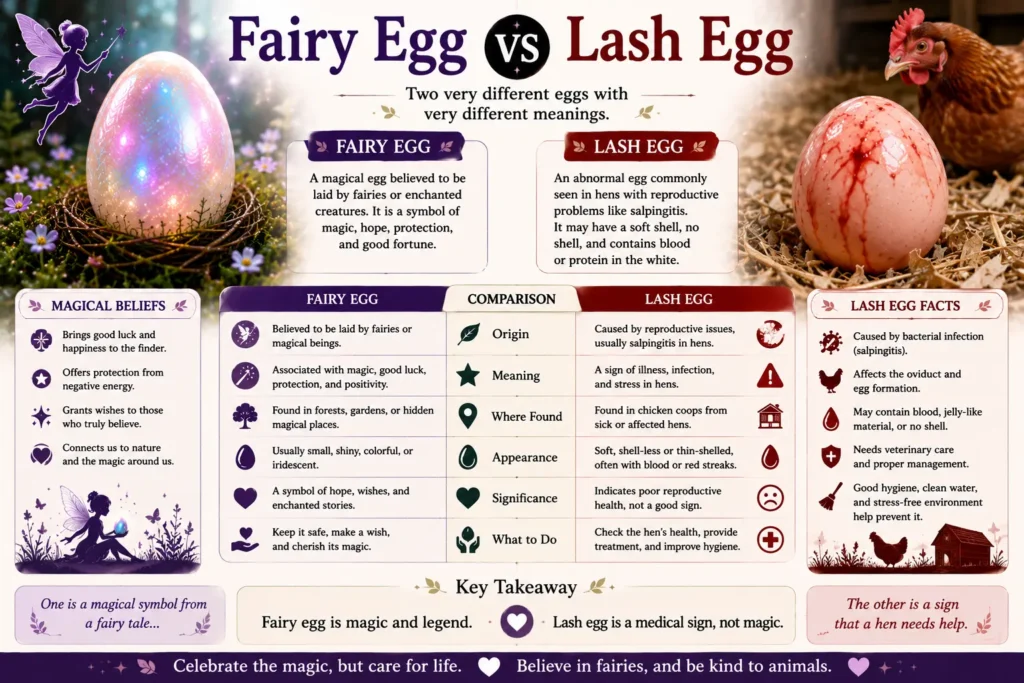
When to Call a Vet
Contact an avian or poultry-experienced veterinarian if you notice:
- A lash egg of any kind
- Repeated small or malformed eggs alongside lethargy or appetite loss
- A swollen, fluid-filled, or firm abdomen
- Persistent decrease in egg production across the flock
- Foul-smelling discharge from the vent
- A hen that seems eggbound but never actually produces an egg
A vet may recommend bloodwork, imaging, or a physical exam to assess the extent of the infection. According to sources referencing the Merck Veterinary Manual, salpingitis is one of the more common reproductive conditions diagnosed in laying hens, and treatment options range from supportive care and antibiotics to, in severe or recurring cases, surgical removal of the affected oviduct. Only a licensed veterinarian can determine which path fits your hen’s specific situation — this article is not a substitute for that exam.
Treatment: What a Vet Might Consider
- Antibiotic therapy, selected based on the suspected or confirmed bacterial cause
- Supportive care such as fluids, warmth, and nutritional support
- Adjusting light exposure and diet to bring a hen out of active lay temporarily
- In advanced or repeat cases, surgical evaluation of the oviduct
Home remedies are not a substitute for this kind of care. Salpingitis that goes untreated can progress and, in some cases, become life-threatening, so early veterinary involvement gives your hen the best odds.
Recovery and Outlook
Fairy Eggs
No recovery period is needed. A hen that lays a fairy egg typically returns to normal-sized eggs on her very next lay, especially if the cause was simply youth, age, or a passing stressor.
Lash Eggs
Recovery depends heavily on how early the infection is caught. Hens treated early, especially for a first, isolated episode, can sometimes return to laying. Chronic or advanced cases carry a more guarded outlook, and some hens experience recurrence even after treatment. This is one more reason the fairy egg vs lash egg distinction matters so much — treating a lash egg like a harmless fairy egg wastes time your hen may not have.
Prevention: Reducing the Risk of Both
You can’t fully prevent an occasional fairy egg, since it’s often tied to natural life stages. But good flock management lowers the odds of both fairy eggs and, more importantly, the infections behind lash eggs.
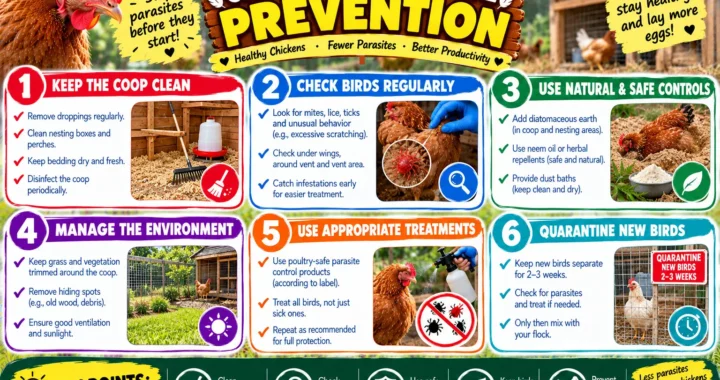
- Keep nesting boxes clean and dry to limit bacterial exposure.
- Provide a complete, age-appropriate layer feed with adequate protein and calcium.
- Maintain good ventilation and manage humidity in the coop.
- Reduce overcrowding, which lowers stress and disease spread.
- Watch for and address vent pecking promptly.
- Keep body condition in a healthy range — avoid overfeeding high-calorie treats.
- Vaccinate against relevant respiratory viruses where recommended by your vet, since several of these can lead to secondary salpingitis.
Common Mistakes Chicken Keepers Make
Common Mistakes
- Assuming any small or odd-shaped egg must be a lash egg, when it’s often just a harmless fairy egg.
- Ignoring a true lash egg because “the hen still seems fine” — symptoms can lag behind the infection.
- Trying to treat suspected salpingitis at home with supplements alone instead of involving a vet.
- Eating an egg without checking it first, simply because most odd eggs turn out to be harmless.
Expert Tip
Expert Tip: Photograph any unusual egg before you dispose of it. If you do need to describe it to a vet over the phone, a clear picture of the shell, texture, and any discharge helps them judge urgency far better than a verbal description alone.
Did You Know?
Did You Know? Salpingitis is considered one of the more common causes of death in laying hens, according to poultry health references like Gail Damerow’s The Chicken Health Handbook, which is exactly why the fairy egg vs lash egg distinction is worth learning before you ever find one in your coop.
Frequently Asked Questions
What is the main difference in a fairy egg vs lash egg comparison? A fairy egg is a real, tiny egg that’s completely safe. A lash egg is a mass of pus and tissue from an infected oviduct and is a medical concern, not a true egg.
Can a lash egg vs fairy egg mix-up be dangerous? Yes, mostly because delaying treatment for a lash egg while assuming it’s a harmless fairy egg gives an infection more time to progress.
Do fairy eggs and lash eggs both come from young hens? Fairy eggs are common in young pullets. Lash eggs can occur in hens of any age once salpingitis develops, though high-production layers may be more susceptible.
Is a lash egg contagious to other hens? The egg itself isn’t what spreads between hens, but the underlying bacterial or viral infection can potentially spread through a flock, so isolating an affected hen and consulting a vet is wise.
Can you eat either a fairy egg or a lash egg? You can eat a fairy egg safely. A lash egg should never be eaten, since it’s infection-related tissue and discharge, not food.
How do I know for sure if it’s a fairy egg vs lash egg without a vet? Check the shell, texture, and smell, and watch the hen for other symptoms like lethargy or a swollen abdomen. When in doubt, treat it as a possible lash egg and reach out to a vet.
Will my hen recover from salpingitis after a lash egg? Some hens recover, especially with early treatment, while chronic or advanced cases have a more uncertain outlook. A veterinarian is best placed to assess your hen’s specific case.
The Bottom Line
Settling the fairy egg vs lash egg question comes down to a few quick checks: the shell, the texture inside, the smell, and — most importantly — how the hen who laid it is acting. A fairy egg is a small, harmless surprise you can eat without a second thought. A lash egg is a sign that salpingitis may be at work, and it deserves prompt veterinary attention rather than a wait-and-see approach. When you’re unsure which one you’re holding, lean toward caution, watch your flock closely, and call your vet if anything about the egg or the hen seems off.