
What Is a Blood Spot Egg?

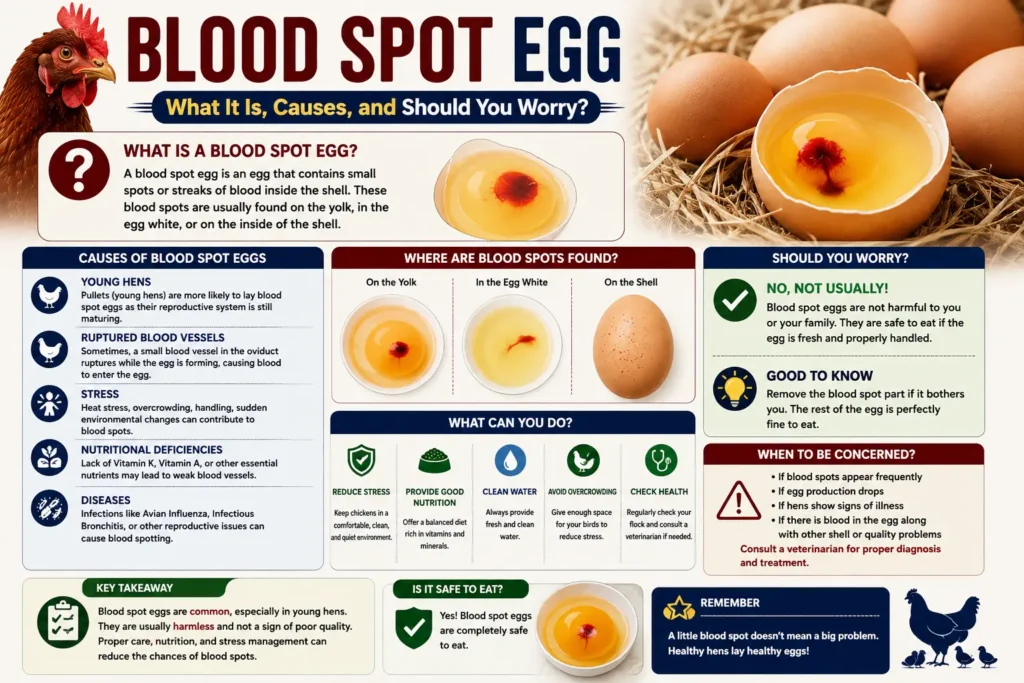
A blood spot egg is a normal egg with a small red or brown speck sitting in the white or on the yolk, usually no bigger than a pinhead or a small dot. It’s one of the most common “odd egg” findings, and it looks more alarming than it actually is.
If you just cracked one open, here’s the short version: a blood spot egg is safe to eat, common in both backyard and commercial eggs, and almost never a sign that anything is wrong with the hen that laid it. This guide covers exactly why it happens, how to handle it in the kitchen, and the rare situation where it’s worth paying closer attention.
Table of Contents
Quick Answer
A blood spot egg happens when a small blood vessel ruptures during the release or formation of the egg, leaving a tiny spot of blood in the white or yolk. It’s completely normal, safe to eat, and not a sign of fertilization or illness in almost all cases.
Read More: https://lashegg.com/can-you-eat-double-yolk-eggs/
Why Blood Spots Happen
1. A Ruptured Blood Vessel During Ovulation
This is the most common cause. As the yolk releases from the ovary, tiny blood vessels sometimes rupture in the process. A small amount of blood mixes in and travels with the egg through the oviduct, ending up as a spot once the egg is fully formed.
2. Blood Vessel Rupture in the Oviduct Wall
Similarly, tiny blood vessels lining the oviduct can occasionally rupture as the egg passes through, depositing a small blood spot onto the white or the surface of the yolk during formation.
3. Genetics
Some hens and bloodlines are simply more prone to blood spots than others. If you notice a particular hen’s eggs showing spots more often than the rest of the flock, this is frequently just an individual tendency rather than anything to worry about.
4. Age and Stage of Lay
Younger hens just starting to lay and hens laying very heavily during peak production can show blood spots slightly more often, tied to how actively their reproductive system is working.
5. Vitamin A Deficiency (Less Common)
In some cases, a vitamin A deficiency is associated with increased fragility of the small blood vessels involved in egg formation, making rupture slightly more likely. This is an uncommon cause in a well-fed flock but worth knowing about.
Did You Know?
Commercial egg producers use a process called candling, shining a bright light through each egg, specifically to catch and remove blood spot eggs before they reach store shelves. That’s part of why backyard and farm-fresh eggs show blood spots more often than the eggs most people are used to buying at the grocery store — not because backyard eggs are less safe, but because they usually skip this extra sorting step.
Is a Blood Spot Egg Safe to Eat?
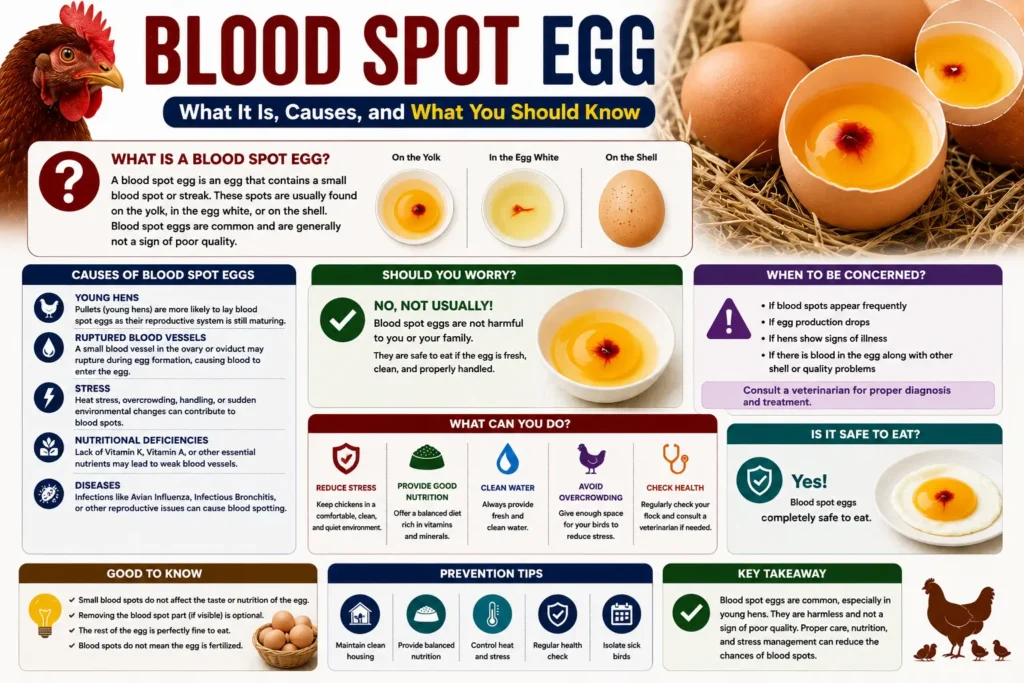
Yes. A blood spot egg is safe to eat. The spot itself is just a tiny amount of blood from a ruptured vessel, not a sign of bacterial contamination, spoilage, or disease. Many people remove the spot with the tip of a knife or the edge of the eggshell purely for appearance, but this step is about preference, not safety.
| Concern | Reality |
| Is it contaminated? | No, it’s blood from a ruptured vessel, not bacteria |
| Does it mean the egg is fertilized? | No, a blood spot and fertilization are unrelated |
| Does it need to be removed before cooking? | No, purely optional and cosmetic |
| Can I eat eggs with blood spots regularly? | Yes, there’s no cumulative risk from eating them occasionally |
Expert Tip
If the appearance bothers you or you’re serving eggs to guests, simply flick the spot out with the tip of a clean knife before cooking. It takes seconds and doesn’t affect the taste or safety of the rest of the egg either way.
Blood Spot Egg vs. Meat Spot Egg
These two are often confused because they look similar at a glance.
| Feature | Blood Spot Egg | Meat Spot Egg |
| Color | Red to reddish-brown | Brown, tan, or grayish |
| Cause | Ruptured blood vessel during formation | Small piece of reproductive tissue that breaks off and gets incorporated into the egg |
| Safety | Safe to eat | Safe to eat |
| Common misconception | Mistaken for a sign of fertilization | Mistaken for a foreign object or contamination |
Both are naturally occurring, harmless, and unrelated to whether an egg is fertilized. Fertilization actually shows up differently, as a small, distinct white “bullseye” ring on the yolk, not a blood or meat spot.
Does a Blood Spot Mean the Egg Is Fertilized?
No, and this is one of the most common misconceptions about a blood spot egg. Fertilization has nothing to do with blood vessel rupture during egg formation. A fertilized egg shows a distinct, ring-shaped white spot on the yolk called a blastoderm, which looks completely different from a blood spot and requires a rooster present in the flock to occur at all.
How Common Are Blood Spot Eggs?
Blood spots show up more often than most people expect, particularly in brown-shelled eggs, where the darker shell color can make an existing spot slightly less visible during grading and sorting.
| Egg Source | Likelihood of Blood Spots |
| Backyard/farm-fresh eggs | Higher, since candling isn’t typically done |
| Commercial graded eggs | Lower, most are caught and removed during candling |
| Brown-shelled eggs | Slightly more likely to pass through unnoticed due to shell color |
| White-shelled eggs | Spots are more visually obvious, so more likely to be caught if graded |
Common Mistakes People Make About Blood Spot Eggs
- Throwing away a perfectly good egg out of unfounded worry
- Assuming a blood spot means the egg is fertilized
- Confusing a blood spot with contamination or spoilage
- Worrying that eating one is somehow unhealthy or risky
- Assuming a hen laying blood spot eggs is sick, without any other symptoms present
When a Blood Spot Egg Might Signal Something to Watch
A single blood spot egg, or even occasional ones, is not a health concern. That said, a few surrounding patterns are worth noting.
Warning
Consider a closer look, and possibly a vet consultation, if you notice:
- A sudden, sharp increase in blood spots across many eggs from the same hen
- Blood spots appearing alongside other signs of illness, like lethargy or reduced appetite
- Visible blood on the outside of the shell itself, rather than inside the egg, which can point to a different issue like a vent injury
- A hen showing signs of straining or discomfort while laying
When to Call a Vet
An occasional blood spot egg is not a reason to call a vet. However, if a hen consistently produces heavily blood-spotted eggs, shows blood on the outside of the shell, or displays other symptoms like lethargy or straining, a veterinary exam is a reasonable next step. Nutritional causes, such as a vitamin A deficiency, are also worth ruling out through a diet review if the pattern is frequent and widespread across the flock.
Can Diet Reduce Blood Spot Eggs?
To a limited degree. Since vitamin A supports the strength of small blood vessels involved in egg formation, ensuring a complete, well-balanced layer feed can help reduce the frequency of blood spots tied to nutritional deficiency specifically. It won’t eliminate blood spots caused by genetics or normal ovulation mechanics, since those aren’t diet-related in the first place.
Blood Spot Eggs and Other Unusual Egg Findings
| Egg Finding | Cause | Safe to Eat? |
| Blood spot egg | Ruptured blood vessel during formation | Yes |
| Meat spot egg | Small tissue fragment incorporated during formation | Yes |
| Double yolk egg | Two yolks released close together | Yes |
| Shell-less/rubber egg | Calcium deficiency, stress, age, or illness | Yes, if collected promptly |
| Yolkless “wind egg” | Stray tissue triggers the egg-forming process | Yes |
What to Do When You Find a Blood Spot Egg
- Don’t discard the egg. A blood spot alone doesn’t affect safety.
- Remove the spot if you prefer, using the tip of a knife or eggshell edge before cooking.
- Cook and eat normally. No special preparation is required.
- Note the pattern if it’s happening frequently from the same hen.
- Check the diet for a complete, balanced layer feed if blood spots seem unusually common across the flock.
- Watch for other symptoms if the pattern is sudden or widespread.
- Consult a vet only if it comes paired with illness signs, shell-surface blood, or laying difficulty.
Finding a blood spot egg is one of the more common “odd egg” moments backyard keepers and grocery shoppers alike run into, and it almost never means anything more than a small, normal blood vessel rupture during egg formation. Cook and enjoy it as you would any other egg, and only bring in a vet if it comes with other signs that something more is going on.
5. FAQ
Is a blood spot egg safe to eat? Yes. A blood spot egg is completely safe to eat. The spot is a small amount of blood from a ruptured vessel, not a sign of contamination or spoilage.
What causes a blood spot in an egg? A blood spot happens when a tiny blood vessel ruptures during ovulation or as the egg travels through the oviduct, leaving a small spot of blood in the white or on the yolk.
Does a blood spot egg mean it’s fertilized? No. Fertilization shows up as a distinct white ring on the yolk, called a blastoderm, which looks completely different from a blood spot and is unrelated to it.
Should I remove the blood spot before cooking? It’s optional. Removing it is purely a matter of appearance and doesn’t change the safety or nutritional value of the egg.
Why do backyard eggs have more blood spots than store-bought eggs? Commercial eggs go through a candling process that catches and removes most blood spot eggs before sale, while backyard eggs typically skip this extra sorting step.
Can diet affect how often a hen lays blood spot eggs? To some extent. A vitamin A deficiency can weaken small blood vessels involved in egg formation, so a complete, balanced layer feed may help reduce nutritionally linked blood spots.
When should I worry about a blood spot egg? Worry only if it comes with a sudden increase in frequency, blood visible on the outside of the shell, or other signs of illness or laying difficulty in the hen.