
What Causes Blood Spots in Eggs?

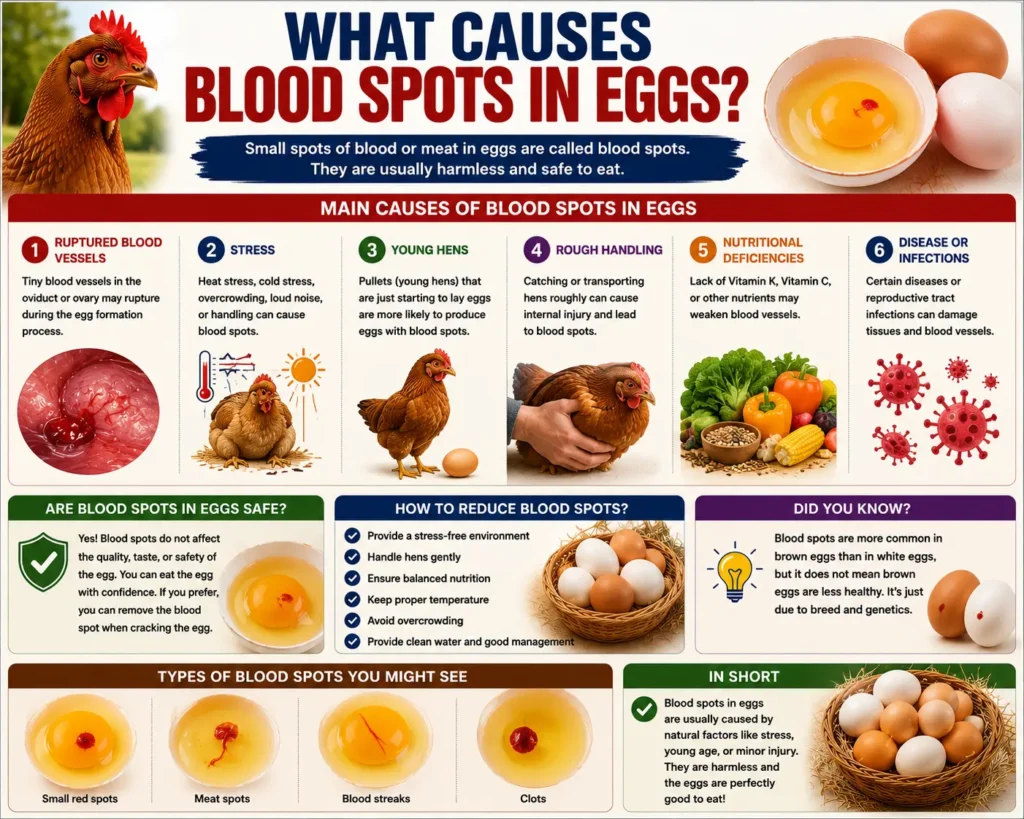
You crack an egg into the pan and see a small red or brown dot floating in the yolk. That’s a blood spot, and it’s one of the most common questions new egg collectors and curious cooks ask. What causes blood spots in eggs comes down to one simple event inside the hen’s body: a tiny blood vessel breaks during the egg-forming process, usually while the yolk is releasing from the ovary or while the egg moves through the oviduct.
It looks alarming on a plate, but it’s rarely a sign of anything wrong with your hen or your food. This guide breaks down exactly why it happens, whether the egg is safe to eat, and what you can do if you’re seeing blood spots more often than you’d like.
Quick Answer: Blood spots form when a small blood vessel ruptures during ovulation or as the egg travels through the hen’s reproductive tract. They’re a natural, mostly harmless occurrence and don’t mean the egg is fertilized or spoiled.
Table of Contents
How an Egg Forms Inside a Hen
To understand blood spot causes, it helps to know how an egg is actually built. A hen doesn’t lay a fully formed egg the moment it’s needed. The process takes roughly 24 to 26 hours from start to finish, and blood spots can appear at more than one stage along the way.
The Ovulation Stage
The yolk develops inside the hen’s ovary, surrounded by a thin web of tiny blood vessels that deliver nutrients as it grows. When the yolk is mature, it releases from the ovary in a process called ovulation. This is the single most common point where a blood spot forms, because the follicle (the sac holding the yolk) has to rupture for the yolk to be released.
If that rupture damages one of the surrounding capillaries, a drop of blood gets swept along with the yolk into the oviduct. That tiny amount of blood then becomes trapped as the white and shell form around it, and it shows up later on your plate.
Read More: https://lashegg.com/blood-spot-egg-causes-safety/
Movement Through the Oviduct
After ovulation, the yolk travels through several sections of the oviduct, where the egg white, membranes, and shell are added in sequence. Small blood vessels line parts of this tract too. Minor irritation, muscle contractions, or the physical passage of the yolk can occasionally nick a vessel here as well, adding a smaller or differently placed blood spot.
Why the Spot Ends Up Where It Does
Where the blood spot lands inside the egg depends on when the rupture happened:
- Blood spot on or near the yolk — usually from the ovulation stage.
- Blood spot in the egg white — usually from later in the oviduct, after the yolk was already coated.
- Streaks or larger spots — can happen when more than one vessel is affected, or when the bleeding is slightly heavier than usual.
Are Blood Spots in Eggs Fertilized Eggs?
No. This is one of the most persistent myths around blood spots, and it’s worth clearing up directly. A blood spot is not related to fertilization. Fertilized eggs have a small, distinct white ring or bullseye pattern on the yolk called the blastoderm (in unfertilized eggs) or blastodisc (in fertilized eggs). A blood spot is a completely separate, reddish-brown mark caused by a burst capillary, and it can appear in both fertile and infertile eggs.
Are Eggs With Blood Spots Safe to Eat?
Yes, eggs with blood spots are generally safe to eat according to food safety authorities, including the USDA. The spot itself is just a tiny amount of blood, not a sign of contamination, disease, or an embryo. Commercial egg producers in many countries use a process called candling to catch and remove eggs with visible blood spots before they reach store shelves, which is why you see them so rarely in supermarket eggs but more often in backyard or farm-fresh eggs.
Expert Tip: If you find a blood spot, you can simply lift it out with the tip of a knife or the edge of an eggshell before cooking. The rest of the egg is completely fine to use.
Warning: The one exception is if the egg shows other signs of spoilage alongside the blood spot — a foul smell, unusual coloring throughout the white, or a runny, discolored texture. In that case, discard the egg regardless of the blood spot.
Blood Spots vs. Meat Spots: What’s the Difference?
People often lump these together, but they’re not identical.
| Feature | Blood Spot | Meat Spot |
| Cause | Ruptured blood vessel during ovulation or oviduct passage | Small piece of reproductive tract tissue or altered blood pigment |
| Color | Red to reddish-brown | Brown, tan, or grayish |
| Location | On yolk or in the white | Usually in the white |
| Common in | Any hen, any breed | Slightly more common in brown-egg-laying breeds |
| Safety | Safe to eat | Safe to eat |
Both are considered blood spot-related defects in commercial grading, and both are removed the same way — with the tip of a knife.
What Causes Blood Spots in Eggs More Frequently?
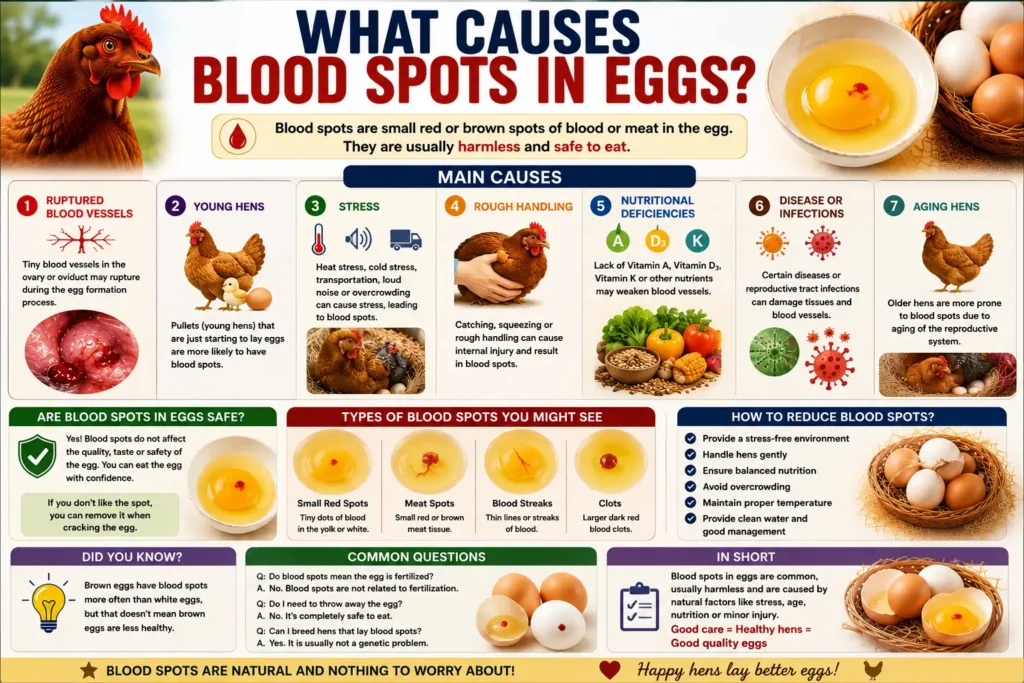
While an occasional blood spot is completely normal, some hens or flocks show them more often than others. Here are the leading factors behind more frequent blood spot causes.
1. Genetics and Breed Tendency
Some hens are simply more prone to blood spots than others, and this trait can run in family lines. Certain breeds and even individual birds within the same breed show a higher natural rate of ovulation-related bleeding.
2. Hen’s Age
Young hens just starting to lay (pullets) and older hens nearing the end of their productive years both tend to show blood spots more often. Younger reproductive systems are still maturing, while older ones may have less elastic tissue and blood vessels.
3. Vitamin A Deficiency
Research from poultry science departments has linked low vitamin A intake to weaker capillary walls in the oviduct, which can make bleeding during egg formation more likely. A balanced layer feed usually prevents this.
4. Stress
Sudden loud noises, predator scares, overcrowding, extreme heat, or a change in routine can all cause temporary stress in laying hens. Stress hormones affect blood pressure and muscle contractions in the reproductive tract, which can raise the chance of a small vessel breaking.
5. Nutritional Gaps
Beyond vitamin A, general nutritional deficiencies — especially in vitamin K, which supports normal blood clotting — can contribute to more frequent or larger blood spots.
6. Rapid or Irregular Egg Production
Hens that are pushed to lay eggs faster than their bodies naturally cycle, whether through breeding selection or lighting manipulation, can experience more reproductive tract irritation.
7. Underlying Reproductive Issues
In rarer cases, ongoing or worsening blood spots, especially paired with soft-shelled eggs, reduced laying, or visible illness, can point to a reproductive tract problem that needs veterinary attention.
Did You Know? Studies summarized by university poultry extension programs suggest brown-egg breeds show blood and meat spots somewhat more often than white-egg breeds, likely tied to pigment deposition differences in the shell gland.
Common Mistakes People Make About Blood Spots
- Assuming the egg is fertilized. As covered above, this isn’t true.
- Throwing away a perfectly good egg. Removing the spot is enough in almost all cases.
- Confusing a blood spot with a broken yolk vessel from cracking the egg. Sometimes a yolk membrane vessel breaks purely from the mechanical act of cracking the egg open, which is not the same as a true blood spot formed inside the hen.
- Ignoring a pattern of frequent blood spots without checking the hen’s diet or environment. One blood spot is normal. Blood spots in nearly every egg from one hen is worth investigating.
How to Reduce Blood Spots in Backyard Flocks
If you keep chickens and want to lower how often you see blood spots, focus on the things within your control.
- Feed a complete, balanced layer ration. Make sure it includes adequate vitamin A and vitamin K.
- Reduce environmental stress. Keep predators out, avoid sudden changes, and give hens enough space.
- Maintain consistent lighting. Avoid forcing unnaturally fast laying cycles with excessive artificial light.
- Watch hen age and retirement patterns. Expect more spots from very young layers and hens past their peak laying years. 7 Keep fresh water available at all times, since dehydration adds to overall physiological stress.
- Candle your eggs if selling them, so you can remove any with visible spots before customers see them.
None of these steps guarantee zero blood spots, since some rate of ovulation-related bleeding is a normal biological event, but they can reduce how often it happens.
When to Call a Vet
When to Call a Vet: A single blood spot is not a reason to call a veterinarian. Reach out to a poultry vet if you notice: blood spots in nearly every egg over several weeks, blood spots paired with reduced appetite or lethargy, visible blood around the vent, soft or misshapen eggs alongside blood spots, or any sign of illness in the hen herself. These combinations can point to reproductive tract inflammation or infection that needs professional diagnosis.
Blood Spots in Store-Bought vs. Farm-Fresh Eggs
| Factor | Store-Bought Eggs | Farm-Fresh / Backyard Eggs |
| Candling before sale | Standard practice at most facilities | Often skipped or done informally |
| Frequency of blood spots seen | Low, since flagged eggs are removed | Higher, since eggs go straight from nest to kitchen |
| Safety | Safe | Safe (unless other spoilage signs present) |
| Grading standards | Follows USDA or regional grading rules | Varies by individual keeper |
People Also Ask
Does a blood spot mean the egg is fertilized? No. A blood spot comes from a burst capillary and has nothing to do with fertilization. A fertilized egg shows a distinct ring pattern on the yolk instead.
Can you eat an egg with a blood spot in it? Yes, in almost all cases. Simply remove the spot with a knife tip before cooking, unless the egg shows other signs of spoilage.
Why do brown eggs have more blood spots than white eggs? Some poultry research suggests brown-egg breeds show slightly higher rates of blood and meat spots, possibly linked to how pigment is deposited in the shell gland region.
Is it normal for chicken eggs to have blood in them? An occasional blood spot is a normal biological occurrence tied to ovulation. Frequent blood spots across many eggs from the same hen is less typical and worth monitoring.
What’s the difference between a blood spot and a meat spot? A blood spot comes from a ruptured blood vessel, while a meat spot is a small piece of tissue or altered pigment, usually brownish or grayish rather than red.
Do blood spots affect egg taste? No. Blood spots do not change the flavor or nutritional value of the egg.
Wrapping Up
What causes blood spots in eggs almost always traces back to one thing: a small blood vessel breaking during ovulation or as the egg passes through the oviduct. It’s a natural part of how eggs form, not a defect in your food or a hidden health problem in most cases. Keep an eye on your flock’s diet, stress levels, and overall behavior, and don’t hesitate to reach out to a poultry veterinarian if blood spots become frequent or show up alongside other symptoms.
FAQ
Q: What causes blood spots in eggs? A: Blood spots form when a small blood vessel breaks during ovulation or while the egg passes through the hen’s oviduct, releasing a tiny bit of blood that gets trapped in the yolk or white as the egg forms.
Q: Are blood spots in eggs harmful? A: No, they’re not harmful. You can remove the spot and cook the egg as usual, as long as there are no other signs of spoilage.
Q: Why does my hen keep laying eggs with blood spots? A: Frequent blood spots can be linked to genetics, age, stress, vitamin A or K deficiency, or in rarer cases, a reproductive tract issue that may need veterinary evaluation.
Q: Can diet reduce blood spot causes in laying hens? A: Yes. A complete layer feed with adequate vitamin A and vitamin K supports healthier blood vessels in the reproductive tract, which can lower how often blood spots occur.
Q: Do all hens eventually lay an egg with a blood spot? A: Most hens will lay at least an occasional egg with a blood spot at some point, since it’s tied to a normal, if imperfect, part of egg formation.