
Can You Eat Blood Spot Eggs?

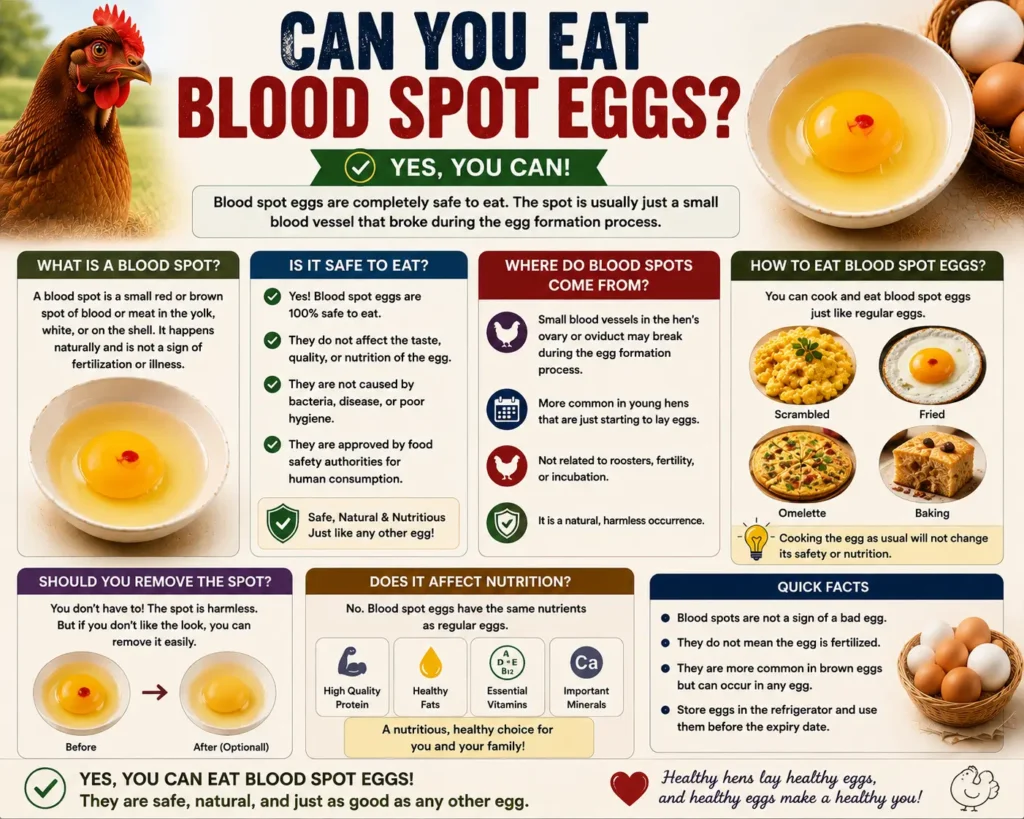
You crack open an egg and spot a small red or brown dot sitting in the yolk or white. Your first instinct might be to toss the whole thing. Can you eat blood spot eggs safely? Yes, in almost every case, you can. That little mark is just a burst blood vessel from the hen’s egg-forming process, not a sign of spoilage, disease, or a developing chick.
This guide walks through exactly why blood spots form, what food safety authorities say about them, and how to tell the rare case where an egg genuinely isn’t safe from the common case where it’s completely fine to cook and eat.
Quick Answer: Yes, you can eat blood spot eggs. The spot is a small amount of blood from a ruptured vessel during egg formation. Simply remove it with a knife tip before cooking, and the rest of the egg is safe.
Table of Contents
What Exactly Is a Blood Spot?
A blood spot is a tiny deposit of blood that ends up trapped inside an egg during its formation inside the hen. It happens when a small capillary breaks, either during ovulation (when the yolk releases from the ovary) or later as the egg travels through the oviduct, where the white, membranes, and shell get added.
The blood gets caught up in the yolk or the surrounding egg white before the shell closes around it. By the time the egg is laid, that drop of blood has often darkened to a reddish-brown color, which is what you see when you crack it open.
Read More: https://lashegg.com/what-causes-blood-spots-in-eggs/
Blood Spot vs. Meat Spot
A meat spot looks similar but comes from a slightly different source — usually a small piece of reproductive tract tissue or altered pigment rather than fresh blood. Both are graded the same way in commercial egg production and both raise the same core question: blood spot egg safety, and the answer for both is the same. They’re safe to eat once removed.
Blood Spot Egg Safety: What the Experts Say
Blood spot egg safety has been studied and addressed by major food safety and agricultural bodies for decades. The USDA classifies blood spots as a quality defect, not a safety hazard. That distinction matters. Quality defects affect appearance or grading, not whether the egg is safe to consume.
Commercial egg facilities use a process called candling, shining a bright light through each egg, to detect and remove eggs with visible blood spots before they’re packaged for sale. That’s the main reason you rarely see blood spots in store-bought eggs but notice them more often in backyard or farm-fresh eggs, which usually skip this step.
| Source | Position on Blood Spot Egg Safety |
| USDA | Classifies blood spots as a quality defect, not a health risk |
| Commercial grading standards | Eggs with visible spots are typically removed during candling, not because they’re unsafe, but for consumer appeal |
| Poultry science research | Confirms blood spots result from normal ovulation or oviduct bleeding, unrelated to disease |
Expert Tip: If you’re ever unsure, simply lift the spot out with the tip of a clean knife or a piece of eggshell before cooking. This removes essentially all of the blood, and the egg cooks normally after that.

Does a Blood Spot Mean the Egg Is Fertilized?
No, and this is one of the most common misunderstandings tied to this topic. A blood spot has nothing to do with fertilization. A fertilized egg shows a distinct small ring or bullseye mark on the yolk called the blastodisc, which looks completely different from a blood spot. You can find blood spots in fertilized and unfertilized eggs alike.
When Is It NOT Safe to Eat an Egg With a Blood Spot?
While the answer to can you eat blood spot eggs is generally yes, safety always depends on the whole egg, not just the spot. Watch for these additional warning signs.
Warning: Discard the egg if you notice any of the following alongside a blood spot:
- A foul, sulfur-like, or otherwise off smell
- Pink, green, or unusually discolored egg white
- A watery, runny consistency beyond normal freshness
- Visible mold or unusual spots in colors other than red, brown, or tan
- An egg that floats in a bowl of water, which can indicate age (though not automatically spoilage)
If any of these appear, throw the egg out regardless of whether a blood spot is present. The blood spot itself is not the safety issue in these cases; general spoilage is.
How to Remove a Blood Spot Before Cooking
- Crack the egg into a small bowl rather than directly into the pan, so you can inspect it first.
- Locate the spot, usually a small reddish-brown dot on or near the yolk, or floating in the white.
- Use the tip of a knife or a piece of clean eggshell to lift the spot out.
- Discard the small amount you removed.
- Cook the egg as normal. Nothing else about the egg needs special treatment.
This entire process takes about 10 seconds once you know what to look for.
Why Do Some Eggs Have Blood Spots and Others Don’t?
Blood spots aren’t caused by anything wrong with the egg itself, but by what happens inside the hen during formation. Several factors influence how often they show up.
Genetics and Individual Hens
Some hens are simply more prone to blood spots than others, and this tendency can be passed down through breeding lines.
Age of the Hen
Very young hens just starting to lay and older hens nearing the end of their laying years both tend to produce more eggs with blood spots, since their reproductive systems are either still maturing or naturally declining.
Nutrition
Diets low in vitamin A or vitamin K have been linked in poultry research to weaker capillary walls in the reproductive tract, which raises the chance of bleeding during egg formation.
Stress
Loud noises, predator scares, sudden environmental changes, or overcrowding can all cause temporary stress hormones to spike in laying hens, which affects blood pressure in the oviduct.
Breed Tendencies
Some university extension studies note that brown-egg-laying breeds show slightly more blood and meat spots than white-egg breeds, likely tied to differences in shell pigment deposition.
Did You Know? Because commercial hatcheries and producers candle eggs before sale, the rate of blood spots in supermarket eggs is estimated to be under 1 in several hundred, while backyard flock owners often see them far more frequently simply because their eggs go straight from nest to kitchen.
Common Mistakes People Make
- Throwing away a whole carton because one egg had a blood spot. Other eggs in the carton are unaffected.
- Assuming a blood spot means the egg is fertilized or “has a chick in it.” It doesn’t.
- Not checking for other spoilage signs. A blood spot alone is not a reason to discard an egg, but it should prompt a quick look at smell and texture.
- Confusing a blood spot with a broken yolk membrane vessel that ruptures purely from the physical act of cracking the egg, which is unrelated to true blood spots formed inside the hen.
Blood Spots in Backyard Eggs vs. Store-Bought Eggs
| Factor | Store-Bought Eggs | Backyard / Farm-Fresh Eggs |
| Candling before sale | Standard in most commercial operations | Often skipped |
| Frequency of blood spots | Low | Higher |
| Safety once removed | Safe | Safe |
| Consumer awareness needed | Minimal, since most are removed already | Higher, since inspection falls on the cook |
Nutritional Impact of a Blood Spot
A blood spot does not change the nutritional content of the egg in any meaningful way. The protein, fat, vitamins, and minerals in the egg remain the same. It also does not affect flavor once removed. This is purely a cosmetic and quality issue, not a nutritional or safety one.
When to Call a Vet
When to Call a Vet: If you keep hens yourself and notice blood spots in nearly every egg over several weeks, especially alongside soft-shelled eggs, reduced appetite, lethargy, or visible blood near the vent, contact a poultry veterinarian. These signs can point to reproductive tract inflammation or another underlying issue that needs a professional diagnosis rather than home management.
People Also Ask
Is it OK to eat an egg with blood in the yolk? Yes. Remove the visible blood with a knife tip and cook the egg normally. This is one of the clearest examples of blood spot egg safety in practice; the blood itself poses no health risk once removed.
Do blood spots mean the egg is rotten? No. A blood spot on its own does not indicate spoilage. Spoilage is identified by smell, texture, and color changes across the whole egg, not by a blood spot.
Why do farm eggs have more blood spots than store eggs? Farm and backyard eggs usually skip the commercial candling process that store-bought eggs go through, so blood spots that would normally be screened out reach the kitchen instead.
Can you eat blood spot eggs raw? The blood spot itself doesn’t change raw egg safety guidance. General raw egg precautions around salmonella still apply regardless of whether a blood spot is present.
Wrapping Up
Can you eat blood spot eggs? In almost every situation, yes. The spot comes from a small, natural blood vessel rupture during the hen’s egg-forming process, not from illness or spoilage. Lift it out with a knife tip, check the rest of the egg for any other warning signs, and cook it as you normally would. If you raise your own hens and blood spots start showing up constantly, keep an eye on diet, stress levels, and overall flock health, and loop in a poultry veterinarian if anything else seems off.
FAQ
Q: Can you eat blood spot eggs? A: Yes. Blood spot eggs are safe to eat in nearly all cases. Remove the spot with a knife tip before cooking, and the rest of the egg is fine.
Q: What is blood spot egg safety based on? A: It’s based on the fact that a blood spot is a small amount of blood from a ruptured vessel during egg formation, not a sign of contamination or disease, according to USDA quality grading standards.
Q: Should I throw away an egg with a blood spot? A: No, not just for the blood spot alone. Only discard the egg if it shows other spoilage signs, like a bad smell or discolored, watery white.
Q: Are blood spot eggs more common in backyard chickens? A: Yes. Backyard and farm-fresh eggs are usually not candled before use, so blood spots that commercial facilities would normally screen out show up more often.
Q: Does removing a blood spot affect the taste of the egg? A: No. Once removed, the egg tastes and cooks exactly like any other egg.