Thin Shell Eggs: What They Mean and How to Fix the Problem

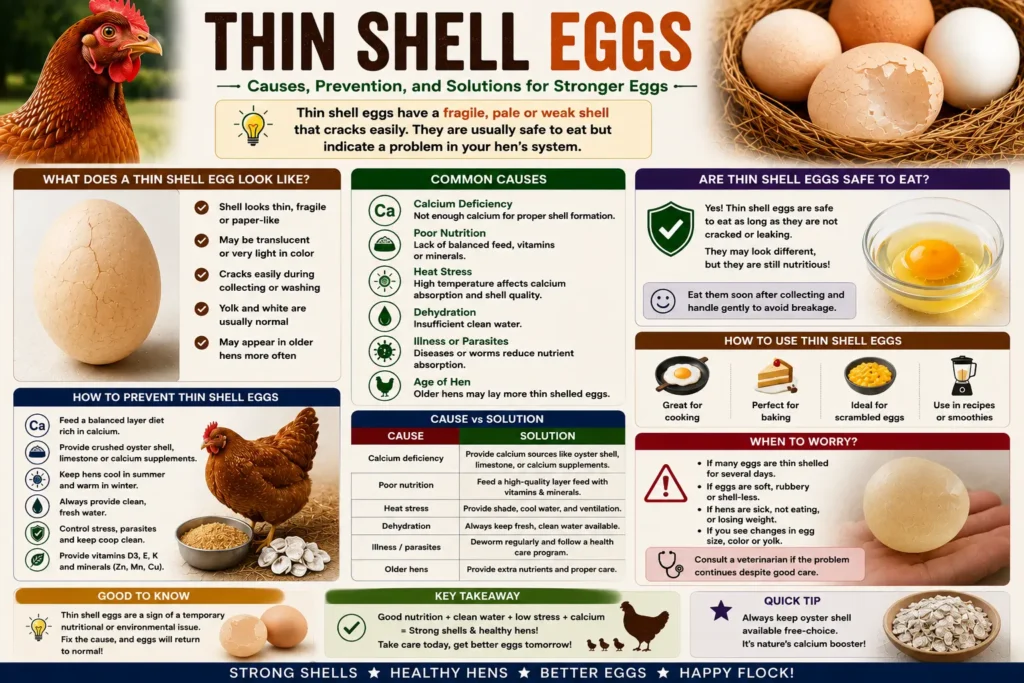
Thin shell eggs are one of the first warning signs that something in your flock’s diet, environment, or health has shifted. If you’ve cracked an egg only to feel the shell give way too easily, or watched one break during collection, you’re dealing with a real management issue — not bad luck. This guide walks through every known cause of thin shell eggs, how to tell them apart, and the exact steps to get your hens back to laying strong, well-formed eggs.
Table of Contents
Quick Answer
Thin shell eggs usually come from low calcium intake, poor vitamin D3 absorption, hen age, heat stress, or an underlying respiratory disease. Most cases improve within 1–2 weeks once the root cause is corrected. Persistent thin shells after diet and environment fixes call for a vet check.
What Causes Thin Shell Eggs?
A hen builds her eggshell almost entirely at night, pulling calcium from her diet and, when that’s not enough, from her own bones. When that calcium supply chain breaks down anywhere along the line, you get a thin egg shell instead of a solid one.
The main causes fall into four categories:
- Nutritional gaps — not enough calcium, phosphorus, or vitamin D3
- Physiological factors — hen age, molting, or the natural end of a laying cycle
- Environmental stress — heat, overcrowding, or sudden lighting changes
- Disease — infectious bronchitis, Newcastle disease, egg drop syndrome, or mycoplasma infections
Read More: https://lashegg.com/wrinkled-eggs/
How to Identify Thin Shell Eggs
A thin-shelled egg often flexes slightly under light pressure, feels lighter than normal, or cracks during routine handling. Some are translucent when held up to light, showing thin or uneven patches. Others look normal but crush easily in the carton. If you’re seeing several of these in the same week, it’s time to look at the flock as a whole rather than one hen.
Nutritional Causes of Thin Egg Shells
Calcium Deficiency
Calcium is the single biggest factor in shell strength. A laying hen needs roughly 4 grams of calcium a day, and most of that goes straight into the shell gland. Standard layer feed is formulated for this, but problems creep in when hens free-range heavily and fill up on low-calcium treats, or when a flock is fed a grower or all-flock ration instead of a true layer feed.
Signs of calcium deficiency:
- Thin shell eggs or soft-shelled eggs
- Reduced egg production
- Brittle bones in older hens
- Egg binding in severe cases
Vitamin D3 and Phosphorus
Calcium can’t do its job without vitamin D3, which controls how much calcium a hen actually absorbs from her gut. Hens kept indoors with limited natural sunlight, or fed a feed low in D3, can develop thin shells even when calcium intake looks adequate on paper. Phosphorus works alongside calcium and needs to stay in the correct ratio — too much phosphorus can block calcium absorption entirely.
Expert Tip
Offer crushed oyster shell free-choice in a separate dish rather than mixing it into feed. Hens instinctively eat more of it in the late afternoon, timing intake with the overnight shell-building process.
Table: Common Causes of Thin Shell Eggs and Their Fixes
| Cause | Key Sign | Fix |
| Calcium deficiency | Thin, chalky, or soft shells | Add free-choice oyster shell; confirm layer feed calcium % |
| Low vitamin D3 | Thin shells despite good diet | Increase sunlight exposure or supplement D3 |
| Hen age (older layers) | Gradual shell thinning over months | Adjust calcium ratio for older birds; consider retirement age |
| Heat stress | Sudden thinning in summer | Increase ventilation, offer electrolytes, shade coops |
| Infectious bronchitis | Thin shells + respiratory signs | Veterinary diagnosis and biosecurity review |
| Newcastle disease | Thin shells + neurological signs | Immediate veterinary attention |
| Overcrowding/stress | Inconsistent shell quality flock-wide | Reduce density, stabilize routine |
| End of laying cycle (molt) | Thin shells before a full stop in laying | Allow natural molt rest; no action needed |
Disease-Related Causes of Thin Shell Eggs
Not every case of thin shell eggs is a diet problem. Several respiratory and reproductive diseases directly damage the shell gland, and these need to be ruled out when nutrition and environment checks come back normal.
Infectious Bronchitis Virus
This highly contagious virus targets the reproductive tract along with the respiratory system. According to the Merck Veterinary Manual, infectious bronchitis is a leading cause of misshapen, thin, and rough-shelled eggs in commercial and backyard flocks alike. Affected hens often show coughing, sneezing, or nasal discharge alongside the drop in shell quality.
Newcastle Disease
Newcastle disease can also disrupt shell formation, usually paired with more severe symptoms like tremors, twisted necks, or sudden death in unvaccinated flocks. This is a reportable disease in many regions, so any suspicion should go straight to a veterinarian or local agricultural extension office.
Egg Drop Syndrome and Mycoplasma
Egg drop syndrome, caused by an adenovirus, produces thin-shelled and shell-less eggs without obvious respiratory symptoms, making it harder to catch early. Mycoplasma gallisepticum infections can produce similar shell effects alongside chronic respiratory disease.
When to Call a Vet
Contact a poultry veterinarian if thin shell eggs are paired with any of the following: coughing, sneezing, lethargy, reduced feed intake, greenish diarrhea, or a sudden flock-wide drop in egg production. A single thin egg from one hen rarely needs a vet visit — a pattern across multiple birds does.
Environmental and Management Causes
Heat Stress
Hens pant to cool down in high heat, and panting lowers blood carbon dioxide levels in a way that reduces calcium carbonate available for the shell. This is one of the most common summer causes of thin shell eggs, especially in regions with sustained temperatures above 85°F (29°C).
To reduce heat-related shell thinning:
- Provide shade and increase airflow in the coop
- Offer cool water throughout the day
- Add electrolytes during heat waves
- Feed calcium supplements in the evening when hens eat more actively
Lighting and Stress
Sudden changes in daylight hours, predator scares, moving to a new coop, or introducing new birds can all trigger short-term stress that shows up as thin or oddly shaped eggs within a few days. These cases usually resolve on their own once the flock settles.
Overcrowding
Crowded coops increase competition for feed and calcium supplements, meaning lower-ranking hens may simply not get enough. Spacing recommendations from university extension poultry programs generally suggest at least 4 square feet per bird inside the coop, more for larger breeds.
Age and Life-Stage Causes
Hen Age
Shell quality naturally declines as hens get older, particularly after their second or third laying year. Older hens absorb calcium less efficiently, and their shell gland loses some capacity over time. This is a gradual, expected change rather than a health emergency.
Molting
During a molt, egg production slows or stops entirely as the hen redirects nutrients into feather regrowth. Any eggs laid right before or after a molt may have thin or uneven shells. This resolves on its own as the molt finishes.
Point of Lay
Very young hens just starting to lay can also produce a few thin-shelled or oddly shaped eggs while their reproductive system calibrates. This typically settles within the first few weeks of laying.
How to Fix Thin Shell Eggs: Step-by-Step
- Check the feed label — confirm it’s a true layer feed with roughly 3.5–4.5% calcium, not a grower or all-flock blend.
- Add free-choice oyster shell in a separate container alongside the feed.
- Review water access — dehydration reduces calcium transport efficiency.
- Assess temperature — cool the coop during heat waves and add electrolytes.
- Watch for illness signs — coughing, discharge, or lethargy point toward disease rather than diet.
- Reduce stress triggers — stabilize lighting, limit sudden changes, manage flock density.
- Track hen age — older birds may need adjusted expectations and calcium ratios.
- Give it two weeks — most nutritional and stress-related thin shell egg cases improve within 10–14 days of correction.
Common Mistakes
- Mixing oyster shell directly into feed instead of offering it separately
- Assuming all thin shell eggs mean disease, causing unnecessary panic
- Switching feed brands repeatedly without giving each one time to work
- Ignoring heat stress until shell quality has already dropped
Did You Know?
A hen’s shell gland works almost exclusively at night, which is why calcium supplements offered in the late afternoon are more effective than morning feeding for improving shell strength.
Thin Egg Shell vs. Other Shell Problems
| Problem | Appearance | Most Likely Cause |
| Thin shell eggs | Feels fragile, may flex slightly, cracks easily | Calcium/D3 deficiency, heat, age, early disease |
| Soft shell eggs | Rubbery, little to no hard shell | Severe calcium deficiency, reproductive disorder |
| Shell-less eggs | No shell, membrane only | Stress, illness, or reproductive tract issue |
| Wrinkled shells | Ridged or bumpy texture | Infectious bronchitis, stress during shell formation |
| Rough/sandy shells | Gritty texture on surface | Excess calcium deposit, mild infection |
Warning
Persistent soft or shell-less eggs across multiple hens, especially with other illness signs, can indicate a serious reproductive or infectious disease. This pattern warrants a veterinary consultation rather than home management alone.
Prevention Checklist for Long-Term Shell Quality
- Feed a complete, age-appropriate layer ration
- Offer free-choice oyster shell daily
- Ensure clean water is always available
- Maintain coop ventilation and shade in warm months
- Keep flock density within recommended space guidelines
- Vaccinate against infectious bronchitis and Newcastle disease where regionally recommended (consult a vet)
- Monitor egg quality weekly to catch trends early
- Quarantine new birds before introducing them to the flock
Conclusion
Thin shell eggs are almost always traceable to one of four things: nutrition, age, environment, or disease. Start with the basics — feed quality, calcium access, and hydration — before assuming the worst. Track how many thin shell eggs you’re seeing and from how many hens, since a single occasional egg is very different from a flock-wide pattern. If thin shell eggs continue after two weeks of dietary and environmental fixes, or if they show up alongside respiratory or behavioral symptoms, a veterinary evaluation is the safest next step to rule out infectious causes.
5. FAQ
What deficiency causes thin shell eggs? Calcium deficiency is the most common cause of thin shell eggs, often made worse by low vitamin D3, which hens need to absorb calcium properly.
Can stress cause thin shell eggs? Yes. Sudden stress from predators, coop changes, or overcrowding can cause temporary thin shell eggs that usually resolve within a few days once the hen settles.
Are thin shell eggs safe to eat? Yes, thin shell eggs are safe to eat as long as the shell isn’t cracked or contaminated. Handle them gently and refrigerate promptly, following standard USDA egg safety guidance.
How long does it take to fix thin shell eggs? Most thin shell egg cases improve within 1–2 weeks after correcting calcium intake, hydration, or heat stress. Disease-related cases depend on the specific illness and treatment.
Do older hens always lay thin shell eggs? Not always, but shell quality does naturally decline with age. Many hens past their second or third laying year show gradually thinner shells even with a good diet.
Can heat cause thin shell eggs? Yes. Heat stress reduces the calcium carbonate available for shell formation, making thin shell eggs common during summer months.
What disease causes thin shell eggs? Infectious bronchitis, Newcastle disease, egg drop syndrome, and mycoplasma infections can all cause thin shell eggs, often alongside respiratory or neurological symptoms.