Corrugated Eggs: What the Ridges Mean and How to Fix It

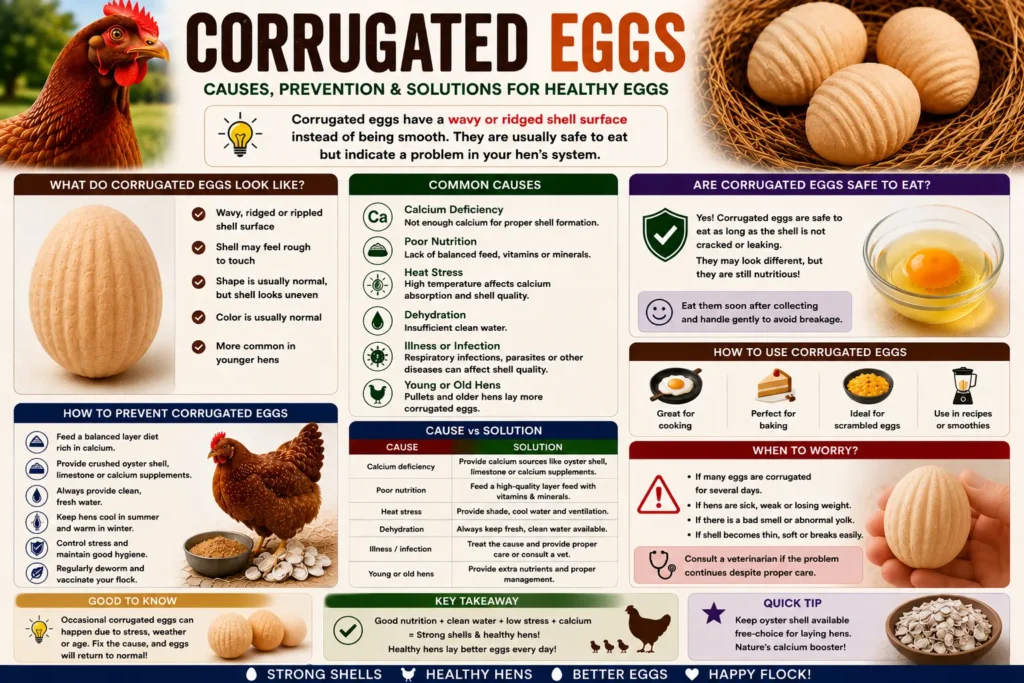
Corrugated eggs stand out the moment you pick one up. Instead of a smooth surface, the shell has visible ridges, bands, or wave-like lines running across it. Most flock owners see this once or twice and wonder if it’s harmless or a sign of something bigger. This guide covers every known cause of corrugated eggs, how to read the pattern on the shell, and the steps to bring shell quality back to normal.
Table of Contents
Quick Answer
Corrugated eggs are usually caused by a disruption during shell formation — most often stress, a respiratory illness like infectious bronchitis, or an issue with the shell gland. A single ridged egg is rarely serious. Ridges appearing across many hens, especially with respiratory symptoms, call for veterinary attention.
What Are Corrugated Eggs?
An egg spends about 20 hours in the shell gland, where thin layers of calcium carbonate are added in sequence to build a smooth, uniform shell. Corrugated eggs, sometimes called ridged eggs, happen when that layering process is interrupted, causing calcium to deposit unevenly and leave raised lines or bands across the surface.
Read More: https://lashegg.com/misshapen-eggs-causes-fixes-guide/
What the ridges can look like:
- Fine, wavy lines running around the egg’s width
- Raised bands that feel rough to the touch
- Deep grooves concentrated at one end of the egg
- A combination of ridges with thin or rough patches elsewhere on the shell
How to Identify Corrugated Eggs
Run a finger across the shell. True corrugated eggs have a texture you can feel, not just see — raised ridges rather than color variation or staining. If the ridges are new and isolated to one or two eggs, it’s likely a short-term disruption. If they’re showing up flock-wide or getting more pronounced, it points toward a more systemic cause.
What Causes Corrugated Eggs?
Stress During Shell Formation
Any sudden disruption while the shell gland is actively laying down calcium can leave a visible ridge. A predator scare, loud noise, rough handling, or even a startled flushing of the hen off the nest can interrupt the smooth, continuous process and show up as a ridge line on the finished egg.
Infectious Bronchitis Virus
This is the disease most consistently linked to corrugated and ridged eggs. According to the Merck Veterinary Manual, infectious bronchitis damages the tissue lining of the shell gland, and hens recovering from it often lay ridged, rough, or misshapen eggs for several weeks even after respiratory symptoms clear. This makes corrugated eggs a useful early warning sign during a bronchitis outbreak.
Shell Gland Irritation or Damage
Beyond infectious bronchitis, any inflammation or irritation of the shell gland — from other respiratory infections, prior injury, or chronic stress — can produce the same rippled, uneven shell texture.
Age-Related Shell Gland Changes
Older hens sometimes develop mild, occasional ridging as their shell gland becomes less efficient at laying down smooth, even layers. This tends to be subtle and doesn’t usually worsen quickly.
Expert Tip
Keep a simple log of which hens lay corrugated eggs and how often. An isolated ridge here and there is normal flock variation. A rising trend across multiple hens in the same week is the signal worth acting on.
Table: Common Causes of Corrugated Eggs
| Cause | Ridge Pattern | Action Needed |
| Stress or disruption during lay | Isolated, faint ridge on one egg | Reduce noise and handling stress |
| Infectious bronchitis | Widespread ridging, rough texture | Veterinary diagnosis and biosecurity review |
| Other respiratory infections | Ridging + chronic respiratory signs | Veterinary evaluation |
| Shell gland irritation | Recurring ridges from one hen | Monitor; consult vet if persistent |
| Older hen decline | Mild, occasional ridging | Adjust expectations; monitor overall health |
| Nutrient imbalance | Ridges combined with thin patches | Review calcium and vitamin D3 intake |
Corrugated Eggs and Infectious Bronchitis: What to Know
Infectious bronchitis is a highly contagious coronavirus that spreads quickly through a flock, usually via respiratory droplets or contaminated surfaces. It affects the respiratory tract first, but the strains that reach the reproductive system can leave a lasting mark on shell quality, including corrugated eggs, thin shells, and misshapen eggs.
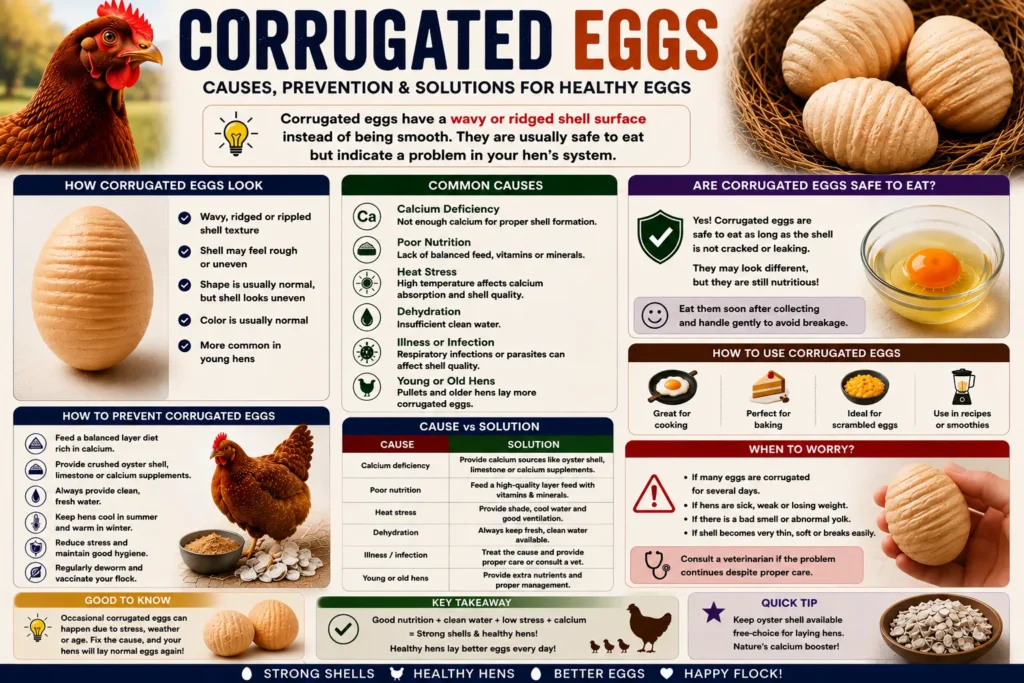
Typical signs alongside corrugated eggs:
- Coughing, sneezing, or rattling breath sounds
- Watery or swollen eyes
- Reduced feed intake
- A noticeable drop in overall egg production
Recovery from infectious bronchitis is common, but shell quality can take several weeks to return to normal even after the hen appears healthy again. There’s no specific cure — supportive care and prevention through vaccination are the main tools available, and vaccination decisions should be made with a veterinarian based on regional disease risk.
When to Call a Vet
Contact a poultry veterinarian if corrugated eggs appear alongside coughing, nasal discharge, lethargy, or a sudden flock-wide drop in production. One ridged egg from a single hen after a stressful day rarely needs medical attention — a pattern across the flock does.
Environmental and Management Factors
Handling and Nest Box Conditions
Rough handling during egg collection doesn’t cause ridges, since the shell is already hardened by then, but disturbances while the hen is still on the nest laying can. Quiet, private, well-bedded nest boxes reduce the odds of mid-lay interruptions.
Flock Health and Biosecurity
Because infectious bronchitis is airborne and highly contagious, basic biosecurity — quarantining new birds, disinfecting shared equipment, and limiting visitor contact with the flock — plays a direct role in preventing the disease that most commonly causes corrugated eggs.
Genetics and Individual Variation
Some hens are simply more prone to occasional shell irregularities due to individual differences in their reproductive tract, without any underlying health issue. This is normal variation rather than a flock-wide problem.
How to Reduce Corrugated Eggs: Step-by-Step
- Track the pattern — note how many hens are affected and how often.
- Reduce stress sources — secure the coop, limit loud disturbances, and keep nest boxes private.
- Watch for respiratory signs — coughing, discharge, or lethargy point toward infectious bronchitis.
- Review biosecurity — quarantine new birds and disinfect shared equipment regularly.
- Check nutrition — confirm a complete layer feed with adequate calcium and vitamin D3.
- Consult a vet on vaccination — especially in regions where infectious bronchitis is common.
- Give it time — shell quality after an illness can take several weeks to fully normalize.
Common Mistakes
- Assuming ridged eggs are always a serious disease without checking for a pattern first
- Skipping quarantine for new birds, increasing infectious bronchitis risk
- Overlooking mild respiratory symptoms that appear alongside corrugated eggs
- Blaming rough egg handling for ridges that actually formed inside the hen
Did You Know?
The ridges on corrugated eggs form inside the hen, not from handling after laying. By the time an egg reaches the nest box, the shell is already fully hardened, so any texture irregularity happened during the roughly 20-hour shell-building process.
Corrugated Eggs vs. Other Shell Texture Problems
| Problem | Texture | Most Likely Cause |
| Corrugated (ridged) eggs | Raised, wavy ridges or bands | Stress, infectious bronchitis, shell gland irritation |
| Sandpaper/rough shells | Gritty, uneven surface | Excess calcium deposit, mild irritation |
| Thin shell eggs | Smooth but fragile, flexes easily | Calcium or vitamin D3 deficiency, heat stress |
| Misshapen eggs | Lopsided, dented, or irregular overall shape | Stress, nest crowding, double ovulation |
| Wrinkled shells | Fine wrinkles, softer than ridges | Early-stage infectious bronchitis, stress |
Warning
A sudden rise in corrugated eggs across multiple hens, especially paired with respiratory symptoms, is one of the earliest visible signs of an infectious bronchitis outbreak. Early veterinary involvement can help limit spread through the rest of the flock.
Prevention Checklist for Fewer Corrugated Eggs
- Keep nest boxes quiet, private, and well-bedded
- Minimize sudden noise and predator exposure near the coop
- Quarantine new birds before flock introduction
- Disinfect shared equipment and coop surfaces regularly
- Feed a complete, age-appropriate layer ration with adequate calcium and D3
- Discuss infectious bronchitis vaccination with a vet if it’s common in your region
- Track shell texture trends weekly to catch flock-wide patterns early
Conclusion
Corrugated eggs are the flock’s way of showing that something interrupted the shell-building process, whether that’s a startled hen, an aging shell gland, or an infectious bronchitis outbreak moving through the coop. One ridged egg here and there is normal variation. Corrugated eggs spreading across multiple hens, especially alongside coughing or a drop in production, are worth tracking closely and discussing with a veterinarian to rule out infectious causes early.
5. FAQ
What causes corrugated eggs in chickens? Corrugated eggs are usually caused by stress during shell formation or infectious bronchitis, which irritates the shell gland and produces visible ridges on the shell.
Are corrugated eggs safe to eat? Yes, corrugated eggs are safe to eat as long as the shell isn’t cracked and the egg has been stored and handled properly, following standard USDA egg safety guidance.
Is infectious bronchitis the main cause of ridged eggs? It’s the most commonly reported disease cause, but stress, individual hen variation, and mild shell gland irritation can also produce corrugated eggs without any illness present.
How long do corrugated eggs last after an illness? Shell quality can take several weeks to fully normalize after a hen recovers from infectious bronchitis, even once respiratory symptoms have cleared.
Should I be worried about one corrugated egg? Not usually. A single ridged egg, especially after a stressful event, is common. A pattern across multiple hens or paired with respiratory symptoms is what warrants a closer look.
Can stress alone cause ridged eggs without illness? Yes. A startled or disturbed hen during the shell-forming window can produce a temporary ridge without any underlying disease.