Rough Egg Shell: What the Gritty Texture Means

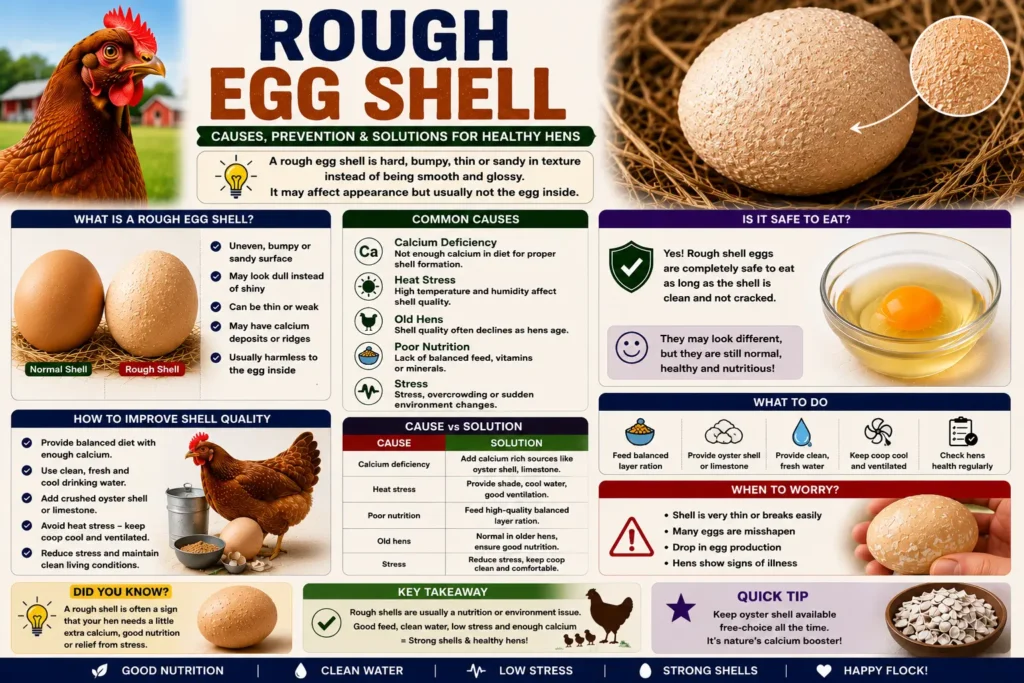
A rough egg shell feels different the second you pick it up — gritty, sandy, or bumpy instead of smooth. It’s one of the most common shell texture complaints among flock owners, and in most cases it’s a harmless side effect of how a hen’s shell gland works, not a sign of disease. This guide covers every known cause of a rough egg shell, how it differs from other shell texture problems, and when the texture is actually worth a closer look.
Table of Contents
Quick Answer
A rough egg shell is usually caused by excess calcium carbonate deposited unevenly on the shell surface during formation. It’s most common in older hens and doesn’t affect the egg’s safety. Rough shell eggs are worth watching only if they’re paired with ridging, thinning, or respiratory symptoms across the flock.
What Causes a Rough Egg Shell?
The shell gland adds calcium carbonate to an egg in layers over roughly 20 hours before it’s laid. A rough egg shell happens when extra calcium gets deposited on top of the normal shell layer, creating a gritty, sandpaper-like texture instead of a smooth finish.
Read More: https://lashegg.com/white-egg-spots-causes-explained/
What a rough egg shell typically feels and looks like:
- Gritty or sandy texture across all or part of the shell
- Small raised bumps that feel rougher than the surrounding shell
- Sometimes concentrated at one end of the egg, especially the pointed end
- A shell that’s often just as strong, or even stronger, than a smooth one
How Is a Rough Egg Shell Different From Other Textures?
A rough egg shell has a fine, sandy, all-over gritty feel, distinct from the raised, wavy lines of a corrugated egg or the isolated chalky bumps of white egg spots. All three come from calcium deposit issues in the shell gland, but the pattern and texture differ enough that they’re usually easy to tell apart once you know what to look for.
Who Gets a Rough Egg Shell Most Often?
Older Hens
The most common source of a rough egg shell is an older hen. As hens age, their shell gland becomes less efficient at applying calcium in smooth, even layers, and excess calcium deposits build up as texture instead. This is one of the most predictable shell changes that comes with a hen’s laying age.
Hens With High Calcium Intake
Hens getting more calcium than they’re actively using for shell production — often from a combination of layer feed and heavy oyster shell supplementation — can end up depositing the extra calcium as surface texture rather than absorbing all of it efficiently.
Individual Variation
Just like white egg spots, some hens naturally produce a slightly rougher shell than others, independent of age or diet, simply due to how their shell gland functions.
Expert Tip
If an older hen consistently lays a rough egg shell but her production and behavior are otherwise normal, there’s usually nothing to correct. This is a common, expected part of the aging laying process.
Table: Common Causes of a Rough Egg Shell
| Cause | Typical Pattern | Action Needed |
| Older hen shell gland changes | Gradual, consistent roughness over time | None — expected with age |
| Excess calcium supplementation | Widespread gritty texture | Reduce free-choice calcium slightly; monitor |
| Individual hen variation | Consistent from one specific hen | None — normal trait |
| Mild shell gland irritation | Rough texture combined with ridging | Monitor for other symptoms |
| Infectious bronchitis (less common) | Rough texture + respiratory signs | Veterinary evaluation |
| Nutrient imbalance | Roughness combined with thin patches | Review calcium-to-phosphorus ratio in feed |
Is a Rough Egg Shell a Health Concern?
For most hens, a rough egg shell reflects a normal shell gland doing its job with a little extra calcium to spare, especially in older birds. It’s rarely, on its own, a sign of illness, and it doesn’t compromise the egg’s safety or what’s inside.
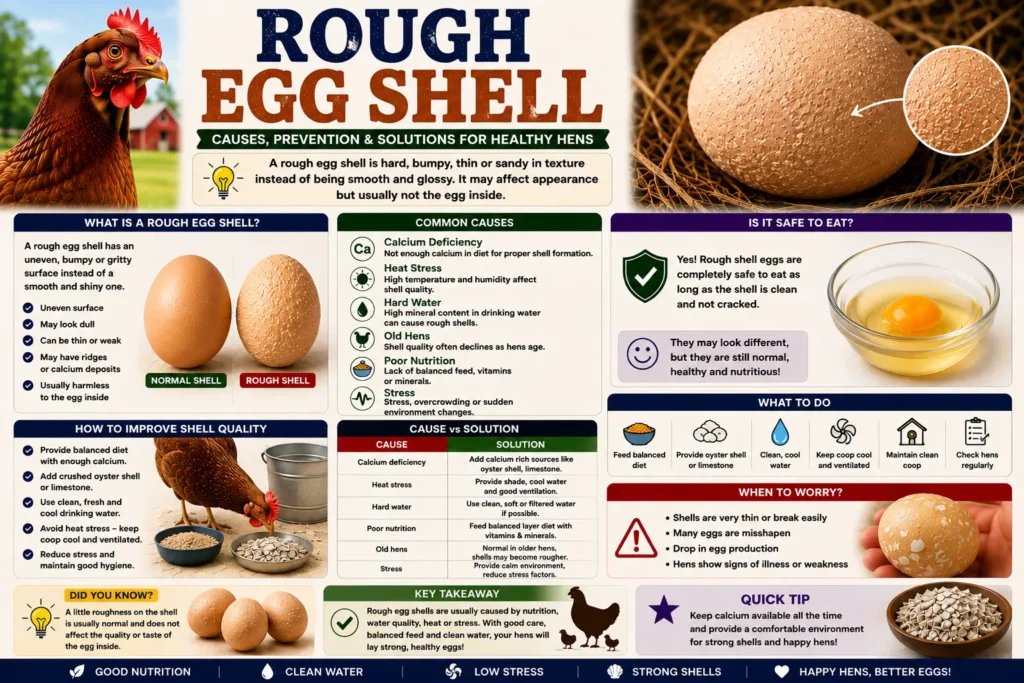
When It Might Signal Something More
A rough egg shell becomes more worth watching when it shows up alongside other shell changes — ridging, thinning, or misshapen eggs — or spreads suddenly across multiple hens rather than staying consistent with one or two older birds. According to general poultry veterinary references, including the Merck Veterinary Manual, respiratory diseases like infectious bronchitis can occasionally contribute to rough or irregular shell texture, though it’s more commonly associated with ridging and thin shells than roughness alone.
When to Call a Vet
Contact a poultry veterinarian if a rough egg shell appears alongside coughing, nasal discharge, a drop in egg production, or other shell abnormalities spreading across the flock. A consistently rough shell from one older, otherwise healthy hen doesn’t need veterinary attention.
Rough Egg Shell vs. Other Shell Texture Problems
| Problem | Texture | Most Likely Cause |
| Rough egg shell | Fine, sandy, gritty overall texture | Excess calcium deposit, older hens |
| Corrugated (ridged) eggs | Raised, wavy ridges or bands | Stress, infectious bronchitis, shell gland irritation |
| White egg spots | Isolated chalky bumps or patches | Uneven calcium deposit, normal variation |
| Thin shell eggs | Smooth but fragile, flexes easily | Calcium or vitamin D3 deficiency, heat stress |
| Wrinkled shells | Fine wrinkles, softer than ridges | Early-stage infectious bronchitis, stress |
Warning
A rough egg shell that develops suddenly across many hens at once, especially paired with coughing or a drop in flock-wide production, is different from the gradual roughness seen in aging hens. This pattern deserves a closer look rather than being written off as normal variation.
Does a Rough Egg Shell Affect Egg Safety or Quality?
A rough egg shell is safe to eat under the same standards as any other egg, following general USDA egg safety guidance. The texture change is a surface feature from calcium buildup and doesn’t indicate contamination or reduce the egg’s freshness. Some flock owners note that a rough egg shell can be slightly more prone to cracking during handling simply because of the uneven surface, so gentle handling is worth the extra care regardless of the cause.
Can Diet Reduce a Rough Egg Shell?
Reviewing Calcium Sources
If a rough egg shell is linked to excess calcium intake, switching from mixed-in calcium supplements to free-choice oyster shell can help hens regulate their own intake more naturally, since they’ll eat only what they need rather than getting a fixed dose in every meal.
Balancing Calcium and Phosphorus
A properly formulated layer feed keeps calcium and phosphorus in the right ratio to support smooth, even shell deposition. If a rough egg shell shows up alongside other shell irregularities, reviewing the feed label for a complete, age-appropriate layer formulation is a reasonable first step.
When Diet Isn’t the Answer
Not every rough egg shell responds to a diet change, especially in older hens where the roughness comes from natural shell gland aging rather than excess intake. In these cases, the texture is simply part of that hen’s normal laying pattern going forward.
What to Do If You Notice a Rough Egg Shell
- Check the hen’s age — older hens are the most common, lowest-concern source.
- Review calcium supplementation — confirm it’s offered free-choice rather than force-fed in bulk doses.
- Watch for other shell changes — ridging or thinning alongside roughness is more notable than roughness alone.
- Track which hens are affected — one or two consistent hens versus a flock-wide shift changes the likely cause.
- Watch for illness signs — coughing or discharge shift this from a texture issue to a health question.
- Continue normal care — no action is needed for isolated, consistent roughness in an otherwise healthy hen.
Common Mistakes
- Assuming a rough egg shell always means too much calcium and cutting supplementation entirely
- Ignoring a sudden flock-wide texture change because “some roughness is normal”
- Confusing a rough egg shell with corrugated ridging, which has a different typical cause
- Overreacting to texture from a single older hen whose shell gland is simply aging normally
Did You Know?
A rough egg shell often shows up more at the pointed end of the egg because that’s typically the last section formed before laying, giving the shell gland less time to smooth out any extra calcium before the egg is laid.
Prevention Checklist for a Smoother Egg Shell
- Offer calcium free-choice rather than mixing large fixed doses into feed
- Feed a complete, balanced layer ration with the correct calcium-to-phosphorus ratio
- Expect natural roughness increases as hens age, rather than treating it as a problem
- Monitor for other shell or health changes rather than reacting to texture alone
- Keep the coop environment stable to support consistent shell formation
Conclusion
A rough egg shell is one of the more common, least concerning shell texture changes a flock owner will notice, especially as hens get older. It comes down to extra calcium being deposited on the shell surface rather than smoothly absorbed into it, and it doesn’t affect the egg’s safety. Keep an eye out for a rough egg shell that appears suddenly across multiple hens or comes paired with other shell irregularities or illness signs, and check in with a veterinarian if that broader pattern shows up.
5. FAQ
What causes a rough egg shell? A rough egg shell is usually caused by excess calcium carbonate deposited unevenly on the shell surface during formation, most common in older hens.
Is a rough egg shell safe to eat? Yes, a rough egg shell is safe to eat. The texture is a surface feature and doesn’t affect the egg’s safety, following standard USDA egg safety guidance.
Do older hens get more rough shell eggs? Yes. Older hens are the most common source of a rough egg shell, since their shell gland becomes less efficient at smooth calcium deposition over time.
Can too much calcium cause a rough egg shell? Yes, calcium intake beyond what a hen needs for shell production can deposit as surface texture, contributing to a rough egg shell.
Is a rough egg shell the same as a corrugated egg? No. A rough egg shell has a fine, gritty texture, while corrugated eggs have raised, wavy ridges. Both come from calcium deposit issues but look and feel different.
Should I worry about a rough egg shell? Usually not, especially from an older hen. A sudden flock-wide change or roughness combined with other shell problems or illness signs is what warrants a closer look.