
Calcium Deposits on Eggs: Why They Form and What They Mean

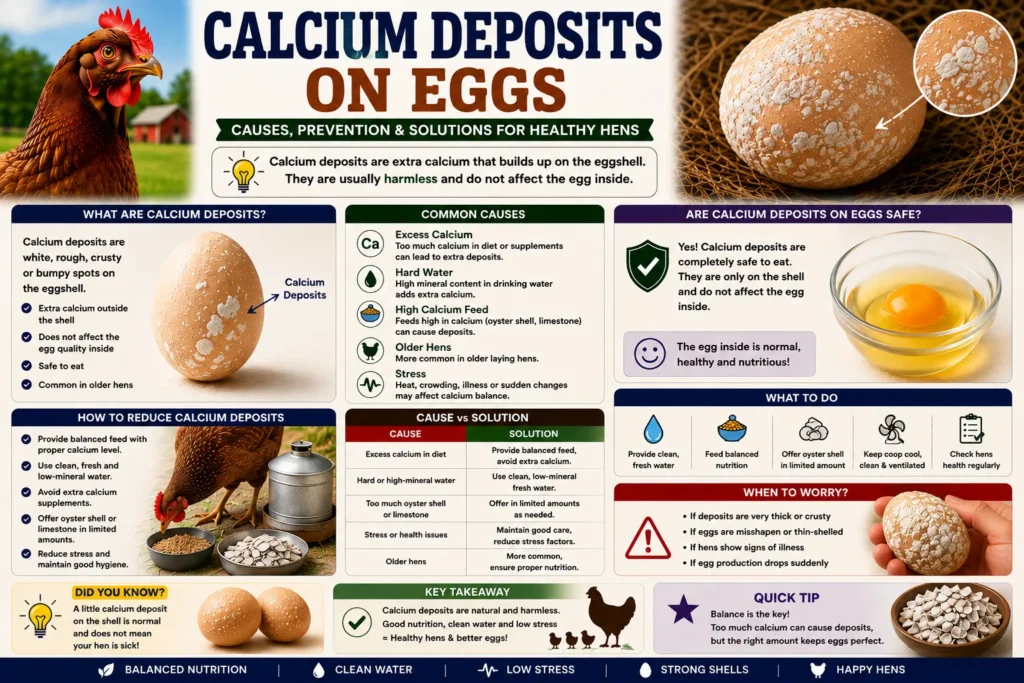
Calcium deposits on eggs show up in a few different forms — chalky white spots, gritty patches, or a general sandy texture across the shell. However they appear, they all trace back to the same basic process: extra calcium carbonate added to the shell after the main layer has already formed. This guide explains exactly why calcium deposits on eggs happen, the different ways they show up, and when they’re worth more than a passing glance.
Table of Contents
Quick Answer
Calcium deposits on eggs form when a hen’s shell gland adds extra calcium carbonate on top of the shell during the final hours of formation. They’re most common in older hens and hens with high calcium intake, and they don’t affect the egg’s safety. Deposits are worth watching only if they’re paired with ridging, thinning, or illness signs.
What Are Calcium Deposits on Eggs?
An eggshell is built almost entirely from calcium carbonate, applied in layers as the egg spends roughly 20 hours in the shell gland before laying. Calcium deposits on eggs happen when the shell gland adds more calcium than needed for a smooth, uniform shell, leaving visible texture on the surface once the egg is laid.
Read More:https://lashegg.com/rough-egg-shell-causes-explained/
The main forms calcium deposits on eggs can take:
- Small, raised, chalky white spots scattered across the shell
- A broader gritty or sandy texture covering large sections of the shell
- Occasional raised bands or ridges when the extra calcium clusters unevenly
- A combination of these, especially in eggs from older hens
Why Does the Shell Gland Add Extra Calcium?
The shell gland doesn’t always distribute calcium with perfect precision. Slight variations in blood calcium levels, timing, or hormone activity during shell formation can leave more calcium available than needed for a smooth finish, and that excess gets deposited as visible texture rather than being reabsorbed.
What Causes Calcium Deposits on Eggs?
High Calcium Intake
Hens getting more dietary calcium than they’re using for active shell production are one of the most common sources of calcium deposits on eggs. This is especially common when oyster shell or another calcium supplement is mixed directly into feed rather than offered separately, since hens can’t regulate how much they eat that way.
Hen Age
Older hens are consistently more likely to show calcium deposits on eggs. As the shell gland ages, it becomes less efficient at laying down calcium in smooth, even layers, and excess deposits build up as visible texture more often than in younger hens.
Individual Hen Variation
Some hens simply produce more visible calcium deposits than others, regardless of diet or age, due to natural differences in how their shell gland functions. This is normal variation rather than a problem to correct.
Stress or Hormonal Fluctuation
Occasional stress or a shift in hormone activity during the laying cycle can disrupt the smooth, steady deposition of calcium, leading to a temporary increase in calcium deposits on eggs during that period.
Genetics and Breed
Certain breeds and even individual family lines show a natural tendency toward heavier calcium deposits, independent of feed or management.
Expert Tip
Offer calcium supplements free-choice in a separate dish instead of mixing them into feed. Hens are generally good at self-regulating calcium intake when given the choice, which reduces the odds of excess deposits building up on the shell.
Table: Common Causes of Calcium Deposits on Eggs
| Cause | Typical Appearance | Action Needed |
| High or unregulated calcium intake | Widespread gritty texture or spots | Switch to free-choice calcium supplementation |
| Older hen shell gland changes | Gradual increase in deposits over time | None — expected with age |
| Individual hen variation | Consistent from one specific hen | None — normal trait |
| Stress or hormonal shift | Temporary spike in deposits | Reduce stress triggers; monitor |
| Genetics/breed tendency | Consistent across related hens | None — normal trait |
| Underlying shell gland irritation | Deposits combined with ridging or thinning | Monitor for other symptoms; consult vet if pattern grows |
Types of Calcium Deposits on Eggs
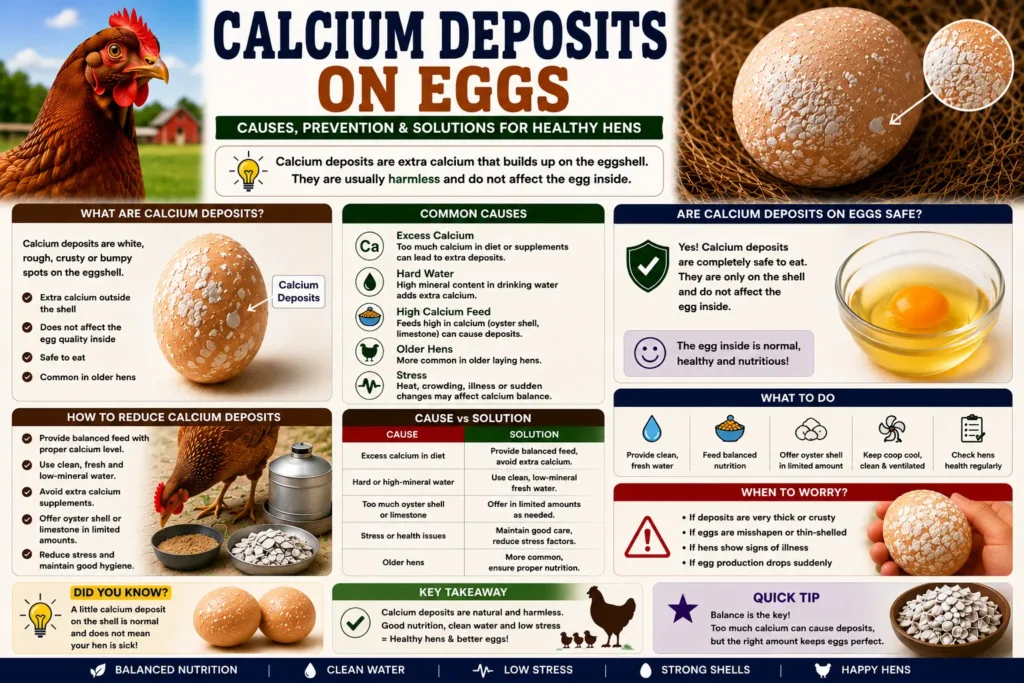
White Egg Spots
Small, raised, chalky bumps or patches scattered across the shell. These are isolated deposits, usually the mildest and most common form calcium deposits on eggs take.
Rough or Sandy Shell Texture
A broader, all-over gritty feel rather than isolated spots, most often seen in older hens whose shell gland deposits excess calcium across a wider area rather than in distinct patches.
Calcium Ridges or Bands
Less common, but sometimes extra calcium clusters into raised lines or bands rather than spots or general grit, especially when the excess builds up quickly during one section of shell formation.
How to tell the difference:
- Spots feel isolated and chalky under a fingertip
- Rough texture feels gritty across most of the shell
- Ridges feel like raised lines rather than scattered bumps
Are Calcium Deposits on Eggs Safe?
Yes. Calcium deposits on eggs are a shell surface feature only, and they don’t affect the egg white, yolk, or overall food safety. An egg with visible calcium deposits is safe to eat under the same standards as any other egg, following general USDA egg-handling guidance: keep it clean, refrigerated, and used within a normal timeframe.
Do Calcium Deposits Weaken the Shell?
Generally, no. Since the deposits are extra calcium rather than missing calcium, a shell with visible deposits is often just as strong, or occasionally stronger, than a completely smooth one. The exception is when deposits appear alongside genuinely thin or fragile sections of shell, which points toward an uneven calcium supply issue rather than simple surface buildup.
When Calcium Deposits on Eggs Might Signal Something More
Occasional calcium deposits on eggs are not, by themselves, a disease symptom. A few patterns are worth watching more closely, especially in combination with other changes.
Combined With Other Shell Irregularities
Calcium deposits paired with ridging, thinning, or misshapen eggs can point toward the same underlying shell gland disruptions linked to stress or infectious bronchitis, rather than simple excess intake.
A Sudden Flock-Wide Increase
Occasional deposits from a few hens, especially older ones, is normal. A sudden jump in calcium deposits on eggs across many hens at once is different, and it’s worth reviewing recent changes in feed formulation, supplementation, or flock health.
When to Call a Vet
Contact a poultry veterinarian if calcium deposits on eggs appear alongside coughing, nasal discharge, a drop in egg production, or other shell abnormalities spreading across multiple hens. Isolated deposits on otherwise normal, strong shells don’t need veterinary attention.
Calcium Deposits on Eggs vs. Other Shell Issues
| Shell Feature | Appearance | Most Likely Cause |
| Calcium deposits on eggs | Chalky spots, grit, or raised patches | Excess calcium, older hens, normal variation |
| Thin shell eggs | Smooth but fragile, flexes easily | Calcium or vitamin D3 deficiency, heat stress |
| Corrugated (ridged) eggs | Raised wavy lines or bands | Stress, infectious bronchitis, shell gland irritation |
| Misshapen eggs | Lopsided, dented, irregular overall shape | Stress, nest crowding, double ovulation |
| Blood or meat spots (inside egg) | Small spots in yolk or white, not on shell | Minor blood vessel rupture, unrelated to shell |
Warning
Don’t assume every shell irregularity is a calcium deposit issue. A shell that’s genuinely thin or fragile alongside visible deposits points toward uneven calcium supply, which is a different management issue than simple excess buildup.
How to Manage Calcium Deposits on Eggs
- Switch to free-choice calcium — offer oyster shell separately rather than mixed into feed.
- Review total calcium intake — check whether multiple supplement sources are stacking up unnecessarily.
- Confirm feed formulation — a complete layer feed is designed to balance calcium and phosphorus correctly on its own.
- Expect more deposits from older hens — this is a normal, expected shift rather than a problem to fix.
- Watch for other shell changes — deposits alone rarely need action; combined irregularities do.
- Track flock-wide patterns — a sudden shift across many hens is more significant than gradual change in one or two.
Common Mistakes
- Assuming calcium deposits on eggs always mean the diet needs a major overhaul
- Mixing calcium supplements directly into feed instead of offering them free-choice
- Cutting calcium supplementation too aggressively, which can create a deficiency instead
- Ignoring a genuine flock-wide texture shift because “some deposits are normal”
Did You Know?
A hen can process and deposit more than 2 grams of calcium into a single eggshell, and she does almost all of it overnight, which is exactly why the timing of calcium availability matters as much as the total amount she eats.
Prevention Checklist for Fewer Calcium Deposits on Eggs
- Offer oyster shell or another calcium source free-choice, separate from feed
- Feed a complete, age-appropriate layer ration with balanced calcium and phosphorus
- Avoid stacking multiple calcium supplements without reviewing total intake
- Expect gradual increases in deposits as hens age, rather than treating it as abnormal
- Monitor for accompanying shell or health changes rather than deposits alone
Conclusion
Calcium deposits on eggs are one of the most common and least concerning shell surface changes a flock owner will see, whether they show up as spots, grit, or occasional bands. They reflect a shell gland adding a bit of extra calcium rather than a hen in poor health, and they don’t affect the safety of the egg. Keep watching for calcium deposits on eggs that come paired with thinning, ridging, or illness signs, and bring in a veterinarian if that broader pattern shows up across the flock.
5. FAQ
What causes calcium deposits on eggs? Calcium deposits on eggs form when a hen’s shell gland adds extra calcium carbonate on top of the shell during the final stage of formation, often from high calcium intake or an aging shell gland.
Are eggs with calcium deposits safe to eat? Yes, eggs with calcium deposits are safe to eat. The deposits are a shell surface feature and don’t affect the egg white or yolk, following standard USDA egg safety guidance.
Do older hens get more calcium deposits on eggs? Yes. Older hens are one of the most common sources of calcium deposits on eggs, since their shell gland becomes less efficient at smooth calcium deposition over time.
Can too much calcium in the diet cause deposits? Yes. Calcium intake beyond what a hen needs for active shell production is one of the leading causes of calcium deposits on eggs, especially when supplements are mixed into feed rather than offered free-choice.
Do calcium deposits mean the shell is weaker? Not usually. Deposits reflect extra calcium rather than missing calcium, so a shell with visible deposits is often just as strong as a smooth one.
Should I stop giving my hens calcium supplements if I see deposits? Not entirely. Switch to free-choice supplementation so hens can regulate their own intake rather than cutting calcium altogether, which risks creating a deficiency instead.