Chicken Diseases: What Every Flock Owner Should Know

A hen that’s suddenly quiet, off her feed, or huddled in a corner is telling you something. Chicken diseases range from mild and easily managed to serious and fast-spreading, and knowing the difference can save your flock.
This guide covers the most common chicken diseases backyard and small-farm owners actually encounter: what causes each one, what symptoms to watch for, how they’re typically managed, and when home care isn’t enough.
Table of Contents
Quick Answer: The most common chicken diseases include Marek’s disease, infectious bronchitis, coccidiosis, Newcastle disease, avian influenza, fowl pox, and infectious coryza. Most are preventable with good biosecurity, vaccination where available, and clean housing.
Read through the symptom tables below to narrow down what you might be seeing, then check the “When to Call a Vet” section before deciding how urgent your situation is.
How to Recognize Chicken Diseases Early
Chickens instinctively hide weakness, since a sick bird is an easy target for predators in the wild. That means by the time symptoms are obvious, the illness has often been developing for days.
Watch for these early warning signs:
- Reduced appetite or water intake
- Drop in egg production
- Lethargy or reluctance to move
- Ruffled feathers or hunched posture
- Pale comb or wattles
- Isolating from the rest of the flock
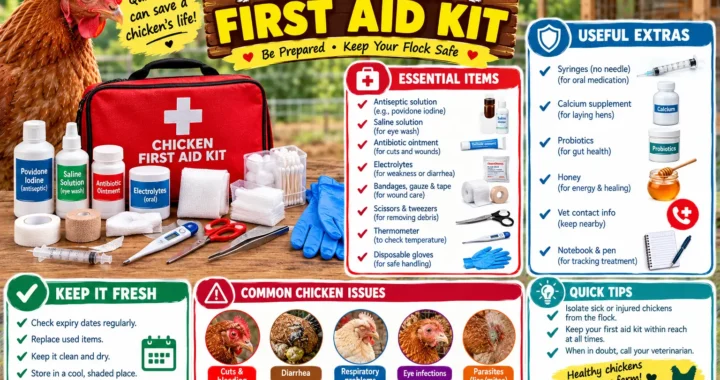
Expert Tip: Weigh or handle your birds regularly so you notice weight loss early. A chicken can lose a surprising amount of condition under a full set of feathers before it’s visible from a distance.
Common Chicken Diseases: Viral Infections
Viral chicken diseases spread quickly and are generally the hardest to treat directly, since antibiotics don’t work against viruses. Prevention through vaccination and biosecurity is the main defense.
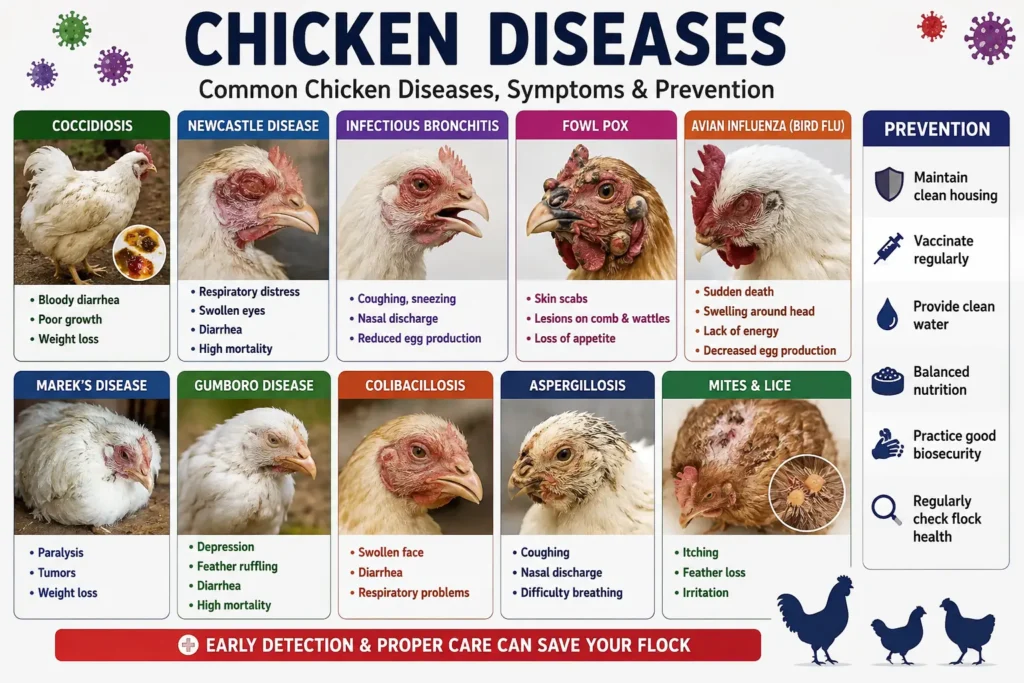
Marek’s Disease
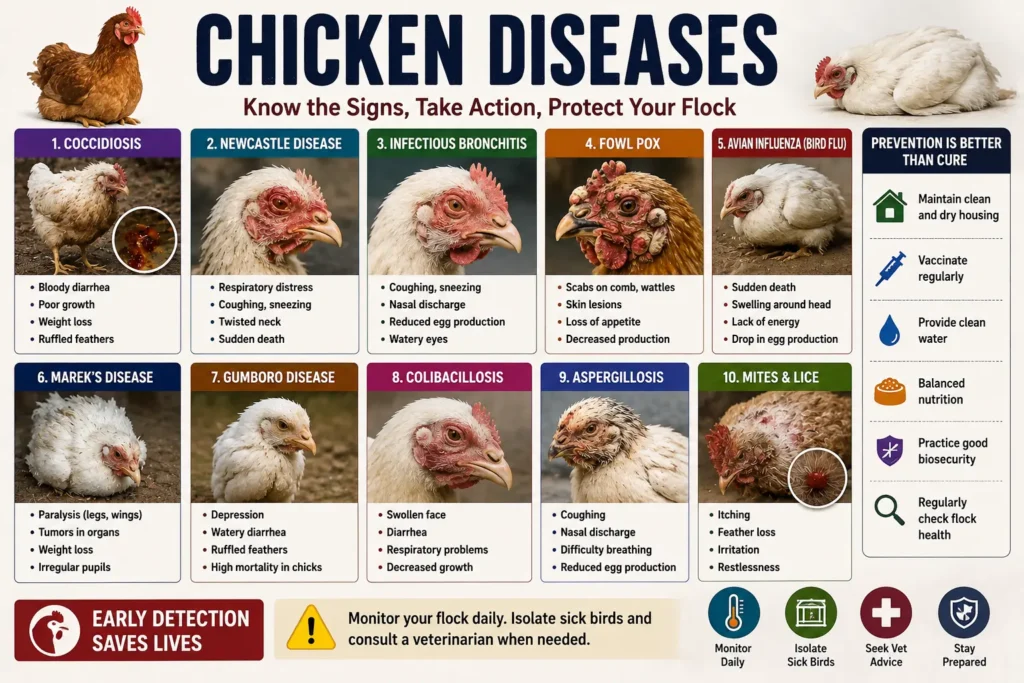
A highly contagious herpesvirus that affects the nervous system and can cause tumors. Symptoms include leg or wing paralysis, weight loss, and irregular pupils. There is no cure once a bird is infected, but a vaccine given at the hatchery is highly effective at preventing the disease.
Newcastle Disease
A serious viral disease affecting the respiratory, nervous, and digestive systems. Symptoms include coughing, gasping, twisted neck, tremors, and a sharp drop in egg production. Newcastle disease is reportable to animal health authorities in many regions because of its severity and spread potential.
Infectious Bronchitis
A highly contagious respiratory virus causing coughing, sneezing, nasal discharge, and reduced egg production with thin or misshapen shells. According to the Merck Veterinary Manual, infectious bronchitis spreads rapidly through a flock and has no specific treatment beyond supportive care.
Avian Influenza (Bird Flu)
A viral disease with strains ranging from mild to highly pathogenic. Symptoms of the severe form include sudden death, swelling of the head and face, and a dramatic drop in egg production. Avian influenza outbreaks are closely tracked by the USDA and typically require reporting to animal health officials.
Read More: https://lashegg.com/egg-abnormalities-in-chickens/
Fowl Pox
Spread by mosquitoes and direct contact, causing wart-like lesions on the comb, wattles, and unfeathered skin, or a diphtheritic form affecting the mouth and throat. It’s rarely fatal on its own but weakens birds and opens the door to secondary infections.
Infectious Laryngotracheitis (ILT)
A respiratory virus causing severe coughing, gasping, and sometimes blood-tinged mucus. It spreads fast in dense flocks and is more serious than a typical cold-like respiratory illness.
Table 1: Common Viral Chicken Diseases
| Disease | Main Symptoms | Treatable? | Prevention |
| Marek’s disease | Paralysis, tumors, weight loss | No cure | Hatchery vaccination |
| Newcastle disease | Coughing, twisted neck, tremors | Supportive care only | Vaccination, biosecurity |
| Infectious bronchitis | Coughing, poor shell quality | Supportive care only | Vaccination, biosecurity |
| Avian influenza | Sudden death, facial swelling | No specific treatment | Strict biosecurity, reporting |
| Fowl pox | Wart-like lesions | Usually self-limiting | Vaccination, mosquito control |
| ILT | Severe coughing, gasping | Supportive care only | Vaccination, biosecurity |
Common Chicken Diseases: Bacterial Infections
Bacterial chicken diseases can often be treated with veterinarian-prescribed antibiotics, but many also require culling or flock management changes to fully control.
Infectious Coryza
A bacterial respiratory disease causing facial swelling, nasal discharge, and a foul odor. It spreads through direct contact and contaminated water and often becomes a recurring problem once established in a flock.
Fowl Cholera
A serious bacterial illness that can cause sudden death or, in chronic cases, swollen joints and wattles. Outbreaks are more common in flocks with wild bird or rodent contact.
Mycoplasma Gallisepticum (Chronic Respiratory Disease)
Causes nasal discharge, facial swelling, and labored breathing, often worsened by stress or poor ventilation. It tends to persist in a flock long-term once introduced.
Salmonella (Pullorum and Fowl Typhoid)
Bacterial infections that can cause diarrhea, lethargy, and high mortality in young chicks. Some Salmonella strains are also a food safety concern for humans handling eggs and birds.
Table 2: Common Bacterial Chicken Diseases
| Disease | Main Symptoms | Treatment Approach |
| Infectious coryza | Facial swelling, nasal discharge | Vet-prescribed antibiotics |
| Fowl cholera | Sudden death or swollen joints | Vet-prescribed antibiotics, biosecurity |
| Mycoplasma gallisepticum | Nasal discharge, breathing trouble | Vet-guided management, reduced stress |
| Salmonella (Pullorum/typhoid) | Diarrhea, chick mortality | Vet diagnosis, flock testing |
Common Chicken Diseases: Parasitic Infections
Coccidiosis
Caused by microscopic parasites in the intestinal tract, coccidiosis is one of the most common chicken diseases in young birds. Symptoms include bloody diarrhea, lethargy, and poor growth. It’s managed with medicated feed for chicks and prompt veterinary treatment for outbreaks in older birds.
External Parasites (Mites and Lice)
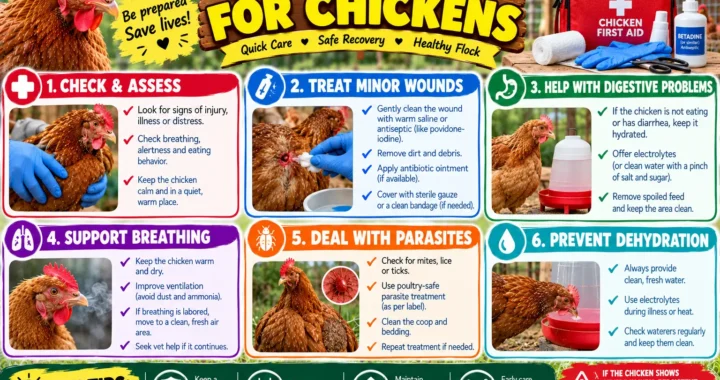
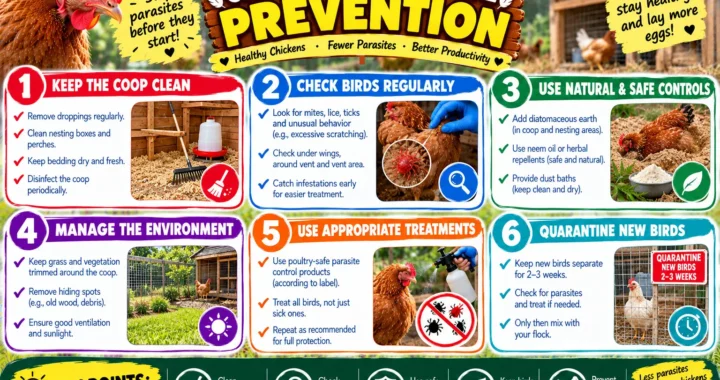
These pests cause feather damage, skin irritation, anemia in severe cases, and reduced egg production. Regular coop cleaning and dust bathing areas help prevent infestations.
Internal Worms
Roundworms, tapeworms, and other intestinal parasites can cause weight loss, reduced egg production, and poor feather condition. Fecal testing through a vet or extension service confirms the type of worm present before treatment.
Warning: Never use dewormers or antiparasitic products without confirming the parasite type first. Using the wrong product, or dosing without guidance, can be ineffective or harmful.
Common Chicken Diseases: Nutritional and Environmental Illness
Not every chicken illness is infectious. Some of the most common chicken diseases in backyard flocks come from diet or environment rather than a pathogen.
- Heat stress – panting, wings held away from the body, reduced egg production in hot weather
- Vitamin and mineral deficiencies – weak legs, poor shell quality, slow growth
- Egg binding – a hen straining to pass a stuck egg, a true emergency requiring prompt veterinary care
- Bumblefoot – a bacterial infection in the foot pad, often from injury or poor perch surfaces
Did You Know? Egg binding can become life-threatening within 24 to 48 hours if untreated. A hen straining repeatedly with no egg produced needs veterinary attention the same day.
Chicken Diseases and Egg Quality
Several chicken diseases show up first in the nesting box before other symptoms appear. Infectious bronchitis, egg drop syndrome, and Newcastle disease are all well-documented causes of soft, thin, wrinkled, or misshapen shells. If you’re seeing unusual eggs alongside any respiratory or behavioral symptoms, treat it as a possible disease signal rather than a coincidence.
Diagnosing Chicken Diseases: What a Vet Actually Does
Home observation narrows down the possibilities, but a firm diagnosis usually needs professional tools:
- Physical exam – checking weight, hydration, respiratory sounds, and skin condition
- Fecal testing – identifying parasites like coccidia or worms
- Blood testing – detecting antibodies or active infection markers
- Necropsy – in flock-wide outbreaks, examining a deceased bird often gives the clearest answer
- Swab testing – confirming specific viral or bacterial pathogens
University extension services and state veterinary diagnostic labs often provide affordable necropsy and testing services for backyard flock owners, and the AVMA maintains directories to help locate poultry-experienced veterinarians.
Common Mistakes When Managing Chicken Illness
Common Mistakes:
- Treating symptoms without knowing the underlying cause
- Assuming all respiratory sounds mean the same illness
- Delaying isolation of a sick bird, allowing disease to spread
- Using leftover medication from a previous illness without vet guidance
- Skipping quarantine for new birds before introducing them to the flock
Biosecurity: The Best Defense Against Chicken Diseases
- Quarantine new birds for at least two to four weeks before introducing them to your flock.
- Limit visitor and equipment contact between your flock and other bird owners’ flocks.
- Control rodents and wild birds, since both can carry and spread disease.
- Clean and disinfect feeders, waterers, and coop surfaces on a regular schedule.
- Use dedicated footwear or foot baths when moving between different bird areas.
- Vaccinate where recommended, especially for Marek’s disease, which has no treatment once contracted.
- Monitor flock health daily so illness is caught before it spreads.
The USDA’s biosecurity guidance and state poultry extension programs both emphasize these same core steps as the most effective way to prevent chicken diseases before they start.
When to Call a Vet
When to Call a Vet:
- A bird shows labored breathing, gasping, or persistent coughing
- Sudden death occurs in the flock, especially more than one bird
- A hen appears to be egg bound and straining without producing an egg
- Neurological signs appear, such as paralysis, tremors, or a twisted neck
- Diarrhea, lethargy, or appetite loss lasts more than a day or two
- You’re unsure which chicken disease you’re dealing with and symptoms are worsening
Chicken diseases that spread quickly, like Newcastle disease and avian influenza, can escalate within days. Fast professional evaluation protects both the affected bird and the rest of your flock.
5. FAQ
Q: What are the most common chicken diseases in backyard flocks? A: The most common chicken diseases in backyard flocks include coccidiosis, infectious bronchitis, Marek’s disease, external parasites like mites and lice, and Mycoplasma gallisepticum. Most are manageable with prevention, vaccination, and prompt veterinary care.
Q: How do I know if my chicken is sick? A: Watch for reduced appetite, lethargy, ruffled feathers, a drop in egg production, and isolation from the rest of the flock. These early signs of chicken illness often appear before more obvious symptoms.
Q: Can chicken diseases spread to humans? A: A few can, including certain Salmonella strains and, in rare cases, avian influenza. Good hygiene when handling birds and eggs, along with prompt reporting of suspected outbreaks, reduces this risk significantly.
Q: Is there a cure for Marek’s disease? A: No. There’s no cure once a bird is infected with Marek’s disease, which is why hatchery vaccination is the primary and most effective prevention method.
Q: What poultry diseases cause a drop in egg production? A: Infectious bronchitis, Newcastle disease, egg drop syndrome, and Mycoplasma gallisepticum are among the poultry diseases most commonly linked to a sudden drop in egg production.
Q: How can I prevent chicken diseases in my flock? A: Strong biosecurity, including quarantining new birds, controlling pests, cleaning regularly, and vaccinating where recommended, is the most effective way to prevent chicken diseases before they start.
Q: When is a chicken illness a true emergency? A: Labored breathing, sudden death in the flock, neurological symptoms, and suspected egg binding all count as emergencies that need same-day veterinary attention.