How to Prevent Prolapsed Vent: A Practical Management Guide

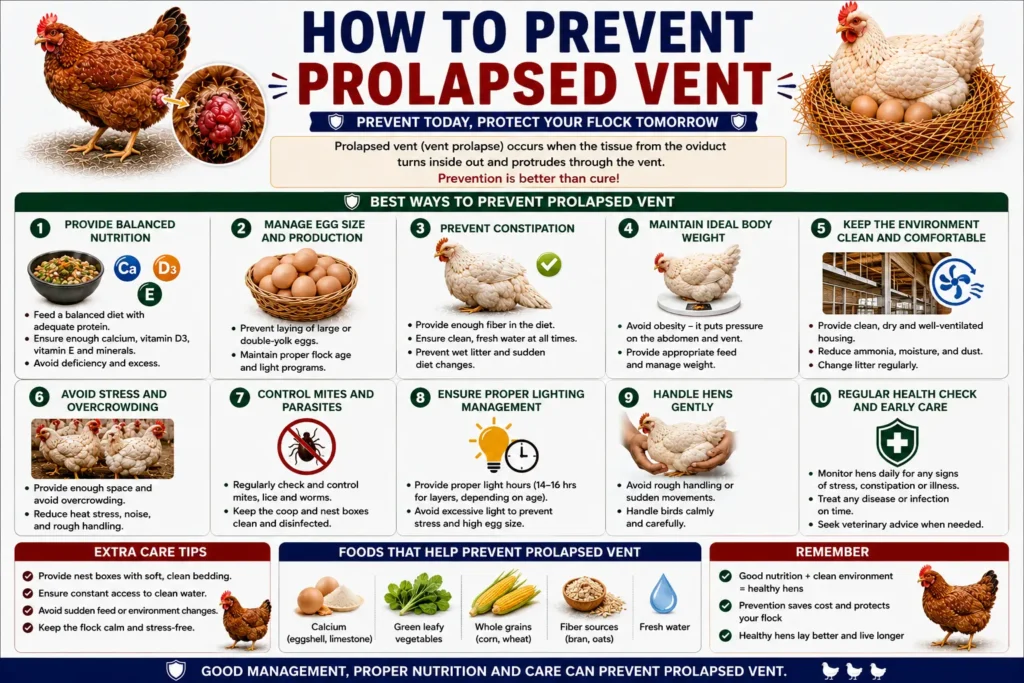
If you’ve already dealt with one prolapse in your flock, you already know why learning how to prevent prolapsed vent matters more than treating it after the fact. Prolapse has no reliable cure once it happens, which makes prevention the single most powerful tool a chicken keeper has.
The good news is that most prolapse prevention comes down to a handful of manageable factors: lighting, body weight, diet, and housing conditions. This guide walks through each one in detail, with practical numbers and timelines you can actually use, plus the warning signs that mean prevention alone isn’t enough anymore.
Table of Contents
Quick Answer: How to prevent prolapsed vent comes down to four pillars: control lighting so pullets don’t start laying before they’re physically ready, keep hens at a healthy body weight, feed a balanced layer diet with adequate calcium and protein, and manage housing to reduce stress and overcrowding. None of these guarantee prevention completely, since genetics also play a role, but together they meaningfully lower the risk across your flock.
Why Prevention Matters More Than Treatment
Commercial poultry guidance is blunt about this: there is no reliable cure for prolapse once it happens, and prevention is considered the best method of control. Backyard flocks have more flexibility than commercial operations, since a single hen can be isolated and given individual care, but the underlying principle is the same. Every prevention strategy below aims to reduce the physical strain on the vent tissue before a prolapse ever starts.
Read More: https://lashegg.com/prolapsed-vent-causes/
Pillar 1: Lighting Management
Light exposure directly controls when hens start laying and how large their eggs become, making it one of the most important levers for prolapse prevention.
Delay Light Stimulation Until Pullets Are Ready
Photo-stimulation, the practice of increasing light exposure to trigger laying, should only happen once pullets reach the right body weight and age for their breed, typically around 17 weeks in many strains. Starting too early forces immature birds into production before their reproductive tract has finished developing, a well-documented driver of prolapse.
Check Flock Uniformity Before Stimulating Light
Commercial poultry guidance recommends checking flock uniformity, meaning how evenly developed the birds are, before increasing light. If uniformity falls under roughly 70%, it’s worth delaying light stimulation so less-developed birds have time to catch up. Backyard keepers with mixed-age flocks can apply the same logic: don’t rush the youngest or smallest birds into lay just because others are ready.
Control Light Duration and Intensity
- Avoid exceeding 16 hours of light per day; some guidance recommends staying closer to 15 hours
- Reduce light intensity where possible, since dimmer conditions in the coop reduce vent-pecking behavior and laying stress
- Keep nest boxes dark, which both encourages natural laying behavior and reduces the chance that other hens notice and peck at a vent that hasn’t fully retracted
Expert Tip: If you’re using supplemental light in winter to maintain egg production, resist the urge to add more than necessary. A modest, well-timed light schedule supports laying without pushing hens toward the oversized eggs and early onset that raise prolapse risk.
Pillar 2: Weight and Body Condition Management
Prevent Obesity
Overweight hens face compounding risk: excess fat adds pressure around the reproductive tract, and heavier hens tend to lay larger eggs, both of which increase the odds of prolapse. Avoiding high-calorie treats, monitoring portion sizes, and providing space for natural movement all help keep body weight in a healthy range.
Watch for Underweight Hens Too
Being too thin carries its own risk, since poor muscle tone throughout the body, including around the vent, makes tissue less able to retract properly. The goal isn’t the thinnest hen possible, but a hen at a healthy, breed-appropriate weight.
Use Body Condition Checks Regularly
Periodically feeling a hen’s keel bone and breast muscle gives you a rough sense of her body condition without needing scales for every bird. Hens that feel unusually bony or, at the other extreme, heavily padded around the keel are worth a closer look at their diet and activity level.
Pillar 3: Nutrition and Feed Management
| Nutrient Focus | Why It Matters for Prevention |
| Calcium (via oyster shell, free-choice) | Supports shell quality and the muscle contractions needed for normal laying |
| Balanced protein (commonly 16–18% in layer feed) | Maintains muscle tone and supports healthy tissue repair |
| Calcium-to-phosphorus balance | Supports both skeletal and reproductive health together |
| Consistent hydration | Prevents constipation-related straining, a lesser-known prolapse trigger |
| Avoiding excess energy-dense feed | High-fat, high-carbohydrate diets can promote excess abdominal fat, narrowing the space eggs pass through |
Feed Formulated for the Right Life Stage
Feeding pullets a diet formulated specifically for growth, then transitioning to a complete layer feed once they reach point of lay, supports proper development instead of rushing the reproductive system. Skipping this staged approach, or feeding an unbalanced homemade diet, is a common and preventable contributor to prolapse.
Warning: If your flock is producing a lot of double-yolked eggs, that’s a signal worth acting on, not ignoring. Gently restricting excess feed intake and reviewing your lighting program can help bring egg size back toward normal and reduce prolapse risk going forward.
Pillar 4: Housing and Stress Management
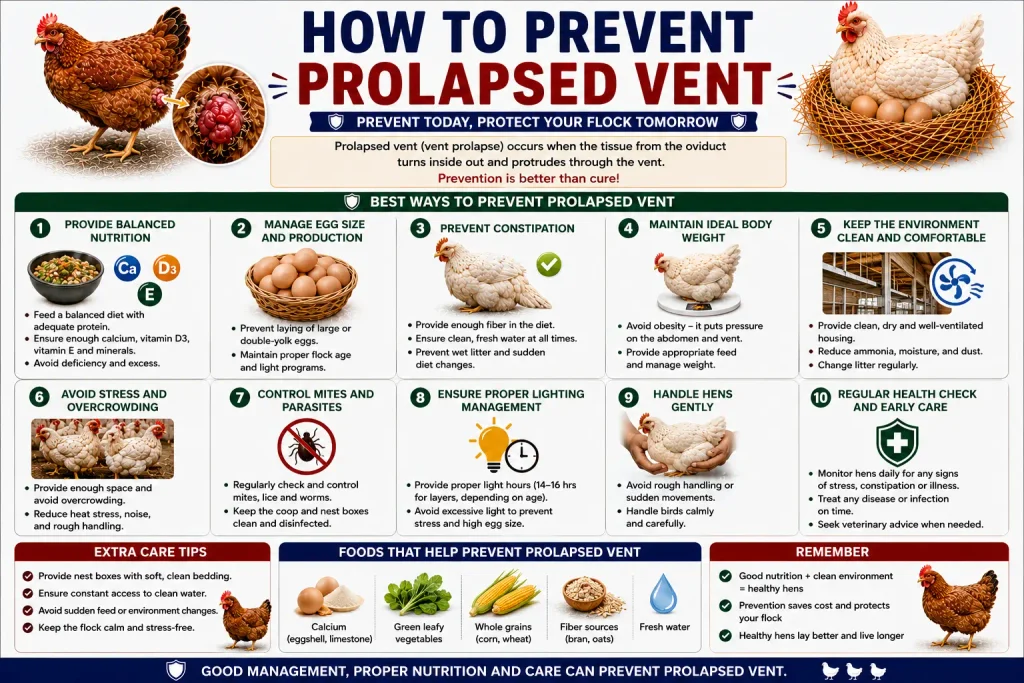
- Reduce overcrowding. Competition for nest boxes and feeders increases stress and can lead to rushed, poorly timed laying.
- Provide enough nest boxes. A general guideline is one nest box for every four to five hens, so birds aren’t forced to wait or lay in stressful conditions.
- Keep the coop clean. Poor hygiene contributes to infections that can weaken reproductive tissue over time.
- Minimize sudden environmental stress. Predator scares, extreme temperature swings, and abrupt diet changes all add physiological stress that can affect laying health.
- Watch for pecking order issues. Chronic stress from flock hierarchy conflicts can affect a hen’s overall condition and resilience.
How to Prevent Prolapsed Vent by Life Stage
| Life Stage | Prevention Priorities |
| Chick and grower (0–16 weeks) | Proper nutrition for skeletal development, adequate space, no early light stimulation |
| Point of lay (16–20 weeks) | Confirm body weight before increasing light; transition to layer feed |
| Peak production | Monitor for double-yolked eggs, maintain calcium intake, watch body condition |
| Older, established layers | Extra attention to muscle tone loss, egg size increases, and any prolapse history |
Breed-Specific Prevention Considerations
Since high-production hybrid layers are statistically more prone to prolapse than many heritage breeds, keepers of these birds should be especially consistent with calcium supplementation and regular body condition checks. This doesn’t mean hybrid layers can’t be kept safely, but it does mean prevention deserves a little extra attention compared to slower-laying heritage breeds.
Did You Know? Some poultry genetics programs are actively working to flatten the natural increase in egg size as hens age, aiming to reduce the physical demand placed on older birds and lower flock-wide prolapse rates over time. This shows prevention isn’t only a keeper responsibility; breeding programs play a role too.
Common Mistakes That Undermine Prevention Efforts
- Rushing pullets into lay for early eggs. The short-term gain isn’t worth the long-term prolapse risk.
- Overcorrecting with calcium alone. Calcium is important, but skipping protein balance, weight management, and lighting control leaves major risk factors unaddressed.
- Ignoring double-yolked eggs as a warning sign. A rise in double-yolkers often signals it’s time to review feed and light management, not just something to celebrate as a bonus.
- Using intense, all-day artificial lighting. More light isn’t always better; excessive intensity and duration both raise prolapse and pecking risk.
- Treating prevention as a one-time setup. Body weight, feed needs, and lighting requirements shift across a hen’s life, so prevention strategies need periodic review, not a single starting adjustment.
What Prevention Cannot Fully Control
Even with excellent management, prevention has limits. Genetics, individual anatomy, and breed predisposition all play a role that management alone cannot eliminate. This is worth knowing upfront so a prolapse, if it happens despite good care, doesn’t feel like a management failure. It’s also why ongoing monitoring matters even in a well-managed flock.
When to Call a Vet
Prevention reduces risk, but it doesn’t replace veterinary care when needed. Reach out to a poultry-experienced vet if:
- A hen prolapses despite consistent prevention efforts, especially more than once
- You notice a pattern of blood-streaked eggs, which can signal vent-pecking related to a prolapse issue in the flock
- A hen shows signs of an underlying reproductive condition, such as abnormal egg shape, reduced laying, or lethargy
- You’re managing a larger flock and want guidance on a tailored lighting or nutrition program
Final Thoughts
Learning how to prevent prolapsed vent isn’t about a single fix. It’s an ongoing combination of thoughtful lighting, steady weight management, balanced nutrition, and calm, well-managed housing. None of these steps guarantee a prolapse-free flock, since genetics and individual anatomy still play a role, but together they meaningfully lower the odds for every hen in your care. Keep monitoring body condition, egg size, and behavior regularly, and loop in a vet if a hen prolapses despite your best prevention efforts.
5. FAQ
Q: What is the single best way to prevent prolapsed vent in chickens? A: There isn’t one single fix, but controlling light exposure so pullets aren’t rushed into laying too early is one of the highest-impact steps, since it directly affects both egg size and reproductive tract readiness.
Q: How does prolapse prevention differ for young pullets versus older hens? A: Young pullets need controlled lighting and proper nutrition to avoid laying before they’re physically ready, while older hens need closer monitoring for muscle tone loss and naturally increasing egg size as they age.
Q: Can changing my hens’ diet really help prevent vent prolapse? A: Yes. Adequate calcium supports muscle contraction and shell quality, while balanced protein maintains tissue tone, and both play a meaningful role in prolapse prevention alongside weight and lighting management.
Q: Does keeping hens at a healthy weight actually lower prolapse risk? A: Yes. Overweight hens face added pressure on the reproductive tract and tend to lay larger eggs, while underweight hens often have weaker overall muscle tone, so a healthy, breed-appropriate weight range is protective either way.
Q: Is there a way to fully guarantee my chickens never get a prolapsed vent? A: No. Genetics and individual anatomy play a role that management can’t fully control, so prevention lowers risk significantly but can’t eliminate it entirely.
Q: How much light should I give my hens to help prevent prolapse? A: Many poultry management sources recommend not exceeding 16 hours of light per day, with some suggesting closer to 15 hours, along with keeping light intensity moderate rather than harsh.
Q: Are certain chicken breeds harder to prevent prolapse in? A: High-production hybrid layers are statistically more prone to prolapse than many heritage breeds, so keepers of these birds benefit from being especially consistent with calcium supplementation and body condition monitoring.
Q: Should I worry if my hens are laying a lot of double-yolked eggs? A: It’s worth paying attention to, since frequent double-yolked eggs are linked to a higher prolapse risk. Reviewing feed intake and lighting can help bring egg size back toward normal.