Sour Crop Causes: Why It’s Not Really About Yeast

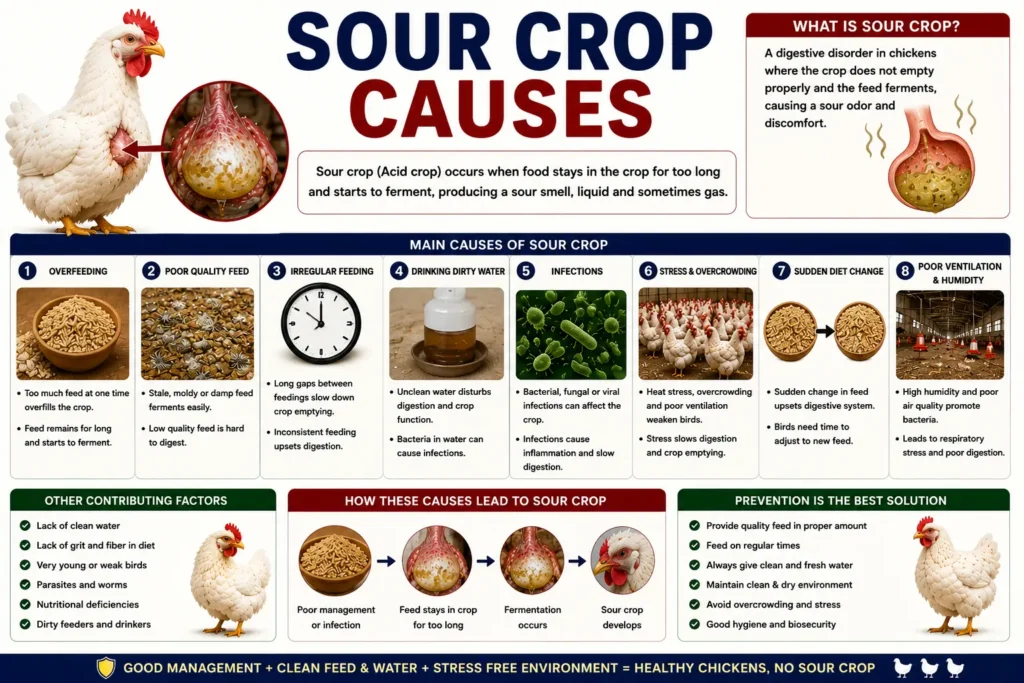
Most explanations of sour crop causes stop at “yeast overgrowth,” but that’s only half the story. Poultry veterinarians increasingly point to something called crop stasis, a loss of the crop’s normal muscle contractions, as the real root problem. The yeast and bacteria that cause the sour smell and fermentation are usually a secondary infection that moves in after the crop has already stopped emptying properly.
This guide goes beyond the basic yeast explanation to cover every documented cause and risk factor behind sour crop, from feeding habits and hydration to underlying disease and even nerve damage. Understanding the full picture matters, since fixing only the surface-level yeast without addressing why the crop stopped emptying in the first place often leads to the same problem coming right back.
Table of Contents
Quick Answer: Sour crop causes fall into two layers. The underlying trigger is usually crop stasis, meaning the crop loses its ability to fully empty due to overeating, dehydration, foreign object ingestion, illness, or nerve-related disease. Once food and fluid sit too long, yeast and bacteria overgrow and ferment the contents, which is the “sour crop” infection people usually notice first. Addressing only the yeast without fixing the underlying stasis is one of the most common reasons sour crop keeps coming back.
The Real Mechanism Behind Sour Crop
The crop is a stretchy, muscular pouch at the base of a chicken’s neck that stores food temporarily before it moves into the rest of the digestive tract. In a healthy bird, coordinated muscle contractions, called motility, push food and fluid out of the crop several times a day and overnight, so it’s normally flat or nearly empty by morning.
Crop stasis happens when this motility slows down or stops. Think of the crop like a balloon that’s been inflated and deflated many times: at first it snaps back to its original size, but eventually it can stretch out and lose some of its ability to contract fully. Once stasis sets in, food and liquid sit stagnant, creating the warm, moist environment where yeast, and sometimes bacteria, multiply and ferment the trapped contents. That fermentation is what most people mean when they say “sour crop.”
Did You Know? Several poultry veterinarians describe sour crop as happening only secondary to crop stasis. In other words, the crop doesn’t get infected first and then stop working; it stops working first, and the infection follows.
Read More: https://lashegg.com/sour-crop-treatment/
Crop Stasis Causes: The Underlying Trigger
Anything that disrupts normal crop motility can set the stage for sour crop to follow. Common triggers include:
Feeding-Related Causes
- Overeating or gorging, especially after feeders have been allowed to run empty and are then refilled, which can trigger a “feast or famine” response
- Sudden diet changes, which can overwhelm the digestive system’s normal rhythm
- Excessive treats, even healthy ones, which can throw off the balance of the crop and gut
- Consuming large amounts of fibrous material, such as long grass, hay, or straw, which is harder to break down and move along
Hydration-Related Causes
- Insufficient water intake, which thickens crop contents and makes them harder to pass into the stomach
- Dehydration from illness, since sick birds that stop drinking normally are more prone to thickened, stagnant crop contents
Foreign Object and Impaction-Related Causes
- Ingesting bedding, string, or other fibrous, indigestible material, which can physically block the crop
- Eating litter, sand, or small foreign objects, particularly common in free-range or curious birds
- Previously untreated impacted crop, which frequently leads directly into secondary sour crop if it isn’t resolved
Disease and Illness-Related Causes
- Marek’s disease, a viral illness that can damage the nerves controlling digestive tract movement
- Heavy metal toxicity, such as lead or zinc ingestion, which can impair normal gastrointestinal function
- Internal parasites, including crop worms like Capillaria, which chickens pick up by eating infected earthworms
- Systemic illness, including liver disease, kidney disease, or other conditions that affect overall metabolism and digestion
- General poor health or a weakened immune system, which makes it harder for the body to keep yeast and bacteria in check
Warning: If sour crop keeps recurring despite good feeding practices and hydration, an underlying illness like Marek’s disease, parasites, or organ dysfunction may be the real driver. These causes need veterinary diagnosis rather than repeated home treatment of the same symptoms.
Sour Crop Causes in Young Chicks
Sour crop, more precisely called crop stasis in this context, shows up differently in chicks than in adult hens, especially hand-fed or brooder-raised chicks.
- Improperly prepared or overly thick feed, particularly in hand-fed chicks
- Food that’s too hot or too cold, which can disrupt normal crop function
- Overfeeding during hand-feeding, especially if feedings happen too close together
- Underdeveloped immune systems, which make chicks more vulnerable to yeast and bacterial overgrowth than mature birds
Environmental and Stress-Related Causes
- Overcrowding, which raises overall stress and can indirectly affect digestion
- Extreme temperatures, both heat and cold, which stress the body and can slow normal digestive function
- Excessive water intake in chicks brooded at very high temperatures, which has been linked to a related condition called pendulous crop
- Long-term or unnecessary antibiotic use, which can disrupt the natural balance of gut bacteria and let yeast expand unchecked
Sour Crop Causes at a Glance
| Category | Specific Cause | How It Contributes |
| Feeding | Overeating or gorging | Overwhelms crop capacity and motility |
| Feeding | Sudden diet changes | Disrupts digestive rhythm |
| Feeding | Excess fibrous material | Harder to break down, slows passage |
| Hydration | Insufficient water intake | Thickens crop contents |
| Physical | Foreign object ingestion | Blocks normal crop emptying |
| Physical | Untreated impacted crop | Frequently progresses to secondary sour crop |
| Disease | Marek’s disease | Damages digestive tract nerve function |
| Disease | Heavy metal toxicity | Impairs gastrointestinal function |
| Disease | Internal parasites (e.g., Capillaria) | Weakens digestive tract, slows motility |
| Disease | Liver, kidney, or systemic illness | Affects metabolism and digestion broadly |
| Chicks | Improper hand-feeding | Immature digestive and immune systems |
| Environment | Stress, overcrowding, temperature extremes | Indirectly disrupts normal digestion |
What Causes Sour Crop in Hens Specifically
While sour crop can affect chickens of any age or sex, adult laying hens face a few additional pressures. The physical demands of consistent egg production add general metabolic strain, and hens are more likely to be free-ranging and picking up fibrous plant material, small stones, or other foreign objects that can contribute to impaction-related crop stasis. Hens recovering from illness or a recent course of antibiotics are also at higher risk, since both circumstances can disrupt the gut balance that normally keeps yeast in check.
Sour Crop vs. Impacted Crop: Are the Causes the Same?
These two conditions share overlapping causes but aren’t identical, and telling them apart matters for treatment.
| Feature | Sour Crop | Impacted Crop |
| Primary cause | Crop stasis leading to fermentation by yeast/bacteria | Physical blockage from fibrous material, foreign objects, or gorging |
| Crop feel | Soft, squishy, fluid-filled | Firm, hard, tightly packed |
| Relationship | Often develops secondary to impaction or stasis | Can lead directly into sour crop if untreated |
| Underlying issue | Infection and fermentation | Mechanical obstruction |
Expert Tip: Feeling the crop is the fastest way to narrow down which set of causes you’re dealing with. A soft, water-balloon feel points toward fermentation-driven sour crop, while a hard, unmoving mass points toward a physical blockage.
Common Mistakes When Investigating Sour Crop Causes
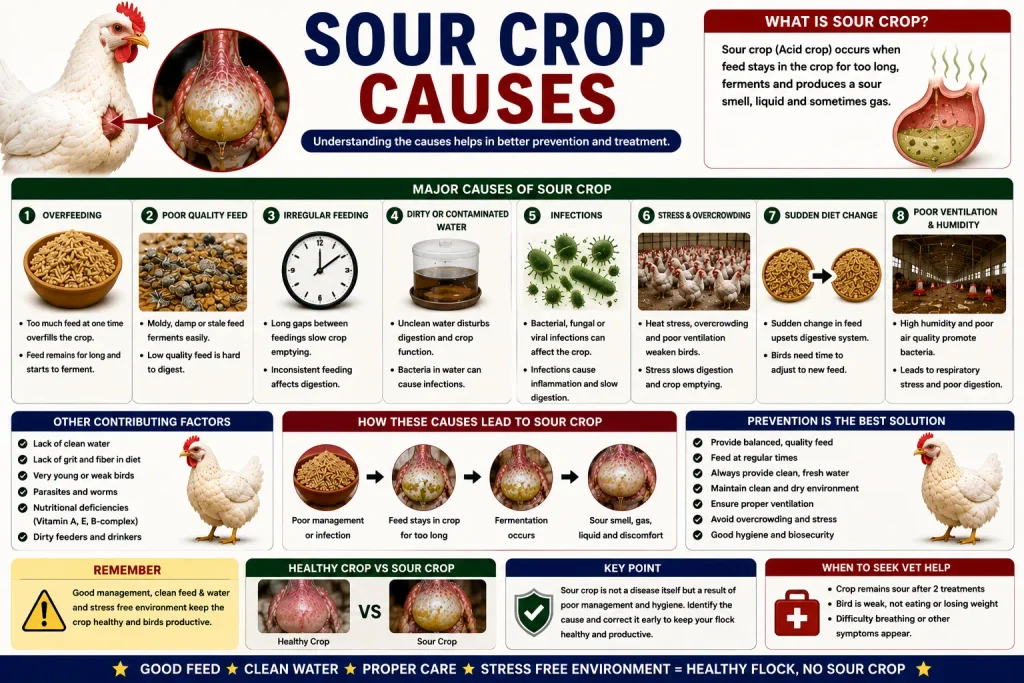
- Blaming yeast as the sole cause. Yeast overgrowth is usually secondary to an underlying motility or obstruction problem, so treating only the infection without addressing why the crop stopped emptying invites a repeat episode.
- Overlooking recent antibiotic use. A course of antibiotics for an unrelated issue can disrupt gut bacteria balance and contribute to yeast overgrowth weeks later.
- Assuming free-range chickens are always safer. Free-ranging comes with its own risks, including fibrous plant material, small stones, and foreign objects that can trigger impaction-related stasis.
- Ignoring recurring cases in the same bird. Repeated sour crop in one hen often points to an underlying illness, parasite burden, or chronic motility issue rather than a coincidence.
- Not considering chick-specific causes. Hand-feeding practices and immature immune systems make young chicks vulnerable in ways that differ from adult hen causes.
When to Call a Vet
Understanding sour crop causes helps with prevention, but certain patterns call for a veterinary workup rather than continued home management:
- Sour crop recurs repeatedly in the same bird despite good feeding and hydration practices
- You suspect an underlying illness, such as Marek’s disease, parasites, or organ dysfunction
- The crop feels hard rather than soft, suggesting impaction rather than straightforward fermentation
- Multiple birds in the flock are affected around the same time, which may point to a shared environmental or dietary cause
- A chick develops symptoms during hand-feeding, since technique and formula preparation may need adjustment
A vet can help identify which of these root causes applies to your specific bird, especially in recurring or multi-bird cases where the cause isn’t obvious from observation alone.
Final Thoughts
Sour crop causes go well beyond a simple yeast infection. The real starting point is almost always crop stasis, a loss of normal muscle contractions in the crop, triggered by anything from overeating and dehydration to foreign object ingestion, parasites, or underlying illness like Marek’s disease. Once the crop stops emptying properly, yeast and bacteria move in and ferment the trapped contents, producing the classic signs most keepers recognize. Addressing the underlying cause, not just the visible fermentation, is what actually prevents sour crop from becoming a repeat problem. Keep monitoring your flock’s crops each morning, and loop in a vet if a case keeps recurring or doesn’t fit the usual feeding-and-hydration explanation.
5. FAQ
Q: What is the real root cause behind most sour crop causes? A: The underlying trigger is usually crop stasis, a loss of the crop’s normal muscle contractions, which allows food to sit stagnant long enough for yeast and bacteria to overgrow and ferment it.
Q: What causes sour crop in hens specifically? A: Adult laying hens face the added metabolic demands of egg production, along with a higher chance of picking up fibrous plant material or foreign objects while free-ranging, both of which can contribute to crop stasis.
Q: Can sour crop be caused by something other than yeast? A: Yes. Overeating, dehydration, foreign object ingestion, internal parasites, Marek’s disease, and other systemic illnesses can all trigger the crop stasis that leads to secondary yeast or bacterial overgrowth.
Q: Why does sour crop keep coming back in the same chicken? A: Recurrence often points to an unresolved underlying cause, such as chronic motility issues, parasites, or illness, rather than a fresh, unrelated episode each time.
Q: Is sour crop in hand-fed chicks caused by the same things as in adult chickens? A: Not entirely. Chick-specific causes often include improperly prepared or overly thick formula, feeding temperature issues, and overfeeding, combined with an immature immune system that makes yeast overgrowth more likely.
Q: Can dehydration alone cause sour crop? A: Yes. Insufficient water intake thickens crop contents, making them harder to pass into the stomach and increasing the risk of stasis, especially in sick birds that have stopped drinking normally.
Q: Do parasites really cause sour crop? A: Internal parasites, particularly crop worms like Capillaria, can damage the digestive tract and slow normal motility, which can lead to crop stasis and the secondary fermentation known as sour crop.
Q: Is antibiotic use a risk factor for sour crop causes? A: Yes, indirectly. Antibiotics can disrupt the normal balance of gut bacteria, creating an opening for yeast to overgrow, which contributes to the fermentation seen in sour crop.