Sour Crop vs Impacted Crop: The Key Differences Every Keeper Should Know

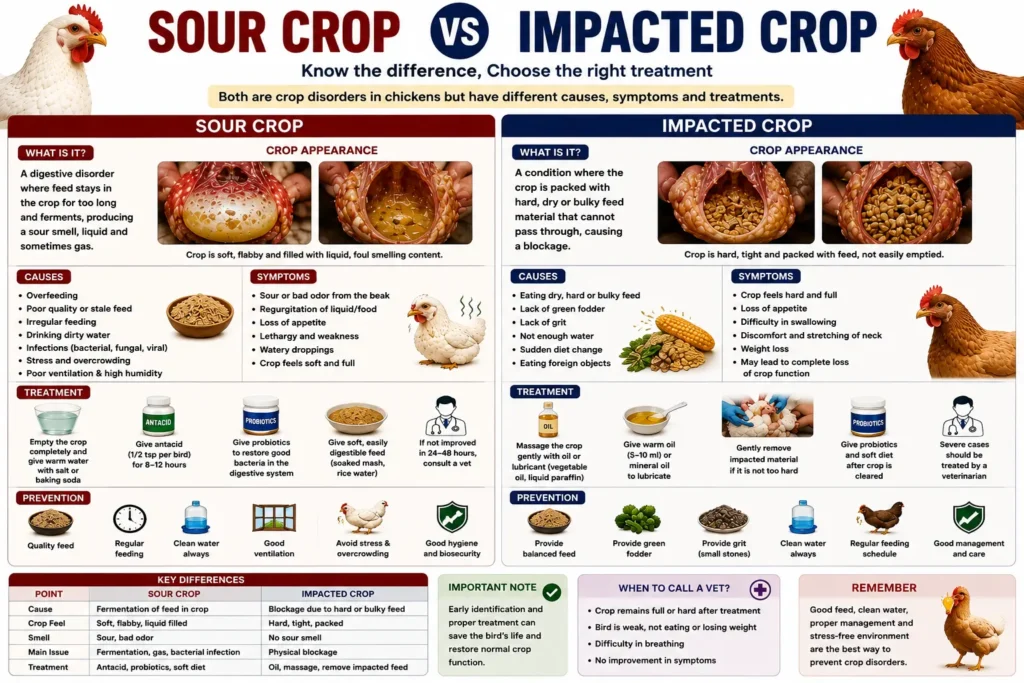
The fastest way to settle the sour crop vs impacted crop question is to feel your hen’s crop: soft and squishy points to sour crop, while firm and hard points to impacted crop. Both conditions involve a crop that isn’t emptying properly, but they have different underlying causes and need different first responses, which is exactly why telling them apart matters before you start treatment.
This guide walks through every distinguishing feature between these two conditions, how they’re connected, and what to do for each one. You’ll find a full symptom comparison table, a step-by-step way to check your hen at home, and answers to the questions keepers ask most when they’re not sure which condition they’re dealing with.
Table of Contents
Quick Answer: Sour crop is a fermentation and infection problem, usually caused by yeast overgrowth after the crop stops emptying properly; it feels soft, squishy, and fluid-filled, and comes with sour, yeasty breath. Impacted crop is a physical blockage, often from long grass, string, or other fibrous material; it feels firm, hard, and doesn’t move when pressed. Impacted crop can lead directly into sour crop if it’s left untreated, which is why the two conditions are so often confused.
Why These Two Conditions Get Mixed Up
Both sour crop and impacted crop share the same starting point: the crop isn’t emptying the way it should. In a healthy chicken, the crop is a stretchy pouch that stores food temporarily and empties out, through coordinated muscle contractions, several times a day and overnight. When that emptying process breaks down, for different reasons in each condition, food and fluid stay put longer than they should egg.
That shared starting point is exactly why people confuse the two. But what’s actually happening inside the crop, and what you need to do about it, is different for each one.
Sour Crop vs Impacted Crop: Side-by-Side Comparison
| Feature | Sour Crop | Impacted Crop |
| What’s happening | Yeast or bacterial overgrowth ferments stagnant crop contents | A physical mass blocks the crop from emptying |
| Crop feel | Soft, squishy, water-balloon-like | Firm, hard, tightly packed |
| Breath odor | Strong, sour, yeasty smell | Usually normal, or mild, unless secondary sour crop has developed |
| Common cause | Crop stasis, yeast overgrowth, prior antibiotic use | Long grass, string, litter, or overeating after fasting |
| Onset | Can develop gradually as fermentation builds | Often follows a specific event, like eating long grass or gorging |
| Regurgitation | Sour-smelling liquid or paste | Dry, fibrous material may come back up |
| First home step | Fasting, then gentle massage to help fermented contents move | Careful massage to help break up the mass; fasting is often needed too |
| Risk if untreated | Can worsen into severe infection or spread beyond the crop | Can lead directly into secondary sour crop |
| Vet treatment | Antifungal medication if candidiasis is confirmed | Manual crop emptying or surgery (ingluviotomy) if the mass won’t pass |
Did You Know? Poultry veterinarians often describe impacted crop as something that predisposes a bird to secondary sour crop. In other words, an impaction left alone doesn’t just stay a blockage; the trapped material eventually ferments, and the bird ends up with both problems at once.
Read More: https://lashegg.com/sour-crop-causes/
How to Check Which One You’re Dealing With
You don’t need special tools to start narrowing things down. Follow these steps with clean hands and a calm approach.
- Feel the crop first thing in the morning, before your hen has eaten. A crop that’s still full at this point already tells you something isn’t emptying normally.
- Press gently and note the texture. A soft, fluid-filled feel that shifts under light pressure points toward sour crop. A firm, dense mass that doesn’t move suggests impacted crop.
- Smell her breath. A strong, sour, yeasty odor is one of the clearest signs of sour crop. Impacted crop often has little to no distinct odor unless it has already progressed into secondary fermentation.
- Think about recent access to grass, string, or bedding. If she’s been free-ranging in long grass or has access to fibrous nesting material, impacted crop becomes more likely.
- Watch for regurgitation. Sour, liquid regurgitation points to sour crop, while dry, fibrous material points more toward an impaction.
Expert Tip: Keep this comparison simple with one mental shortcut: soft and sour points to sour crop, hard and packed points to impacted crop. When you’re not sure, treat it as impacted crop first, since forcing fermented material through a physical blockage can make things worse.
Symptoms Comparison Table
| Symptom | Sour Crop | Impacted Crop |
| Squishy, fluid-filled crop | Yes | No (firm instead) |
| Hard, unmoving mass | No | Yes |
| Sour or yeasty breath | Yes, classic sign | Usually absent early on |
| Reduced appetite | Yes | Yes |
| Lethargy | Yes, especially in advanced cases | Yes, especially with prolonged blockage |
| Weight loss | Yes | Yes |
| Regurgitation | Liquid, sour-smelling | Fibrous, dry material |
| Normal droppings | Often reduced or changed | Often reduced or absent |
Causes: What Leads to Each Condition
What Causes Sour Crop
- Crop stasis, where the crop loses its normal ability to contract and empty
- Yeast overgrowth, most often involving Candida albicans
- Recent antibiotic use, which can disrupt healthy gut bacteria
- Dehydration, which thickens crop contents and slows passage
- Illness or a weakened immune system
What Causes Impacted Crop
- Eating long grass, hay, or other fibrous plant material
- Ingesting string, bedding, or other indigestible objects
- Overeating or gorging after a feeder has run empty
- Eating litter, sand, or small foreign objects, particularly in free-range or curious birds
Warning: Never try to force a hard, impacted mass through the crop with aggressive pressure. This can tear or damage the crop wall. Gentle massage combined with fasting is the safer starting point, and a vet should be involved if the mass doesn’t soften and move within a day or so.
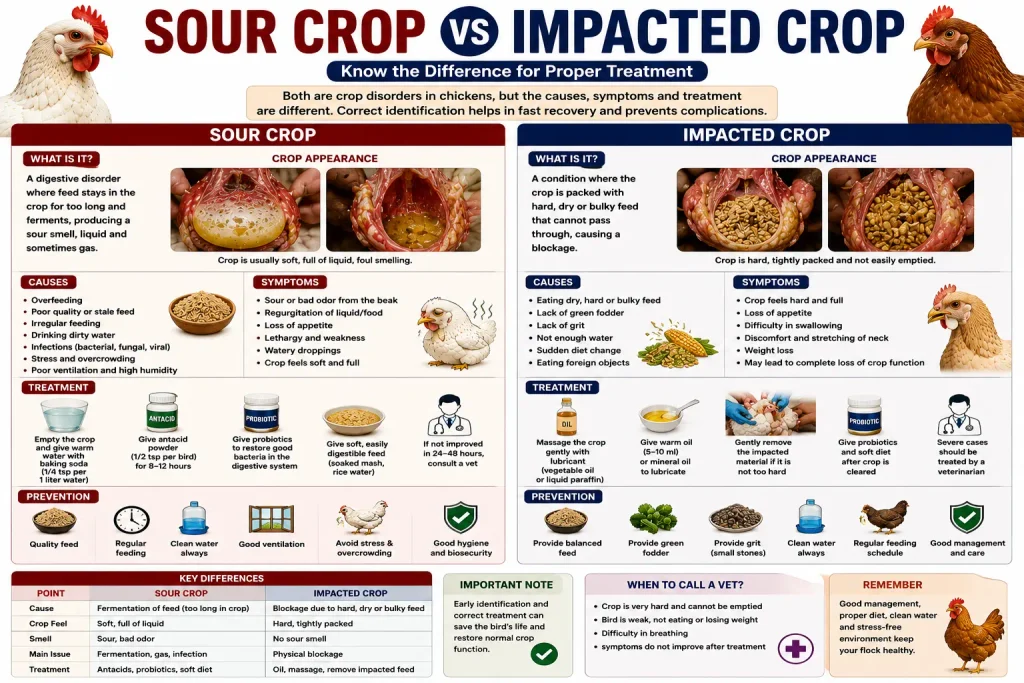
Treatment Differences
| Step | Sour Crop Approach | Impacted Crop Approach |
| Fasting | 12–24 hours, water available | Often needed to prevent adding to the blockage |
| Massage | Gentle, to help fermented liquid move along | Gentle, to help break up and soften the mass |
| Supportive care | Probiotics, diluted apple cider vinegar | Hydration support, sometimes small amounts of oil to help material pass |
| When home care fails | Veterinary antifungal medication | Manual crop emptying or surgical removal (ingluviotomy) |
| Underlying issue to address | Gut balance, hydration, crop motility | Diet, environment, and access to fibrous or foreign material |
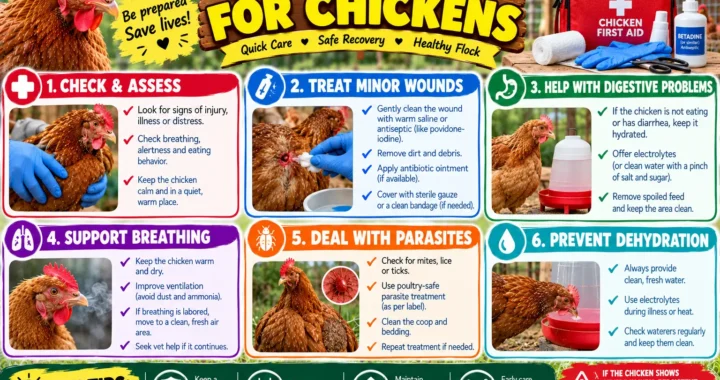
Both conditions call for the same first move: stop feeding while you assess the situation, and involve a vet if there’s no improvement within a day or two. Beyond that first step, the specific hands-on approach differs, since forcing a hard mass and helping fermented liquid drain are two different physical problems.
When One Condition Leads to the Other
Impacted crop and sour crop are connected, not competing, diagnoses. A chicken can develop a physical blockage first, and if that blockage isn’t cleared, the trapped material eventually ferments, adding a secondary sour crop infection on top of the original impaction. This is one of the more advanced things to understand in the sour crop vs impacted crop comparison: a case that starts as one condition can become both at once, and treatment then needs to address the blockage and the resulting infection together.
Common Mistakes When Comparing These Conditions
- Assuming every full crop is impacted. A full, soft, squishy crop is more consistent with sour crop or simple overfeeding than a true blockage.
- Assuming every full crop is sour crop. A firm, hard crop that doesn’t move under gentle pressure is more likely an impaction, which needs a different first step.
- Treating only the visible symptom. An impaction that’s cleared without addressing why the hen had access to long grass or foreign objects can happen again quickly.
- Skipping the smell check. Sour, yeasty breath is one of the most reliable ways to distinguish sour crop from a straightforward impaction.
- Waiting too long to seek help for either condition. Both can become serious within a day or two if the crop isn’t emptying and the hen isn’t eating or drinking normally.
When to Call a Vet
Regardless of which condition you suspect, involve a veterinarian if:
- The crop, soft or firm, hasn’t shown improvement after 24 to 48 hours of fasting and gentle massage
- You can’t tell whether you’re dealing with sour crop, impacted crop, or both
- The hen shows severe lethargy, significant weight loss, or stops eating and drinking entirely
- A suspected impaction feels very large or doesn’t soften at all with gentle massage
- The problem keeps recurring despite dietary and environmental changes
A vet can confirm which condition, or combination of conditions, is present and provide options like manual crop emptying, prescribed antifungal medication, or surgery when home care isn’t enough.
Final Thoughts
Settling the sour crop vs impacted crop question comes down to one simple check: feel the crop. Soft, squishy, and sour-smelling points to sour crop, while firm, hard, and unmoving points to impacted crop. The two conditions are closely linked, since an untreated impaction often leads directly into a secondary sour crop infection, so catching either one early gives you the best shot at a quick, uncomplicated recovery. Keep checking your flock’s crops each morning, and bring in a vet if you’re ever unsure which condition you’re facing or if home care isn’t making progress.
5. FAQ
Q: What is the easiest way to tell sour crop vs impacted crop apart? A: Feel the crop. A soft, squishy, fluid-filled crop points to sour crop, while a firm, hard, tightly packed crop points to impacted crop.
Q: Can a chicken have both sour crop and impacted crop at the same time? A: Yes. An impacted crop that isn’t cleared can lead directly into secondary sour crop, since the trapped material eventually ferments, so both conditions can be present together.
Q: Does sour crop or impacted crop smell different? A: Sour crop typically causes strong, sour, yeasty-smelling breath, while impacted crop often has little noticeable odor unless secondary fermentation has already started.
Q: What causes impacted crop most often? A: Impacted crop is usually caused by eating long grass, string, bedding, or other fibrous or indigestible material, or by overeating after a feeder has been empty for a while.
Q: Is the treatment the same for sour crop and impacted crop? A: Both start with fasting and gentle massage, but sour crop treatment focuses on supporting gut health and, if needed, antifungal medication, while impacted crop treatment focuses on softening and breaking up the physical mass, sometimes requiring manual removal or surgery.
Q: Which condition is more dangerous, sour crop or impacted crop? A: Both can become serious if untreated. Impacted crop carries the added risk of leading into sour crop, effectively combining both problems, so neither should be left unaddressed.
Q: Can I treat sour crop or impacted crop without knowing which one it is? A: You can start with fasting and gentle massage for either condition, but if you’re unsure and there’s no improvement within a day or so, a veterinary exam is the safest way to confirm which condition you’re dealing with.
Q: How do I prevent both sour crop and impacted crop in my flock? A: Keep feeders consistently filled to avoid gorging, limit access to long grass and fibrous treats, provide clean water at all times, and check your flock’s crops each morning as a routine habit.