Calcium for Laying Hens: What They Actually Need

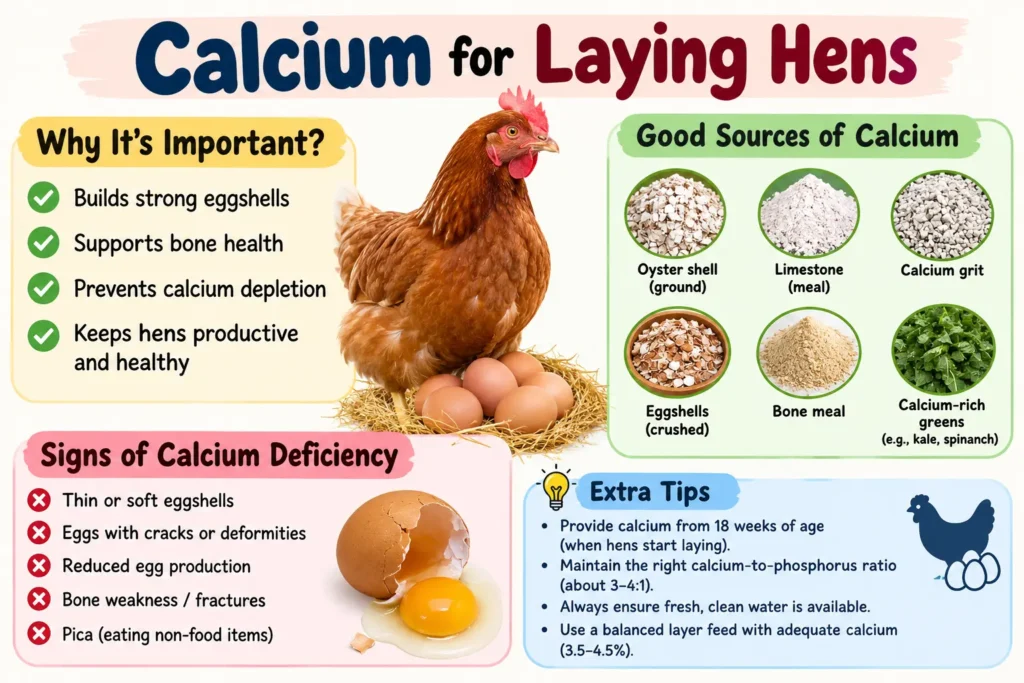
Calcium for laying hens is one of the most important, and most commonly mismanaged, parts of backyard flock nutrition. Getting it right supports strong shells and healthy bones; getting it wrong, in either direction, causes real problems that show up in the nesting box and beyond.
This guide works as a practical reference: how much calcium requirements actually look like by life stage, a clear comparison of the most common calcium supplements for chickens, and exactly how to feed calcium correctly across a mixed-age flock.
Quick Answer: Laying hens need roughly 4 to 4.5 grams of calcium per day, far more than non-laying birds. This is best provided through a complete layer feed containing 3.5 to 4% calcium, supplemented with free-choice oyster shell offered separately. Avoid feeding high-calcium layer feed to chicks, growing pullets, or roosters, since their calcium requirements are much lower.
Table of Contents
Calcium Requirements by Life Stage
Why One Feed Doesn’t Fit Every Bird
Calcium requirements shift dramatically as a chicken moves from chick to pullet to actively laying hen. Feeding the wrong calcium level at the wrong stage causes real problems in both directions, whether that’s deficiency in layers or kidney strain in younger birds.
| Life Stage | Approximate Calcium Need | Appropriate Feed Type |
| Chick (0–8 weeks) | Low | Starter feed (~1% calcium) |
| Grower/pullet (8–18 weeks) | Low to moderate | Grower feed (~1% calcium) |
| Actively laying hen | High | Layer feed (3.5–4% calcium) |
| Non-laying adult (rooster, retired hen) | Low | All-flock or maintenance feed |
Why Laying Hens Need So Much More
An eggshell contains roughly 2 grams of calcium, and a hen laying nearly daily needs to replace that amount consistently just to maintain shell quality, on top of her ongoing bone and metabolic needs. This is why calcium for laying hens sits so much higher than any other life stage’s requirement.
Did You Know? A laying hen absorbs calcium from her diet far more efficiently during the hours leading into and through the night, when shell formation is actively happening, which is part of why some keepers offer a supplemental calcium snack in the late afternoon.
Read More: https://lashegg.com/calcium-deficiency-in-chickens/
Comparing Calcium Supplements for Chickens
Oyster Shell
Crushed oyster shell is the most widely used supplemental calcium source, valued for its slow digestion rate that provides a steady calcium release overnight, matching the timing of shell formation.
Limestone (Ground Or Granular)
Limestone is a common calcium source in commercial layer feeds, digesting faster than oyster shell. It works well as a base feed ingredient but is less ideal as a free-choice supplement due to its quicker absorption.
Crushed Eggshell
Many keepers recycle their own eggshells as a free calcium source. This works well nutritionally, provided the shells are baked or boiled first to eliminate bacterial risk, and crushed finely enough that hens don’t visually associate it with their own eggs.
| Supplement | Digestion Speed | Best Use | Notes |
| Oyster shell | Slow, steady release | Free-choice, separate dish | Matches overnight shell formation |
| Limestone | Faster | Mixed into commercial feed | Less ideal as standalone supplement |
| Crushed eggshell | Moderate | Free-choice, home-recycled | Must be sanitized and finely crushed |
How to Feed Calcium Correctly
Step-by-Step: Setting Up Calcium for a Mixed-Age Flock
- Feed layer feed only to actively laying hens. This ensures the base diet already contains an appropriate calcium level for that group.
- Offer free-choice oyster shell in a separate container. This lets laying hens supplement further based on individual need, without over-supplying non-layers.
- Keep growing pullets and roosters on a lower-calcium feed. An all-flock feed with calcium closer to 1–2%, plus separate oyster shell access, works well for flocks with mixed ages.
- Watch for consumption patterns. Hens actively needing more calcium will typically consume noticeably more from the free-choice dish, which is a helpful, self-regulating sign.
- Adjust seasonally if needed. Some keepers find hens consume more supplemental calcium during heavy summer heat, when overall feed intake drops.
Expert Tip
Never assume a flock’s calcium needs are static. A young flock ramping up into full production, an aging flock past peak laying, and a summer heat wave can all shift actual calcium requirements meaningfully, even while the feed itself stays the same.
Signs You’ve Got the Balance Right
Positive Indicators
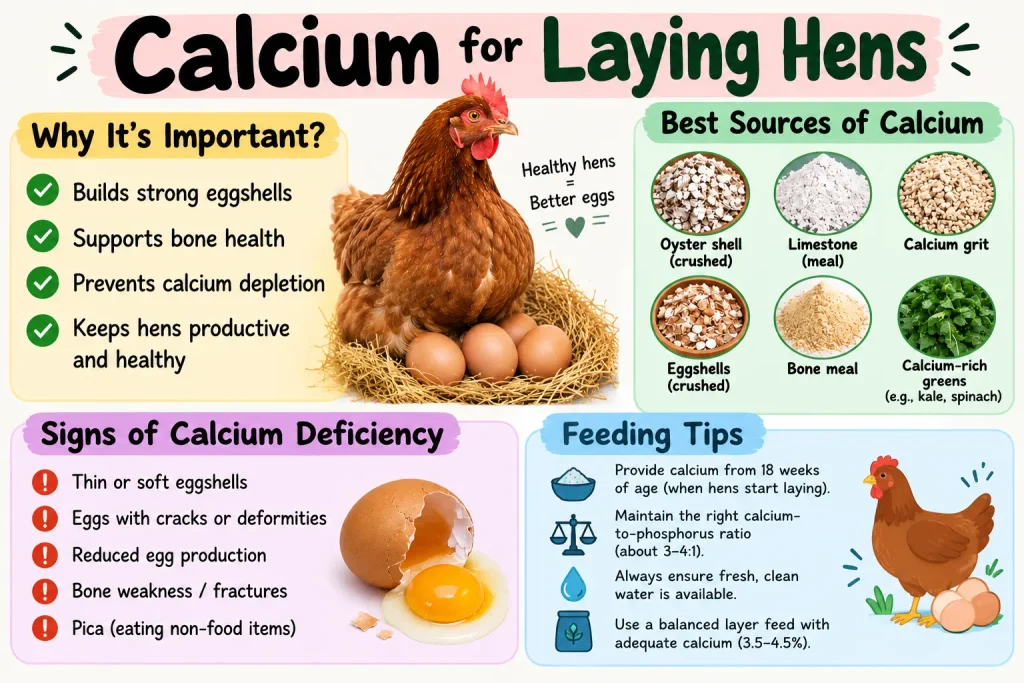
- Consistently strong, evenly textured eggshells
- Steady, expected lay rate for the flock’s age and breed
- Good bone strength and normal mobility across the flock
- Reasonable, not excessive, consumption from the free-choice oyster shell dish
Signs to Adjust
| Sign | Likely Issue | Adjustment Needed |
| Thin or soft shells | Insufficient calcium | Increase free-choice availability |
| Very high oyster shell consumption | Possible early deficiency or high demand | Confirm layer feed quality, monitor |
| Growing pullets on layer feed | Excess calcium for their stage | Switch to appropriate grower feed |
| Roosters eating from layer feeder | Excess calcium exposure | Separate feeding stations if possible |
Avoiding Calcium Excess
Why More Isn’t Always Better
Excess calcium, particularly in non-laying birds, can strain the kidneys over time and interfere with the absorption of other important minerals like phosphorus and zinc. This is the main reason free-choice, self-regulated supplementation is generally preferred over force-feeding high calcium levels to an entire mixed flock.
Common Mistakes to Avoid
- Feeding layer feed to chicks or growing pullets before they need the higher calcium level
- Mixing oyster shell directly into shared feed for a mixed-age flock
- Assuming more calcium always means better shells, regardless of the source or timing
- Ignoring vitamin D3 levels, which are necessary for the body to actually use dietary calcium
- Switching feed types abruptly without a transition period
Warning
Chronic calcium excess in non-laying birds, especially young growing pullets, can cause kidney damage over time. Keeping high-calcium supplements separate and free-choice, rather than mixed into a shared feed, protects birds that don’t need the extra calcium from unintentional overconsumption.
When to Call a Vet
Contact a poultry veterinarian if a hen shows signs of calcium-related problems, such as consistently poor shell quality or leg weakness, despite what appears to be a properly balanced diet and appropriate supplementation. A vet can assess whether an absorption issue, underlying illness, or another factor is interfering with how the bird uses dietary calcium.
People Also Ask
How much calcium do laying hens need per day? Laying hens typically need around 4 to 4.5 grams of calcium daily, which is why a complete layer feed with 3.5 to 4% calcium content, plus free-choice supplementation, is generally recommended.
What is the best calcium supplement for chickens? Free-choice crushed oyster shell is widely considered the best supplemental option due to its slow digestion, which matches the timing of overnight eggshell formation.
Can I use crushed eggshells instead of oyster shell? Yes, crushed eggshells work well as a calcium source as long as they’re baked or boiled first for sanitation and crushed finely enough to avoid encouraging egg-eating behavior.
Do chicks and pullets need the same calcium as laying hens? No, chicks and growing pullets need significantly less calcium, and feeding them layer-level calcium too early can strain their developing kidneys.
Is it possible to give chickens too much calcium? Yes, especially in non-laying birds, excess calcium can strain the kidneys and interfere with absorption of other minerals, which is why free-choice, self-regulated access is generally safer than mixing high calcium into shared feed.
Final Thoughts
Calcium for laying hens comes down to matching the right amount, source, and timing to what a hen’s body actually needs at her specific life stage. A complete layer feed paired with free-choice oyster shell covers the vast majority of backyard flocks without the risks that come from over-supplementing non-laying birds.
Watch shell quality and consumption patterns as your ongoing feedback loop, and reach out to a poultry veterinarian if calcium-related problems persist despite what looks like an appropriately balanced diet and supplement routine.
5. FAQ
Q: How much calcium for laying hens is too much? A: Laying hens themselves rarely over-consume calcium when it’s offered free-choice, but non-laying birds accidentally given the same access can develop problems from chronic excess.
Q: What are the best calcium requirements guidelines for a mixed-age flock? A: Keep actively laying hens on a proper layer feed with free-choice oyster shell, while growing pullets and roosters stay on a lower-calcium all-flock or grower feed.
Q: Are calcium supplements for chickens necessary if I already feed layer feed? A: Many hens do fine on layer feed alone, but free-choice supplementation helps cover individual variation in need, especially during peak laying or heat stress periods.
Q: Can low vitamin D3 cause calcium problems even with a good diet? A: Yes, since D3 is required for calcium absorption, a deficiency there can cause calcium-related symptoms even when dietary calcium intake looks adequate.
Q: Should I stop giving oyster shell during a hen’s molt? A: It’s fine to leave free-choice oyster shell available during molt; a hen who isn’t laying will simply consume less, since the self-regulating nature of free-choice access adjusts naturally.