Oyster Shell for Chickens: More Than Just “Add Some Calcium”

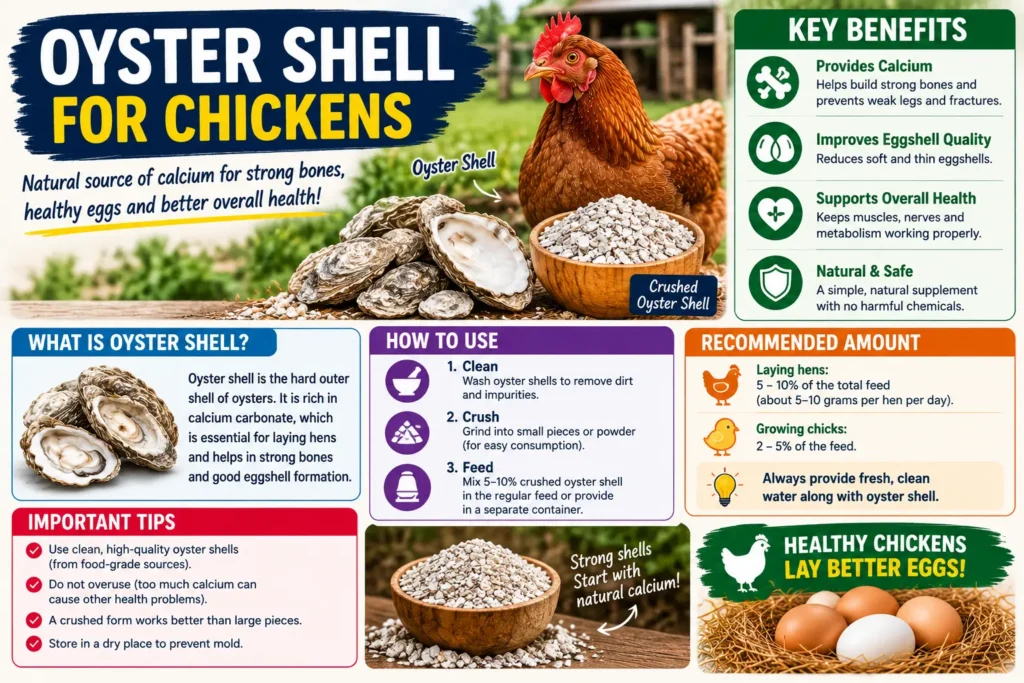
Oyster shell for chickens sounds simple enough to buy and toss in a dish, but the details actually matter more than most feed store labels let on. Particle size, freshness, and how you introduce it to a flock all affect whether hens get a steady, useful calcium source or mostly ignore it.
This guide skips the basic “why calcium matters” explanation covered elsewhere and focuses purely on the practical side: what to look for when buying oyster shell calcium, how to introduce it properly, and how to store and manage it so it actually gets used.
Quick Answer: Oyster shell for chickens should be coarsely crushed, not powdered, since larger particles digest more slowly and match the overnight timing of eggshell formation. Offer it free-choice in a separate dish alongside a complete layer feed, store it in a dry, sealed container, and expect actively laying hens to self-regulate their intake naturally.
Table of Contents
Understanding Oyster Shell Grades and Particle Size
Why Particle Size Matters More Than the Bag Suggests
Coarsely crushed oyster shell digests slowly in a hen’s gizzard, releasing calcium gradually over several hours, which lines up well with the overnight period when eggshell formation is most active. Finely ground or powdered oyster shell digests too quickly to provide this same steady release.
| Form | Digestion Speed | Best Use |
| Coarse, crushed pieces | Slow, steady release | Free-choice supplement for laying hens |
| Fine or powdered | Fast | Less ideal as standalone supplement |
| Flour-grade (very fine) | Very fast | Typically used in commercial feed mixing, not free-choice |
What to Look For When Buying
- Visible, coarse shell fragments rather than fine powder or dust
- A product specifically labeled for poultry rather than reptile or garden use
- Minimal fine debris or dust settled at the bottom of the bag
- A reasonably fresh product without a musty or off odor
Did You Know? Oyster shell for chickens is typically sourced from oyster shell processing byproducts, cleaned and crushed specifically for livestock feed use, which is different from decorative or aquarium-grade crushed shell sold for other purposes.
Read More: https://lashegg.com/calcium-for-laying-hens/
How to Introduce Oyster Shell to Your Flock
Step-by-Step: A Smooth Introduction
- Offer it in a separate container from feed. This keeps it free-choice rather than forcing intake on birds that don’t need extra calcium.
- Place the dish somewhere accessible but not in the main feed area. This helps hens learn to seek it out intentionally rather than confusing it with regular feed.
- Expect a slow start. Some hens investigate and consume it quickly, while others take days to start using it regularly.
- Watch consumption patterns over the first two weeks. A gradual increase in use, especially from actively laying hens, is a good sign the flock has found it.
- Keep it available continuously afterward. Rather than offering it occasionally, consistent access allows hens to regulate intake based on their actual daily need.
Expert Tip
If your flock seems slow to start using a new oyster shell dish, try placing a small handful of crushed pieces directly into the main run area for the first day or two. Hens are naturally curious foragers, and this can help them associate the new item as something worth investigating.
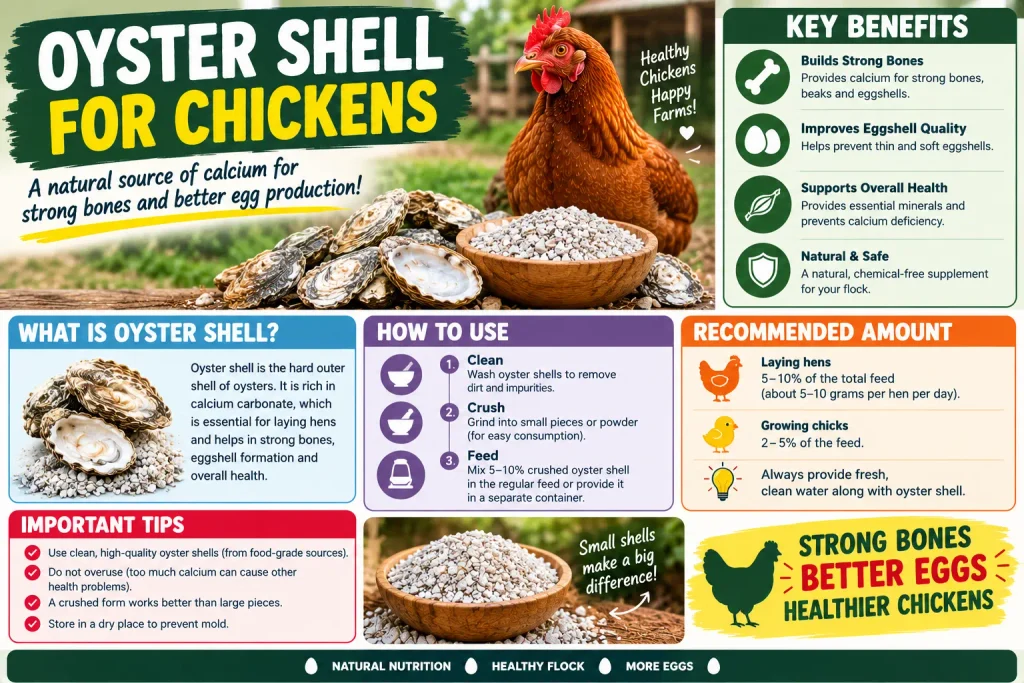
Where to Place and How to Store Oyster Shell
Placement Tips
- Keep the dish under cover if your run is exposed to rain, since moisture clumps oyster shell calcium and reduces its appeal
- Position it away from roosting areas to avoid droppings accumulating in the supply
- Use a shallow, wide dish rather than a narrow feeder to make it easy for multiple hens to access at once
Storage Guidelines
| Storage Factor | Recommendation |
| Container type | Sealed, rodent-proof container |
| Location | Cool, dry area away from direct sun |
| Shelf life | Long-lasting if kept dry; discard if clumped or moldy |
| Bulk buying | Reasonable for larger flocks; smaller flocks may prefer smaller bags to maintain freshness |
Oyster Shell vs. Other Calcium Sources: Quick Comparison
| Source | Ease of Use | Cost | Digestion Speed |
| Oyster shell for chickens | Easy, widely available | Low to moderate | Slow, steady |
| Ground limestone | Moderate, often feed-mixed | Low | Faster |
| Crushed, sanitized eggshell | Free, home-recycled | None | Moderate |
Why Most Keepers Choose Oyster Shell as the Default
Oyster shell calcium strikes a practical balance of availability, cost, and the right digestion speed for free-choice supplementation, which is why it remains the standard recommendation across university extension poultry resources and commercial feed guidance alike.
Common Mistakes When Using Oyster Shell for Chickens
- Mixing it directly into shared feed for a mixed-age flock, over-supplying birds that don’t need it
- Buying a finely ground product expecting the same slow-release benefit as coarse pieces
- Leaving the dish exposed to rain, leading to clumping and waste
- Assuming every hen will start using it immediately without a short adjustment period
- Forgetting to check and refill it regularly once it becomes part of the routine
Warning
Avoid offering oyster shell for laying hens to young, non-laying pullets or roosters as their primary feed additive, since their calcium requirements are much lower and excess intake over time can strain the kidneys. Free-choice access naturally limits this risk better than mixing it into shared feed.
When to Call a Vet
Contact a poultry veterinarian if you’re offering oyster shell for chickens correctly and consistently, yet still seeing signs like thin or soft-shelled eggs, leg weakness, or reduced laying. This pattern may point toward a vitamin D3 absorption issue, an underlying illness, or another factor beyond simple calcium availability that’s worth a professional look.
People Also Ask
Is oyster shell for chickens better than crushed eggshell? Both work well nutritionally, though oyster shell offers more consistent particle size and digestion speed, while crushed eggshell requires proper sanitizing and fine crushing to be equally safe and effective.
How much oyster shell calcium should I offer per hen? There’s no strict daily amount to measure out; offering it free-choice in a separate dish allows each hen to self-regulate her intake based on her individual need.
Can chickens eat too much oyster shell? Actively laying hens rarely over-consume it when offered free-choice, though non-laying birds given unrestricted access to the same supply can develop problems from chronic excess over time.
Does oyster shell for laying hens go bad over time? It doesn’t spoil in the traditional sense, but moisture exposure can cause clumping and reduce its appeal, so dry storage and covered feeding dishes help maintain quality.
Do I still need oyster shell if I already feed a complete layer feed? Many keepers offer it anyway as a free-choice supplement, since individual hens vary in calcium need and self-regulated access covers gaps that a standardized feed formulation alone might not.
Final Thoughts
Oyster shell for chickens works best when the practical details are handled well: coarse particle size, free-choice access in a separate dish, and dry, consistent storage. These small details are often the difference between a supplement that quietly supports strong shells and one that ends up wasted or ignored in the coop.
Watch consumption patterns and shell quality as your main feedback signals, and reach out to a poultry veterinarian if calcium-related issues persist despite offering oyster shell calcium correctly and consistently.
5. FAQ
Q: What’s the best type of oyster shell for chickens to buy? A: Look for a coarsely crushed, poultry-specific product rather than a finely ground or powdered version, since coarse pieces digest more slowly and match natural eggshell formation timing.
Q: How long does a bag of oyster shell calcium last? A: Stored properly in a sealed, dry container, oyster shell doesn’t spoil quickly, though buying appropriately sized bags for your flock helps maintain freshness and reduces waste.
Q: Should oyster shell for laying hens be mixed into their regular feed? A: No, offering it separately in a free-choice dish is generally recommended so hens can regulate intake individually rather than everyone receiving a fixed amount regardless of need.
Q: Will my chickens automatically know to eat oyster shell? A: Most hens figure it out within a few days to two weeks, though placing a small amount in the main run initially can help curious birds discover it faster.
Q: Can I use aquarium or garden-grade crushed oyster shell for my chickens? A: It’s best to use a product specifically labeled for poultry, since other grades may not be processed or cleaned to the same standard for animal consumption.