Best Feed for Laying Hens: What Actually Matters

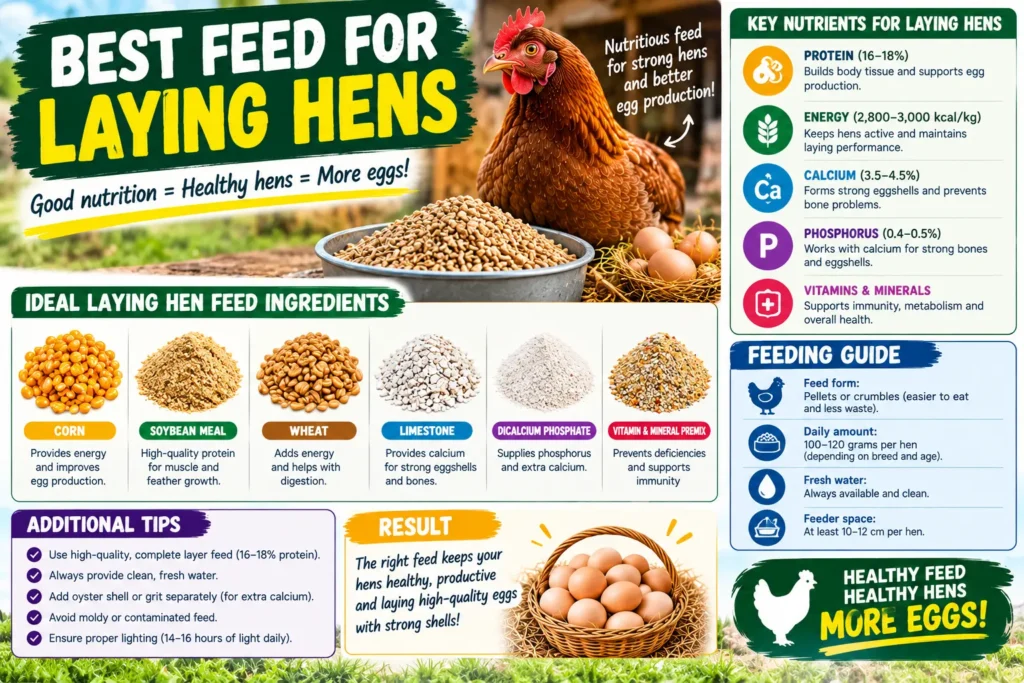
Best feed for laying hens isn’t really about finding one magic bag on the shelf; it’s about understanding what a proper layer feed needs to contain and matching that to your specific flock’s needs. Protein level, calcium content, ingredient quality, and physical form all play a role in whether a feed genuinely supports consistent chicken egg production.
This guide breaks down exactly what to look for on a feed label, compares the main types of layer feed available, and explains how to choose confidently rather than guessing based on packaging claims or price alone.
Quick Answer: The best feed for laying hens is a complete layer feed with 16 to 18% protein and 3.5 to 4% calcium, formulated specifically for actively laying birds. Beyond that baseline, choosing between pellets, crumbles, or mash mostly comes down to your flock’s preference and your own feeding setup, not a meaningful difference in nutrition.
Table of Contents
What Every Layer Feed Needs to Contain
Protein: The Foundation
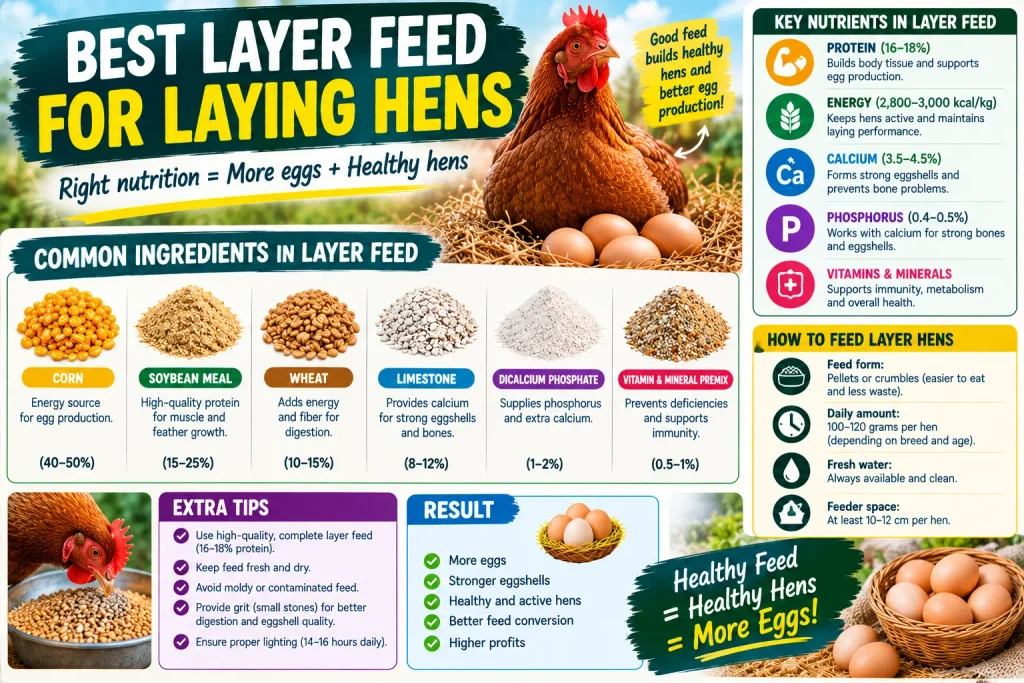
Layer feed typically contains 16 to 18% protein, which supports both egg formation and general body maintenance. Feed with protein below this range, such as a scratch grain mix used as a primary diet, won’t adequately support consistent laying.
Calcium: Built for Shell Formation
A proper layer feed contains 3.5 to 4% calcium, significantly higher than feed formulated for chicks or non-laying birds. This baseline, combined with free-choice oyster shell, covers most flocks’ calcium needs for chicken egg production.
Essential Vitamins and Minerals
Quality layer feed includes vitamin D3 for calcium absorption, along with a broader vitamin and mineral package supporting overall health, feather quality, and immune function.
| Nutrient | Target Range in Layer Feed | Purpose |
| Protein | 16–18% | Egg formation, body maintenance |
| Calcium | 3.5–4% | Shell strength |
| Vitamin D3 | Included in fortification | Calcium absorption |
| Phosphorus | Balanced with calcium | Bone health, metabolic function |
Did You Know? Feed labeled simply “chicken feed” or “all-flock” without specifying a laying hen formulation often contains lower calcium and different protein levels, meant to serve a mixed-age flock rather than actively laying birds specifically.
Read More: https://lashegg.com/oyster-shell-for-chickens/
Comparing Feed Forms: Pellets, Crumbles, and Mash
Pellets
Compressed into small cylindrical pieces, pellets reduce selective eating since every bite contains the same nutritional mix. Many keepers find less feed waste with pellets compared to looser forms.
Crumbles
Essentially crumbled pellets, this form works well for hens transitioning from crumble-based grower feed and remains a popular standard choice for laying flocks.
Mash
A finely ground, loose form that some hens take slightly longer to adjust to, though it works well for specific feeding setups, including certain treat-mixing or wet-mash feeding methods some keepers prefer.
| Form | Waste Level | Selective Eating Risk | Best For |
| Pellets | Lower | Very low | Most standard setups |
| Crumbles | Moderate | Low | Common default choice |
| Mash | Can be higher outdoors | Low | Specific feeding methods, wet mash |
Does Form Actually Affect Chicken Egg Production?
Not meaningfully, as long as the underlying nutritional formulation is the same. Choosing the best feed for laying hens in terms of form comes down to practical factors like waste, feeder type, and flock preference rather than any real difference in laying outcomes.
Organic, Non-GMO, and Specialty Layer Feed Options
What These Labels Actually Mean
Organic feed must meet certification standards regarding ingredient sourcing and farming practices, while non-GMO labeling specifically addresses genetically modified ingredients rather than broader farming methods. Neither label inherently changes the core protein or calcium formulation needed for good chicken egg production.
Weighing the Trade-Offs
| Feed Type | Typical Cost | Considerations |
| Conventional layer feed | Lower | Widely available, well-tested formulations |
| Organic layer feed | Higher | Certified sourcing, personal or market preference |
| Non-GMO layer feed | Moderate to higher | Avoids GMO ingredients specifically |
| Soy-free layer feed | Moderate to higher | Alternative protein sources for specific dietary preferences |
Choosing Based on Your Priorities
Cost, personal values around farming practices, and any specific dietary goals for your household’s eggs all factor into this choice more than any documented difference in hen health or laying performance between these options, provided the core nutritional profile remains appropriate.
How to Choose the Best Feed for Laying Hens for Your Flock
Step-by-Step: Evaluating a Feed Bag
- Check the protein percentage first. Confirm it falls in the 16–18% range appropriate for actively laying hens.
- Verify the calcium content. Look for 3.5–4% calcium specifically formulated for layers, not a general all-flock blend.
- Review the ingredient list. Whole grains and named protein sources generally indicate a higher-quality formulation than heavily processed byproducts.
- Consider your flock’s age composition. A mixed-age flock with non-laying pullets may do better on an all-flock feed with separate free-choice calcium rather than straight layer feed.
- Factor in your budget realistically. A moderately priced, nutritionally complete conventional feed generally outperforms an expensive feed used inconsistently due to cost concerns.
Expert Tip
Resist switching feed brands frequently based on minor price differences. Consistency in diet supports more stable chicken egg production than frequent changes, even when each individual feed is nutritionally adequate on its own.
Transitioning to a New Layer Feed
Why a Gradual Switch Matters
Abruptly changing feed can cause temporary digestive upset and a brief dip in egg production as a flock adjusts. A gradual transition over 7 to 10 days minimizes this disruption.
Step-by-Step Transition Method
- Start with roughly 75% old feed and 25% new feed. Mix thoroughly so hens can’t simply pick out their preferred type.
- Shift to a 50/50 mix after two to three days. Continue monitoring appetite and droppings for any concerning changes.
- Move to 25% old feed and 75% new feed. Most flocks show minimal resistance by this stage.
- Complete the transition to 100% new feed. Total transition time of 7 to 10 days works well for most flocks.
Common Mistakes to Avoid
- Switching feed abruptly without any transition period
- Choosing a feed based on price alone without checking protein and calcium content
- Feeding a general all-flock formulation to a flock that’s entirely actively laying hens
- Assuming organic or specialty labels automatically mean better nutrition for egg production
- Overloading a layer feed diet with treats, diluting its nutritional completeness
Warning
Feeding a grower or all-flock formulation with low calcium as the sole diet for actively laying hens over an extended period can lead to calcium deficiency, thin shells, and eventually bone health problems. Confirm the feed matches your flock’s actual laying status, not just their general age category.
When to Call a Vet
Contact a poultry veterinarian if a flock shows poor shell quality, reduced laying, or other signs of nutritional deficiency despite being fed what appears to be an appropriate layer feed. A vet can help identify whether an absorption issue, underlying illness, or a genuine feed formulation problem is behind persistent symptoms.
People Also Ask
What is the best feed for laying hens to maximize egg production? A complete layer feed with 16–18% protein and 3.5–4% calcium, fed consistently alongside free-choice oyster shell, provides the strongest foundation for supporting a hen’s natural production potential.
Is pellet or crumble layer feed better for chicken egg production? Neither form has a meaningful nutritional advantage over the other; the choice mostly comes down to reduced waste and feeder compatibility rather than any real difference in laying results.
Can I feed all-flock feed instead of layer feed? Yes, particularly for mixed-age flocks, as long as free-choice calcium is offered separately to meet the higher needs of actively laying hens within the group.
Does organic layer feed produce better eggs? Organic certification addresses farming and sourcing practices rather than the core nutritional profile, so egg quality depends more on matching protein and calcium needs than on organic status alone.
How much layer feed should a chicken eat per day? Most adult laying hens eat roughly 1/4 to 1/3 pound of feed daily, though this varies by breed size, activity level, and how much they consume in treats or forage.
Final Thoughts
Best feed for laying hens comes down to a clear nutritional baseline: 16 to 18% protein and 3.5 to 4% calcium in a complete, consistent formulation. Beyond that foundation, choices around form, organic certification, and brand come down to personal preference and practical feeding setup rather than any dramatic difference in outcomes.
Transition feed gradually, watch shell quality and overall flock health as your feedback signals, and reach out to a poultry veterinarian if nutritional problems persist despite feeding an appropriate, well-formulated layer feed.
5. FAQ
Q: What makes a feed the best feed for laying hens versus a regular chicken feed? A: The key differences are higher protein, around 16–18%, and significantly higher calcium, around 3.5–4%, specifically formulated to support active egg laying rather than general maintenance.
Q: How do I know if my current layer feed is actually good quality? A: Check the guaranteed analysis for appropriate protein and calcium levels, review the ingredient list for whole, named sources, and watch your flock’s shell quality and egg production over time.
Q: Can chicken feed for egg production include treats and scraps? A: Yes, in moderation, but treats should stay a minor part of the diet since they dilute the overall nutritional completeness of a properly formulated layer feed.
Q: Should I switch layer feed brands if my hens seem to prefer a different one? A: If both feeds meet appropriate nutritional standards, occasional switching is fine, though frequent changes can cause temporary digestive upset and are best done gradually.
Q: Does the best feed for laying hens differ by breed? A: The core nutritional needs are similar across breeds, though larger or higher-production breeds may benefit from slightly higher overall feed intake to match their size and output.