Protein for Laying Hens: Why It’s the Other Half of the Equation

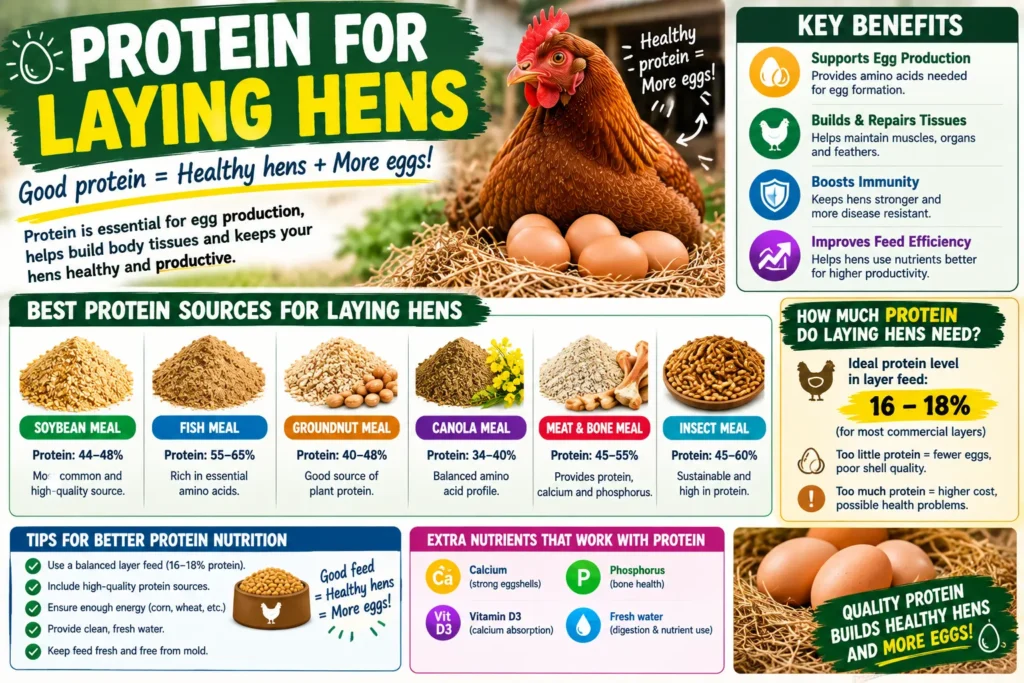
Protein for laying hens gets far less attention than calcium, even though it plays an equally essential role in consistent egg production. Every egg white is almost entirely protein, and a hen’s body also relies on dietary protein for feather regrowth, muscle maintenance, and general health.
This guide covers exactly how much protein requirements actually look like for laying hens, the best sources to meet them, and the specific signs that show up when chicken protein needs aren’t being met.
Quick Answer: Laying hens need feed containing 16 to 18% protein to support consistent egg production. Higher-producing breeds, hens during heavy molt, or those under heat stress may benefit from feed toward the upper end of that range. Protein for laying hens should come primarily from a complete layer feed, with treats and supplements playing only a minor supporting role.
Table of Contents
Why Protein Matters So Much for Laying Hens
What Protein Actually Builds
An egg’s white, or albumen, is composed almost entirely of protein, meaning a hen quite literally cannot form a normal egg without adequate dietary protein intake. Beyond egg formation, protein supports muscle maintenance, immune function, and feather structure.
The Feather Connection
Feathers are roughly 85% protein, which is exactly why molting periods increase a hen’s protein requirements significantly. A hen regrowing her entire feather coat needs meaningfully more protein than one focused purely on maintenance and laying.
| Life Stage or Condition | Approximate Protein Need | Notes |
| Standard laying hen | 16–18% | Baseline for consistent production |
| Molting hen | 18–20% | Supports feather regrowth |
| Heat-stressed hen | 16–18%, higher quality sources | Reduced overall feed intake makes quality matter more |
| Heavy production breed | Upper end of 16–18% range | Higher output demands more consistent protein |
Did You Know? Unlike calcium, which is stored and buffered by medullary bone, protein isn’t meaningfully stored in a hen’s body for later use. This means consistent daily intake matters more for protein than for some other nutrients, since there’s no significant internal reserve to draw from during a shortfall.
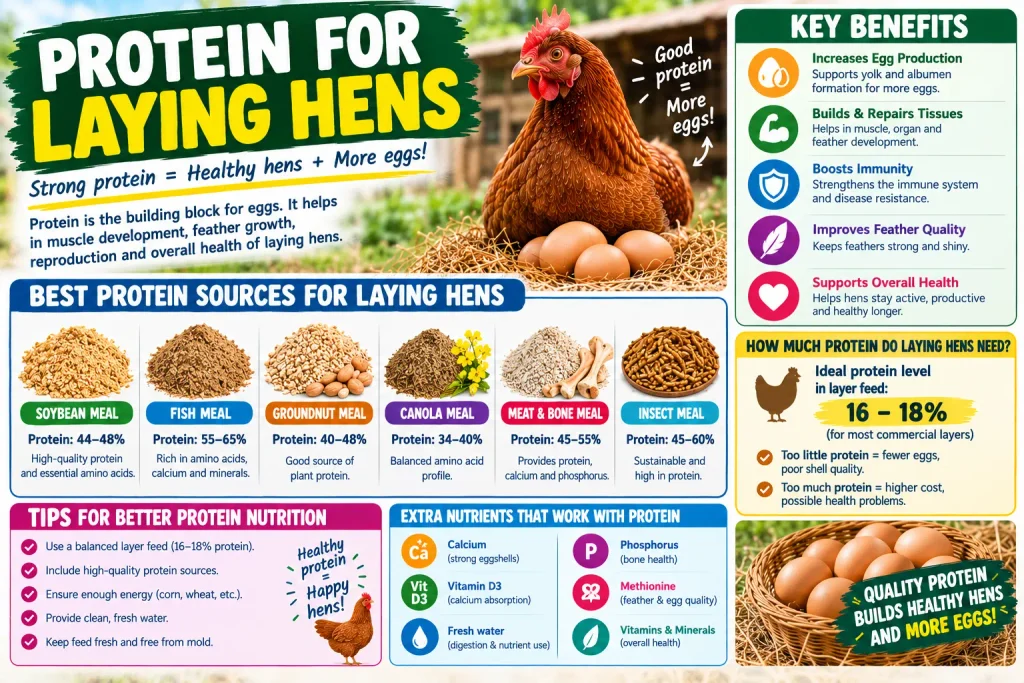
How Much Protein Do Laying Hens Actually Need
The Standard Range
Most complete layer feeds are formulated at 16 to 18% protein, a range supported by university extension poultry research as sufficient for consistent egg production in typical backyard flocks.
When Higher Protein Helps
- During an active molt, when feather regrowth significantly increases demand
- For high-production hybrid breeds laying at or near their genetic peak
- During recovery from illness or parasite-related nutrient loss
- In flocks showing feather picking, which can sometimes relate to inadequate protein
When Lower Protein Is More Appropriate
Non-laying birds, including roosters and retired hens, generally do well on lower protein levels closer to 14 to 16%, since they aren’t supporting the same egg formation demands.
Best Sources of Protein for Chickens
Complete Layer Feed as the Foundation
A properly formulated layer feed should already meet baseline chicken protein needs without requiring additional supplementation for most flocks under normal conditions.
Read More: https://lashegg.com/best-feed-for-laying-hens/
Supplemental Protein Sources
| Source | Protein Content (Approximate) | Notes |
| Mealworms (dried) | 50%+ | Popular treat, feed in moderation |
| Black soldier fly larvae | 40%+ | Growing in popularity, nutritionally dense |
| Sunflower seeds | 20–25% | Good occasional supplement |
| Cooked eggs | High | Safe, effective way to recycle protein |
| Fish meal (in commercial feed) | Very high | Common commercial feed ingredient |
Using Supplements Responsibly
Supplemental protein sources should stay a minor addition to the diet, not a replacement for a nutritionally complete layer feed. Overfeeding high-protein treats can throw off the overall balance of the diet, including calcium and other nutrient ratios.
Signs of Inadequate Protein for Laying Hens
Physical and Production Signs
- Reduced egg size or overall production despite otherwise adequate care
- Slow or patchy feather regrowth after molting
- Dull, brittle-looking feathers even outside of molt
- Reduced body condition or muscle mass over time
Behavioral Signs
- Increased feather picking within the flock, sometimes linked to inadequate protein
- General lethargy or reduced activity in more severe, prolonged cases
| Symptom | Likely Connection to Protein | Other Possible Causes |
| Slow feather regrowth | Inadequate protein during molt | Also affected by overall nutrition, health |
| Feather picking | Possible protein deficiency | Also linked to overcrowding, boredom, parasites |
| Smaller eggs | Inadequate protein for egg formation | Also affected by age, breed |
| Poor body condition | Inadequate overall nutrition | Also linked to illness, parasites |
Warning: Feather picking has several potential causes beyond protein deficiency, including overcrowding, boredom, parasites, or excessive light exposure. Don’t assume protein is the sole cause without also addressing these other common contributing factors.
Correcting a Protein Shortfall
Step-by-Step: Adjusting the Diet
- Confirm current feed protein percentage. Check the guaranteed analysis on the feed label to establish a clear baseline.
- Switch to an appropriately formulated layer feed if needed. Ensure it falls within the 16–18% range for standard laying hens.
- Reduce competing treats and scratch grains. These dilute overall protein intake even when the base feed is adequate.
- Add moderate supplemental protein if appropriate. Mealworms or black soldier fly larvae in small amounts can help during molt or recovery periods.
- Monitor feather quality and egg size over several weeks. These are among the more visible indicators that protein intake has improved.
Expert Tip
During a flock-wide molt, consider temporarily switching to a feed formulated specifically for molting or higher-protein needs, then transitioning back to standard layer feed once feathering completes and laying resumes.
Common Mistakes to Avoid
- Assuming any chicken feed provides adequate protein without checking the actual percentage
- Overfeeding high-protein treats at the expense of a balanced complete feed
- Ignoring increased protein needs during an active molt
- Attributing all feather picking to protein deficiency without ruling out other causes
- Feeding excessive protein without also matching calcium intake appropriately
Warning
Excessively high protein intake, particularly without balanced calcium and other nutrients, can strain a hen’s kidneys over time. More protein isn’t automatically better; matching intake to actual chicken protein needs based on life stage and condition matters more than simply maximizing the percentage.
When to Call a Vet
Contact a poultry veterinarian if a hen shows persistent poor feather quality, reduced body condition, or ongoing feather picking within the flock despite adjusting protein intake and ruling out overcrowding or parasites. These signs occasionally point toward an underlying health issue rather than a simple dietary gap.
People Also Ask
How much protein do laying hens need per day in grams? Rather than a fixed daily gram target, protein for laying hens is typically managed through feed percentage, with 16–18% protein feed providing adequate intake based on normal daily consumption.
Can too much protein hurt my chickens? Yes, excessively high protein without balanced other nutrients can strain the kidneys over time, so matching intake to actual need rather than maximizing protein is the better approach.
What are the best natural sources of protein for chickens? Mealworms, black soldier fly larvae, and cooked eggs are popular natural supplemental sources, though a complete layer feed should remain the primary source of chicken protein needs.
Does protein for laying hens change during molting? Yes, molting significantly increases protein needs due to feather regrowth, and many keepers switch to a higher-protein feed temporarily during this period.
Is soy the only good protein source in chicken feed? No, quality layer feeds use various protein sources including soybean meal, fish meal, and other ingredients, and soy-free formulations exist for keepers seeking alternatives.
Final Thoughts
Protein for laying hens deserves the same attention as calcium, even though it gets less discussion among backyard keepers. A properly formulated layer feed at 16 to 18% protein covers most flocks’ needs, with adjustments upward during molting or high production periods.
Watch feather quality, egg size, and overall body condition as your feedback signals, and reach out to a poultry veterinarian if protein-related concerns persist despite feeding an appropriately balanced diet.
5. FAQ
Q: What percentage of protein for laying hens is ideal? A: Most laying hens do well on feed containing 16 to 18% protein, with the higher end of that range benefiting molting or high-production birds.
Q: How do I know if my chicken protein needs aren’t being met? A: Watch for smaller eggs, slow feather regrowth after molt, dull feather quality, or increased feather picking as potential signs of inadequate protein.
Q: Do protein requirements differ between chicken breeds? A: The baseline percentage range is similar across breeds, though higher-production hybrids laying more frequently may benefit from feed toward the upper end of the standard range.
Q: Can I feed my laying hens a higher protein feed year-round? A: It’s generally fine, though matching protein to actual need, higher during molt and lower during rest periods, is a more balanced long-term approach than a single fixed high level.
Q: Are mealworms a good regular protein source for chickens? A: Yes, in moderation, mealworms provide a concentrated protein boost, though they should supplement rather than replace a complete, balanced layer feed.