Lash Egg Causes: What’s Really Behind This Alarming Egg

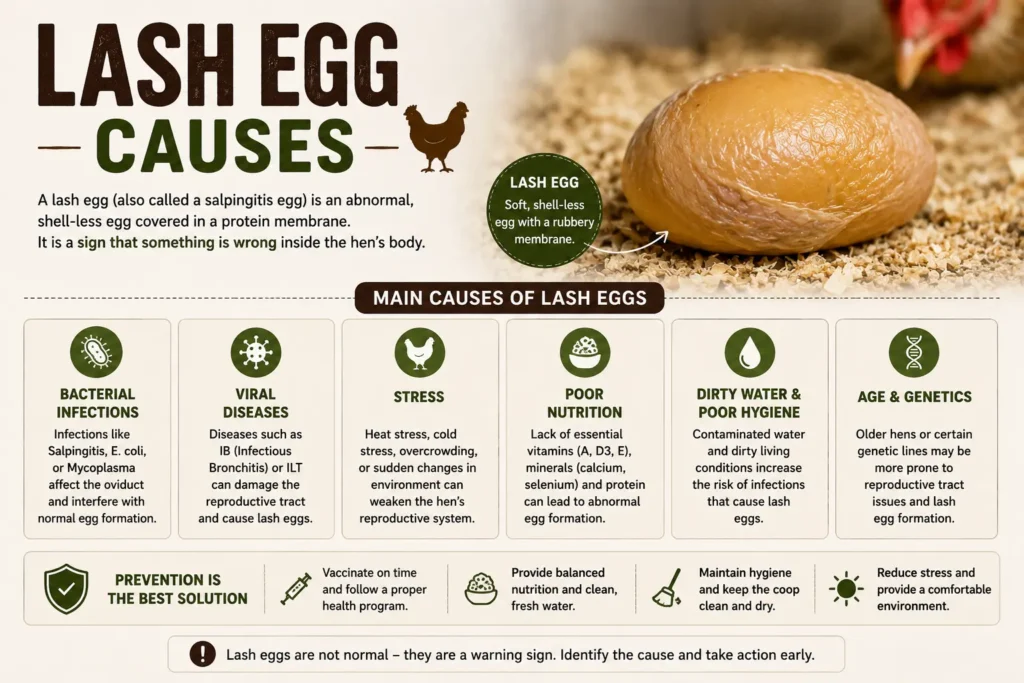
Understanding lash egg causes starts with knowing what a lash egg actually is. It isn’t a real egg at all. It’s a hardened mass of pus, tissue, and sometimes bits of yolk or shell, expelled by a hen whose oviduct is fighting an infection called salpingitis.
If you’ve just found one in the nesting box, the first question is naturally “why did this happen?” The short answer: bacteria, viruses, high egg production, poor hygiene, and diet gaps can all play a role, often together rather than alone. This guide breaks down every known cause, how vets diagnose it, and what you can do next.
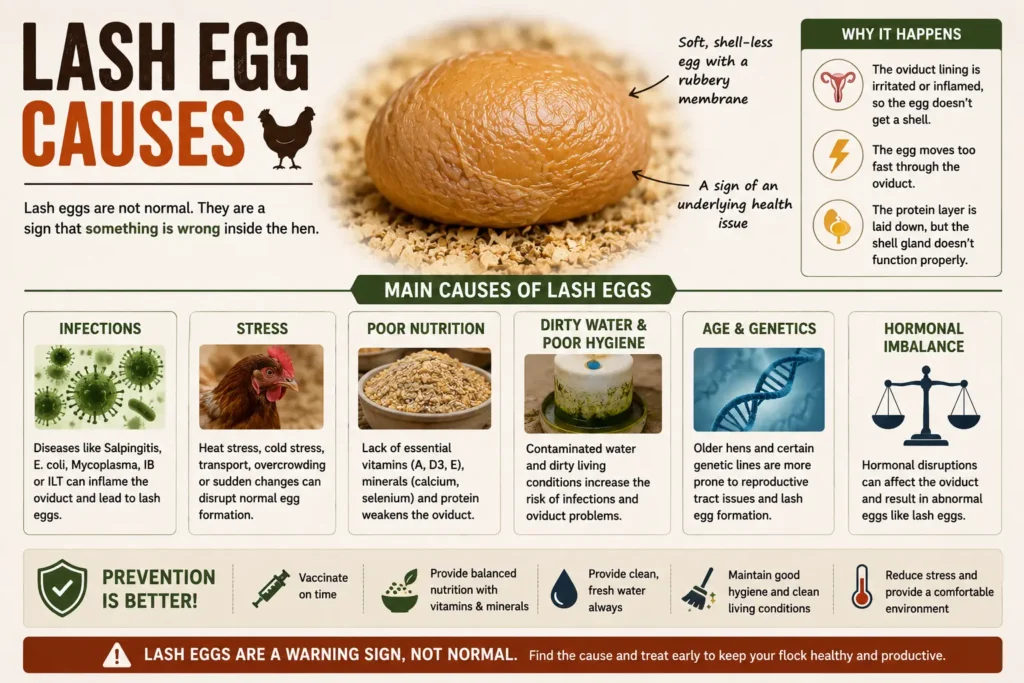
Quick Answer: The main lash egg causes are bacterial infections (like E. coli and Salmonella), viral infections (like infectious bronchitis or Newcastle disease), high egg output, obesity, poor nest hygiene, and vent injuries that let pathogens travel into the oviduct.
Table of Contents
The Oviduct Explained: Why It’s So Vulnerable
A hen’s oviduct is a long, delicate tube made up of five sections: the infundibulum, magnum, isthmus, uterus (shell gland), and vagina. Each part adds a layer to the egg as it travels through, from the initial yolk capture to the final shell.
Because it’s a soft, actively working tissue with a direct connection to the vent, it’s exposed to whatever bacteria or viruses reach that area. Inflammation anywhere along this tract is called salpingitis, and it’s the umbrella condition behind nearly every lash egg case.
What Causes a Lash Egg at the Bacterial Level?
Bacterial infection is the most common of all lash egg causes reported by poultry veterinarians. The main bacteria involved include:
- E. coli: Often present in droppings, dirty bedding, or contaminated water; it can travel up through the vent, especially in hens with relaxed vent muscles from heavy laying.
- Salmonella enterica (including S. Enteritidis): Known to directly infect the oviduct lining in some hens.
- Mycoplasma gallisepticum (MG): A chronic respiratory organism that can spread into reproductive tissue.
- Pasteurella multocida (fowl cholera): Chronic infections may eventually reach the oviduct.
- Ornithobacterium rhinotracheale (ORT): A respiratory pathogen with secondary reproductive effects in some flocks.
Bacterial salpingitis tends to produce firmer, more solid lash eggs because the exudate (the pus-like fluid) hardens as it mixes with cellular debris.
What Causes Lash Eggs at the Viral Level?
Viral infection is the second major category among lash egg causes. Several respiratory viruses can travel to the reproductive tract and trigger inflammation there:
- Infectious bronchitis virus
- Newcastle disease virus
- Avian influenza
Viral salpingitis often looks different under examination, sometimes producing more watery, edematous lesions rather than the thick, cheese-like masses typical of bacterial cases. Either way, the underlying issue is the same: infection reaching and inflaming the oviduct.
Read More: https://lashegg.com/lash-egg-inside-another-egge/
Non-Infectious Risk Factors Behind Lash Egg Causes
Infection is the direct trigger, but several underlying conditions make a hen more likely to develop salpingitis in the first place.
- High egg production: Hens bred for heavy laying, especially commercial layer breeds, put continuous strain on the oviduct. Frequent egg passage can relax vent muscles over time, giving bacteria an easier path inward.
- Obesity: Overweight hens show a higher rate of reproductive tract problems, likely tied to hormonal imbalance and reduced immune resilience.
- Nutritional gaps: Diets low in essential vitamins and minerals weaken a hen’s general immune defenses, making infection more likely to take hold.
- Vent pecking: Open wounds around the vent from flock-mates pecking give bacteria direct entry.
- Poor nest and coop hygiene: Damp bedding, soiled nest boxes, and dirty water sources all raise bacterial exposure.
- Stress: Overcrowding, sudden environmental changes, or predator pressure can suppress immune function, indirectly contributing to infection risk.
Did You Know? Salpingitis also occurs in humans, where it refers to inflammation of the fallopian tubes. The name and general concept overlap with poultry medicine, but the causes and treatments are completely different between species.
Lash Egg Causes at a Glance
| Cause Category | Specific Examples | How It Reaches the Oviduct |
| Bacterial | E. coli, Salmonella, Mycoplasma gallisepticum, Pasteurella multocida | Vent contamination, blood spread from other infection sites |
| Viral | Infectious bronchitis, Newcastle disease, avian influenza | Respiratory spread to reproductive tissue |
| Production-related | High egg output, relaxed vent muscles | Increases bacterial access over time |
| Body condition | Obesity, poor nutrition | Weakens immune defenses |
| Physical injury | Vent pecking wounds | Direct bacterial entry point |
| Environmental | Dirty bedding, poor coop hygiene | Ongoing bacterial exposure |
Recognizing Symptoms Tied to These Causes
Whatever combination of causes is at work, hens with salpingitis tend to share a similar symptom pattern:
- Lethargy or reduced activity
- Decreased appetite
- Swollen or firm abdomen
- Fewer eggs, or a stop in laying altogether
- Foul-smelling vent discharge
- Ruffled feathers, hunched posture
- Labored breathing in advanced cases, from abdominal pressure on the air sacs
Warning: If your hen shows both abdominal swelling and difficulty breathing, don’t wait to see if it passes. That combination can mean the mass is compressing internal organs and needs prompt veterinary attention.
How Vets Diagnose the Underlying Cause
Because so many lash egg causes overlap in their symptoms, a veterinarian typically needs more than a visual check to confirm what’s driving a specific case. Diagnostic steps often include:
- Physical exam and abdominal palpation
- Radiographs (X-rays) to check for masses or fluid buildup
- Ultrasound imaging of the oviduct
- Bloodwork for signs of active infection or inflammation
- Culture and sensitivity testing of vent discharge, when feasible, to pinpoint the exact bacteria involved
This last step matters most for treatment decisions, since different bacteria respond to different antibiotics.
Can You Tell the Cause Just by Looking at the Lash Egg?
Not reliably. A firmer, layered mass often points to bacterial salpingitis, while a softer, more watery one can suggest viral involvement, but this isn’t a firm rule. Lab testing remains the only accurate way to identify the specific cause.
Treatment Approaches Based on Cause
Treatment plans vary depending on what’s driving the infection, and should always be guided by a veterinarian rather than guesswork.
| Suspected Cause | Typical Veterinary Approach | Home Support Role |
| Bacterial infection | Targeted antibiotics based on culture results | Clean environment, reduce stress |
| Viral infection | Supportive care; antibiotics only for secondary bacterial issues | Isolation, monitoring |
| High production strain | Hormonal rest (reduced light, molt-type feed) | Consistent feed and light schedule changes |
| Obesity-related | Weight management alongside infection treatment | Adjusted portion sizes |
| Recurrent or severe cases | Surgical removal of mass or oviduct; euthanasia in advanced cases | Close observation before and after |
Expert Tip: Bringing a hen out of active egg production, by shortening daylight hours and switching to a lower-protein, molt-type feed, removes much of the hormonal pressure that keeps stressing an already inflamed oviduct. Many vets consider this one of the most useful non-surgical tools available.
Common Mistakes When Investigating Lash Egg Causes
Common Mistakes: Many keepers assume a single odd egg is a one-off fluke and skip monitoring altogether. Others try to treat the hen with random antibiotics from a farm store without knowing which bacteria, if any, is actually involved, which can delay proper treatment and contribute to resistance. Always loop in a vet before starting any medication.
Prevention: Reducing the Risk Factors Behind Lash Eggs
You can’t eliminate every possible cause, but strong flock management lowers your risk significantly.
- Keep nest boxes, bedding, and water sources clean and dry
- Maintain solid biosecurity to reduce exposure to E. coli, Salmonella, and respiratory viruses
- Feed a balanced, age-appropriate layer diet with adequate vitamins and minerals
- Avoid overfeeding to prevent obesity-related reproductive strain
- Address vent pecking quickly with separation and wound care
- Vaccinate against infectious bronchitis and Newcastle disease where recommended for your region and flock
- Give high-producing hens occasional rest periods from intensive laying schedules
Does Flock Size Affect Lash Egg Causes?
Larger flocks generally face higher infection pressure simply because pathogens spread faster between birds sharing space, water, and nest boxes. Smaller backyard flocks with strong hygiene practices tend to see fewer salpingitis cases, though any flock size can be affected if biosecurity slips.
Recovery Outlook by Cause Type
| Cause Type | General Recovery Outlook |
| Mild bacterial, caught early | Often improves with targeted antibiotics and rest from laying |
| Viral, mild case | May resolve with supportive care as the hen’s immune system responds |
| Chronic or recurring bacterial | Variable; some stabilize, others progress despite treatment |
| Advanced with abdominal mass | Poor prognosis without surgery; guarded even with surgery |
Recovery depends heavily on how early the cause is identified and addressed. Some hens go on to live full, comfortable lives after a single episode, while others experience repeat cases if the underlying risk factors, like obesity or poor hygiene, aren’t corrected.
When to Call a Vet
When to Call a Vet: Reach out to a poultry-experienced veterinarian if your hen passes a lash egg, shows abdominal swelling, stops eating, breathes with visible effort, or has repeated abnormal eggs. Identifying the specific cause early gives her the best chance at a good outcome.
Abnormal Eggs vs. Lash Eggs: Where Causes Overlap
Not every strange egg points to salpingitis. Soft-shelled eggs often trace back to calcium deficiency, wind eggs relate to a hen’s irregular laying cycle, and double-yolk eggs come from two yolks released together. Lash eggs stand apart because their causes are specifically infectious or inflammatory, not just a laying quirk.
Frequently Asked Questions
What are the most common lash egg causes? The most common lash egg causes are bacterial infections like E. coli and Salmonella, viral infections like infectious bronchitis, high egg production, and poor nest hygiene.
What causes a lash egg in a hen that seems otherwise healthy? Even healthy-looking hens can have early-stage salpingitis. Mild infections don’t always cause obvious symptoms right away, which is why monitoring after an unusual egg matters.
What causes lash eggs to keep happening in the same hen? Recurring lash eggs usually mean the underlying infection or risk factor, such as obesity or ongoing bacterial exposure, hasn’t been fully resolved, even if the hen seems to bounce back between episodes.
Can diet alone cause a lash egg? Diet alone rarely causes salpingitis, but poor nutrition weakens immune defenses, making infection more likely when bacteria or viruses are present.
Are lash egg causes the same in all chicken breeds? The underlying causes are similar across breeds, but high-production layer breeds face higher risk simply because of the added strain of frequent egg laying.
Bringing the Causes Together
Lash egg causes almost always come down to some form of oviduct infection, bacterial or viral, layered on top of contributing factors like high egg production, obesity, or poor hygiene. None of these causes are things you can diagnose with certainty just by looking at an egg.
The most reliable path forward is close observation of your hen’s behavior, prompt attention to symptoms like swelling or lethargy, and a veterinary visit when something seems off. With good management and early care, many hens recover well and go on to live healthy lives even after a lash egg episode.
FAQ (Standalone Section)
Q: What is the number one cause of lash eggs in backyard chickens? A: Bacterial infection, especially from E. coli or Salmonella, is the most frequently cited cause among poultry veterinarians and researchers.
Q: Can stress be one of the lash egg causes? A: Stress doesn’t directly cause salpingitis, but it can suppress a hen’s immune system, making her more vulnerable to the bacteria or viruses that do cause it.
Q: Do all hens with these risk factors end up with a lash egg? A: No. Many hens with high egg production, minor nutrition gaps, or mild stress never develop salpingitis. These factors raise risk, but infection is still the direct trigger.
Q: Is there a way to test for lash egg causes at home? A: No reliable home test exists. Confirming the exact bacterial or viral cause requires veterinary diagnostics like culture testing or bloodwork.