What Does It Mean When You Find a Lash Egg Inside Another Egg?

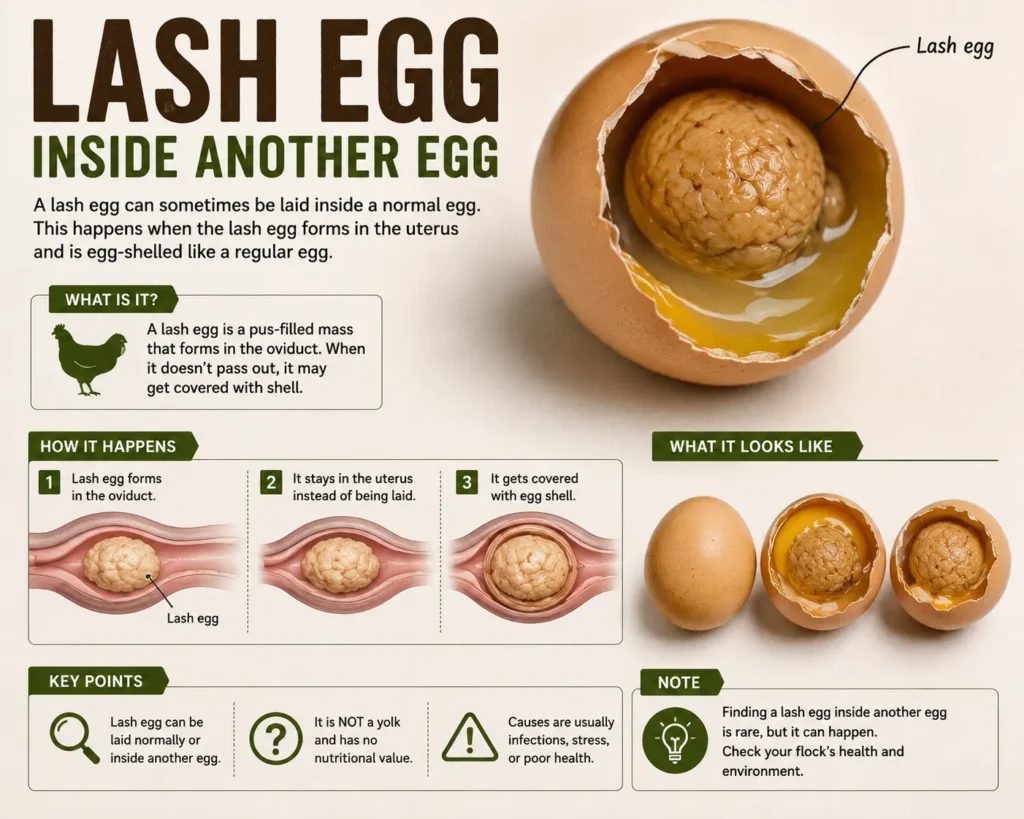
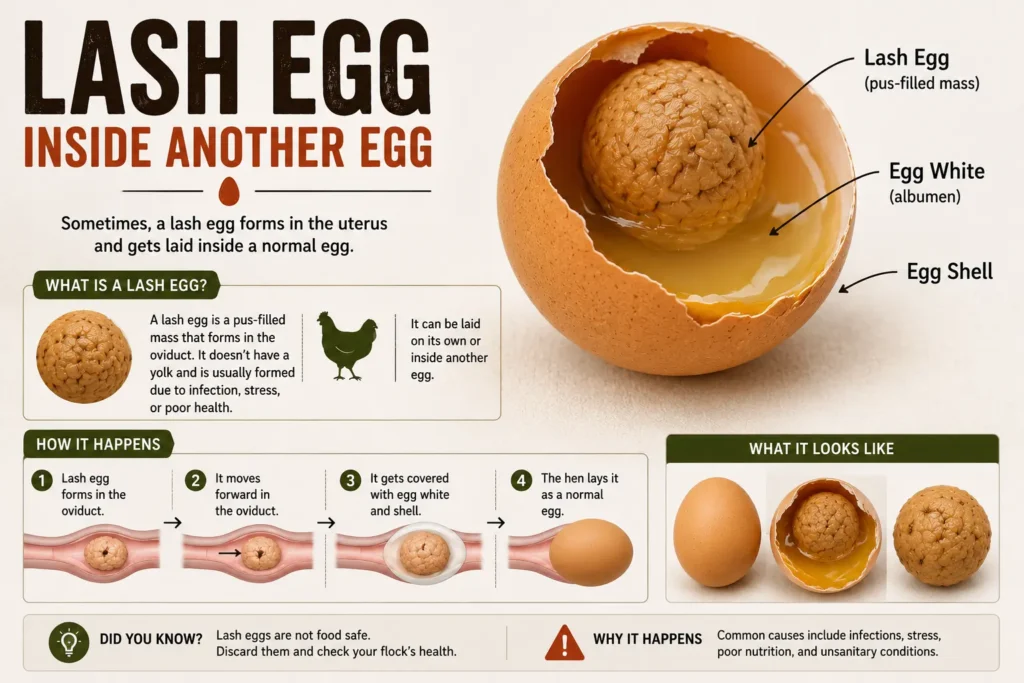
A lash egg inside another egg is one of the strangest things a backyard chicken keeper can pull out of a nesting box. At first glance it looks like a normal egg. Crack it open, though, and instead of yolk and white you find a smaller, rubbery, egg-shaped mass wrapped inside the shell. That inner mass is the lash egg, and its presence tells you the hen’s reproductive tract is fighting an infection called salpingitis.
This isn’t a random fluke or a “double egg” like the twin-yolk surprises some hens produce. It’s a sign that pus, tissue, and inflammatory debris have been caught up in the oviduct along with a normal egg as it formed, so the shell gland wrapped everything together in one package. Understanding why this happens, and what it means for your hen’s health, can help you respond quickly and calmly.
Quick Answer: A lash egg inside another egg happens when a hen has salpingitis (oviduct inflammation), and the resulting pus or tissue mass gets incorporated into an egg as it travels down the reproductive tract, later being covered by a shell like a normal egg.
Table of Contents
Egg Inside Egg vs. Lash Egg: Why Terminology Gets Confused
People searching for this topic often mix up two different things: a true egg inside egg, where one fully-formed egg gets pushed back up the oviduct and re-shelled around a second egg (counter-peristalsis), and a lash egg that happens to be enclosed inside a regular shell. Both are unusual, but they don’t always share the same cause.
| Term | What’s Inside | Usual Cause | Health Concern |
| Egg inside egg | A complete, shelled egg | Reverse movement of the egg in the oviduct (counter-peristalsis) | Usually a one-time fluke, low concern |
| Lash egg inside another egg | Pus, tissue, or caseous (cheese-like) material | Salpingitis (bacterial or viral oviduct infection) | Ongoing infection, needs monitoring |
| Lash egg (standalone) | Pus, tissue, sometimes yolk or shell fragments, no outer shell | Salpingitis | Ongoing infection, needs monitoring |
Knowing which type you’re dealing with changes how worried you should be and what you should do next.
How a Lash Egg Ends Up Inside Another Egg
The oviduct is a long tube with several sections, each adding a layer to the forming egg: the infundibulum, magnum, isthmus, uterus (shell gland), and vagina. When salpingitis inflames this tract, pus and sloughed tissue can sit in one section while an egg is passing through another.
If the timing lines up, the shell gland may wrap shell material around both the developing egg and the infected debris together. The result is a shell that looks ordinary from the outside but hides a lash mass, sometimes alongside a yolk, inside.
What Causes Salpingitis and Lash Eggs in Hens
Salpingitis rarely has one single trigger. It usually develops from a combination of infection and stress on the reproductive system.
- Bacterial infection: E. coli, Salmonella (including S. Enteritidis), Mycoplasma gallisepticum, and Pasteurella multocida are common culprits, often entering through the vent or spreading from a respiratory infection.
- Viral infection: Infectious bronchitis, Newcastle disease, and avian influenza can damage the oviduct lining and set the stage for secondary bacterial invasion.
- High egg production: Hens under heavy laying pressure, especially high-output breeds, have more relaxed vent muscles, which can let bacteria migrate upward.
- Poor nest hygiene: Dirty bedding, soiled vent feathers, and contaminated water increase bacterial exposure.
- Obesity and nutrition gaps: Overweight hens and those on diets short on vitamins and minerals appear more prone to reproductive infections.
- Vent pecking: Open wounds around the vent give bacteria a direct route into the reproductive tract.
Is a Lash Egg Inside Another Egg More Serious Than a Regular Lash Egg?
Not necessarily more dangerous on its own, but it’s still a sign of active salpingitis. The double structure doesn’t change the underlying infection; it just reflects unlucky timing between the infected debris and a forming egg. Either way, the hen has an oviduct problem that deserves attention.
Read More: https://lashegg.com/lash-egg-anatomy/
Recognizing the Warning Signs Beyond the Egg Itself
A hen dealing with salpingitis often shows symptoms well before, during, or after she passes an unusual egg. Watch for:
- Lethargy or reduced activity
- Loss of appetite
- A visibly swollen or firm abdomen
- A “penguin stance” from abdominal pressure
- Fewer eggs laid, or a stop in laying altogether
- Foul-smelling vent discharge
- Ruffled feathers and a hunched posture
- Pale or discolored comb and wattles
Warning: If your hen shows labored breathing along with abdominal swelling, the mass may be pressing on her air sacs. This needs prompt veterinary evaluation.
Symptoms, Likely Cause, and Recommended Action
| Symptom Combination | Likely Cause | Recommended Action |
| One-off odd egg, hen acting normal | Mild, early-stage or resolving infection | Monitor for 1-2 weeks, improve hygiene |
| Repeated lash eggs, lethargy | Chronic salpingitis | Veterinary exam, possible antibiotics |
| Swollen abdomen, labored breathing | Advanced salpingitis with mass pressure | Urgent vet visit |
| Foul discharge, drop in flock production | Possible bacterial spread within flock | Vet consultation, biosecurity review |
Diagnosis: How Veterinarians Confirm Salpingitis
A veterinarian typically starts with a physical exam, feeling the abdomen for swelling or masses. From there, diagnostic steps may include:
- Abdominal palpation and body condition scoring
- Radiographs (X-rays) to check for masses or fluid
- Ultrasound to visualize the oviduct and any retained material
- Bloodwork to look for signs of infection or inflammation
- Culture and sensitivity testing of discharge, when available, to identify the exact bacteria involved
Because the outer symptoms overlap with several other poultry conditions, including egg binding and ascites, professional diagnosis is the only reliable way to confirm salpingitis rather than guessing from the egg alone.
Treatment Options for Lash Eggs and Salpingitis
Home care can support a mildly affected hen, but true treatment for salpingitis is a veterinary matter. Options a vet may consider include:
- Antibiotic therapy: Tetracyclines and other antibiotics may be prescribed based on culture results, though response varies.
- Supportive care: Fluids, nutritional support, and rest from egg laying.
- Hormonal rest: Reducing daylight hours and switching to a lower-protein, molt-type feed can bring a hen out of production, giving the reproductive tract time to recover.
- Surgical removal: In severe or recurring cases, a veterinarian may recommend removing the mass or, in extreme situations, the oviduct itself. This is a significant surgery with a guarded prognosis, especially if peritonitis is present.
- Euthanasia: In advanced cases where infection has spread and quality of life is poor, a veterinarian may discuss this as a humane option.
Expert Tip: Bringing a hen out of active lay by shortening light exposure and switching feed is one of the most effective non-surgical ways vets manage ongoing salpingitis, since it removes the hormonal drive that keeps stressing the inflamed oviduct.
At-Home Supportive Care While You Arrange a Vet Visit
While professional treatment addresses the infection itself, you can support a hen at home in the meantime:
- Isolate her from the rest of the flock to reduce stress and observe her closely
- Keep her nesting area clean and dry
- Offer easy access to food and water at a comfortable height if she seems weak
- Avoid handling her abdomen roughly
- Track her symptoms daily so you have clear information for the vet
Common Mistakes: Many keepers wait too long to seek help because the hen “seems fine otherwise,” or they assume a single odd egg means nothing. Salpingitis is progressive in many birds, so early monitoring matters more than waiting for a crisis.
Recovery Outlook and Long-Term Management
Recovery depends heavily on how early the infection is caught and how the hen responds to reduced egg production. Some hens go on to live comfortably for years after passing a lash egg, occasionally producing another one without serious decline. Others have recurring, worsening episodes that eventually require surgical intervention or humane euthanasia.
| Recovery Scenario | Typical Outlook |
| Single lash egg, hen otherwise healthy | Often resumes normal life; may or may not return to laying |
| Recurrent lash eggs with treatment | Variable; some stabilize with hormonal rest, others progress |
| Advanced salpingitis with abdominal mass | Poor prognosis without surgery; guarded even with surgery |
Did You Know? Salpingitis is also found in humans, where it refers to inflammation of the fallopian tubes, though the causes and treatment are entirely different from poultry medicine.
Prevention: Reducing the Risk of Lash Eggs in Your Flock
You can’t eliminate salpingitis risk completely, but good management lowers the odds considerably.
- Keep nest boxes and bedding clean and dry
- Maintain strong biosecurity to limit exposure to Salmonella, E. coli, and respiratory viruses
- Feed a balanced, age-appropriate diet with adequate vitamins and minerals
- Avoid overfeeding to prevent obesity-related reproductive stress
- Address vent pecking quickly with separation and wound care
- Vaccinate against infectious bronchitis and Newcastle disease where recommended for your region and flock type
- Give high-producing hens periodic rest from intensive laying schedules
Does Diet Really Affect Lash Egg Risk?
Yes. Hens on diets low in key vitamins and minerals, or those carrying excess weight, show higher rates of reproductive tract problems, including salpingitis. A balanced layer feed appropriate to the hen’s age and production level supports a healthier oviduct.
When to Call a Vet
When to Call a Vet: Contact a poultry-experienced veterinarian if your hen passes a lash egg (with or without an outer shell), shows abdominal swelling, stops eating, breathes with visible effort, or has repeated abnormal eggs. Early veterinary input gives her the best chance at a good outcome.
Abnormal Eggs: How Lash Eggs Fit Into the Bigger Picture
Lash eggs are just one type of abnormal egg a flock owner might encounter. Others include:
- Soft-shelled or shell-less eggs, often linked to calcium deficiency or early laying
- Wind eggs, tiny yolk-free eggs from a young or older hen’s irregular cycle
- Blood spots or meat spots, generally harmless and related to minor vessel rupture during formation
- Double-yolk eggs, from two yolks released together, common in young hens
Unlike most of these, a lash egg (whether standalone or found inside another egg) points specifically to an active infection rather than a simple reproductive quirk, which is why it deserves closer attention than the others on this list.
Frequently Asked Questions
Is a lash egg inside another egg dangerous for my hen? It means she has salpingitis, an oviduct infection, which can range from mild to serious. It’s not an emergency by itself, but it should prompt monitoring and, ideally, a veterinary check.
Can a hen recover from a lash egg inside another egg without treatment? Some hens recover on their own, especially after a rest from laying, but chronic or worsening cases need veterinary treatment for the best outcome.
Will my hen lay a lash egg inside another egg again? It’s possible. Some hens pass a lash egg once and never again, while others have recurring episodes tied to ongoing or repeated infection.
Should I eat eggs from a hen that has had a lash egg inside another egg? Discard any egg containing a lash mass. For eggs laid before or after the episode, ask your vet about safety, especially if antibiotics are involved, since withdrawal periods may apply.
Is a lash egg inside another egg contagious to other hens? The infection causing it, such as certain bacteria or viruses, can spread within a flock. The odd egg itself isn’t the risk; the underlying pathogen is.
How is a lash egg inside another egg different from a double-yolk egg? A double-yolk egg contains two normal yolks and no infection. A lash egg inside another egg contains pus or tissue from an infected oviduct, which is a health concern rather than a laying quirk.
Bringing It All Together
Finding a lash egg inside another egg is unsettling, but it’s a clear signal rather than a mystery. It points to salpingitis, an oviduct infection that ranges from a single mild episode to a chronic, progressive condition. The safest approach is to watch your hen closely for lethargy, appetite changes, or abdominal swelling, and to loop in a poultry-savvy veterinarian sooner rather than later.
With good nest hygiene, a balanced diet, and prompt attention to any repeat episodes, many hens go on to live comfortable lives even after an unusual egg like this. When in doubt, a vet visit remains the most reliable next step, since only professional diagnosis can confirm what’s really happening inside your hen’s reproductive tract.
FAQ (Standalone Section)
Q: What does it mean if I find a lash egg inside another egg? A: It means your hen’s oviduct produced infected tissue or pus (a lash egg) that got incorporated into a normal egg’s shell, indicating salpingitis.
Q: Do all hens with salpingitis lay a lash egg inside another egg? A: No. Most hens with salpingitis pass a standalone lash egg without an outer shell. The enclosed version is less common and depends on timing within the oviduct.
Q: Can stress cause a lash egg inside another egg? A: Stress alone doesn’t cause salpingitis, but it can weaken immune defenses and make infection more likely, indirectly raising the risk.
Q: What breeds are most prone to lash eggs? A: High-production laying breeds, which place more strain on the reproductive system, tend to show salpingitis and lash eggs more often than lower-production or heritage breeds.