What Causes Lash Eggs in Chickens? The Short Answer First

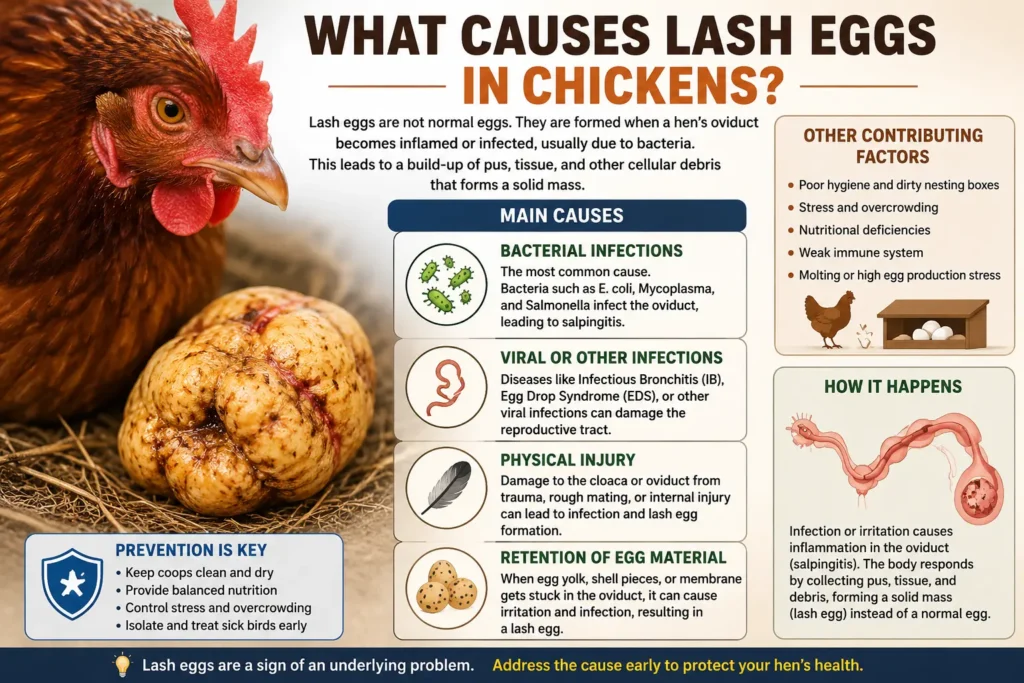
If you just cracked open something that looked more like a lump of pus and tissue than an egg, you’re probably asking what causes lash eggs in chickens before anything else. The short answer: a hen’s oviduct is fighting an infection called salpingitis, and the lash egg is the visible result of that fight.
This isn’t caused by anything you fed her that day, and it’s not a random genetic quirk. It’s a health event, tied to bacteria, viruses, or ongoing stress on her reproductive system. Once you understand what’s actually happening inside her, the rest of your flock management gets a lot clearer.
Quick Answer: The main things that cause lash eggs in chickens are bacterial infections (especially E. coli and Salmonella), viral infections like infectious bronchitis, high egg production, obesity, poor nest hygiene, and vent injuries that let bacteria travel into the oviduct.
Table of Contents
Understanding Salpingitis: The Condition Behind Every Lash Egg
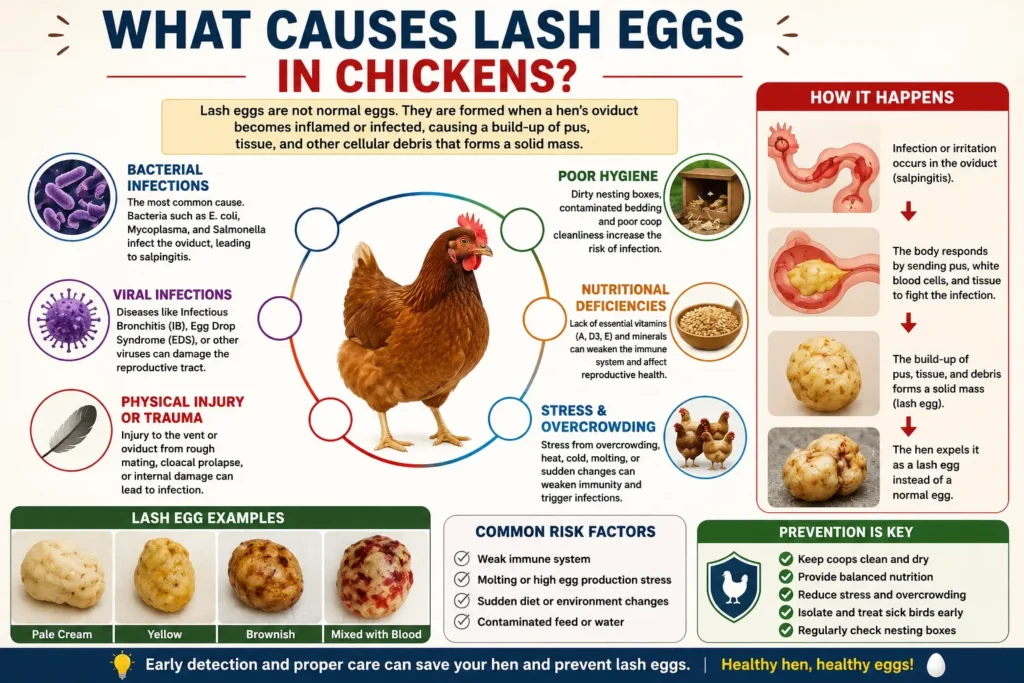
Salpingitis is inflammation of the oviduct, the tube that builds an egg layer by layer as it travels from the ovary to the vent. When this tube gets infected, the hen’s body still tries to process pus, dead cells, and inflammatory fluid the same way it processes a real egg, wrapping it in membrane and sometimes shell material.
That packaged mass is what keepers call a lash egg. It’s not a type of egg at all; it’s a symptom you can hold in your hand.
Is What Causes Lash Eggs in Chickens the Same as What Causes Salpingitis?
Yes, essentially. Salpingitis is the underlying disease, and the lash egg is the physical evidence of it. Anything that causes salpingitis is, by extension, one of the things that causes lash eggs in chickens. The two terms describe the same event from different angles: one is the diagnosis, the other is what you find in the nest box.
The Core Causes: Bacteria Behind Most Cases
Bacterial infection accounts for the majority of documented salpingitis cases in backyard and commercial flocks alike. The most frequently identified organisms include:
- E. coli: Commonly present in droppings and dirty environments; it travels up through the vent, especially in hens with a relaxed vent from frequent laying.
- Salmonella species, including Salmonella Enteritidis: Known to colonize the oviduct directly in some hens.
- Mycoplasma gallisepticum: A chronic respiratory pathogen that can spread to reproductive tissue over time.
- Pasteurella multocida: The organism behind fowl cholera, occasionally reaching the oviduct in long-term infections.
Bacterial salpingitis tends to produce firmer, denser lash eggs, since the pus mixes with cellular debris and hardens as it moves through the reproductive tract.
Viral Causes You Shouldn’t Overlook
Bacteria aren’t the only culprit behind lash eggs. Several respiratory viruses can also inflame the oviduct:
- Infectious bronchitis virus
- Newcastle disease virus
- Avian influenza, in some documented cases
Viral salpingitis often looks a little different on exam, sometimes producing softer, more watery lesions instead of the firm, cheese-like texture typical of bacterial infections. Either way, the hen’s oviduct is dealing with active inflammation.
Read More: https://lashegg.com/lashegg-com-lash-egg-causes/
Causes at a Glance
| Cause | Type | How It Reaches the Hen |
| E. coli | Bacterial | Contaminated bedding, water, droppings |
| Salmonella | Bacterial | Direct oviduct colonization, contaminated feed or water |
| Mycoplasma gallisepticum | Bacterial | Respiratory spread to reproductive tract |
| Infectious bronchitis | Viral | Respiratory transmission within the flock |
| Newcastle disease | Viral | Respiratory transmission, often flock-wide |
| High egg production | Contributing factor | Weakens vent muscle tone over time |
| Obesity | Contributing factor | Hormonal imbalance, weaker immune response |
| Vent pecking | Contributing factor | Open wound gives bacteria direct entry |
Flock Conditions That Raise the Risk
Infection is the direct trigger, but several flock-level conditions make salpingitis more likely to take hold in the first place.
- Heavy laying schedules. Hens bred for high production, especially commercial layer breeds, put continuous strain on the oviduct.
- Overcrowding. Tight living conditions increase stress and bacterial exposure across the whole flock.
- Poor ventilation. Ammonia buildup from droppings can irritate the respiratory tract, creating an entry point for infection that eventually reaches the oviduct.
- Inconsistent nutrition. Diets lacking key vitamins and minerals weaken general immune defenses.
- Dirty nesting boxes. Damp, soiled bedding raises bacterial load in the one place hens spend time daily while laying.
- New bird introductions without quarantine. Bringing in birds without isolating them first is one of the most common ways new pathogens enter an otherwise healthy flock.
Warning: If more than one hen in your flock develops symptoms of salpingitis around the same time, treat it as a flock-wide biosecurity concern, not an isolated case. Clustered cases often point to a shared source of infection.
Does Hen Age Affect What Causes Lash Eggs in Chickens?
Yes, to some degree. Young hens just coming into lay and older hens nearing the end of their productive years both show slightly higher rates of reproductive tract issues, though for different reasons. Younger hens have oviducts still adjusting to regular egg production, while older hens often deal with general reproductive wear after years of laying.
Recognizing the Symptoms That Go With These Causes
Whatever the specific trigger, hens with salpingitis tend to show a recognizable pattern of symptoms:
- Reduced activity or noticeable lethargy
- Decreased appetite
- A swollen, firm, or fluid-filled abdomen
- A “penguin-like” upright stance from abdominal pressure
- Drop in egg production, or a complete stop
- Foul-smelling discharge from the vent
- Labored breathing in advanced cases
Symptom, Cause, and Recommended Response
| Symptom Pattern | Likely Cause | Recommended Response |
| One unusual egg, hen behaving normally | Mild or early-stage infection | Monitor closely for one to two weeks |
| Repeated lash eggs, lethargy | Chronic bacterial salpingitis | Veterinary exam and possible antibiotics |
| Abdominal swelling with labored breathing | Advanced infection, mass pressing on organs | Urgent veterinary care |
| Multiple hens affected at once | Shared bacterial or viral source | Vet consultation plus flock biosecurity review |
How Veterinarians Confirm the Cause
Because symptoms overlap with other poultry conditions, a proper diagnosis takes more than a visual check. Veterinarians typically use:
- Physical exam and abdominal palpation
- Radiographs to check for internal masses or fluid
- Ultrasound imaging of the reproductive tract
- Bloodwork to assess inflammation and general health
- Culture and sensitivity testing of any discharge, to identify the exact organism involved
This last step matters most, since treatment for bacterial versus viral salpingitis looks completely different.
Treatment Options Based on the Underlying Cause
| Suspected Cause | Veterinary Approach | Supportive Home Care |
| Bacterial infection | Targeted antibiotics based on culture results | Clean, dry environment; reduced stress |
| Viral infection | Supportive care; antibiotics only for secondary infection | Isolation and close monitoring |
| High production strain | Hormonal rest via shortened daylight and molt feed | Consistent lighting and feed schedule |
| Obesity-related | Gradual weight management alongside treatment | Portion control, more foraging space |
| Severe or recurring cases | Surgical removal of mass or oviduct; euthanasia if advanced | Close observation before and after any procedure |
Expert Tip: Reducing daylight hours and switching to a lower-protein, molt-type feed can bring a hen out of active lay. This removes much of the hormonal pressure driving continued strain on an already inflamed oviduct, and many vets consider it one of the most useful non-surgical tools available.
Common Mistakes When Investigating Lash Egg Causes
Common Mistakes: Many keepers assume one odd egg means nothing and skip monitoring entirely. Others reach for over-the-counter antibiotics without knowing which bacteria, if any, is actually involved, which can delay real treatment and contribute to antibiotic resistance across the flock. A vet consultation before starting any medication protects both the hen and the rest of your birds.
Prevention: Reducing the Risk Factors in Your Flock
You can’t eliminate every risk, but strong management significantly lowers your odds of dealing with lash eggs at all.
- Keep nest boxes, bedding, and water sources clean and dry
- Quarantine new birds for at least two to three weeks before flock introduction
- Maintain solid biosecurity to limit exposure to E. coli, Salmonella, and respiratory viruses
- Feed a balanced, age-appropriate layer diet with adequate vitamins and minerals
- Avoid overcrowding, and provide enough space per bird
- Address vent pecking quickly with separation and wound care
- Vaccinate against infectious bronchitis and Newcastle disease where recommended for your region
- Give high-producing hens occasional rest from intensive laying cycles
Did You Know? Salpingitis also exists in human medicine, referring to inflammation of the fallopian tubes. The name overlaps with poultry medicine, but the causes and treatment are entirely different between species.
Recovery Outlook by Cause
| Cause Type | Typical Recovery Outlook |
| Mild bacterial, caught early | Often improves with targeted antibiotics and rest from laying |
| Chronic bacterial | Variable; some hens stabilize, others progress despite treatment |
| Viral, mild case | May resolve with supportive care as immune response strengthens |
| Advanced, with abdominal mass | Poor prognosis without surgery, guarded even with it |
Recovery depends heavily on how early the underlying cause gets identified and addressed. Hens whose flock conditions improve alongside treatment tend to do better long-term than those where the same risk factors remain in place.
When to Call a Vet
When to Call a Vet: Reach out to a poultry-experienced veterinarian if your hen passes a lash egg, shows abdominal swelling, stops eating, breathes with visible effort, or if more than one bird in your flock shows similar symptoms. Identifying the cause early gives every affected hen a better chance at recovery.
Frequently Asked Questions
What causes lash eggs in chickens most often? Bacterial infections, particularly from E. coli or Salmonella, are the most frequently identified cause, often alongside contributing factors like high egg production or poor hygiene.
Can one hen’s lash egg spread to the rest of the flock? The lash egg itself isn’t contagious, but the underlying bacteria or virus causing it sometimes can spread between birds sharing space, water, or nesting boxes.
Is diet one of the causes of lash eggs in hens? Diet alone rarely causes salpingitis directly, but poor nutrition weakens a hen’s immune defenses, making infection more likely when bacteria or viruses are present.
Do certain chicken breeds get lash eggs more than others? High-production layer breeds face somewhat higher risk simply due to the added physical strain of frequent egg laying, though any breed can develop salpingitis.
Can stress alone cause a lash egg? Stress doesn’t directly cause salpingitis, but it can suppress a hen’s immune system, making her more vulnerable to the infections that do cause it.
How long does it take for a lash egg to appear after infection starts? This varies significantly by hen and by how quickly the infection progresses; some hens show signs within days, while others develop chronic, low-level salpingitis over weeks or months before a lash egg appears.
Bringing the Causes Together
Understanding what causes lash eggs in chickens comes down to recognizing salpingitis for what it is: an oviduct infection, usually bacterial or viral, often made worse by flock conditions like overcrowding, poor hygiene, or heavy laying schedules. None of these causes are things you can confirm just by looking at the egg itself.
The most reliable path forward is close observation of your flock, quick attention to symptoms like swelling or lethargy, and a veterinary visit when something seems off. With solid management and early intervention, many hens recover well and continue living healthy lives even after a lash egg episode.
FAQ (Standalone Section)
Q: What is the number one thing that causes lash eggs in chickens? A: Bacterial infection, most often from E. coli or Salmonella, is the leading cause identified in poultry veterinary cases.
Q: Can a virus really cause lash eggs in chickens, or is it always bacteria? A: Viruses like infectious bronchitis and Newcastle disease can also cause salpingitis, though bacterial cases are documented more often.
Q: Do lash eggs mean my whole flock is at risk? A: Not automatically, but if the underlying cause is a contagious bacteria or virus, other hens sharing the same space could be exposed.
Q: Is there a way to prevent every possible cause of lash eggs in hens? A: No method guarantees full prevention, but strong hygiene, quarantine practices, and balanced nutrition significantly lower the risk.