
Bacterial Infection Causing Lash Eggs: What’s Actually Happening

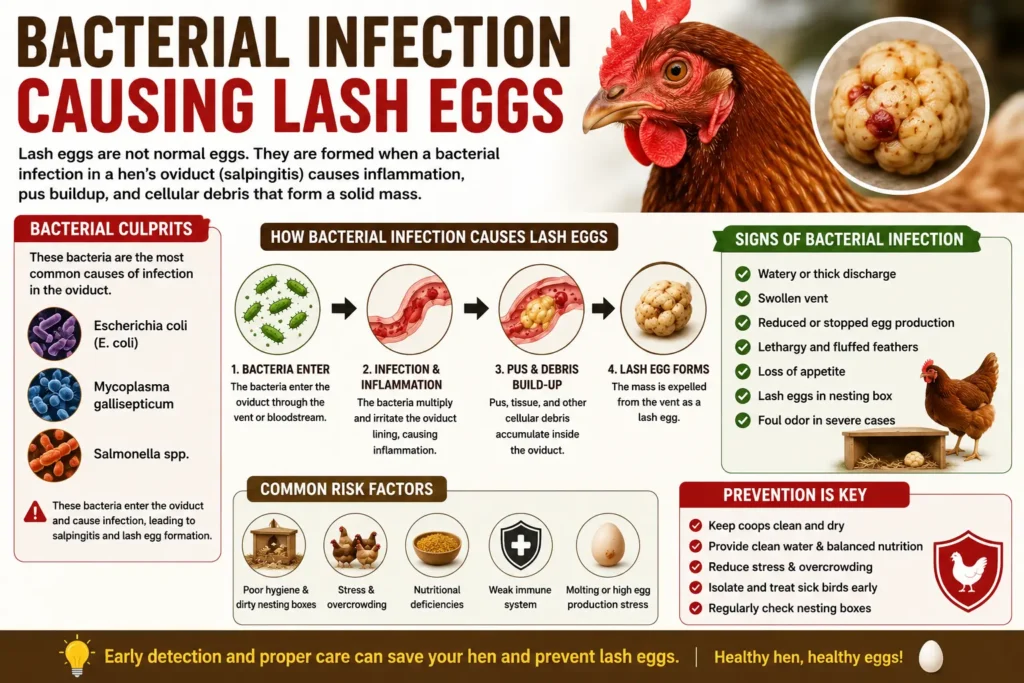
A bacterial infection causing lash eggs is the most common reason hens produce this strange, pus-filled mass instead of a normal egg. The bacteria involved don’t attack the egg itself; they infect the oviduct, the tube that builds each egg layer by layer, and the lash egg is simply the visible evidence of that infection.
This guide goes deeper than a general overview. It breaks down exactly which bacteria are usually responsible, how they reach the oviduct in the first place, how vets confirm the specific culprit, and what treatment actually looks like once bacteria are involved.
Quick Answer: The bacteria most often responsible for lash eggs are E. coli, Salmonella species, Mycoplasma gallisepticum, and Pasteurella multocida. All of them can inflame the oviduct and trigger salpingitis, the condition behind nearly every lash egg case.
Table of Contents
How a Bacterial Infection Reaches the Oviduct
The oviduct sits close to the vent, which makes it vulnerable to bacteria already present in droppings, dirty bedding, or contaminated water. Bacteria can travel upward through the vent, especially in hens whose vent muscles have relaxed from frequent egg-laying.
Some bacteria take a different route entirely, spreading through the bloodstream from an infection elsewhere in the body, such as the respiratory tract. Either path can end with bacteria settling into the oviduct lining and triggering inflammation.
Why Does a Bacterial Infection Causing Lash Eggs Happen More in Some Hens?
Hens with weaker immune defenses, whether from poor nutrition, obesity, or the physical strain of heavy egg production, are more likely to develop a bacterial infection that reaches the oviduct. Age plays a role too: very young hens whose reproductive tracts are still adjusting to regular laying, and older hens with years of accumulated strain, both show somewhat higher rates of salpingitis.
The Main Bacteria Behind Lash Eggs
E. coli: The Most Frequently Identified Cause
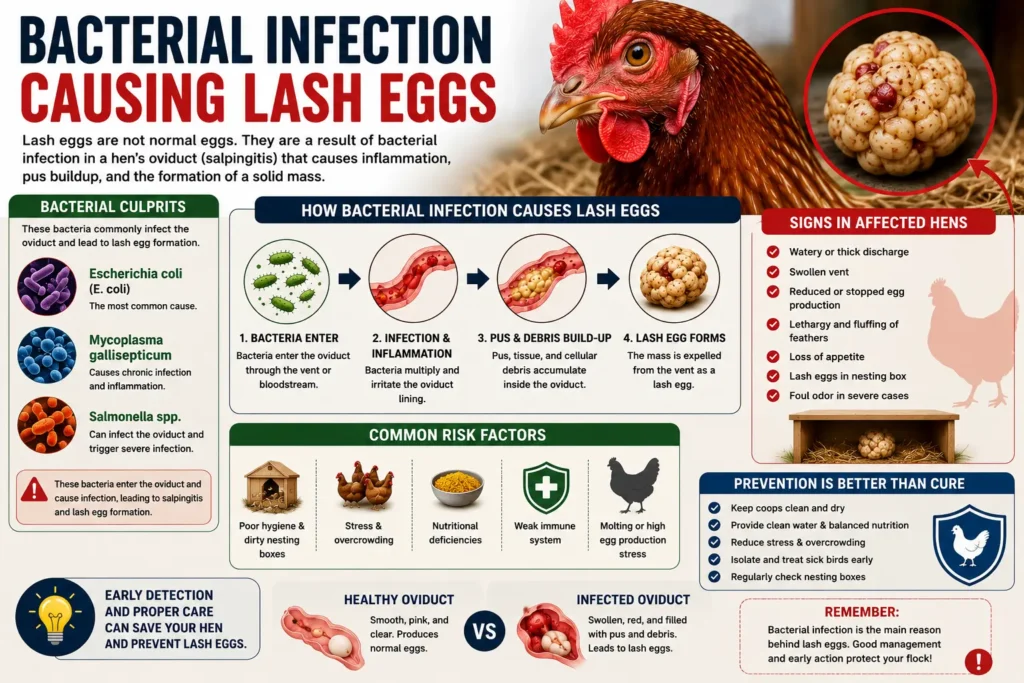
Escherichia coli is present in almost every flock’s environment, usually in droppings and contaminated surfaces. It becomes a problem when it enters the oviduct, most often through the vent. Because it’s so widespread, E. coli accounts for a large share of documented bacterial salpingitis cases.
Read More: https://lashegg.com/lashegg-com-what-causes-lash-eggs-in-chickens/
Salmonella Species
Several Salmonella strains, including Salmonella Enteritidis, are known to directly colonize the oviduct in some hens rather than simply passing through the digestive tract. This is part of why egg-borne Salmonella risk gets so much attention from food safety researchers, since an infected oviduct can affect the eggs a hen produces even before symptoms become obvious.
Mycoplasma gallisepticum
This bacteria is better known as a respiratory pathogen, but it doesn’t always stay contained to the airways. In some hens, chronic Mycoplasma infection spreads to reproductive tissue, contributing to salpingitis over time. Because Mycoplasma infections tend to be chronic rather than acute, hens with this cause often show a slower, more gradual symptom progression.
Pasteurella multocida
Known as the bacteria behind fowl cholera, Pasteurella multocida can occasionally reach the oviduct after a long-standing infection elsewhere in the body. This cause is less common than E. coli or Salmonella, but it’s still documented in poultry health literature.
Bacterial Causes at a Glance
| Bacteria | Typical Entry Point | Infection Pattern |
| E. coli | Vent, contaminated bedding or water | Often acute, tied to hygiene conditions |
| Salmonella spp. | Vent, contaminated feed or water | Can directly colonize the oviduct |
| Mycoplasma gallisepticum | Respiratory tract, then bloodstream | Chronic, gradual progression |
| Pasteurella multocida | Bloodstream, from existing infection | Less common, tied to fowl cholera history |
Did You Know? According to general poultry pathology references like the Merck Veterinary Manual, salpingitis is one of the most frequently diagnosed reproductive tract conditions in laying hens, and bacterial causes make up the majority of documented cases.
Recognizing Symptoms Tied to Bacterial Salpingitis
Whichever specific bacteria is involved, hens tend to show a similar cluster of symptoms once salpingitis sets in:
- Lethargy or noticeably reduced activity
- Loss of appetite
- A swollen, firm abdomen
- Fewer eggs laid, or a complete stop in production
- Foul-smelling discharge from the vent
- Ruffled feathers and a hunched posture
- Labored breathing in advanced cases, from abdominal pressure
Warning: If your hen shows abdominal swelling along with visible breathing difficulty, don’t wait to see if it resolves on its own. This combination often means the infected mass is large enough to press on internal organs, which needs prompt veterinary attention.
How Vets Identify the Specific Bacterial Infection Causing Lash Eggs
A visual exam alone can’t confirm which bacteria is responsible, and treatment decisions depend heavily on getting that answer right. Veterinary diagnosis typically includes:
- Physical exam and abdominal palpation
- Radiographs to check for internal masses or fluid buildup
- Ultrasound imaging of the oviduct
- Bloodwork to assess overall infection and inflammation levels
- Culture and sensitivity testing of vent discharge or, in surgical cases, tissue samples
Culture and sensitivity testing matters most here, since it identifies the exact bacteria and shows which antibiotics it will actually respond to, rather than guessing.
Can You Tell Which Bacteria Is Involved Just by Looking at the Lash Egg?
Not reliably. A firmer, more layered lash egg often suggests a longer-standing bacterial infection, while a fresher, softer mass may point to a more recent one. But texture alone can’t identify the specific organism. Lab testing remains the only accurate way to confirm which bacteria is behind a given case.
Treatment for Bacterial Infections Causing Lash Eggs
| Treatment Approach | What It Involves | Who Should Guide It |
| Targeted antibiotics | Chosen based on culture and sensitivity results | Licensed veterinarian |
| Hormonal rest | Reduced daylight hours, molt-type feed to pause laying | Can be started at home, ideally with vet guidance |
| Supportive care | Fluids, nutrition support, stress reduction | Home care alongside veterinary treatment |
| Surgical removal | Removing the mass or, in severe cases, the oviduct | Veterinary surgery only |
| Euthanasia | Considered in advanced, non-responsive cases | Veterinary discussion and decision |
Expert Tip: Never start a hen on random antibiotics from a farm store without knowing which bacteria is involved. Using the wrong antibiotic not only fails to treat the infection, it can contribute to antibiotic resistance that makes future infections harder to treat across your whole flock.
Common Mistakes When Dealing With Bacterial Salpingitis
Common Mistakes: A frequent misstep is assuming any antibiotic will work for any lash egg case. Bacteria respond differently to different drugs, and using the wrong one wastes time while the infection continues to progress. Another common mistake is stopping antibiotic treatment early once the hen “seems better,” which can allow surviving bacteria to rebound, sometimes in a more resistant form.
Preventing a Bacterial Infection Causing Lash Eggs in Your Flock
Reducing bacterial exposure is one of the most effective ways to lower your flock’s overall risk.
- Keep nest boxes, bedding, and water sources clean and dry
- Quarantine new birds for two to three weeks before introducing them to the flock
- Avoid overcrowding, which raises bacterial exposure and stress across the group
- Feed a balanced, age-appropriate layer diet to support immune function
- Address vent pecking wounds quickly, since open wounds give bacteria direct entry
- Maintain good ventilation to reduce ammonia buildup, which can weaken respiratory defenses
- Practice general biosecurity, including handwashing and boot changes between different bird areas
Does Coop Hygiene Really Make a Measurable Difference?
Yes. Since E. coli and Salmonella both spread easily through contaminated bedding, droppings, and water, consistent coop hygiene is one of the most direct ways to lower bacterial exposure. University extension poultry programs frequently list nest box and waterer cleanliness among the top preventable risk factors for reproductive tract infections in layer flocks.
Recovery Outlook for Bacterial Cases
| Case Type | General Recovery Outlook |
| Mild, caught early, single antibiotic course | Often resolves well with proper treatment and rest from laying |
| Chronic Mycoplasma-related salpingitis | Variable; some hens stabilize long-term, others have recurring flare-ups |
| Advanced infection with abdominal mass | Poor prognosis without surgery, guarded even with it |
| Recurrent E. coli or Salmonella cases | Often tied to ongoing environmental exposure; addressing hygiene alongside treatment improves outcomes |
Recovery tends to go better when the specific bacteria gets identified early and the hen’s living conditions improve alongside treatment. Hens left in the same high-risk environment after recovering are more likely to face a repeat infection.
When to Call a Vet
When to Call a Vet: Contact a poultry-experienced veterinarian if your hen passes a lash egg, shows abdominal swelling, stops eating, or breathes with visible effort. If you suspect a bacterial infection causing lash eggs based on repeated episodes or discharge, culture testing is the only reliable way to identify the exact bacteria and choose the right treatment.
Frequently Asked Questions
What bacteria most commonly causes lash eggs in chickens? E. coli is the most frequently identified bacteria behind lash eggs, followed by Salmonella species and, in chronic respiratory cases, Mycoplasma gallisepticum.
Can a bacterial infection causing lash eggs spread to other hens? Yes, in many cases. Bacteria like E. coli and Salmonella can spread through shared water, bedding, or close contact, which is why flock-wide monitoring matters after one hen is affected.
How do vets know which bacteria is causing salpingitis? Culture and sensitivity testing of vent discharge or tissue samples identifies the exact bacteria and shows which antibiotics will be effective against it.
Is a bacterial infection causing lash eggs curable? Many cases respond well to targeted antibiotics and rest from egg-laying, especially when caught early. Chronic or advanced cases have a more variable outlook.
Can I treat a bacterial lash egg infection without a vet? Home care can support a hen’s comfort and stress levels, but actual antibiotic treatment should be guided by a veterinarian and ideally based on culture results, not guesswork.
Does egg-laying frequency affect bacterial infection risk? Yes. Hens under heavy laying pressure tend to have more relaxed vent muscles over time, which can make it easier for bacteria to travel into the oviduct.
Bringing It All Together
A bacterial infection causing lash eggs almost always traces back to organisms like E. coli, Salmonella, Mycoplasma gallisepticum, or Pasteurella multocida reaching the oviduct and triggering salpingitis. Identifying which bacteria is actually involved through proper veterinary testing makes the difference between guessing at treatment and actually resolving the infection.
Good coop hygiene, quarantine practices, and balanced nutrition go a long way toward lowering your flock’s risk. When symptoms do show up, close monitoring and a timely veterinary visit give affected hens the best chance at a full recovery.
FAQ (Standalone Section)
Q: Is E. coli always the bacteria involved when a hen has a lash egg? A: Not always, but it is the most commonly identified bacteria in documented cases of salpingitis and lash eggs.
Q: Can antibiotics fully clear a bacterial infection causing lash eggs? A: In many early or mild cases, yes. Chronic or advanced infections may respond only partially, especially if the mass has grown large before treatment begins.
Q: Why does culture testing matter so much for bacterial salpingitis? A: Different bacteria respond to different antibiotics, so identifying the exact organism prevents wasted treatment time and reduces the risk of antibiotic resistance.
Q: Are some bacterial causes of lash eggs more dangerous than others? A: Chronic infections, like those involving Mycoplasma gallisepticum, tend to be harder to fully resolve than acute E. coli cases caught early, making prompt attention especially important.