Chicken Coop Temperature: The Equipment and Management Side

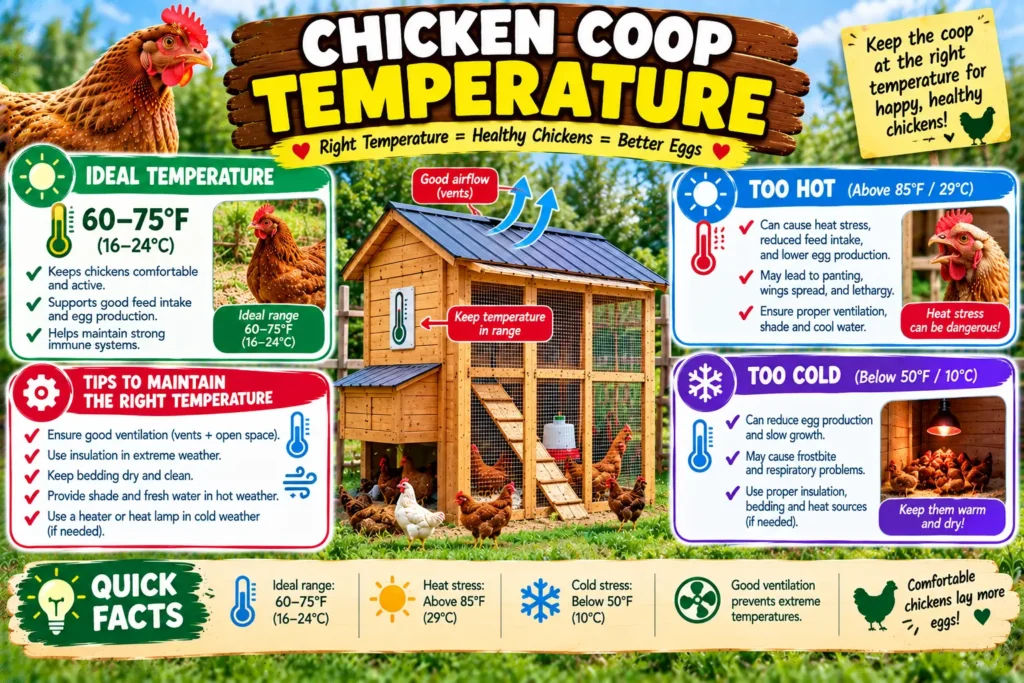
Chicken coop temperature is often discussed purely in terms of what’s biologically ideal for chickens, a topic covered in depth elsewhere. This guide instead focuses on the practical side: how to actually manage coop temperature through insulation, safe heating and cooling equipment, and monitoring, without over-relying on numbers alone.
Getting chicken temperature management right is less about hitting an exact reading and more about using the right tools safely for your specific climate and coop setup.
Quick Answer: Chickens tolerate a wide temperature range well without intervention, generally down to freezing and up into the 80s°F, as long as they’re dry, out of drafts, and have shade and water in heat. Active chicken coop temperature management, insulation, heating, or cooling equipment, becomes relevant mainly at genuine extremes, and safety should guide equipment choices as much as effectiveness.
Table of Contents
When Chickens Actually Need Help With Temperature
The Ideal Temperature for Chickens Isn’t a Single Number
Rather than a strict target, chickens do well across a fairly wide range when other conditions, dryness, shelter from wind, shade, and water, are met. Active intervention becomes more relevant at genuine extremes rather than moderate seasonal variation.
| Condition | Intervention Generally Needed? |
| Moderate cold (20–45°F), dry, no draft | Usually no |
| Severe cold (below 0–10°F) | Consider supplemental heat for extended periods |
| Moderate heat (75–90°F) | Shade and water usually sufficient |
| Severe heat (95°F+) | Active cooling measures recommended |
Why “As Long As They’re Dry” Matters So Much
Wet feathers lose their insulating properties almost entirely, meaning a chicken dry and out of wind at 20°F often fares better than one exposed to dampness at a much milder temperature.
Did You Know? Chicken coop temperature management historically relied almost entirely on insulation and shelter design rather than powered equipment, since electricity in coops is a relatively recent convenience that introduces its own safety considerations.
Insulation: The First Line of Defense
How Insulation Helps in Both Directions
Good insulation slows heat loss in winter and can also reduce heat gain in summer, making it a genuinely dual-purpose investment for chicken coop temperature stability rather than a cold-weather-only concern.
Read More: https://lashegg.com/chicken-coop-ventilation/
Insulation Approaches
- Traditional insulation material (rated for the structure, protected from bird access and chewing)
- Deep litter bedding, which generates some passive warmth through composting
- Strategic coop siting, using windbreaks or partial shade from existing structures or trees
| Insulation Method | Primary Season Benefit |
| Wall/ceiling insulation | Both winter heat retention and summer heat reduction |
| Deep litter method | Winter warmth from composting activity |
| Strategic siting (windbreaks/shade) | Both, depending on placement |
Supplemental Heat: Safety First
Comparing Heat Source Options
| Heat Source | Fire Risk | Effectiveness | Notes |
| Traditional heat lamps | High | Effective but risky | Leading cause of coop fires |
| Radiant heat panels/plates | Lower | Effective, safer | Generally preferred modern option |
| Deep litter method | None (passive) | Modest | No fire risk, limited heat output |
Why Heat Lamps Carry Real Risk
Traditional heat lamps are a well-documented cause of coop fires, largely due to dry bedding, dust, and the fixture’s proximity to flammable material. When supplemental heat is genuinely necessary, safer radiant options reduce this risk significantly.
Step-by-Step: Using Supplemental Heat Safely
- Confirm genuine need first. Reserve supplemental heat for true extreme cold rather than routine winter temperatures.
- Choose a lower-risk heat source. Radiant panels designed for livestock use generally carry less fire risk than open heat lamp bulbs.
- Secure any heat source well away from bedding and flammable material. Use protective housings or cages where available.
- Use a thermostatically controlled option if possible. This prevents overheating and reduces the temptation to leave equipment running unnecessarily.
- Check equipment regularly. Inspect cords, connections, and mounting security throughout the season.
Warning
Heat lamps and other supplemental heating equipment are a leading cause of coop fires, particularly when combined with dry bedding and dust. If you choose to use supplemental heat, prioritize safer radiant options, secure mounting, and regular inspection over convenience or lower upfront cost.
Cooling Options for Extreme Heat
Passive Cooling
Shade structures, adequate ventilation, and reflective roofing materials all reduce coop temperature without requiring power, making them the first line of defense in hot climates.
Active Cooling
Fans improve air circulation and evaporative cooling for the flock, while misting systems, used carefully to avoid creating a humid, damp environment, can provide additional relief during genuine heat waves.
| Cooling Method | Power Needed | Best For |
| Shade structures | No | Baseline heat reduction |
| Reflective roofing | No | Reduces heat absorption |
| Fans | Yes | Improved air circulation |
| Misting systems | Yes | Acute heat wave relief |
Common Mistakes to Avoid
- Using heat lamps without adequate fire safety precautions
- Sealing a coop tightly in winter, trapping moisture despite good intentions
- Over-relying on active cooling equipment instead of passive measures like shade and ventilation
- Ignoring humidity when using misting systems, which can create dampness problems
- Assuming a single ideal temperature for chickens exists rather than a wider tolerable range
Monitoring Chicken Coop Temperature
Simple Monitoring Tools
A basic indoor/outdoor thermometer placed inside the coop gives a reasonable baseline reading, while more advanced keepers sometimes use connected sensors for remote monitoring, particularly useful during extreme weather events.
What to Watch Alongside the Thermometer
Numbers alone don’t tell the whole story; watching flock behavior, panting and spread wings in heat, huddling and fluffed feathers in cold, provides real-time feedback that complements a simple temperature reading.
Expert Tip
Place your thermometer at roosting height rather than floor level, since that’s the zone that actually matters most for your flock’s comfort overnight, and floor-level readings can be misleadingly different from conditions where birds actually sleep.
When to Call a Vet
Contact a poultry veterinarian if a bird shows signs of frostbite, heat stress, or hypothermia despite temperature management efforts, or if you’re uncertain whether current chicken coop temperature conditions pose a genuine risk to a particular bird, especially very young, old, or already unwell individuals.
People Also Ask
What is the ideal temperature for chickens in a coop? There’s no single ideal number; chickens tolerate a wide range well, generally from around freezing up into the 80s°F, as long as they stay dry, sheltered from drafts, and have shade and water in heat.
Do chickens need a heated coop in winter? Most healthy adult chickens don’t need supplemental heat even in fairly cold climates, as long as the coop is dry, draft-free, and appropriately insulated; extreme, prolonged cold is the main exception.
What’s the safest way to warm a coop in extreme cold? Radiant heat panels designed for livestock use are generally considered safer than traditional heat lamps, which carry a well-documented fire risk.
How hot is too hot for a chicken coop? Temperatures above 95°F warrant active cooling measures like shade, fans, or misting, since heat stress becomes a significant risk beyond this point, especially during extended heat waves.
Can chicken coop temperature affect egg production? Yes, though that connection is covered in more depth elsewhere; extreme temperatures in either direction generally reduce egg production alongside posing direct comfort and safety concerns.
Final Thoughts
Chicken coop temperature management comes down to good insulation, genuinely safe heating and cooling choices reserved for real extremes, and simple monitoring that combines a thermometer reading with actual flock behavior. Most healthy flocks need far less active intervention than new keepers initially expect.
Prioritize safety, especially around supplemental heat sources, and reach out to a poultry veterinarian if a bird shows signs of temperature-related distress despite reasonable coop management efforts.
5. FAQ
Q: What ideal temperature for chickens should I aim for in my coop? A: Rather than a strict target, aim for dry conditions, shelter from drafts, and reasonable insulation; chickens tolerate a wide temperature range well without needing a precise number.
Q: Are heat lamps safe for chicken coop temperature management? A: They carry real fire risk and are a well-documented cause of coop fires, making safer radiant heat options generally preferable when supplemental heat is genuinely needed.
Q: How can I monitor chicken temperature without expensive equipment? A: A basic indoor/outdoor thermometer placed at roosting height, combined with watching flock behavior for signs of heat or cold stress, covers most monitoring needs effectively.
Q: Does insulation help with both hot and cold chicken coop temperature extremes? A: Yes, quality insulation slows heat loss in winter and can also reduce heat gain in summer, making it a genuinely dual-purpose investment.
Q: When should I actually intervene with active heating or cooling? A: Reserve active intervention for genuine extremes, well below freezing for extended periods or above roughly 95°F, rather than routine seasonal temperature changes.