How to Keep Chickens Warm in Winter: Beyond the Coop Itself

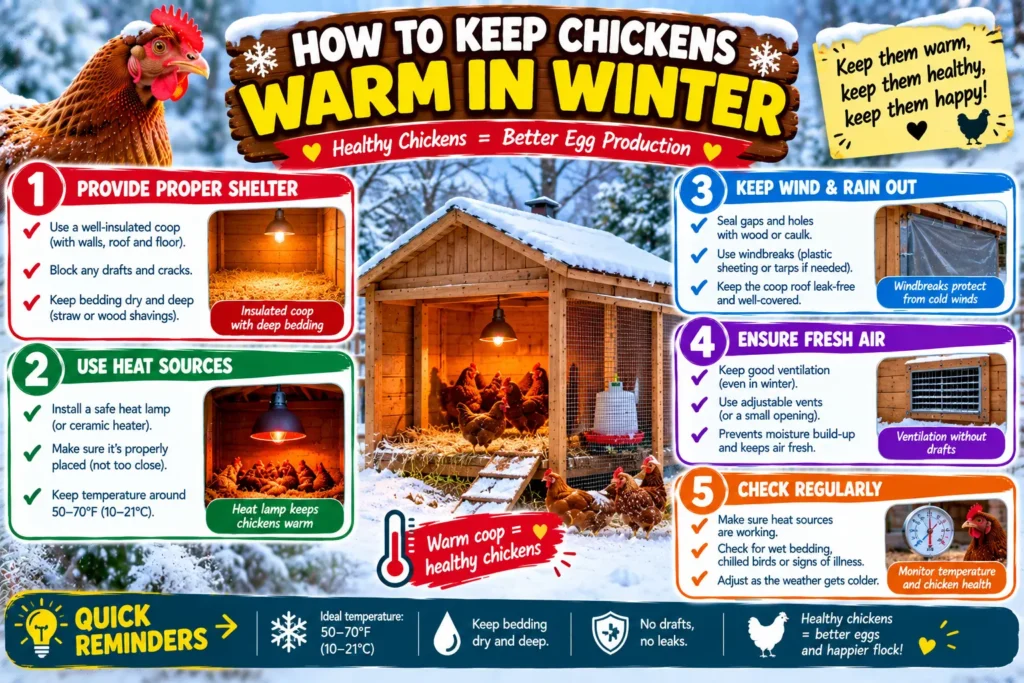
How to keep chickens warm in winter comes down to more than just coop insulation and heating equipment, covered in depth elsewhere. The specifics that matter most day to day are protecting combs and wattles from frostbite, keeping water from freezing, and supporting your flock’s natural ability to generate their own body heat.
This guide focuses on that practical, bird-level side of winter chicken care: what actually keeps individual birds safe and comfortable through cold weather.
Quick Answer: Keeping hens warm in winter relies mainly on their own insulation, feathers and body fat, working properly: dry conditions, protection from wind, and adequate nutrition. Frostbite prevention for combs and wattles, reliable unfrozen water access, and allowing natural roosting behavior (birds huddle together for shared warmth) matter more day to day than any single piece of equipment.
Table of Contents
Understanding How Chickens Naturally Stay Warm
Feathers as Insulation
A chicken’s feathers trap air close to the body, and fluffing them, which you’ll often see on cold days, increases this insulating air layer. This natural system works remarkably well as long as feathers stay dry.
Body Fat and Metabolism
Chickens naturally increase feed intake in cold weather to fuel additional body heat production, which is part of why consistent access to adequate feed matters even more in winter than in milder seasons.
Roosting Behavior
Chickens naturally huddle together on the roost in cold weather, sharing body heat. This is a normal, effective behavior, not a sign of distress, as long as birds aren’t so crowded that weaker individuals get pushed to less favorable spots.
Did You Know? A chicken’s feet and legs are covered in specialized scales with minimal blood flow near the surface, which is part of why they can stand on cold or even icy ground for periods without the same frostbite risk that affects combs and wattles.
Read More: https://lashegg.com/chicken-coop-temperature/
Frostbite Prevention: The Real Priority
Why Combs and Wattles Are Vulnerable
Unlike feet, combs and wattles have significant blood flow close to the surface with no feather protection, making them the most frostbite-prone part of a chicken’s body in cold weather, especially in breeds with larger combs.
Recognizing Frostbite Stages
| Stage | Appearance | Action Needed |
| Early | Pale, whitish discoloration on comb/wattle tips | Warm gradually, monitor closely |
| Moderate | Grayish, may show swelling | Warm gradually, watch for blistering |
| Severe | Blackened tissue | Veterinary evaluation, tissue may be lost |
Step-by-Step: Preventing Frostbite
- Apply a thin layer of petroleum jelly to combs and wattles. This can help provide a moisture barrier during extreme cold snaps, though effectiveness varies and shouldn’t replace other prevention steps.
- Ensure adequate coop ventilation. Counterintuitively, moisture buildup from poor ventilation increases frostbite risk more than cold air alone.
- Keep bedding dry. Damp conditions near roosting areas increase overall cold and frostbite risk.
- Consider breed selection for extreme climates. Smaller-combed breeds are inherently less prone to frostbite than large single-comb varieties.
- Avoid unnecessary drafts at roosting height. This connects directly to proper coop ventilation placement, keeping airflow above roost level.
Warning
Frostbite on combs or wattles that appears blackened or shows signs of infection needs veterinary attention. Don’t attempt to treat severe frostbite entirely at home, since tissue damage assessment and infection risk are better evaluated professionally.
Preventing Frozen Water
Why This Matters So Much
Chickens need consistent water access even in winter, and dehydration compounds cold stress rather than existing as a separate issue. Frozen waterers are one of the most common winter care failures for backyard keepers.
Options for Keeping Water From Freezing
| Method | How It Works | Considerations |
| Heated waterer base | Electric base warms the container | Requires power access, generally reliable |
| Heated waterer (built-in) | Integrated heating element | Convenient, higher upfront cost |
| Frequent manual replacement | Swapping frozen water multiple times daily | No equipment cost, more labor-intensive |
| Insulated waterer cover | Slows freezing without power | Works better in milder cold than extreme temperatures |
Step-by-Step: Setting Up Reliable Winter Water
- Choose a method matched to your climate severity. Occasional light freezes may only need manual replacement, while consistently sub-freezing regions benefit from heated equipment.
- Position waterers away from direct wind exposure. This slows freezing even without additional equipment.
- Check water at least twice daily during freezing weather. Morning and evening checks catch freezing before it becomes a prolonged problem.
- Have a backup plan for power outages if using heated equipment. Manual replacement as a backup prevents water access gaps during outages.
Nutrition Adjustments for Winter
Increasing Caloric Support
Offering scratch grains in the late afternoon or evening gives hens an extra calorie source to help fuel overnight body heat production, since digesting food itself generates some internal warmth.
Maintaining Complete Nutrition
Scratch grains should supplement, not replace, a complete layer feed, since relying too heavily on scratch alone dilutes overall nutritional balance even while providing extra calories.
| Feeding Adjustment | Purpose |
| Evening scratch grains | Extra calories for overnight warmth |
| Maintained complete feed | Baseline nutrition, unaffected by supplementation |
| Consistent feeding schedule | Supports predictable energy availability |
Expert Tip
Watch your flock’s feed consumption rate through winter rather than assuming it stays constant. Increased intake during cold snaps is normal and expected, and a sudden drop instead of the expected increase can be an early sign something else is affecting a bird’s health.
Common Mistakes to Avoid
- Relying solely on supplemental heat equipment while neglecting frostbite prevention basics
- Forgetting that damp conditions increase cold and frostbite risk more than dry cold alone
- Checking water only once daily during severe freezing weather
- Assuming huddling on the roost is a sign of distress rather than normal cold-weather behavior
- Neglecting large-combed breeds’ extra frostbite vulnerability compared to smaller-combed birds
Warning
Wet conditions combined with cold temperatures pose a much greater risk to chickens than dry cold alone, since wet feathers lose their insulating properties almost entirely. Prioritizing dryness, in bedding, in the coop structure, and around water sources, matters as much as temperature itself.
When to Call a Vet
Contact a poultry veterinarian if you notice blackened or infected-looking frostbite on a bird’s comb or wattles, or if a bird shows signs of hypothermia, such as extreme lethargy, despite reasonable winter care measures. Prompt evaluation matters more with cold-weather injuries than a wait-and-see approach.
People Also Ask
How to keep chickens warm in winter without electricity? Good insulation, windbreaks, deep litter bedding for passive warmth, and allowing natural roosting huddling behavior all help without requiring any powered equipment.
Do chickens need extra care overnight during winter chicken care? Ensuring the coop is dry, draft-free at roosting height, and that birds went to roost with adequate feed intake for the day covers most overnight needs without additional intervention.
What’s the best way of keeping hens warm without risking a coop fire? Prioritizing insulation, dryness, and natural behaviors over supplemental heat sources avoids fire risk entirely; if heat is genuinely necessary, safer radiant options are preferable to open heat lamps.
Can petroleum jelly really prevent frostbite on combs? It may offer some moisture barrier benefit during extreme cold snaps, though it works best combined with other prevention steps like proper ventilation and dry bedding rather than as a standalone solution egg
How often should I check chicken water in freezing weather? At least twice daily, morning and evening, catches most freezing issues before birds go too long without adequate water access.
Final Thoughts
How to keep chickens warm in winter comes down to supporting their own natural insulation and behavior, dry conditions, adequate nutrition, and normal huddling, while specifically protecting combs and wattles from frostbite and ensuring reliable water access. These bird-level details matter as much as coop equipment and insulation.
Watch for frostbite signs and water access issues as your two biggest daily winter priorities, and reach out to a poultry veterinarian promptly if frostbite looks severe or a bird shows signs of genuine cold-weather distress.
5. FAQ
Q: How to keep chickens warm in winter if I don’t want to use heat lamps? A: Focus on insulation, dryness, windbreaks, and nutrition adjustments; most healthy adult flocks do fine without any supplemental heat source at all.
Q: What breeds need extra winter chicken care for frostbite? A: Large single-comb breeds, like Leghorns, are more frostbite-prone than rose-comb or smaller-combed breeds, making breed selection relevant in extremely cold climates.
Q: Is keeping hens warm with scratch grains actually effective? A: Yes, to a modest degree; the extra calories support overnight body heat production, though scratch grains should supplement rather than replace a complete diet.
Q: How do I know if my chickens are too cold despite winter care efforts? A: Persistent, severe huddling beyond normal roosting behavior, lethargy, or visible frostbite signs suggest current measures aren’t adequate for the conditions.
Q: Can chickens get frostbite on their feet as well as combs? A: It’s possible but less common than comb and wattle frostbite, since feet have less surface blood flow, though prolonged exposure to wet, freezing conditions can still pose a risk.