Chicken Nutrition: Beyond Just Laying Hens

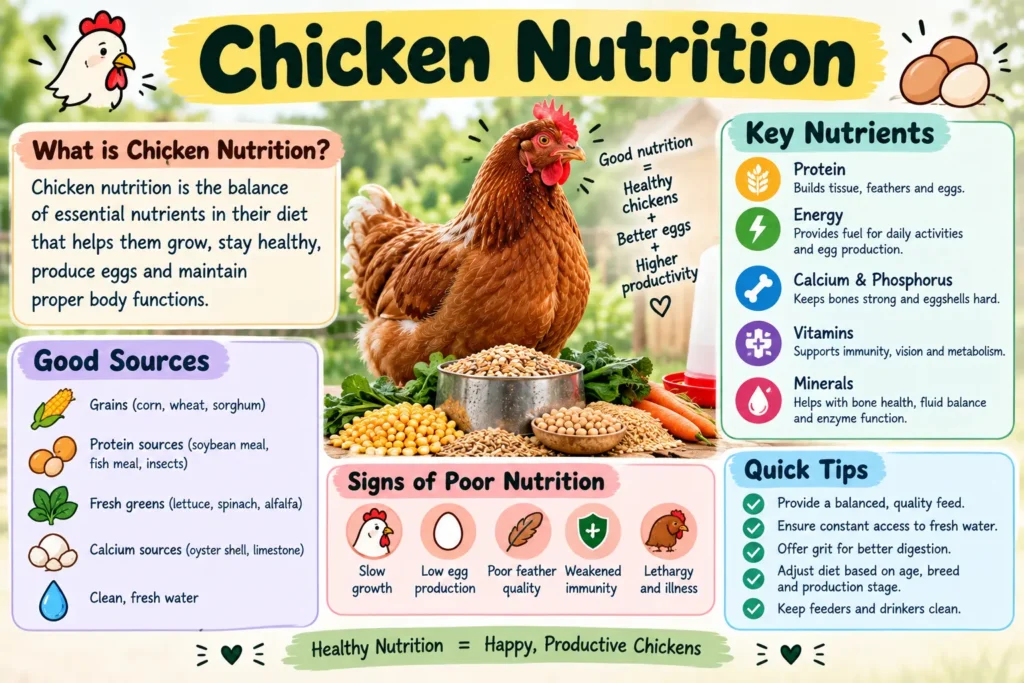
Chicken nutrition changes dramatically across a bird’s life, and most discussions focus almost entirely on laying hens, covered in depth elsewhere. This guide takes a broader view: what a proper chicken diet looks like from hatching through adulthood, including birds that will never lay an egg at all, roosters, meat birds, and retired hens.
Understanding poultry nutrition at every stage helps you feed appropriately whether you’re raising chicks, maintaining a mixed-purpose flock, or caring for non-laying birds long-term.
Quick Answer: Chicken nutrition requirements shift through four main stages: starter feed for chicks (18–24% protein), grower feed for pullets (16–18% protein), layer feed for actively laying hens (16–18% protein, higher calcium), and maintenance or all-flock feed for non-laying adults (lower calcium, moderate protein). Matching feed to actual life stage and purpose, not just age, is the foundation of healthy chicken feed practices.
Table of Contents
The Four Core Life Stages of Chicken Nutrition
Starter Feed (Chicks, 0–8 Weeks)
Chicks need the highest protein levels of any life stage, typically 18 to 24%, to support rapid early growth and development. Starter feed also contains appropriate, lower calcium levels suited to developing, not-yet-laying birds.
Grower Feed (Pullets, 8–18 Weeks)
As growth rate slows slightly, protein needs decrease modestly to 16 to 18%, supporting continued development toward laying age without the excess calcium a young bird’s kidneys aren’t yet equipped to handle.
Layer Feed (Actively Laying Hens, 18+ Weeks)
Once laying begins, calcium needs rise sharply to support shell formation, while protein stays in the 16 to 18% range to support both maintenance and egg formation.
Maintenance/All-Flock Feed (Non-Laying Adults)
Roosters, retired hens, and other non-laying adult birds do well on a lower-calcium formulation, since their bodies don’t need the shell-building calcium levels appropriate for actively laying hens
.
| Life Stage | Approximate Protein | Approximate Calcium | Typical Age Range |
| Starter | 18–24% | Low | 0–8 weeks |
| Grower | 16–18% | Low | 8–18 weeks |
| Layer | 16–18% | High (3.5–4%) | 18+ weeks, actively laying |
| Maintenance/all-flock | 14–18% | Low to moderate | Non-laying adults |
Did You Know? Feeding layer feed’s higher calcium content to non-laying birds long-term, including roosters, can strain kidney function over time, which is exactly why mixed-purpose flocks benefit from separating feed by actual laying status rather than simply by age.
Read More: https://lashegg.com/best-waterer-for-chickens/
Chicken Nutrition for Special Situations
Meat Birds vs. Egg-Laying Breeds
Broiler or meat-focused breeds often use specialized “broiler starter” and “broiler grower” formulations with different protein-to-energy ratios optimized for rapid muscle growth rather than long-term laying performance.
Mixed-Purpose or Heritage Flocks
Dual-purpose breeds raised for both eggs and eventual meat generally follow standard laying hen nutrition guidelines throughout their productive years, since they aren’t typically processed at the young age broiler-specific nutrition targets.
Breeding Flocks
Hens and roosters kept specifically for hatching eggs sometimes benefit from breeder-specific feed formulations with enhanced vitamin E and other nutrients supporting fertility and hatchability, beyond standard layer feed’s focus on shell quality.
| Flock Purpose | Feed Approach |
| Egg production only | Standard layer feed once laying begins |
| Meat production | Broiler-specific starter/grower formulations |
| Dual-purpose/heritage | Standard layer feed, similar to egg-focused breeds |
| Breeding stock | Breeder feed with enhanced fertility-supporting nutrients |
Building a Complete Chicken Diet Beyond the Bag
The Role of a Complete Feed
A properly formulated complete feed, matched to life stage and purpose, should provide the substantial majority of daily nutritional needs without requiring extensive additional supplementation for most healthy flocks.
Where Supplements Fit In
Free-choice calcium for laying hens, occasional protein treats during molt, and situational electrolytes during heat or illness all serve specific, targeted purposes rather than forming the core of a healthy chicken feed approach.
Water as Part of Nutrition
Water is easy to overlook in nutrition discussions, but it’s essential for digestion, nutrient absorption, and egg formation, meaning even excellent feed can’t compensate for inadequate water access.
Reading a Chicken Feed Label
What the Numbers Mean
The guaranteed analysis on any feed bag lists minimum protein, minimum and maximum fat, and maximum fiber, along with mineral content including calcium. Comparing these numbers against your flock’s actual life stage needs is more reliable than trusting marketing language alone.
Ingredient Quality Signals
Named, whole ingredients (corn, soybean meal, specific grains) generally indicate a higher-quality formulation than vague terms like “grain products” or “animal byproducts” without further specification.
| Label Element | What to Check |
| Guaranteed analysis | Protein, calcium match life stage needs |
| Ingredient list | Named, whole ingredients preferred |
| Life stage label | Confirms intended use (starter, grower, layer, all-flock) |
Common Mistakes in Chicken Nutrition
- Feeding layer feed to chicks or growing pullets before they need the higher calcium level
- Continuing grower feed too long after hens start laying, delaying adequate calcium intake
- Feeding standard layer feed to roosters and other non-laying birds long-term
- Overloading any life stage’s diet with treats at the expense of complete nutrition
- Assuming all “chicken feed” products are interchangeable regardless of life stage labeling
Warning
Chronic calcium excess in non-laying birds, particularly young growing pullets and roosters, can contribute to kidney damage over time. Matching feed type to actual laying status, not just general “chicken” categorization, protects against this risk.
When to Call a Vet
Contact a poultry veterinarian if you notice signs of nutritional deficiency, poor growth, weak bones, dull feathers, reduced egg production, despite what appears to be an appropriate feed matched to life stage and purpose. A vet can help identify whether an absorption issue or underlying health condition is affecting how your flock uses its nutrition.
People Also Ask
What is the most important part of chicken nutrition overall? Matching feed formulation to actual life stage and laying status is generally considered the single most impactful nutritional decision, more so than any specific supplement or additive.
Does chicken diet need to change for non-laying birds? Yes, roosters and retired hens do better on lower-calcium maintenance or all-flock feed rather than continuing on layer feed formulated for active egg production.
Is poultry nutrition different for meat birds versus egg-laying breeds? Yes, meat-focused breeds often use specialized broiler formulations optimized for rapid growth, differing meaningfully from the nutrition approach used for egg-laying breeds.
How do I know if my healthy chicken feed choice is actually working? Good body condition, appropriate growth for age, strong shell quality in layers, and consistent energy levels are all signs your feed choice is meeting your flock’s nutritional needs.
Can chicken nutrition needs change with the seasons? Yes, particularly around molting (higher protein needs) and extreme heat (reduced overall intake, requiring attention to nutrient density), both of which affect practical feeding beyond the basic life-stage formula.
Final Thoughts
Chicken nutrition extends well beyond laying hens alone, with distinct needs across chicks, growing pullets, active layers, non-laying adults, and specialized purposes like meat production or breeding. Matching feed formulation to actual life stage and purpose, rather than general age or species alone, is the foundation of a genuinely healthy chicken feed approach.
Review your flock’s composition against these life stage categories, and reach out to a poultry veterinarian if nutritional deficiency signs appear despite what looks like an appropriately matched feeding program.
5. FAQ
Q: What’s the biggest chicken nutrition mistake mixed-age flock owners make? A: Feeding one uniform feed type to a flock that includes both non-laying young birds and actively laying hens is one of the most common mistakes, since their calcium needs differ significantly.
Q: Does chicken diet quality really affect lifespan? A: Yes, consistent, well-matched nutrition throughout life supports better long-term health outcomes, though genetics and overall care also play significant roles.
Q: Is organic or specialty poultry nutrition worth the extra cost? A: This comes down to personal values and budget rather than a clear nutritional advantage, since the core protein and calcium requirements remain the same regardless of certification status.
Q: How often should I reassess my flock’s chicken nutrition needs? A: Reassess whenever a flock’s composition changes significantly, new layers reaching maturity, hens retiring from laying, or seasonal shifts like molting affecting nutritional demands.
Q: Can healthy chicken feed alone prevent all nutritional problems? A: A high-quality, properly matched feed prevents the vast majority of issues, though water access, treat moderation, and situational supplementation all remain relevant supporting factors.