What Do Chickens Eat? The Short List First

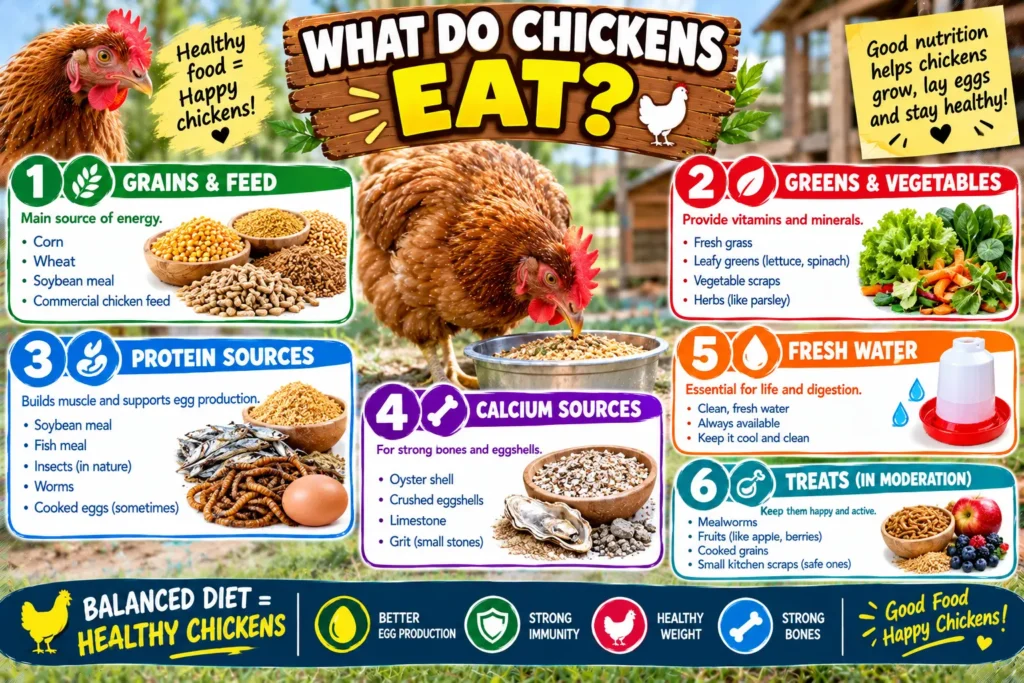
What do chickens eat comes down to four main categories: commercial feed, foraged food, kitchen scraps and treats, and grit to help with digestion. Chickens are omnivores, meaning their natural backyard chicken diet includes far more than just grain, bugs, worms, and even small amounts of meat all show up in a free-ranging bird’s daily menu.
This guide gives a concrete, practical answer: exactly what goes into a healthy chicken food routine, what chickens naturally forage for on their own, and which common human foods are safe versus genuinely harmful.
Quick Answer: Chickens eat commercial layer or all-flock feed as their nutritional base, supplemented by foraged food like insects, worms, and plants when free-ranging, plus occasional kitchen scraps and treats in moderation. Grit, small stones that help grind food in the gizzard, rounds out a complete backyard chicken diet, especially for birds without regular access to natural ground.
Table of Contents
The Core of Chicken Food: Commercial Feed
Why Commercial Feed Is the Foundation
A complete commercial feed, formulated for the bird’s specific life stage, provides balanced protein, calcium, vitamins, and minerals that would be difficult to reliably replicate through foraging and treats alone.
| Feed Type | Life Stage | Purpose |
| Starter | Chicks (0–8 weeks) | High protein for rapid growth |
| Grower | Pullets (8–18 weeks) | Continued development |
| Layer | Actively laying hens | Balanced protein, higher calcium |
| All-flock/maintenance | Non-laying adults | Balanced nutrition, lower calcium |
Feed Forms
Commercial feed comes as pellets, crumbles, or mash, all nutritionally similar within the same formulation, differing mainly in physical form and how much waste or selective eating they tend to cause. egg
What Chickens Naturally Forage For
Insects and Small Creatures
Free-ranging or run-access chickens actively hunt for insects, worms, grubs, and even small creatures like lizards or mice on occasion, which is part of why chickens are considered effective natural pest control in a garden setting.
Plants and Grasses
Chickens graze on grass, clover, and various weeds, picking selectively based on taste and texture. This foraged plant material contributes fiber and some nutrients, though it isn’t nutritionally complete on its own.
Seeds and Fallen Fruit
Given access, chickens happily eat fallen seeds, berries, and fruit, another natural part of what chickens eat in a free-range or pastured setting.
| Foraged Food | Nutritional Contribution |
| Insects/worms | Protein |
| Grass/clover/weeds | Fiber, minor vitamins |
| Seeds/fallen fruit | Carbohydrates, minor vitamins |
Did You Know? A chicken’s foraging behavior is driven by strong natural instinct, not just hunger; even well-fed chickens with a complete diet available will actively scratch and forage simply because it’s an innate behavior tied to their evolutionary history as jungle fowl.
Read More: https://lashegg.com/chicken-nutrition/
Safe Kitchen Scraps and Treats
Generally Safe Options
- Leafy greens (lettuce, spinach, kale)
- Cooked vegetables (squash, carrots, peas)
- Fruit in moderation (berries, melon, apple without seeds)
- Cooked grains (rice, oats, pasta)
- Mealworms and other high-protein treats
Feeding Treats Responsibly
Treats and kitchen scraps should stay to roughly 10% or less of total diet, since overfeeding them dilutes the balanced nutrition a complete feed is designed to provide.
| Treat Category | Examples | Feeding Frequency |
| Vegetables | Squash, carrots, leafy greens | Regular, in moderation |
| Fruit | Berries, melon, apple | Occasional |
| Protein treats | Mealworms, cooked egg | Occasional, especially during molt |
| Grains | Cooked rice, oats | Occasional |
Foods to Avoid
Genuinely Harmful Foods
- Avocado skin and pit (contains toxic persin)
- Chocolate and caffeine (toxic to poultry)
- Raw or dried beans (toxic unless properly cooked)
- Green potato skins and sprouts (contain solanine)
- Moldy or spoiled food of any kind
Foods to Limit
Salty processed snacks and excessive citrus offer little nutritional benefit and are best kept as rare exceptions rather than regular additions to backyard chicken diet routines.
| Food | Risk Level |
| Avocado skin/pit | High, toxic |
| Chocolate/caffeine | High, toxic |
| Raw dried beans | High, toxic unless cooked |
| Moldy food | High, mycotoxin risk |
| Salty snacks | Low, poor nutrition rather than toxic |
Warning
Never assume a food is safe for chickens just because it’s fine for humans or other pets. Several common kitchen items, particularly avocado and chocolate, are specifically toxic to poultry even in small quantities.
Grit: The Overlooked Part of Chicken Food
Why Chickens Need Grit
Chickens don’t have teeth, so grit, small insoluble stones, sits in the gizzard and helps mechanically grind food during digestion. Free-ranging birds often find enough naturally, while confined birds typically need it provided separately.
Types of Grit
| Grit Type | Purpose |
| Insoluble grit (granite, flint) | Digestive grinding aid |
| Soluble grit (oyster shell, limestone) | Calcium source (technically a supplement, not grit) |
Common Mistakes to Avoid
- Assuming commercial feed alone means a chicken’s diet needs nothing else at all
- Overfeeding treats and scraps at the expense of complete nutrition
- Feeding known toxic foods without realizing the risk
- Forgetting grit for confined birds without natural foraging access
- Assuming all life stages should eat the exact same feed and treats
Step-by-Step: Building a Balanced Backyard Chicken Diet
- Choose a complete feed matched to life stage. This forms the nutritional foundation regardless of what else is offered.
- Allow foraging access when possible. Even limited run access lets chickens supplement their diet naturally.
- Offer treats and scraps in moderation. Keep this to a small percentage of overall daily intake.
- Provide grit if birds don’t have consistent natural ground access. This supports proper digestion of everything else they eat.
- Avoid known toxic foods entirely. Double-check unfamiliar foods before offering them to your flock.
When to Call a Vet
Contact a poultry veterinarian if a bird shows signs of illness after eating something unusual, such as lethargy, vomiting-like regurgitation, or diarrhea, since certain foods can cause a genuine toxic reaction requiring prompt attention.
People Also Ask
What do chickens eat besides commercial feed? Beyond feed, chickens naturally eat insects, worms, grass, seeds, fallen fruit, and safe kitchen scraps offered in moderation as part of a well-rounded backyard chicken diet.
Can chickens eat meat? Yes, chickens are omnivores and will eat meat scraps, insects, and even small creatures when foraging, making them naturally more flexible eaters than many people expect.
Is chicken food the same for chicks and adult hens? No, chicks need higher-protein starter feed, while adult laying hens need higher-calcium layer feed, reflecting their very different nutritional needs at each stage.
What human foods are safe as chicken treats? Leafy greens, cooked vegetables, most fruits, cooked grains, and mealworms are all generally safe options when offered in moderation alongside a complete diet.
Do free-range chickens need less commercial feed? Foraging can supplement their diet, but it rarely provides complete, balanced nutrition on its own, so commercial feed generally remains an important part of even a free-ranging chicken’s overall diet.
Final Thoughts
What do chickens eat comes down to a combination of complete commercial feed, natural foraging, moderate treats, and grit for digestion, all working together to support a healthy, balanced backyard chicken diet. Understanding which foods are safe versus genuinely harmful rounds out the full picture.
Build your flock’s routine around a complete feed as the foundation, and reach out to a poultry veterinarian promptly if a bird shows signs of illness after consuming something potentially harmful.
5. FAQ
Q: What do chickens eat in the wild versus a backyard setting? A: Wild and feral chickens rely entirely on foraging, insects, seeds, plants, while backyard chickens typically combine this natural foraging with a complete commercial feed for reliable, balanced nutrition.
Q: How much chicken food should I offer per bird each day? A: Adult laying hens typically eat about 1/4 to 1/3 pound of complete feed daily, with treats and scraps making up no more than a small additional percentage.
Q: Can chickens eat eggshells or their own eggs? A: Yes, crushed and baked eggshells are a safe calcium source, though care should be taken to crush them finely so chickens don’t associate them with their own eggs.
Q: What backyard chicken diet mistakes do new keepers make most often? A: Overfeeding treats at the expense of complete feed and unknowingly offering toxic foods like avocado or chocolate are among the most common early mistakes.
Q: Do chickens need variety in their diet, or is feed alone enough? A: A complete feed alone meets nutritional needs, but variety through foraging and occasional treats supports natural behavior and can improve overall flock satisfaction and engagement.