Grit for Chickens: Why This Small Detail Matters So Much

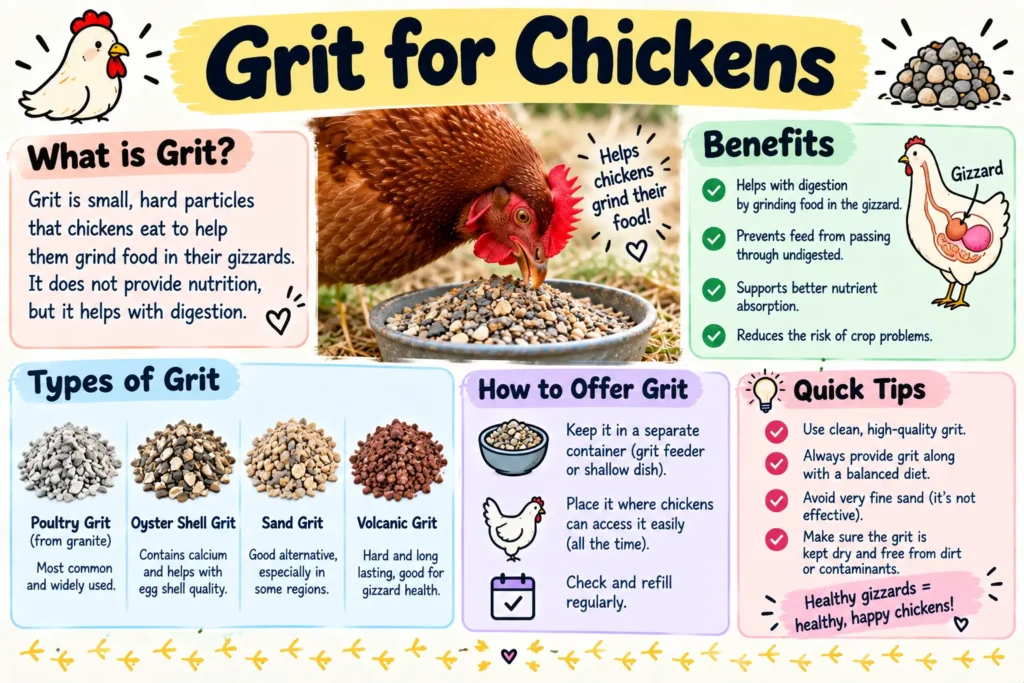
Grit for chickens is one of the most overlooked parts of backyard flock care, yet it plays a direct role in how well a chicken digests everything it eats. Without it, even the best layer feed and healthiest treats can go partly to waste, because chickens have no teeth to chew with.
This guide breaks down exactly what grit is, whether your flock actually needs it, how to choose the right type, and how to avoid the mistakes that trip up even experienced keepers.
Quick Answer: Grit for chickens is small, hard particles — usually insoluble stone grit — that sit in a chicken’s gizzard and grind up food. Chickens that free-range on foods other than commercial pellets or crumble almost always need it added to their diet.
Table of Contents
Do Chickens Need Grit? Understanding the Digestive System
Chickens swallow food whole. Instead of teeth, they rely on a muscular organ called the gizzard to break food down mechanically. Do chickens need grit for this to work? In most cases, yes, especially once whole grains, seeds, or foraged foods are part of the diet.
How the Gizzard Uses Grit
Food travels from the crop to the gizzard, where strong muscular contractions squeeze it against small stones the chicken has swallowed. This grinding action does the job teeth would normally do in other animals, breaking down tough plant material and whole grains into digestible pieces.
When Grit Isn’t Strictly Necessary
Chickens fed exclusively on finely ground, complete commercial feed with no treats, scratch, or free-ranging technically need very little grit, since the feed is already processed into small particles. The moment scratch grains, garden scraps, or pasture access enter the picture, grit becomes important again.
Expert Tip: If your flock free-ranges even part-time, assume they need supplemental grit, since foraged plants and bugs are far tougher to break down than pelleted feed.
Read More: https://lashegg.com/treats-for-chickens/
Types of Grit for Chickens
Not all grit serves the same purpose, and mixing up the types is one of the most common beginner mistakes.
| Type | Purpose | Digestible? | Notes |
| Insoluble grit (granite, flint) | Mechanical digestion in the gizzard | No | The true “grit” that grinds food |
| Soluble grit (crushed oyster shell) | Calcium supplement for eggshell strength | Yes, dissolves | Not a substitute for insoluble grit |
| Sand (coarse, washed) | Limited grinding aid | Partially | Used by some keepers, less effective than granite grit |
| Dirt or soil | None reliably | N/A | Not a true grit substitute |
Insoluble Grit: The Real Digestive Tool
Insoluble grit, made from granite or flint, stays in the gizzard and grinds food over weeks before eventually wearing down and passing through. This is the type most poultry keepers mean when they talk about chicken grit.
Soluble Grit: A Different Job Entirely
Crushed oyster shell or limestone dissolves in the digestive tract and supplies calcium, mainly for laying hens building eggshells. It does not grind food and should never be confused with insoluble grit, even though both are sold in similar bags at feed stores.
Common Mistake: Offering only oyster shell and assuming it covers a chicken’s grit needs. Oyster shell supports eggshells; it does not help with mechanical digestion.
Do Chickens Need Grit If They Only Eat Pellets?
This is one of the most searched People Also Ask questions on this topic. If a flock eats only complete pelleted feed and nothing else, grit needs drop significantly, since the feed already arrives finely processed. Most keepers still offer a small dish of grit free-choice, since chickens will self-regulate and only eat what they need.
Free-Range Chickens and Grit
Free-ranging chickens pick up small stones naturally while foraging, which can reduce how much supplemental grit they need. However, yards with soft soil, mulch, or limited stone access often don’t provide enough on their own, so a dedicated grit source is still the safer choice.
How Much Grit Do Chickens Need?
There’s no fixed daily amount, because grit isn’t a nutrient — it’s a mechanical tool the chicken uses as needed. The standard approach is to offer it free-choice in a separate container.
Step-by-Step: Introducing Grit for Chickens
- Choose the right size. Use chick-sized grit for birds under 8 weeks and adult-sized grit for older birds.
- Offer it separately. Never mix grit into feed; use a small dish or feeder so chickens can self-select.
- Keep it available at all times. Chickens instinctively eat what they need when it’s accessible.
- Refill as needed. Grit doesn’t spoil, but keep the container topped off, especially during scratch-heavy weeks.
- Adjust by season. Chickens that forage more in warm months may need slightly more grit access than in winter confinement.
Chicken Grit by Age: What Changes
| Age Group | Grit Size Needed | Notes |
| Chicks (0–8 weeks) | Fine chick grit | Only needed once solid foods beyond starter feed are introduced |
| Pullets (8–18 weeks) | Medium grit | Transition size as birds grow |
| Adult hens | Coarse adult grit | Standard ongoing need, especially with treats or free-ranging |
| Roosters | Coarse adult grit | Same needs as adult hens |
Did You Know? Baby chicks raised solely on a complete starter feed typically don’t need grit until treats, scratch, or outdoor time are introduced.
Signs of a Grit Deficiency
A chicken lacking enough grit isn’t always obviously sick, but there are patterns worth watching for.
- Undigested whole grains or seeds visible in droppings
- A visibly enlarged or hard crop that doesn’t empty overnight
- Reduced appetite or reluctance to eat scratch and treats
- General lethargy without other obvious causes
Warning: A severely impacted crop or gizzard can become a medical emergency. If a chicken’s crop feels hard and full more than 12 hours after eating, or the bird stops eating and drinking altogether, this goes beyond a simple grit fix. egg
Grit for Chickens vs. Oyster Shell: Clearing Up the Confusion
Keepers new to poultry often ask whether grit and oyster shell are the same thing. They are not, and mixing them up is one of the most repeated questions in backyard chicken communities.
| Feature | Insoluble Grit | Oyster Shell |
| Main job | Mechanical digestion | Calcium supplement |
| Dissolves in gizzard? | No | Yes |
| Needed by all chickens? | Mainly those eating whole foods | Mainly laying hens |
| Can be mixed together? | Yes, offered in separate dishes | Yes, offered in separate dishes |
Both can sit side by side in a coop, each in its own small container, and hens will instinctively choose what their body needs.
Common Mistakes With Chicken Grit
- Mixing grit directly into feed instead of offering it free-choice
- Assuming oyster shell replaces the need for insoluble grit
- Giving chick-sized grit to fully grown birds, or the reverse
- Forgetting grit entirely for flocks that free-range or get regular treats
- Using soft materials like garden soil as a stand-in for real grit
When to Call a Vet
When to Call a Vet: Contact a poultry veterinarian if a chicken has a hard, swollen crop that doesn’t empty, stops eating for more than a day, shows signs of pain when handled near the crop, or has persistent, watery droppings alongside lethargy. These symptoms may point to an impacted crop or gizzard that needs professional treatment beyond adding grit at home.
Grit access at home solves most day-to-day digestive sluggishness, but a true impaction sometimes requires manual crop massage or veterinary intervention. Sources like the Merck Veterinary Manual and university poultry extension programs note that crop impactions, left untreated, can become serious quickly in backyard flocks.
Building Grit Into a Long-Term Flock Routine
The simplest system works best: keep a small, dedicated container of appropriately sized grit available at all times, refill it regularly, and pair it with a separate oyster shell dish for laying hens. This lets each bird regulate its own intake without any guesswork from the keeper.
Reference points from the USDA, the AVMA, and various university extension poultry programs consistently support free-choice access as the simplest, most reliable method, rather than trying to calculate exact amounts per bird.
Final Thoughts on Grit for Chickens
Grit for chickens is a small addition with an outsized impact on digestion, comfort, and overall flock health. Once free-choice grit is part of the regular routine, most digestive sluggishness tied to whole grains, scratch, or foraging resolves on its own. Keep an eye on droppings and crop fullness after introducing new treats, and reach out to a poultry-savvy veterinarian if anything looks like more than routine digestion catching up. A simple dish of the right grit for chickens goes a long way toward a comfortable, well-functioning flock.
5. FAQ
What is grit for chickens used for? Grit for chickens grinds down whole grains, seeds, and foraged food inside the gizzard, since chickens have no teeth to chew with.
Do chickens need grit if they eat only pellets? Chickens on a complete pelleted diet with no treats or free-ranging need very little grit, since the feed is already finely processed.
What’s the difference between grit and oyster shell? Grit is insoluble and used for mechanical digestion, while oyster shell dissolves and supplies calcium mainly for eggshell strength in laying hens.
Can chickens get grit from their yard naturally? Free-ranging chickens can pick up small stones on their own, but yards with soft soil often don’t provide enough, so supplemental grit is still recommended.
How do I know if my chickens need more grit? Undigested grain in droppings, a firm crop that doesn’t empty overnight, or reduced appetite around treats can all point to a grit deficiency.
Is chick grit different from adult chicken grit? Yes. Chick grit is finer and sized for smaller birds, while adult grit is coarser and meant for fully grown hens and roosters.
Can too much grit hurt a chicken? Grit offered free-choice is self-regulated by the bird, so overconsumption is uncommon; problems are far more likely from too little grit than too much.
Should grit be mixed into chicken feed? No. Grit should be offered separately in its own dish so chickens can eat it as needed rather than with every mouthful of feed.