Treats for Chickens: What Every Backyard Keeper Should Know

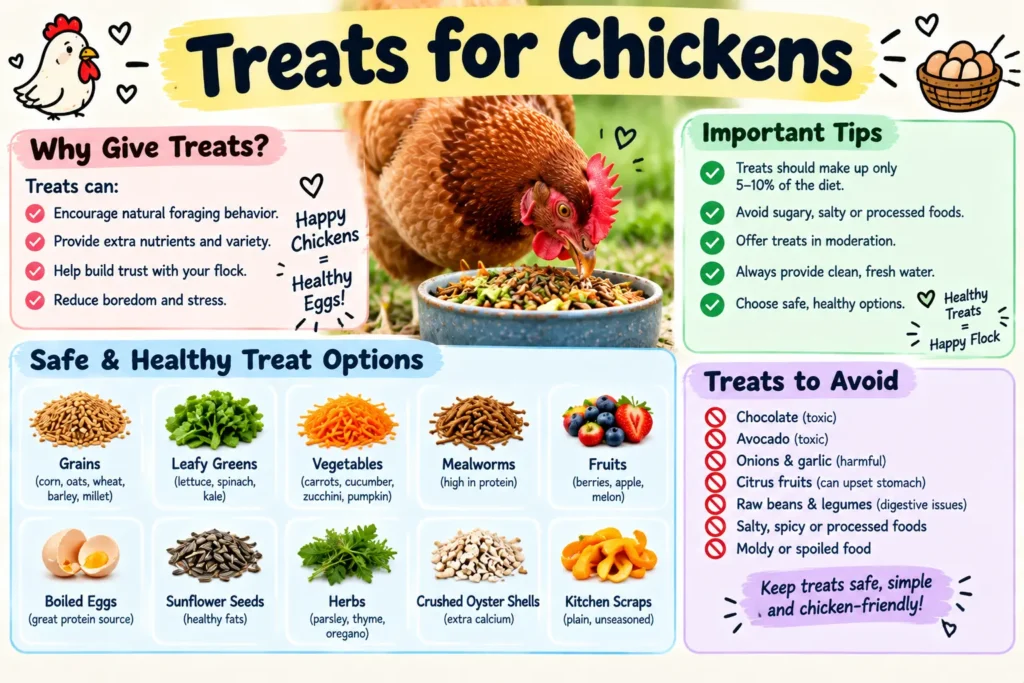
Choosing the right treats for chickens can turn snack time into a health boost instead of a hidden risk. Many backyard keepers hand out bread, table scraps, or sugary snacks without realizing how quickly this can throw off a hen’s diet. The right treats, given the right way, support egg production, feather health, and flock happiness — the wrong ones can cause obesity, poor laying, or worse.
This guide covers exactly which treats are safe, which ones to skip, how much is too much, and how to build treat time into a routine that keeps your flock thriving year-round.
Quick Answer: The safest treats for chickens are fresh vegetables, fruit in moderation, mealworms, and cooked grains. Treats should never exceed 10% of a chicken’s daily diet, with the rest coming from a complete layer feed.
Table of Contents
Why Treats for Chickens Need Rules, Not Just Instinct
Chickens are opportunistic eaters. They will peck at almost anything placed in front of them, which is exactly why keepers need to set the boundaries their birds won’t set for themselves. A layer feed is formulated with the calcium, protein, and vitamins a hen needs to lay consistently. Treats, no matter how healthy, dilute that balance when overused.
The 90/10 Rule for Treats for Chickens
Poultry extension programs at land-grant universities generally recommend that treats make up no more than 10% of a chicken’s total daily food intake, with the remaining 90% coming from a nutritionally complete layer feed. This is often called the 90/10 rule, and it’s the single most important guideline in this entire article.
Going over that ratio regularly can lead to:
- Nutrient imbalances, especially calcium deficiency in laying hens
- Weight gain that stresses joints and reduces mobility
- Reduced or irregular egg production
- Picky eating habits, where chickens ignore balanced feed in favor of snacks
Expert Tip: Treats are most useful as a training tool, a boredom-buster, or a way to deliver hydration in hot weather — not as a meal replacement.
Read More: https://lashegg.com/what-can-chickens-not-eat/
Healthy Chicken Treats: The Full List of Safe Foods
When people search for healthy chicken treats, they usually want a straightforward list they can act on immediately. Here’s a breakdown by category, based on what poultry nutrition guidance and veterinary sources generally consider safe in moderation.
Fruits Chickens Can Eat Safely
| Fruit | Safe? | Notes |
| Watermelon | Yes | Great for hydration in summer; chickens eat flesh and seeds |
| Apples (no seeds) | Yes | Remove seeds and core; they contain trace cyanide compounds |
| Berries | Yes | Strawberries, blueberries, raspberries are all fine |
| Bananas | Yes, in small amounts | High in sugar; treat, not a staple |
| Melon | Yes | Rind can be pecked at too, reducing food waste |
| Citrus fruit | Limited | Small amounts are fine; large amounts may affect calcium absorption |
| Avocado flesh | No | The pit, skin, and surrounding flesh contain persin, which is toxic to poultry |
Vegetables Chickens Can Eat Safely
- Leafy greens: spinach, kale, lettuce, Swiss chard
- Cooked squash and pumpkin (also helps with natural deworming folklore, though evidence is limited)
- Carrots, raw or cooked, shredded for easier pecking
- Cooked sweet potato
- Broccoli and cauliflower, in moderation
- Cucumber, especially useful for hot-weather hydration
Grains and Seeds
Scratch grains — a mix of cracked corn, wheat, and oats — are a classic treat, but they are calorie-dense and low in protein. Sunflower seeds and flaxseed offer healthy fats and can even improve yolk color when fed in small amounts.
Protein-Rich Treats
- Mealworms (live, dried, or freeze-dried)
- Cooked eggs (yes, chickens can eat eggs — cooked and chopped, never raw and whole)
- Cooked meat scraps, unseasoned
- Black soldier fly larvae, increasingly available as a commercial poultry treat
Did You Know? A cooked, mashed egg is one of the most nutrient-dense treats for chickens because it mirrors what they’re already producing — full circle protein.
Best Treats for Hens by Season
The best treats for hens often depend on the weather. Adjusting treats seasonally helps chickens regulate body temperature and stay active.
Summer: Cooling Treats
- Frozen watermelon chunks or frozen corn
- Chilled cucumber slices
- Ice blocks with berries frozen inside for enrichment
Winter: Warming Treats
- Warm cooked oatmeal (unsweetened, unsalted)
- Scratch grains scattered for foraging exercise
- Suet-based blocks similar to wild bird feed, formulated for poultry
Molting Season
During molting, chickens rebuild feathers made almost entirely of protein. Extra mealworms, black soldier fly larvae, or a higher-protein treat mix can support faster, healthier regrowth.
Foods to Avoid Giving Chickens
Not everything in the kitchen is fair game. Some common foods are genuinely dangerous, not just “not ideal.”
Warning: Never feed chickens the following. Some can cause organ damage, digestive blockages, or death.
- Avocado skin and pit (persin toxin)
- Raw or dried beans (contain hemagglutinin, toxic until fully cooked)
- Chocolate and anything containing caffeine
- Onions and garlic in large quantities (can affect red blood cells over time)
- Salty or processed snack foods (chips, cured meats)
- Moldy or spoiled feed and produce
- Green potato skins and sprouted potatoes (solanine)
- Anything sugary, like candy or soda
Foods That Are Fine in Moderation But Often Get a Bad Reputation
Rice (cooked, not raw and dry in large amounts), citrus, and dairy in small quantities are frequently misunderstood. Chickens lack the enzyme to digest lactose efficiently, so dairy like plain yogurt should be occasional, not a staple, despite the probiotic benefits it can offer.
How to Introduce New Treats for Chickens Safely
- Start small. Offer a tablespoon-sized portion per bird the first time.
- Watch for 24 hours. Look for changes in droppings, appetite, or behavior.
- Chop appropriately. Large chunks can cause choking, especially in younger birds.
- Avoid feeding treats right before laying feed. This encourages hens to eat their complete feed first.
- Rotate treats. Variety prevents nutritional gaps and keeps chickens mentally engaged.
Common Mistake: Dumping a large pile of one treat (like watermelon) into the run at once. Chickens overeat the treat, skip their regular feed, and get less balanced nutrition that day.
Homemade Chicken Treat Recipes
Homemade treats let keepers control exactly what goes into the flock’s diet.
Simple Chicken Treat Cake
Ingredients:
- 2 cups scratch grains
- 1 cup mixed chopped vegetables
- 2 eggs (cooked and mashed)
- 1 tablespoon flaxseed
Steps:
- Mix all ingredients in a bowl until evenly combined.
- Press the mixture into a shallow, oven-safe dish.
- Bake at 300°F for 20 minutes, or until firm.
- Cool completely before breaking into pieces and serving.
Frozen Summer Treat Block
Freeze chopped fruit, vegetables, and a splash of water in an ice cube tray or bundt pan. This slows down eating, cools chickens in hot weather, and doubles as enrichment.
Store-Bought vs. Homemade Treats for Chickens
| Factor | Store-Bought Treats | Homemade Treats |
| Convenience | High | Lower, requires prep time |
| Ingredient control | Limited to label | Full control |
| Cost per feeding | Often higher | Usually lower |
| Shelf life | Long (dried/freeze-dried) | Short, best used fresh |
| Nutritional consistency | Standardized | Varies by recipe |
Both options work well when used within the 90/10 rule. The best approach for most keepers is a mix: a bag of dried mealworms for daily use, plus occasional homemade treats for variety.
Signs Your Chicken Is Getting Too Many Treats
- Noticeably overweight body condition, especially around the keel bone
- Drop in egg-laying frequency
- Loose, watery, or unusually colored droppings
- Chickens ignoring their regular feed
- Lethargy or reduced activity
If several of these signs appear together, it’s worth cutting treats back to well under 10% of daily intake and reassessing the flock’s overall diet.
When to Call a Vet
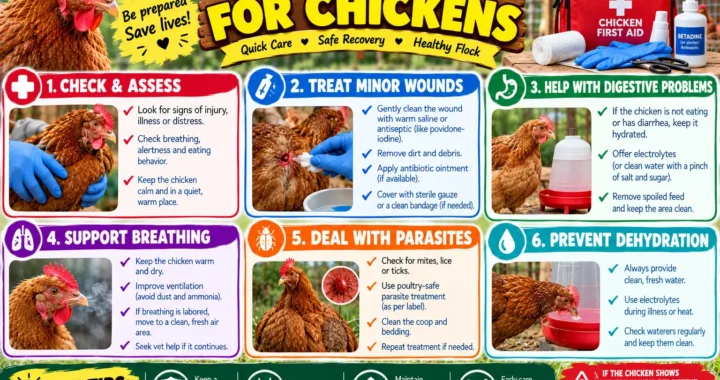
When to Call a Vet: Contact a poultry veterinarian if a chicken shows sudden lethargy, refuses all food (not just treats), has swollen or discolored skin, or has diarrhea lasting more than 24 to 48 hours. These symptoms can point to something beyond diet and need professional evaluation rather than home adjustment alone.
Home care and dietary changes are appropriate for mild, treat-related issues. Anything involving sudden illness, injury, or symptoms lasting more than a day or two calls for a licensed veterinarian familiar with poultry, since backyard chicken health issues can escalate quickly compared to larger livestock.
Building a Long-Term Treat Routine
The healthiest flocks tend to have keepers who treat snack time as a supplement to good nutrition, not a replacement for it. A simple weekly rhythm — mealworms a few times a week, vegetable scraps most days, fruit occasionally, and homemade treats for special occasions — keeps things varied without tipping the balance.
Reference points like the USDA’s poultry nutrition guidance, the Merck Veterinary Manual, and university extension poultry programs consistently point back to the same principle: balanced complete feed first, treats second, and moderation always.
Final Thoughts on Treats for Chickens
Treats for chickens should feel like a bonus, not a burden. When kept to roughly 10% of a hen’s diet and chosen from genuinely safe foods, treats support bonding, enrichment, and flock health rather than working against it. Keep an eye on egg output, body condition, and droppings after introducing anything new, and don’t hesitate to loop in an avian or poultry veterinarian if something feels off. A little planning around treats for chickens goes a long way toward a happier, healthier backyard flock.
5. FAQ
What are the best treats for chickens? The best treats for chickens include leafy greens, watermelon, mealworms, cooked eggs, and scratch grains, all fed in moderation alongside a complete layer feed.
Can chickens eat bread as a treat? Bread offers little nutritional value and can fill chickens up without providing needed nutrients. It’s best treated as an occasional, small treat rather than a regular one.
How often should I give my chickens treats? Most keepers offer treats a few times a week, keeping total treats under 10% of daily food intake so the complete feed still makes up the bulk of the diet.
Are healthy chicken treats different from regular chicken feed? Yes. Healthy chicken treats are supplemental foods like fruits, vegetables, and protein snacks, while chicken feed is formulated to meet all daily nutritional needs on its own.
What are the best treats for hens during molting? Protein-rich options like mealworms, black soldier fly larvae, and cooked eggs support feather regrowth better than sugary or starchy treats during molting season.
Can baby chicks have the same treats as adult chickens? No. Chicks need age-appropriate, finely chopped treats in very small amounts, since their digestive systems and nutritional needs differ from adult laying hens.
Do treats affect egg production? Overfeeding treats can reduce egg production by displacing the balanced nutrients hens need from a complete feed. Moderate, varied treats generally don’t cause problems.
Is it safe to feed chickens kitchen scraps every day? Occasional kitchen scraps are fine if they come from the safe-foods list, but daily scraps in large amounts can unbalance a chicken’s diet over time.