Why Do Chickens Dust Bathe? The Real Reasons & Tips

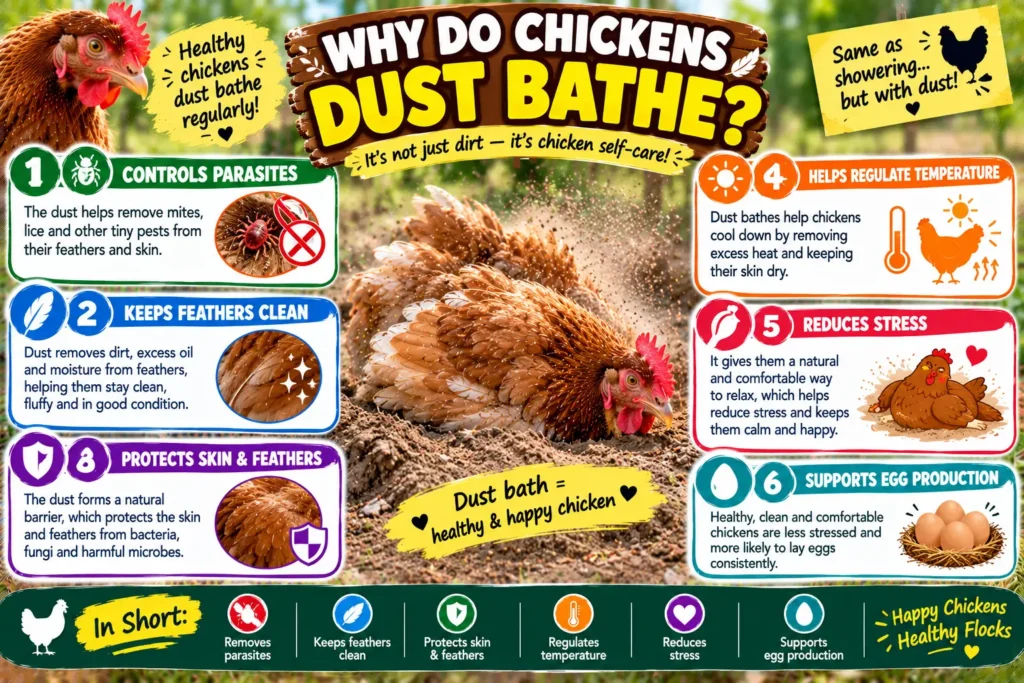
Why do chickens dust bathe? Because a dust bath is how a chicken cleans itself. Fine, dry dirt soaks up extra oil, loosens debris and old skin flakes, and helps knock off mites and lice. It also feels good, and the urge is deeply built into chicken instinct.
If you have ever watched a hen flop into a hole, flap like she is in trouble, and then lie there half asleep, you have seen healthy dust bathing behavior. This guide explains what drives it, what it looks like, when to worry, and how to build a dust bath your flock will use.
[Image suggestion: hen mid dust bath with dirt flying. Alt text: “Why do chickens dust bathe? A hen fluffing her feathers in a dry dirt hollow”]
Table of Contents
Why Do Chickens Dust Bathe? The Short Answer
Quick Answer: Chickens dust bathe to keep their feathers clean and in good condition. Dry dust absorbs excess oil, helps control external parasites like lice and mites, and satisfies a strong natural instinct. Hens that cannot dust bathe often become stressed and can develop poorer plumage.
Chickens do not wash in water. Wet feathers lose their insulation, and a soaked bird gets cold fast. Dust does the same job in a way that suits a feathered animal.
A chicken’s preen gland, near the base of the tail, makes an oil she spreads over her feathers. Some oil keeps feathers flexible and waterproof. Too much, mixed with skin flakes and dirt, leaves plumage greasy and clumped. Dust soaks up the excess and restores the feather structure.
Wild ancestors did this too. Domestic chickens descend from the red junglefowl of Southeast Asia, which dust bathes on dry forest floors.
Read More: https://lashegg.com/chicken-dust-bath/
What Dust Bathing Behavior Looks Like, Step by Step
Once you know the sequence, you will spot it right away. Researchers who study poultry behavior describe a clear order of movements:
- Scouting and scratching. The hen picks a spot with loose, dry soil. She scratches with her feet and rakes with her beak to make a shallow hollow.
- Settling. She sits or squats in the hollow, often with a soft, low sound.
- Tossing dust. She flicks dirt over her back and wings using her feet and wing shakes.
- Working it in. She rubs her head and body in the dust and rolls onto her side. She fluffs her feathers so dust reaches the skin.
- Resting. Many hens lie still with half-closed eyes, looking relaxed.
- Shaking off. She stands, gives a big shake, and often preens afterward.
How Long Does a Dust Bath Last?
Most dust baths run about 15 to 30 minutes, though the length varies with the hen, the weather, and how much company she has. Quick five-minute dips are common too.
Dust Bathing or Something Else?
New keepers sometimes mistake other behaviors for dust bathing, and the reverse. This table helps.
| Behavior | What you see | Normal? |
| Dust bathing | Digging, flapping, rolling, dirt flying. The hen looks relaxed and returns to normal afterward. | Yes |
| Sunbathing | Lying on one side in direct sun with a wing stretched out. No digging. | Yes |
| Heat stress | Open-beak panting, wings held away from the body, lying in shade, sluggish. | Cool her down now |
| Illness | Hunched, fluffed up, eyes closed, alone, not eating, slow to stand. | Call a vet |
Did You Know? Chickens raised on wire or bare floors with no loose material still go through the dust bathing motions. Researchers call this “sham” or “vacuum” dust bathing. It shows the drive is internal, not something a hen only does when dirt happens to be nearby. egg
The Main Reasons Chickens Take Dust Baths
Poultry scientists point to several overlapping reasons. Here are the main ones, from most to least supported by research.
1. Feather Care and Oil Control
Dust bathing keeps plumage in working order. Fine particles absorb extra preen oil and skin debris, and shaking the dust out leaves feathers lighter and separate.
Dutch research by D.W. Van Liere and colleagues found that hens deprived of dust bathing material later dust bathed longer and more intensely once it was available. That “rebound” points to a real need, not just a habit.
2. Parasite Control
Dust bathing helps reduce external parasites such as lice and some mites. Dust irritates them, makes it harder to grip feathers and skin, and shakes some loose.
People who ask “why do chickens dust bathe?” are often told it is to kill mites. The truth is more limited, and the section on mites and lice below covers what a dust bath can and cannot do.
3. Instinct and Comfort
Even a spotless hen with no parasites will still seek out dust. The behavior is instinctive, and it seems to feel rewarding. Itchy skin, growing pin feathers, and the simple pleasure of warm, loose dirt all seem to play a part.
4. Why Do Chickens Dust Bathe Together?
Dust bathing is contagious. When one hen starts, others nearby often join in. Scientists call this social facilitation. This shared dust bathing behavior probably helps flock members stay in sync and reinforces bonds.
Pecking order matters here too. Higher-ranking hens may claim the best spot, while lower-ranking hens wait or use a second area. That is why one dust bath is rarely enough for a bigger flock.
5. Staying Cooler in Hot Weather
In summer, many chickens dig hollows in shady, loose soil and settle in. This overlaps with dust bathing, but it is also a way to lose heat. The soil a few inches down is cooler than the air. If a hen in a hollow is also panting hard, treat it as a heat problem, not a dust bath.
Do Chickens Really Need a Dust Bath?
Yes. Animal welfare researchers treat dust bathing as an important natural behavior, and they recommend giving hens suitable material to do it. So why do chickens dust bathe even when they seem perfectly clean? Because they are motivated to, and blocking that motivation has a cost.
Studies have linked limited access to loose dusting material with more feather pecking and poorer feather condition in laying hens. Keepers report the same pattern in backyard flocks. Bored or frustrated hens may pick at each other’s feathers. If that happens in your flock, see
Dust bathing also lets you read your flock. A hen that suddenly stops dust bathing may be unwell, and a hen that dust bathes constantly may be itchy.
When and How Often Do Chickens Dust Bathe?
There is no fixed schedule. Research suggests hens often dust bathe every day or two, but it depends on the bird and the conditions.
- Time of day: Midday and early afternoon are common. Many hens lay in the morning, then relax and dust bathe afterward.
- Chicks: Baby chicks can start dust bathing motions within the first week or two, even on brooder bedding.
- Roosters and bantams: Roosters and small breeds dust bathe just like standard hens.
- Broody hens: A broody hen leaves the nest once a day for a quick dust bath, food, and water.
- Rain and mud: Chickens avoid wet ground. Wet dirt clumps and does not absorb oil.
- Winter: Chickens will still dust bathe in cold weather if they find dry, loose soil. Frozen or snowy ground stops them, so they need an indoor or covered option.
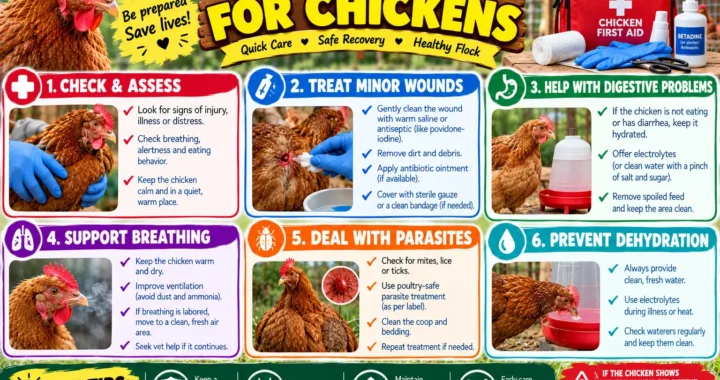
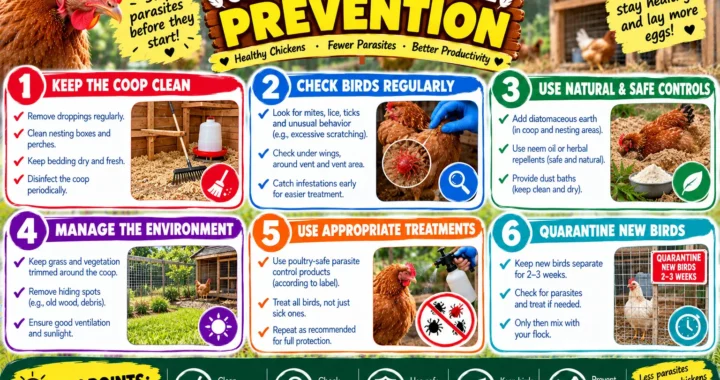
Dust Bathing vs. Mites and Lice: What It Can and Can’t Do
A dust bath is a maintenance tool, not a cure. It helps manage light parasite loads. It will not clear a real infestation. The Merck Veterinary Manual lists lice and mites among the common external parasites of poultry and notes that treatment often has to cover both the birds and their housing.
| Parasite | Where it lives | Common signs | Does a dust bath help? |
| Chicken lice | On the bird, all life stages. Eggs cluster at feather bases near the vent. | Dull feathers, scratching, egg clusters on feather shafts | Partly. It can reduce numbers but rarely clears them. |
| Northern fowl mite | On the bird, mostly around the vent | Dark, dirty-looking feathers at the vent, restlessness, pale comb in heavy cases | Some help, often not enough |
| Red poultry mite | Hides in coop cracks and roosts by day, feeds on birds at night | Pale combs, restless nights, gray or red specks on roost ends, blood spots on eggs | Little to none. The coop needs treatment. |
| Scaly leg mite | Burrows under leg scales | Raised, crusty, rough leg scales | No. Needs treatment. |
Expert Tip: Check for red mites at night. Go out with a flashlight an hour after dark, look at the underside of roosts and the joints of the perches, and wipe a white cloth along the wood. Tiny red or gray specks that move are mites.
When to Call a Vet: Contact a poultry-experienced or avian veterinarian if you see any of these:
- Pale comb or wattles, weakness, or sudden weight loss
- A big drop in egg production
- Scabby, bleeding, or bare skin
- Wheezing, gaping, or labored breathing
- A bird that will not stop scratching and dust bathing
- Multiple birds sick at once or sudden deaths
A vet can confirm the parasite, rule out other causes, and recommend a safe treatment for your flock and eggs.
How to Build the Best Chicken Dust Bath
A good chicken dust bath is easy to make. It needs three things: loose dry material, a dry location, and enough room for several hens.
Best Materials for a Dust Bath
| Material | Role | Notes |
| Dry topsoil or fine dirt | Base | Free and familiar. Avoid soil treated with herbicides or pesticides. |
| Washed play sand | Mix-in | Drains well and stays loose. Avoid dusty sandblasting sand. |
| Wood ash | Additive | Use only cold, dry ash from untreated wood. Wet ash is caustic. |
| Food-grade diatomaceous earth | Optional pinch | The fine silica dust can irritate lungs. Use sparingly. Research on it for mites is mixed. |
| Dried herbs (lavender, mint, oregano) | Optional | Pleasant smell. Evidence for parasite control is limited. |
A common starting mix is roughly equal parts soil and sand, with a couple of scoops of ash. Adjust it to what your hens actually use.
Warning: Never use ash from pressure-treated or painted wood, coal, or charcoal briquettes. Avoid cedar shavings, because their aromatic oils can irritate the respiratory tract. Never use pool-grade diatomaceous earth.
Step-by-Step Setup
- Pick a dry, sheltered spot. Partial shade under a roof or in a covered run works best. Wet ground ruins a dust bath.
- Choose a container or dig a hollow. A kiddie pool with drainage holes, a wooden box, an old tire, or a shallow pit all work. Aim for space for several hens at once.
- Fill it 6 to 8 inches deep with your soil, sand, and ash mix.
- Add the extras. Sprinkle in a small amount of herbs, if you like. Skip diatomaceous earth if you keep chicks or anyone in the flock has breathing problems.
- Attract the flock. Toss a few grains or on top. Scratching brings hens to the spot, and the loose dirt does the rest.
- Keep it fresh. Rake it every few days, remove droppings, and replace the material every few weeks or whenever it gets damp or soiled.
If you are planning a full run layout, covers space, roofing, and fencing.
Expert Tip: Put a second dust bath in the run if you keep more than four or five hens. This prevents bullying over the best spot.
Keep Wild Birds Out
The USDA’s Defend the Flock program advises backyard keepers to limit contact between their birds and wild birds, since wild birds can carry avian influenza. A dust bath under a roof, inside a netted run, is safer than open ground. Clean up spilled feed and never leave standing water nearby.
Common Mistakes
Common Mistakes:
- Building a chicken dust bath in a spot that gets rained on
- Using wet, heavy soil or clay that clumps
- Adding too much diatomaceous earth or ash
- Forgetting to refresh the material so it becomes soiled with droppings
- Assuming a dust bath replaces coop cleaning
- Relying on the dust bath alone to treat red mites
Troubleshooting Dust Bath Problems
My hens ignore the dust bath. Check that it is dry, loose, and not too new-smelling. Move it next to a spot they already like, and scatter grains on it. Watch for a dominant hen guarding it.
They dig up my flower beds. Hens choose loose, dry soil near cover. If your garden matches that description, fence it off and give them a better option. A bare patch of the run with a roof is hard to beat.
They dust bathe in the coop or nest boxes. This usually means no dry option outdoors, often because of weather. Provide a shallow tub of sand and soil inside or under cover. Keep ventilation good, because indoor dust adds up.
A hen dust bathes constantly. Excessive dusting and scratching can signal lice or mites. Inspect her vent, under her wings, and the base of her feathers. If you find parasites, treat the bird and the coop.
A hen has stopped dust bathing and seems dull. A hen that skips her dust bath and looks hunched or off her food should be checked. See a vet if it lasts more than a day or two.
Chicks. From the first week or two, a shallow tray of fine sand mixed with a little soil lets chicks practice the behavior. Skip ash and diatomaceous earth around chicks.
Dust and health. Dry, clean dust is normal for a dust bath. Dusty, moldy, or damp material can cause respiratory problems in birds and people. Mold-related illnesses such as aspergillosis can affect chickens kept on damp bedding, so keep the dust bath dry and replace it if it smells musty.
Wrapping Up
So, why do chickens dust bathe? To keep their feathers clean, help manage lice and mites, and act on an instinct that is as basic to a chicken as pecking. A dry, loose dust bath is one of the cheapest and most useful things you can give your flock.
Watch how your hens use it. Healthy dust bathing looks relaxed and social, followed by a good shake and a return to normal activity. Constant scratching, no interest at all, or signs like pale combs, weight loss, or breathing trouble deserve a closer look and, when in doubt, a veterinarian who knows poultry.
5. FAQ
Why do chickens dust bathe instead of using water?
Water soaks feathers and strips their insulating and waterproofing qualities, which can chill a bird. Dust absorbs extra oil and debris while leaving feathers intact. This is why chickens dust bathe instead of washing, and it is also why wet ground puts them off.
Why do chickens roll in dirt?
Rolling in dirt is the dust bathing. The rolling works dust through the feathers to the skin, where it absorbs oil and helps dislodge parasites and debris.
Do chickens need a dust bath?
Yes. Dust bathing is a strong natural behavior, and hens without a place to do it may show stress, poorer feather condition, and more feather pecking.
How often do chickens dust bathe?
Often every day or two, but it varies by hen, weather, and setup. Sessions commonly last 15 to 30 minutes.
What is the best thing to put in a chicken dust bath?
Dry, loose soil mixed with washed sand is a solid base. Many keepers add a little cold, dry wood ash from untreated wood. Avoid cedar shavings, treated-wood ash, and anything damp.
Can a dust bath get rid of mites and lice?
It can reduce some external parasites but will not cure an infestation. Red mites live in the coop, so the coop needs cleaning and treatment too. A vet can advise on safe products.
Do chickens dust bathe in the rain or snow?
Not usually. They avoid wet and frozen ground. Offer a covered or indoor dust bath in wet or cold weather.
Do baby chicks and roosters dust bathe?
Yes to both. Chicks can start within the first week or two. Roosters dust bathe like hens.
Is it normal for chickens to dust bathe all day?
A few sessions a day is normal for some hens. If one hen is constantly scratching and dusting, check for lice or mites and watch her overall health.
Why do my chickens dig holes in the yard?
Those holes are usually dust bath hollows or cooling spots. Provide a dry, sheltered dust bath and protect flower beds with fencing.