When Should You Worry About a Lash Egg?

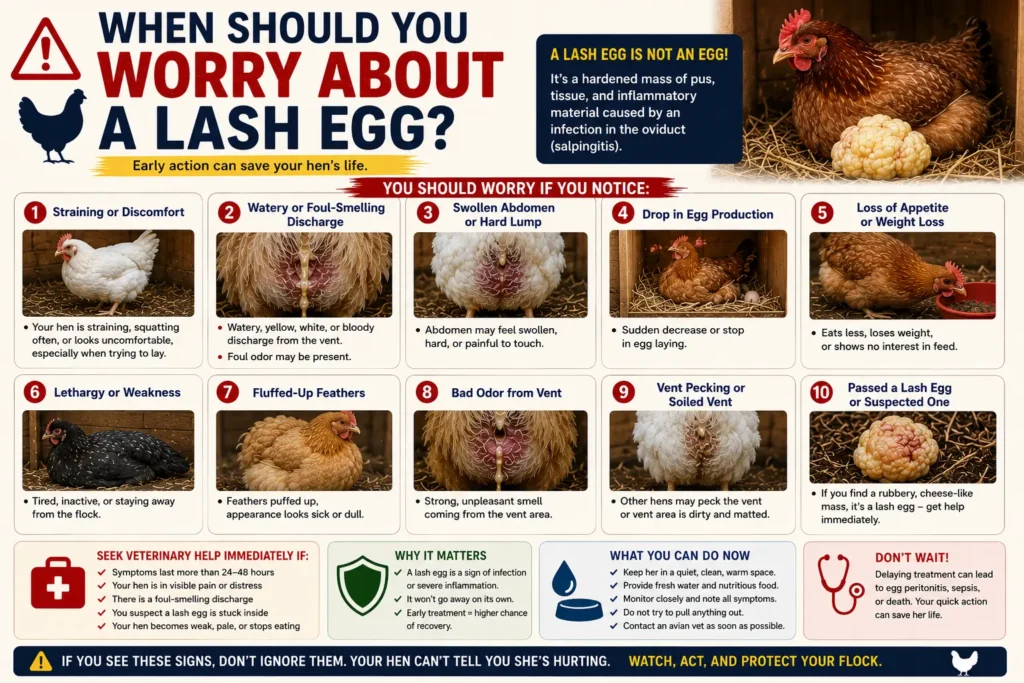
When should you worry about a lash egg is one of the first questions most keepers ask after finding that strange, cheese-like mass in the nesting box. The honest answer is that a single lash egg with no other symptoms is worth watching closely, while a lash egg paired with lethargy, swelling, or breathing trouble is a reason to act right away.
A lash egg forms when a hen’s oviduct becomes infected, a condition called salpingitis. Not every case follows the same path. Some hens pass one lash egg and recover with minimal intervention. Others show it as the first visible sign of a much more serious infection. This guide breaks down exactly how to tell the difference.
Quick Answer: Worry about a lash egg when it appears alongside lethargy, appetite loss, abdominal swelling, labored breathing, or repeated occurrences. A single lash egg with an otherwise active, eating, normal-acting hen calls for close monitoring rather than immediate panic, though a vet consultation is still a smart precaution.
Table of Contents
Understanding the Range of Lash Egg Situations
Not every lash egg means the same level of danger. Severity depends on how far the underlying infection has progressed and whether other symptoms are present alongside it.
H3: When Should You Worry About a Lash Egg — A Severity Breakdown
| Situation | Hen’s Condition | Level of Concern |
| One lash egg, hen acting normal | Eating, active, normal comb color | Low concern — monitor closely |
| Lash egg with mild lethargy or appetite dip | Slightly less active, eating less | Moderate concern — consider a vet call |
| Lash egg with abdominal swelling or pale comb | Visibly unwell, reduced movement | High concern — veterinary evaluation needed |
| Lash egg with labored breathing or collapse | Severe distress | Emergency — seek immediate veterinary care |
Signs That Mean Low to Moderate Concern
- A single lash egg found with no other visible symptoms.
- The hen is eating and drinking normally.
- Her comb remains a normal, healthy color.
- She continues normal flock activity, including foraging and social interaction.
- Egg laying resumes within a few days.
In these situations, most experienced keepers recommend close observation for one to two weeks rather than immediate emergency action. Still, mentioning the lash egg to a vet, even in a brief phone consultation, is a reasonable step.
Did You Know? Some hens pass a single lash egg during a mild, self-limiting bout of inflammation and never show another symptom again. This does not mean lash eggs should be ignored, but it does mean one occurrence alone is not automatically an emergency.
Read More: https://lashegg.com/symptoms-of-salpingitis-in-chickens/
Emergency Signs That Mean You Should Worry
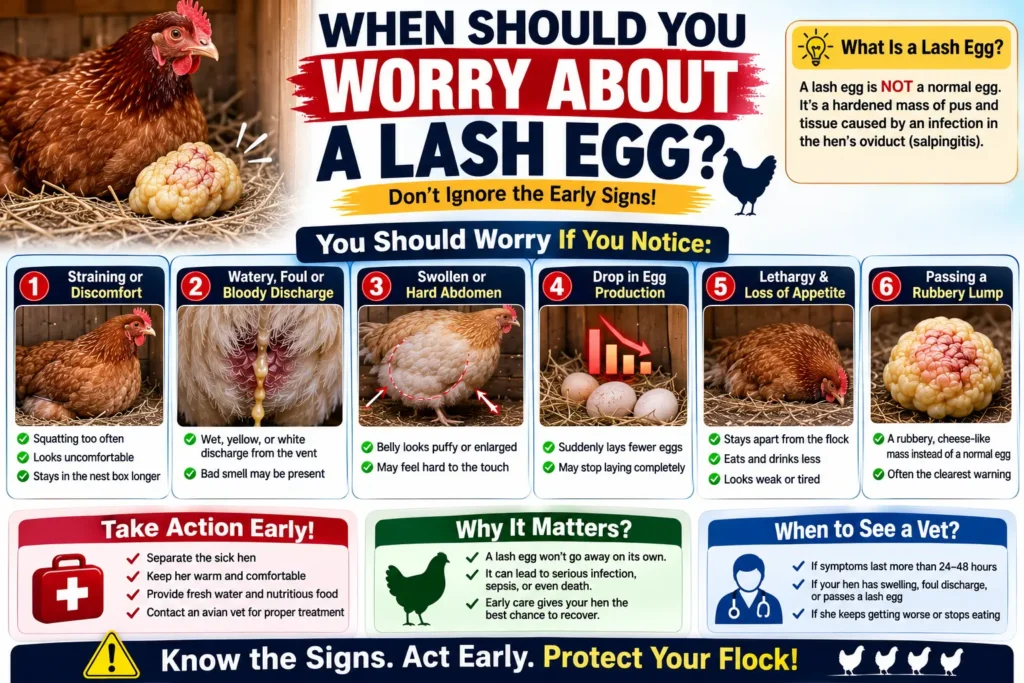
Certain symptoms alongside a lash egg point toward a more advanced or dangerous stage of infection. These are the signs that shift the situation from “monitor” to “act now.”
- Labored or open-mouth breathing. This can indicate abdominal swelling pressing against the air sacs.
- A firm, swollen, or fluid-filled abdomen. Often felt as unusual firmness when gently handling the hen.
- Complete loss of appetite. Especially when it lasts more than a day.
- Extreme lethargy or inability to stand. A sign the infection may be affecting the whole body.
- Pale or dusky comb color that does not improve. Suggests ongoing, unresolved illness.
- Repeated lash eggs over a short period. A pattern rather than a one-time event signals a persistent infection.
Warning: If a hen shows two or more of these emergency signs at the same time, treat it as urgent. Waiting to “see how she does overnight” can allow a treatable infection to progress into a life-threatening one, particularly if fluid has begun building in the abdominal cavity.
H3: Emergency Signs vs. Signs You Can Monitor
| Category | Examples | Recommended Response |
| Monitor at home | Single lash egg, normal appetite, active behavior | Watch closely for 1–2 weeks, note any changes |
| Contact a vet soon | Mild lethargy, one skipped meal, slightly pale comb | Phone consultation within a day or two |
| Emergency care | Labored breathing, swollen abdomen, collapse, no appetite | Same-day or immediate veterinary attention |
Why Some Lash Egg Cases Turn Serious
The underlying cause of a lash egg is salpingitis, inflammation or infection of the oviduct, most often triggered by bacteria such as E. coli. According to information from sources like the Merck Veterinary Manual, reproductive tract disorders are among the leading causes of death in laying hens, and severity often depends on how quickly the infection is caught and treated.
When salpingitis progresses without treatment, it can lead to a related and more dangerous condition called egg yolk peritonitis, where infected material spreads into the abdominal cavity. This is when a hen typically develops the more severe emergency signs, including swelling and breathing difficulty.
H4: Factors That Increase the Risk of a Serious Case
- Age. Hens over two years old face higher reproductive risk.
- Breed and production level. High-laying breeds place more strain on the reproductive tract.
- Underlying respiratory illness. Infectious bronchitis virus (IBV) can weaken the reproductive tract as a secondary effect.
- Delayed response. Waiting several days after symptoms appear before seeking care allows infections more time to progress.
What to Do While You Decide Whether to Worry
- Isolate the hen. This reduces her stress and makes her easier to monitor.
- Check her comb color, appetite, and activity level daily. Small changes matter.
- Gently feel her abdomen. Note any firmness, swelling, or unusual warmth.
- Track whether she lays again within a few days. A return to normal laying is a good sign.
- Write down what you observe. A simple log makes it easier to describe changes accurately if you do call a vet.
Expert Tip: Take a photo of the lash egg and note the date. If symptoms progress or a vet visit becomes necessary, this record helps establish a timeline that can support diagnosis and treatment decisions.
When to Call a Vet
When to Call a Vet: Call a poultry or avian veterinarian if a lash egg appears alongside lethargy, appetite loss, abdominal swelling, or labored breathing, or if a hen passes more than one lash egg within a short period. Even without emergency signs, a phone consultation after a first lash egg is a reasonable precaution, since early guidance often prevents a mild case from becoming serious.
University extension services and state poultry diagnostic labs can help connect flock owners with veterinarians who have specific poultry experience, especially in areas where a dedicated avian vet is hard to find.
Common Mistakes When Deciding Whether to Worry
Common Mistakes: A common mistake is assuming that because a hen “seems fine,” a lash egg can be ignored entirely, when it actually deserves at least a few days of close monitoring. Another mistake is waiting too long once emergency signs appear, hoping the hen will improve on her own rather than seeking care promptly.
Some keepers also mistake normal molting or heat-related lethargy for a reproductive emergency, which is why looking at the full picture, not just one symptom, matters most.
What Happens If You Wait Too Long
Delaying care once emergency signs appear reduces the chances of a full recovery. As an infection spreads from the oviduct into the surrounding abdominal cavity, treatment becomes more complex and the prognosis becomes more guarded. Hens treated early, before fluid buildup or breathing difficulty develops, generally have a better chance of returning to normal health, even if egg production sometimes decreases afterward.
This is not meant to suggest panic over every irregular egg. It simply means that once real emergency signs are present, time matters.
Preventing Situations That Lead to Concern
- Keep nesting boxes clean and dry to reduce bacterial exposure.
- Feed a balanced layer diet with adequate protein and calcium.
- Reduce flock overcrowding and stress where possible.
- Ask a poultry veterinarian about infectious bronchitis vaccination if it’s a regional concern.
- Quarantine new birds before adding them to your flock.
- Check older or high-production hens more frequently for early changes.
Conclusion
Knowing when should you worry about a lash egg comes down to watching the whole picture, not just the mass itself. A single lash egg in an otherwise healthy, active hen usually calls for close monitoring, while lethargy, swelling, breathing trouble, or repeated occurrences call for prompt veterinary care. Staying observant, keeping a simple symptom log, and acting quickly when emergency signs appear gives every hen the best possible chance at a full recovery.
FAQ
When should you worry about a lash egg the most? The greatest concern arises when a lash egg appears alongside lethargy, abdominal swelling, labored breathing, or a complete loss of appetite, since these combined signs point toward a more advanced infection.
Is one lash egg always a medical emergency? No, a single lash egg in a hen that is otherwise eating, active, and behaving normally is usually not an emergency, though monitoring and a vet consultation are still recommended.
What emergency signs should never be ignored? Labored breathing, a firm or swollen abdomen, collapse, and complete refusal to eat are emergency signs that require immediate veterinary attention.
Can a hen recover from a lash egg without treatment? Some mild cases resolve with rest and supportive care alone, but there is no way to know in advance how a case will progress, which is why monitoring closely and consulting a vet remain important.
How long should I monitor a hen after a lash egg before worrying? Most experienced keepers recommend watching closely for one to two weeks, checking appetite, activity, comb color, and laying pattern daily during that time.
Does a repeated lash egg mean something more serious? Yes, more than one lash egg within a short period usually signals a persistent infection rather than a one-time issue, and it warrants a veterinary evaluation.