Symptoms of Salpingitis in Chickens: A Complete Clinical Overview

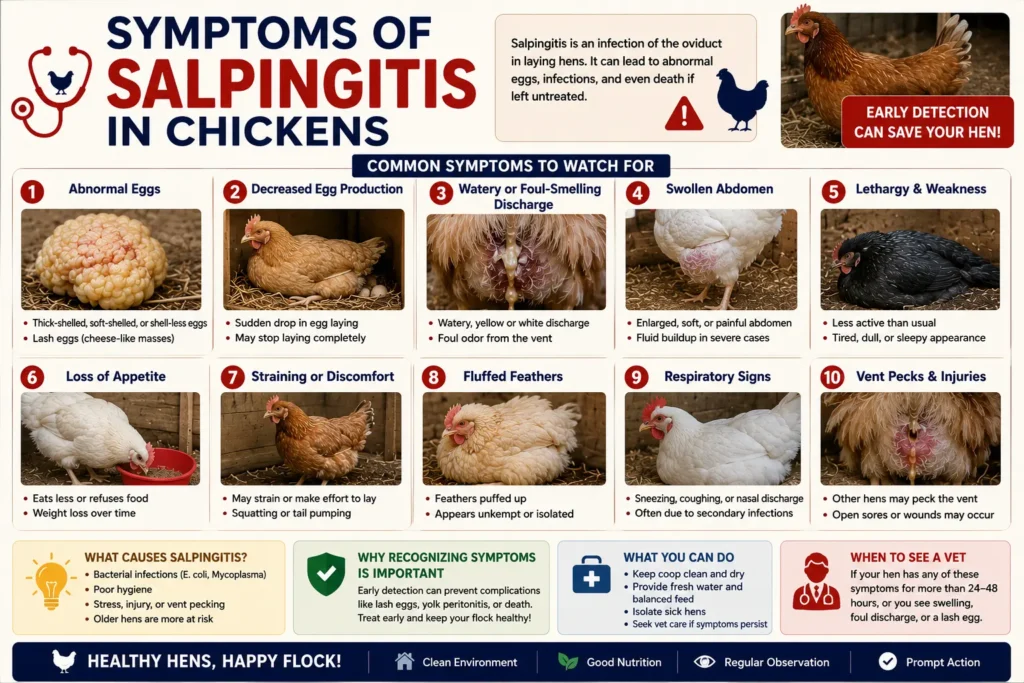
The symptoms of salpingitis in chickens range from barely noticeable to severe, which is exactly what makes this reproductive disease tricky to catch early. Salpingitis is inflammation or infection of the oviduct, the tube that forms and moves an egg through a hen’s reproductive tract, and it is one of the most common reproductive disorders in laying hens.
This condition is also the underlying cause behind lash eggs, the cheese-like masses some hens pass instead of a normal egg. Understanding the full range of reproductive infection symptoms, from the earliest clues to advanced disease, helps backyard keepers and small flock owners know when home monitoring is enough and when veterinary care becomes necessary.
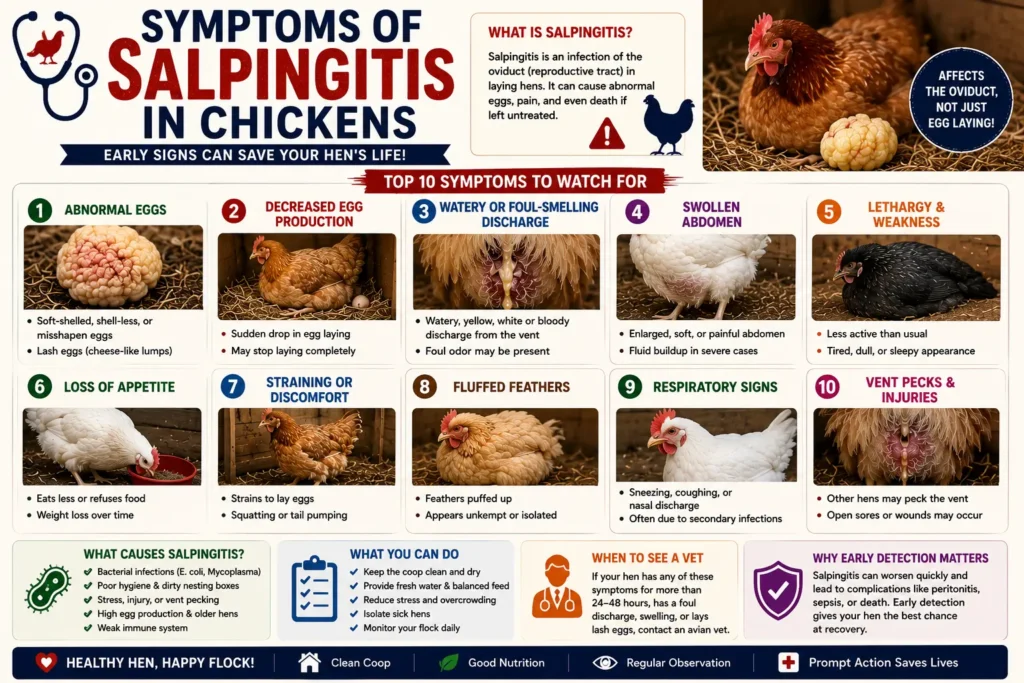
Quick Answer: Common symptoms of salpingitis in chickens include reduced or stopped egg laying, lethargy, loss of appetite, a swollen or fluid-filled abdomen, pale comb color, and in some cases, the passing of a lash egg. Severity ranges from mild and chronic to sudden and life-threatening.
Table of Contents
What Is Salpingitis in Chickens?
Salpingitis develops when bacteria, most often E. coli, infect the oviduct, either ascending from the vent or spreading from another site of infection in the body. The oviduct lining responds with inflammation and produces a thick, caseous discharge. Over time, that discharge can build up, harden into layers, and eventually be expelled as a lash egg.
According to information from sources like the Merck Veterinary Manual, reproductive tract disorders including salpingitis rank among the leading causes of mortality in laying hens, particularly in birds with a history of high egg production.
H3: Acute vs. Chronic Symptoms of Salpingitis in Chickens
| Type | Onset | Typical Symptoms | Outlook |
| Acute salpingitis | Sudden | Rapid lethargy, abdominal swelling, labored breathing | Can be life-threatening within days if untreated |
| Chronic salpingitis | Gradual | Irregular laying, mild weight loss, occasional lash eggs | May persist for weeks or months, sometimes without dramatic symptoms |
Common Symptoms of Salpingitis in Chickens
Reproductive Symptoms
- Reduced or stopped egg laying. This is often the first noticeable change.
- Irregular laying pattern. A hen may lay every few days instead of daily, or skip laying entirely for stretches.
- Passing a lash egg. A soft, layered mass instead of a normal shelled egg is a strong indicator.
- Straining in the nesting box. Some hens show visible effort without producing a normal egg.
General Illness Symptoms
- Lethargy. Reduced activity and more time spent resting.
- Appetite loss. Ranging from mild disinterest in food to complete refusal to eat.
- Weight loss. Often gradual in chronic cases, more rapid in acute ones.
- Pale or dull comb and wattles. A sign the body is fighting infection.
- Ruffled or puffed feathers. A general illness indicator, not specific to salpingitis alone.
Abdominal and Physical Symptoms
- Swollen or distended abdomen. Caused by fluid buildup or an enlarged, infected oviduct.
- A hunched or upright “penguin” posture. Often develops as abdominal pressure increases.
- Labored or open-mouth breathing. Can occur when abdominal swelling presses against the air sacs.
- Fluid sounds or a “sloshing” feel on the abdomen. Sometimes detected during a veterinary exam.
Did You Know? Salpingitis is sometimes discovered only after a hen dies, since chronic cases can progress quietly for weeks without dramatic visible symptoms until the disease reaches an advanced stage.
Read More: https://lashegg.com/chicken-behavior-before-laying-a-lash-egg/
H3: Reproductive Infection Symptoms by Severity
| Severity Level | Symptoms | Recommended Action |
| Mild | Slightly reduced laying, minor appetite dip | Monitor closely, track laying pattern |
| Moderate | Lash egg passed, lethargy, pale comb | Veterinary consultation recommended |
| Severe | Abdominal swelling, labored breathing, complete appetite loss | Urgent veterinary care needed |
What Causes Salpingitis in Chickens?
- Bacterial infection, primarily E. coli, which can enter through the vent or travel from the intestines.
- Viral respiratory disease, including infectious bronchitis virus (IBV), which can damage the reproductive tract as a secondary effect.
- Egg-laying stress, particularly in high-production breeds under heavy laying demands.
- Age, since hens over two years old face a higher risk of reproductive tract disorders.
- Poor hygiene, including dirty nesting boxes or bedding that increases bacterial exposure.
- Previous reproductive trauma, such as prior egg binding, which can leave the oviduct more vulnerable.
H4: Why E. coli Is the Most Common Culprit
E. coli naturally lives in a hen’s intestines and environment. It becomes a problem when it enters the reproductive tract through the vent, often aided by stress, poor sanitation, or an existing respiratory infection that weakens the hen’s immune defenses. This is why hygiene and stress reduction play such a large role in prevention.
How Salpingitis Is Diagnosed
A veterinarian typically uses a combination of methods rather than relying on a single test.
- Physical examination, including palpation of the abdomen for swelling or masses.
- History review, covering laying patterns, recent illness, and flock conditions.
- Imaging, such as radiographs or ultrasound, to detect fluid or an enlarged oviduct.
- Bloodwork, which can reveal elevated white blood cell counts consistent with infection.
- Necropsy, in cases where a hen has died, which can confirm salpingitis or related complications like egg yolk peritonitis directly.
Salpingitis Symptoms vs. Other Reproductive Conditions
| Condition | Key Symptoms | How It Differs From Salpingitis |
| Salpingitis | Reduced laying, lash egg, abdominal swelling | Involves infection/inflammation of the oviduct itself |
| Egg yolk peritonitis | Severe lethargy, swollen abdomen, possible fluid buildup | Often develops as a complication of untreated salpingitis |
| Egg binding | Straining, no egg passed, distress | Physical obstruction rather than infection |
| Soft-shelled eggs | Thin or missing shell | Usually linked to calcium or age, not infection |
Treatment for Symptoms of Salpingitis in Chickens
Supportive Home Care
- Isolate the affected hen to reduce stress and monitor her closely.
- Provide fresh water and easily digestible food at all times.
- Offer electrolytes or a poultry-safe probiotic to support recovery.
- Keep her in a warm, quiet, low-stress environment.
Veterinary Treatment
- Antibiotics, prescribed based on the likely or confirmed bacterial cause.
- Anti-inflammatory medication, to reduce swelling and discomfort.
- Fluid therapy, for hens showing dehydration or significant fluid loss.
- Surgical intervention, including drainage or, in some cases, spay procedures performed by an experienced avian veterinarian for recurring or severe cases.
Expert Tip: Never start antibiotics without veterinary guidance. Using the wrong medication or dosage can mask symptoms, delay an accurate diagnosis, and contribute to antibiotic resistance.
Warning: A hen with labored breathing, a firm or fluid-filled abdomen, and complete appetite loss needs urgent veterinary attention. These symptoms can indicate the infection has spread to the abdominal cavity, a condition that can be fatal without prompt treatment.
When to Call a Vet
When to Call a Vet: Contact a poultry or avian veterinarian if a hen shows reduced appetite lasting more than a day, irregular or stopped laying combined with lethargy, a swollen abdomen, or labored breathing. Passing even one lash egg is reason enough to seek a phone consultation, since early treatment significantly improves outcomes.
University extension services and state poultry diagnostic labs can often help connect backyard flock owners with veterinarians experienced in treating chickens, especially in regions without a dedicated avian vet.
Recovery and Prognosis
Recovery depends heavily on how early treatment begins. Hens treated during the mild or moderate stage, before fluid builds up in the abdomen, often respond well and may return to normal activity, though egg production sometimes decreases permanently afterward. Hens diagnosed after the infection has progressed to the abdominal cavity face a much more guarded prognosis, even with aggressive treatment.
Some hens recover fully. Others survive the infection but never resume normal laying because of lasting damage to the oviduct. In severe or repeatedly recurring cases, a veterinarian may discuss long-term management options or, when quality of life cannot be maintained, humane euthanasia.
Common Mistakes: A common mistake is treating a single missed egg as unimportant instead of watching for a pattern. Another is delaying veterinary care for a week or more while trying home remedies, which allows a treatable infection to progress into a more serious, harder-to-treat condition.
Preventing Salpingitis and Reproductive Infections
- Keep nesting boxes clean and dry to limit bacterial exposure.
- Provide a balanced layer feed with adequate protein and calcium.
- Avoid overcrowding, since stress weakens immune defenses.
- Discuss infectious bronchitis vaccination with a poultry veterinarian if it is a known risk in your region.
- Quarantine new birds before introducing them to your existing flock.
- Monitor older hens more closely, since reproductive risk rises with age.
- Handle hens regularly so you can recognize subtle changes in weight or abdominal firmness early.
Conclusion
Recognizing the symptoms of salpingitis in chickens early, from a skipped laying day to a swollen abdomen, gives a hen the best chance at a full recovery. While mild reproductive infection symptoms sometimes respond to supportive home care, any hen showing lethargy, abdominal swelling, or a lash egg needs prompt veterinary evaluation. Careful daily observation, good coop hygiene, and a fast response to warning signs remain the most reliable tools for protecting flock health.
FAQ
What are the earliest symptoms of salpingitis in chickens? The earliest symptoms usually include a mild drop in appetite, a skipped laying day, and slightly reduced activity, often appearing before more visible signs like a lash egg or abdominal swelling.
Is salpingitis in chickens contagious to other hens? Salpingitis itself is not directly contagious, but the underlying bacterial or viral cause, such as E. coli or infectious bronchitis virus, can potentially spread within a flock under the right conditions.
Can a hen survive salpingitis? Yes, many hens survive with prompt treatment, especially when caught in the early or moderate stage. Some hens stop laying permanently even after recovering physically.
How is salpingitis different from a lash egg? Salpingitis is the underlying infection of the oviduct, while a lash egg is one possible physical result of that infection, a mass of pus and tissue the hen expels.
What reproductive infection symptoms require emergency care? Labored breathing, a firm or fluid-filled abdomen, and complete refusal to eat are emergency-level symptoms that need immediate veterinary attention.
Can diet prevent salpingitis in chickens? A balanced diet supports overall reproductive health but cannot fully prevent salpingitis, since the condition is typically caused by bacterial or viral infection rather than nutrition alone.
How common is salpingitis in backyard chicken flocks? Salpingitis is considered one of the more common reproductive disorders in laying hens, particularly in older birds and high-production breeds, though exact rates vary by flock management and conditions.