How to Treat a Lash Egg: Start Here

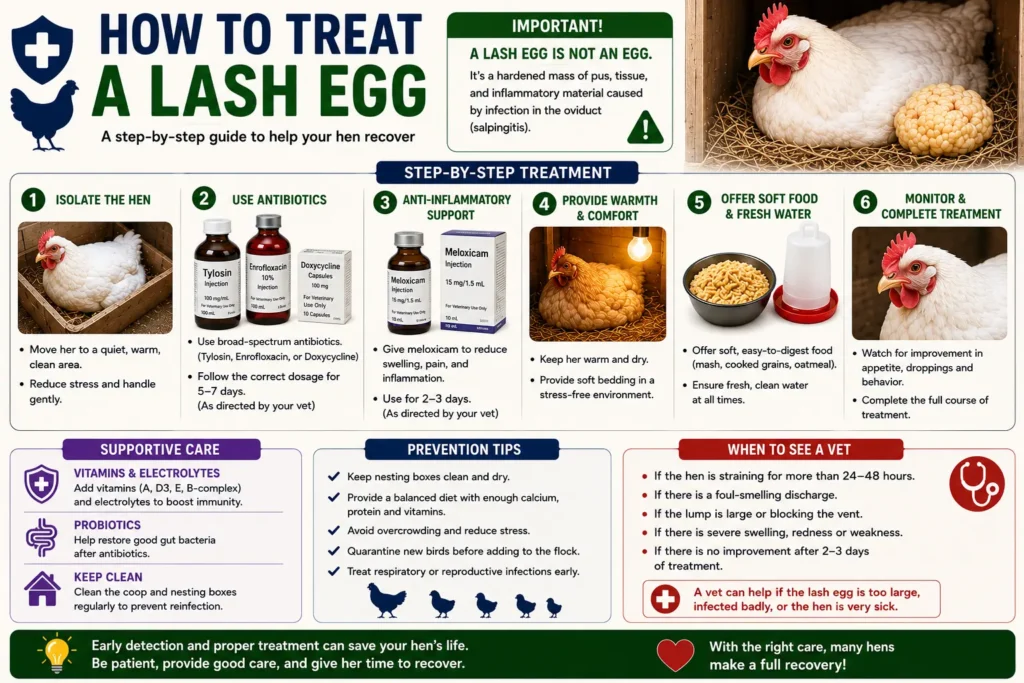
If you just found a strange, layered mass in your nesting box and you’re wondering how to treat a lash egg, take a breath first. It looks alarming, but it’s a manageable situation once you understand what’s happening. A lash egg isn’t a deformed egg — it’s a sign your hen’s body is fighting off an infection in her reproductive tract. This guide walks you through exactly what to do, step by step, from the first hour you find it to full recovery.
Table of Contents
Quick Answer
To treat a lash egg, isolate the hen, keep her hydrated and warm, monitor her closely for 24–48 hours, and contact a poultry veterinarian for an exam and possible antibiotics. Mild, one-time cases sometimes resolve with supportive care, but recurring lash eggs or any sign of illness need professional treatment.
What You’re Actually Treating
Before jumping into steps, it helps to know what a lash egg is made of. It’s not shell, yolk, and white — it’s a mixture of hardened pus, casein (a cheesy protein), blood, and tissue debris. The medical term for the underlying issue is salpingitis, an infection or inflammation of the oviduct.
Knowing this changes how you think about treatment. You’re not treating “an egg problem.” You’re treating an infection, and that distinction shapes every decision from here.
Read More:https://lashegg.com/lash-egg-treatment/
Lash Egg Causes at a Glance
| Cause | How It Happens |
| Bacterial infection (E. coli, Mycoplasma, Salmonella) | Bacteria enter the oviduct and trigger inflammation |
| Internal laying | A yolk drops into the abdomen instead of the oviduct |
| Respiratory infection spread | Infection travels from the respiratory tract to the reproductive system |
| High egg production strain | Frequent laying wears down oviduct tissue, raising infection risk |
| Poor coop sanitation | Higher bacterial exposure around the vent |
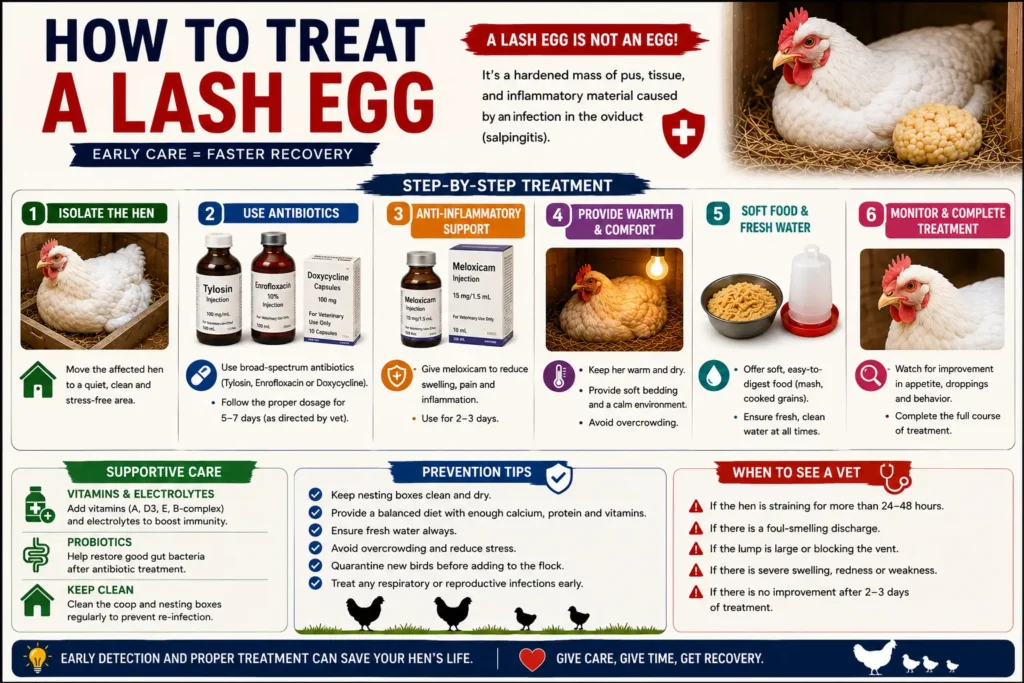
Step-by-Step: How to Treat a Lash Egg at Home
These steps cover the first 24–72 hours after you discover a lash egg. They’re meant to stabilize your hen while you arrange veterinary care, not replace it.
- Remove the hen from the flock. Isolation lowers her stress and stops other birds from pecking at her while she’s vulnerable.
- Set up a warm, quiet recovery space. A dog crate or small pen with clean bedding, away from drafts, works well.
- Offer water with electrolytes. Dehydration speeds decline in sick birds, so hydration comes before anything else.
- Tempt her to eat. Soft foods like scrambled egg, warm mash, or soaked feed are easier for a weakened hen to manage.
- Clean her vent area gently. Use warm water and a soft cloth if there’s discharge or crusting, and avoid harsh soaps.
- Check her weight and behavior daily. A kitchen scale and a simple notebook let you track trends, not just guesses.
- Call a poultry or avian vet within 24 hours, even if she seems stable, to rule out deeper infection.
- Follow the prescribed treatment plan fully if antibiotics or other medication are prescribed, even after she seems better.
Expert Tip
Keep a daily log of appetite, energy, droppings, and weight. Vets treating backyard poultry rarely get to examine the bird multiple times a day, so your notes often reveal the pattern that leads to a diagnosis.
Can You Treat Lash Egg Naturally?
Many keepers ask whether they can treat lash egg naturally, without antibiotics. The honest answer is that natural support has a role, but it isn’t a substitute for medical treatment when bacterial infection is present.
Supportive, non-medicated approaches that may help alongside veterinary care include:
- Probiotics or fermented feed to support gut health during recovery
- Apple cider vinegar in water (diluted), which some keepers use for general flock wellness
- Reduced light exposure to slow egg production temporarily and give the oviduct rest
- Stress reduction, since cortisol from stress can suppress immune response
- Balanced nutrition with adequate calcium and protein to support tissue repair
None of these treat the underlying bacterial infection on their own. If you want to treat lash egg naturally as a complete approach without any veterinary involvement, you’re relying on the hen’s immune system alone, which works only for the mildest cases and carries real risk if the infection progresses.
Warning
Do not substitute natural remedies for antibiotics once a vet has diagnosed a bacterial infection. Untreated salpingitis can progress to egg yolk peritonitis, a serious and sometimes fatal complication.
When Home Treatment Isn’t Enough
Home care and natural support work best for mild, isolated cases. Here’s how to tell when you’ve moved past that point.
When to Call a Vet
- The hen has passed more than one lash egg
- She’s lethargic, hiding, or not eating
- Her abdomen looks swollen or feels firm
- There’s a persistent foul smell from the vent
- No improvement after 48–72 hours of home care
Signs the Infection Is Serious
| Sign | Why It Matters |
| Penguin-like upright posture | Suggests abdominal fluid or swelling |
| Pale comb and wattles | May indicate advanced illness |
| Labored breathing | Possible fluid pressure on internal organs |
| Sudden appetite loss | Common early marker of systemic illness |
| Green or watery droppings | Can point to advanced infection |
Veterinary Treatment: What to Expect
A vet visit for a lash egg typically starts with a physical exam, and may include an X-ray or ultrasound to check for internal laying, fluid buildup, or masses. Bloodwork can help gauge how sick the hen is internally.
From there, treatment plans vary based on severity:
| Treatment | Purpose |
| Prescribed antibiotics | Targets the specific bacteria causing infection |
| Anti-inflammatory medication | Reduces pain and swelling |
| Fluid therapy | Corrects dehydration in weaker birds |
| Hormonal treatment | Pauses egg-laying to let the oviduct heal |
| Surgery | Reserved for severe, recurring, or advanced cases |
Common Mistakes When Treating a Lash Egg
- Trying only natural remedies while ignoring worsening symptoms
- Stopping antibiotics early once the hen “looks better”
- Returning her to the flock before she’s stable
- Assuming one recovered episode means she’s fully protected from another
Recovery Timeline
| Stage | What Usually Happens |
| Day 1–2 | Isolation and stabilization; vet visit if symptoms are present |
| Day 3–7 | Appetite and energy should trend upward with proper treatment |
| Week 2–4 | Egg laying may resume, sometimes at a reduced rate |
| Beyond 4 weeks | Watch for recurrence, especially in high-production breeds |
Did You Know?
Hens that recover from one bout of salpingitis are statistically more prone to future episodes, particularly hybrid layer breeds bred for maximum egg output.
Preventing the Need to Treat Another Lash Egg
- Keep bedding and nesting boxes clean to reduce bacterial exposure
- Feed a complete layer diet with proper calcium levels
- Avoid overcrowding, a known stress and disease driver
- Treat respiratory illness early, before it can spread internally
- Monitor older hens more closely, since age raises salpingitis risk
Conclusion
Learning how to treat a lash egg comes down to two things working together: calm, attentive home care and timely veterinary diagnosis. Home support and natural methods can ease your hen’s stress and help her body cope, but they can’t replace antibiotics when a bacterial infection is confirmed. Watch her closely over the following days, keep notes on her condition, and loop in a poultry-experienced vet quickly if anything worsens. Acting early gives your hen the best chance at a full recovery.
5. FAQ
How do you treat a lash egg at home? Isolate the hen, keep her hydrated and warm, offer soft food, and monitor her closely. Home care supports recovery but should be paired with a vet visit if she shows any signs of illness.
Can you treat lash egg naturally without antibiotics? You can support recovery naturally with probiotics, stress reduction, and good nutrition, but bacterial salpingitis usually needs antibiotics for full treatment. Natural methods alone work only for the mildest cases.
How long does it take to treat a lash egg? Mild cases can improve within a week of starting supportive care. More serious infections treated with antibiotics may take two to four weeks for full recovery.
Do you need a vet to treat a lash egg? Not always for a single mild episode, but a vet is strongly recommended, especially if the hen shows lethargy, appetite loss, or repeat lash eggs.
What happens if you don’t treat a lash egg? Untreated salpingitis can progress to egg yolk peritonitis, a serious internal infection that can be fatal without treatment.
Will my hen lay eggs again after treatment? Many hens return to laying, sometimes at a lower rate, after successful treatment. Some stop laying permanently if the oviduct was significantly damaged.
Is a lash egg painful for the hen? It’s reasonable to assume some discomfort is involved, since it’s tied to inflammation and infection, though hens often mask pain as a survival instinct.
Can lash eggs come back after treatment? Yes, recurrence is possible, especially in high-production breeds, so ongoing monitoring after recovery is worthwhile.