Lash Egg Treatment at Home: Where to Start

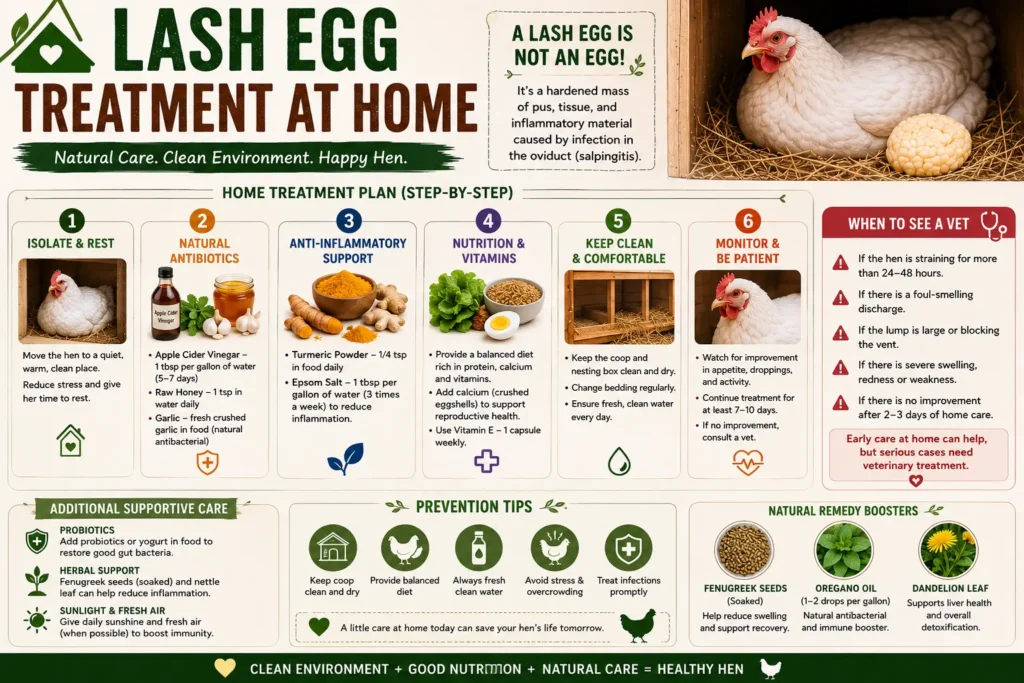
Finding a lash egg in the coop is unsettling, and your first instinct is probably to figure out lash egg treatment at home before anything else. That instinct is reasonable — most cases start with home care while you arrange a vet visit. This guide gives you a real plan: what to set up, what to do each day, and how to tell if home care is enough or if you need professional help fast.
Table of Contents
Quick Answer
Lash egg treatment at home involves isolating the hen, keeping her hydrated and warm, offering easy-to-digest food, and tracking her symptoms daily for 48–72 hours. Home care supports recovery and buys time, but it does not replace a veterinary exam when infection is confirmed or symptoms worsen.
What a Lash Egg Actually Is (In Plain Terms)
A lash egg isn’t a malformed egg. It’s a mass made of hardened pus, casein (a cheese-like protein), blood, and tissue, expelled from the oviduct because of an infection called salpingitis. The body forms it in layers, the same way it builds a real egg, which is why it looks egg-shaped.
Home treatment for lash egg situations works best when you understand this distinction. You’re supporting a hen through an infection, not just dealing with an odd-looking object in the nesting box.
Home Treatment for Lash Egg vs. Veterinary Treatment
| Care Type | What It Covers | What It Can’t Do |
| Home treatment for lash egg | Hydration, warmth, stress reduction, monitoring | Cannot cure bacterial infection directly |
| Veterinary treatment | Diagnosis, antibiotics, imaging, bloodwork | Requires an in-person or telehealth exam |
| Combined approach | Stabilizes the hen while treating the cause | Needs coordination between keeper and vet |
Building a Lash Egg Treatment at Home Toolkit
Before symptoms escalate, it helps to have supplies ready. Keepers who already have these on hand tend to catch problems earlier.
- A separate crate or pen for isolation, lined with clean, soft bedding
- A heat source, such as a low-wattage heat lamp, for hens showing chills or lethargy
- Poultry-safe electrolyte powder for the water supply
- Plain scrambled egg or soaked layer feed for hens with reduced appetite
- A digital kitchen scale to track weight changes
- A notebook or phone note for daily symptom logging
- Clean cloths and warm water for gentle vent cleaning
- Contact information for a poultry or avian vet, saved before you need it
Expert Tip
Weigh your hens occasionally when they’re healthy so you have a baseline. A 10% weight drop means something very different if you know her normal weight versus guessing after the fact.
Read More: https://lashegg.com/how-to-treat-a-lash-egg/
Day-by-Day Plan for Lash Egg Treatment at Home
| Day | Focus | Actions |
| Day 1 | Stabilize | Isolate, offer electrolyte water, check for other symptoms, call the vet to schedule or discuss |
| Day 2 | Monitor closely | Track appetite, droppings, and weight; clean vent area if needed |
| Day 3 | Reassess | If no improvement, treat as urgent and prioritize a vet visit |
| Day 4–7 | Follow treatment plan | Administer any prescribed medication exactly as directed |
| Week 2+ | Watch for recurrence | Note egg production changes and general behavior |
Did You Know?
A hen can look completely normal in the hours right after passing a lash egg, then decline over the following day. That’s why the daily check-ins matter more than a single glance in the coop.
Step-by-Step Home Care Actions
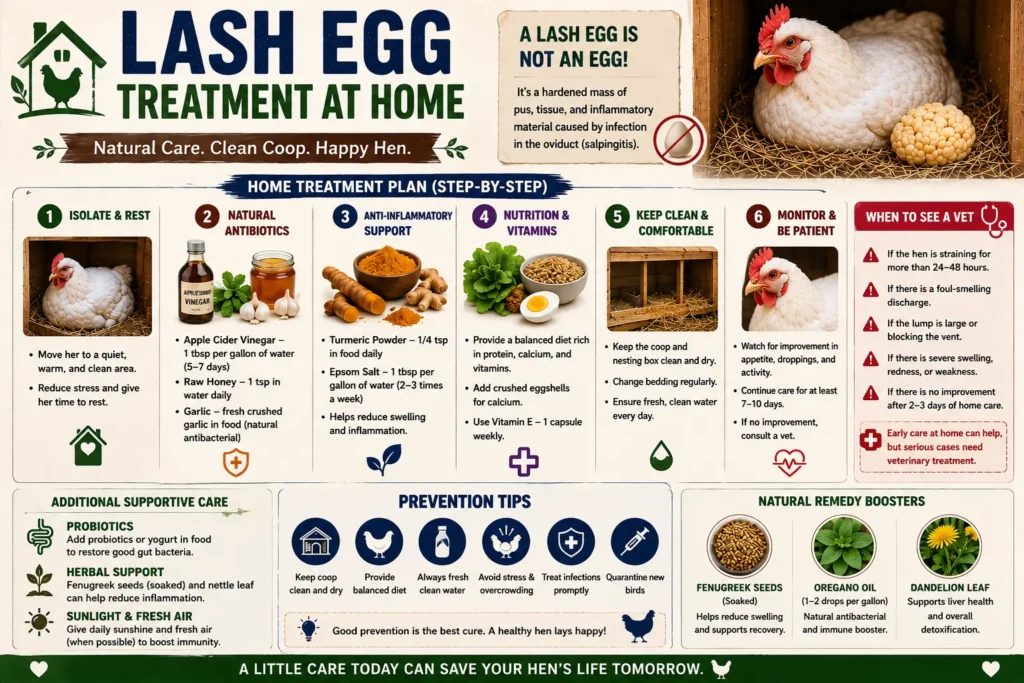
- Separate her immediately from the rest of the flock to reduce stress and prevent pecking.
- Offer electrolyte water rather than plain water for the first 24–48 hours.
- Provide soft, high-value food like scrambled egg if she’s not eating normally.
- Add gentle heat if she seems cold, fluffed up, or lethargic.
- Inspect and clean the vent area carefully, watching for ongoing discharge.
- Log her condition twice daily, noting appetite, energy, droppings, and weight.
- Contact a vet within the first day, even for advice over the phone or via telehealth.
- Reintroduce her to the flock gradually, only once she’s eating, active, and stable.
Is Home Treatment for Lash Egg Enough on Its Own?
Sometimes, yes. A single lash egg in a hen that’s eating, drinking, and behaving normally may resolve with supportive care and monitoring alone. This is more common in cases where the infection was mild or already clearing.
Often, no. If there’s an active bacterial infection, home care alone won’t eliminate it. It can stabilize the hen, but the infection can keep progressing quietly, sometimes toward more serious complications.
Warning
Never assume home treatment for lash egg cases has “worked” just because the hen looks brighter for a day or two. Some infections cause temporary improvement before worsening again. Keep monitoring for at least a full week.
Symptoms That Mean Home Care Isn’t Enough
| Symptom | Why It’s a Red Flag |
| Second lash egg | Suggests ongoing, not resolved, infection |
| Abdominal swelling | Possible fluid buildup or internal laying |
| Appetite loss beyond 24 hours | Sign of systemic illness |
| Labored breathing | May indicate pressure from internal swelling |
| Persistent foul odor | Active infection continuing |
When to Call a Vet
Reach out promptly if home treatment for lash egg symptoms doesn’t lead to visible improvement within 48–72 hours, or if your hen shows any of the red flags above. Waiting rarely improves the outcome with salpingitis, since bacterial infections tend to worsen without targeted treatment.
Diet and Environment Adjustments During Recovery
- Increase protein slightly during recovery to support tissue repair, using layer feed or boiled egg
- Ensure consistent calcium access through oyster shell, since reproductive stress can affect calcium needs
- Reduce light exposure if a vet recommends slowing egg production temporarily
- Keep the recovery space clean and dry to avoid additional bacterial exposure
- Limit handling to what’s necessary for care, since excess stress can slow healing
Common Mistakes With Lash Egg Treatment at Home
- Treating home care as a full replacement for veterinary diagnosis
- Giving random over-the-counter medications without knowing the actual cause
- Skipping daily monitoring once the hen seems slightly better
- Returning her to the main flock too early, before she’s fully stable
- Ignoring a second lash egg because “she recovered fine last time”
Recovery Expectations After Home and Veterinary Care
| Timeframe | Expected Progress |
| 48–72 hours | Appetite and energy should trend upward if treatment is working |
| 1–2 weeks | Continued improvement; laying may still be paused |
| 2–4 weeks | Laying may resume, sometimes at a lower rate than before |
| Long term | Some hens recover fully; others lay less or stop permanently |
Preventing the Next Lash Egg
- Keep the coop and nesting boxes clean to lower bacterial exposure
- Feed a complete, age-appropriate layer diet
- Avoid overcrowding, which raises stress and disease transmission
- Address respiratory symptoms quickly before they spread internally
- Keep closer watch on older or high-production hens
Conclusion
Lash egg treatment at home is a real and useful first step, not a complete solution on its own. A clean setup, daily monitoring, and quick action during the first 48 hours give your hen the best possible start. But home treatment for lash egg situations works best paired with veterinary diagnosis, especially once symptoms extend beyond a single mild episode. Watch her closely, trust the red flags over wishful thinking, and involve a poultry-experienced vet as soon as something feels off.
5. FAQ
What is the best lash egg treatment at home? The best home approach combines isolation, hydration with electrolytes, soft food, warmth, and daily symptom tracking. It supports recovery but isn’t a substitute for veterinary care if infection is confirmed.
How long should you try home treatment for lash egg before seeing a vet? Most keepers give home care 48–72 hours while watching closely. Any worsening symptoms during that window mean it’s time to call a vet sooner.
Can a hen recover from a lash egg with home care alone? Some mild, isolated cases do recover with supportive home care. However, active bacterial infections generally need veterinary antibiotics for full resolution.
What supplies do I need for lash egg treatment at home? A clean isolation space, electrolyte powder, soft food, a heat source, a scale for weight tracking, and a way to log symptoms daily cover the basics.
Is it safe to handle a hen with a lash egg? Yes, with basic hygiene like washing your hands afterward. Wear gloves if you’re cleaning discharge from the vent area.
Do I need to isolate a hen with a lash egg? Isolation is strongly recommended. It reduces stress from flock dynamics and lets you monitor her condition accurately.
What if home treatment for lash egg doesn’t seem to be working? Treat that as a clear signal to involve a vet quickly rather than extending the home care period further.
Will diet changes help with lash egg recovery? Adequate protein and calcium support tissue repair and reproductive health, though diet alone won’t resolve a bacterial infection.