Should You Isolate a Chicken With a Lash Egg? Here’s the Clear Answer

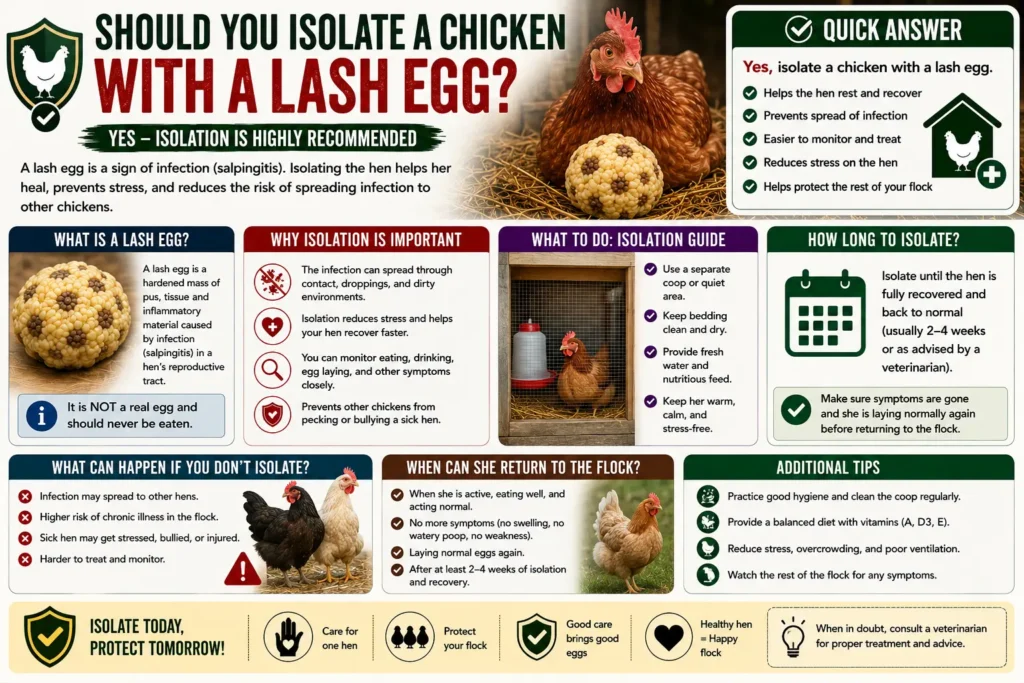
You just found a lash egg, and your next move matters. Should you isolate a chicken with a lash egg? Yes, in almost every case, separating the affected hen from the rest of the flock for a few weeks is the safest first step, even before you know the exact cause.
A lash egg is not a real egg. It is a solid mass of pus and inflammatory material that forms when a hen’s oviduct becomes infected, a condition known as salpingitis. The hen producing it is sick, even if she looks otherwise normal.
This guide explains exactly how long to isolate her, how to set up a proper quarantine, and when the rest of your flock needs attention too.
Table of Contents
Why Isolation Is the Right First Move
When a hen produces a lash egg, you often do not know yet whether the cause is contagious. Isolating her buys you time to watch for symptoms without risking the rest of the flock.
Merck Veterinary Manual and MSD Veterinary Manual both note that reproductive tract infections in poultry can stem from bacteria that spread through shared water, bedding, or respiratory droplets. Until you know more, caution costs little and protects a lot.
Should You Isolate a Chicken With a Lash Egg Even if She Seems Fine?
Yes. A hen can act completely normal, eat well, and still be dealing with an internal infection. Appearance alone is not a reliable way to judge whether isolation is necessary. The lash egg itself is the warning sign, regardless of how she behaves afterward.
Read More: https://lashegg.com/should-you-throw-away-eggs-after-a-lash-egg/
Table: Reasons to Isolate vs. Reasons You Might Skip It
| Situation | Isolate? | Why |
| First-time lash egg, hen otherwise active | Yes | Standard precaution during recovery |
| Lash egg plus lethargy or appetite loss | Yes, urgently | Signs of a more serious infection |
| Repeated lash eggs from the same hen | Yes | Chronic condition needs monitoring |
| Multiple hens showing symptoms at once | Isolate affected birds, monitor rest | Possible flock infection risk |
| Confirmed non-contagious cause from a vet | Optional, short recovery period still helpful | Reduces stress-related setbacks |
This table is a general guide. Individual flock circumstances can change the right approach.
Quick Answer
Yes, isolate a hen with a lash egg for about two to three weeks, watch her closely, clean her area daily, and keep an eye on the rest of the flock for any new symptoms.
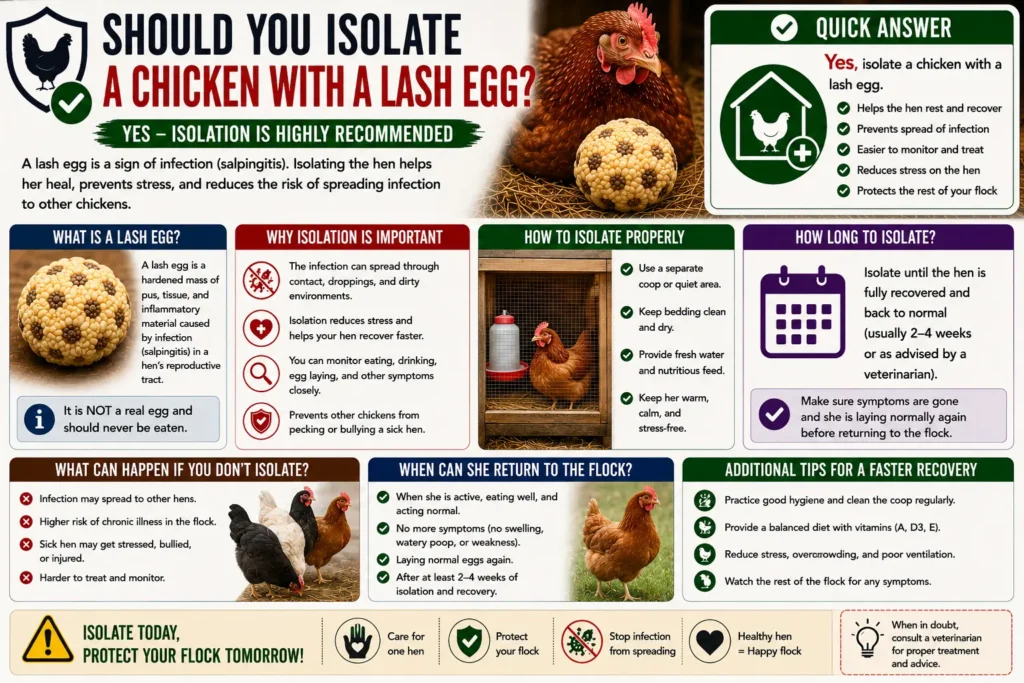
How Long Should Quarantine Last?
Most experienced keepers isolate an affected hen for two to three weeks. This window allows enough time to see if symptoms worsen, improve, or spread to other birds before deciding on next steps.
If a veterinarian identifies a specific pathogen, they may recommend a different quarantine length based on that organism’s typical recovery timeline.
Step-by-Step: How to Quarantine Hens With a Lash Egg
- Move the affected hen to a separate enclosure, away from shared air space if possible.
- Give her fresh water and clean bedding daily.
- Feed her a balanced layer diet with adequate calcium and protein.
- Monitor her droppings, appetite, and energy levels each day.
- Wash your hands or change clothes after handling her, before touching other birds.
- Disinfect her original nesting box and surrounding area in the main coop.
- Watch the rest of the flock daily for respiratory or laying changes.
Expert Tip
Keep a simple daily log of the isolated hen’s appetite, energy, and droppings. Small changes are easier to catch when you compare notes day to day instead of relying on memory alone.
Setting Up a Proper Quarantine Space
A good quarantine setup for hens with a lash egg does not need to be elaborate, but it does need a few key features:
- A separate cage, dog crate, or small pen away from the main flock
- No shared water or feed containers with healthy birds
- Enough space for the hen to move, stand, and lie down comfortably
- Protection from extreme heat or cold during recovery
- Easy access for you to observe her without disturbing her constantly
Warning
Never isolate a hen in a way that also isolates her from food, water, or shelter checks. Quarantine means separation from the flock, not neglect of her basic care needs.
What to Watch For During Quarantine
While isolating a chicken with a lash egg, track these signs closely:
- Appetite: eating normally or refusing food
- Droppings: normal texture versus watery or discolored
- Breathing: normal versus labored or open-mouth
- Energy: alert and active versus hunched and lethargic
- Additional lash eggs or abnormal eggs during the quarantine period
Table: Recovery Signs vs. Warning Signs During Isolation
| Category | Recovery Signs | Warning Signs |
| Appetite | Eating and drinking normally | Refusing food for more than a day |
| Droppings | Normal, formed | Watery, green, or bloody |
| Behavior | Alert, moving around | Hunched, fluffed, isolating itself further |
| Breathing | Quiet, normal rate | Open-mouth, labored, wheezing |
| Egg pattern | Returns to normal laying | Repeated lash eggs or none at all |
Should You Quarantine the Rest of the Flock Too?
Usually not, unless other hens are already showing symptoms. The goal of isolating the affected hen is to protect the healthy flock, not to disrupt everyone’s routine unnecessarily.
That said, keep a closer eye on the rest of the flock during this period. If more than one hen develops symptoms, broader quarantine hens practices, such as separating small groups by symptom status, become more appropriate.
Common Mistakes When Isolating a Hen With a Lash Egg
- Skipping isolation because the hen “seems totally fine”
- Ending quarantine too early, before the full recovery window
- Forgetting to disinfect the original nesting box afterward
- Not tracking symptoms daily, relying on memory instead
- Reintroducing the hen without checking flock reaction and her energy levels first
Did You Know?
Stress, heat, and molting season can all make a hen more likely to develop salpingitis, even without any contagious pathogen involved, which is one reason isolated, low-stress recovery conditions matter so much.
How to Reintroduce a Hen After Quarantine
- Confirm she has eaten normally and shown steady energy for several days.
- Check that her droppings and any new eggs look normal.
- Reintroduce her during the day, in a visible but supervised setting.
- Watch flock interactions for excessive pecking or bullying.
- Continue observing her for another week after reintroduction.
When to Call a Vet
Contact a poultry veterinarian if:
- The hen shows no improvement after one to two weeks of isolation
- She develops labored breathing, severe lethargy, or stops eating entirely
- She produces repeated lash eggs over multiple cycles
- Other hens in the flock begin showing symptoms during her quarantine
- You want lab confirmation of the exact cause before deciding on antibiotics
A veterinarian can run bacterial cultures or PCR testing, which tells you far more than isolation alone about whether you are dealing with a contagious organism or an individual case.
People Also Ask
How long do you quarantine a chicken with a lash egg? Most keepers isolate the hen for two to three weeks, adjusting based on her recovery progress and any veterinary guidance received.
Can a hen with a lash egg live with the flock during recovery? It is not recommended, since isolating a chicken with a lash egg reduces the chance that an underlying infection spreads to healthy birds.
Do you need special equipment to quarantine hens? No, a simple separate pen, crate, or fenced-off area with its own food and water works well for isolating hens with a lash egg.
What if the hen refuses to eat during isolation? Reduced appetite for a day can happen with stress, but ongoing refusal to eat is a sign to contact a veterinarian promptly.
FAQ
Should you isolate a chicken with a lash egg? Yes, isolating the affected hen for two to three weeks is the standard, safest first step, since you often do not know the exact cause right away.
Should you isolate a chicken with a lash egg if she seems healthy otherwise? Yes, appearance is not a reliable sign of internal health, so isolation is still recommended even if she is eating and behaving normally.
How do you quarantine hens properly during a lash egg recovery? Set up a separate space with its own food, water, and bedding, monitor her daily, and avoid cross-contact with the healthy flock until she fully recovers.
Is it safe to end quarantine early if the hen looks better after a few days? It is safer to complete the full two to three week window, since some infections improve outwardly before fully resolving internally.
Do other hens need to be isolated too after one hen has a lash egg? Not usually, unless other hens start showing symptoms, in which case separating any additional affected birds becomes appropriate.