Should You Throw Away Eggs After a Lash Egg? Here’s the Real Answer

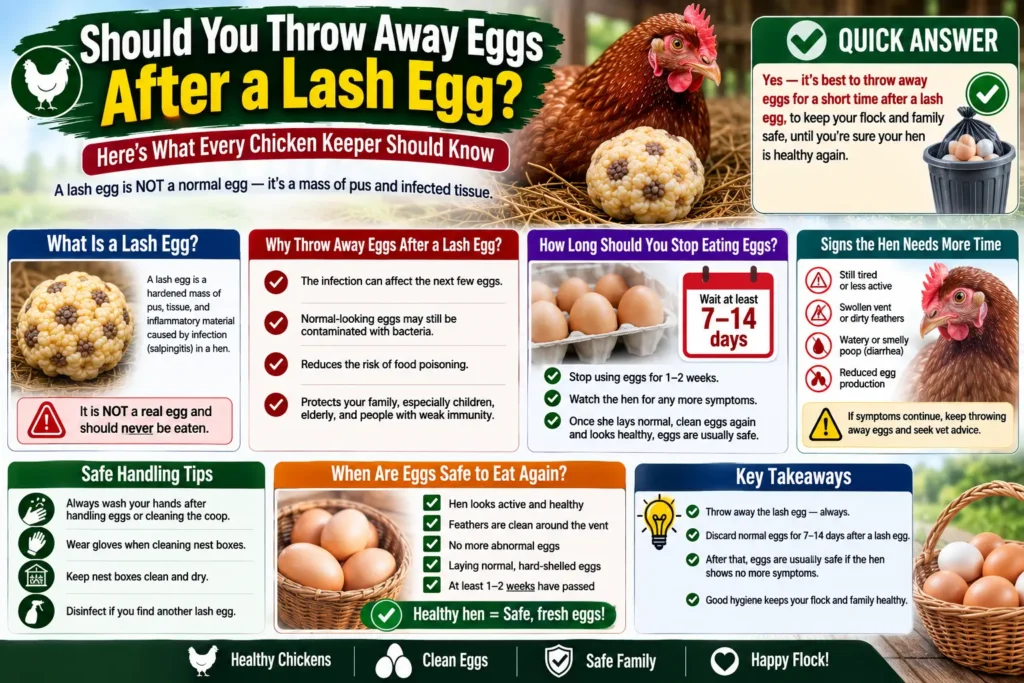
Finding a lash egg in the nesting box is unsettling enough, but then comes the practical question: should you throw away eggs after a lash egg? The honest answer is not all-or-nothing. Eggs from the affected hen during her illness should go, but eggs from the rest of a healthy flock are usually fine to keep eating.
A lash egg is not an actual egg. It is a mass of hardened pus that forms when a hen’s oviduct becomes infected, a condition vets call salpingitis. It looks and smells unpleasant, which is exactly why so many keepers assume every egg in the coop is now suspect.
This guide walks through exactly which eggs to discard, which to keep, and how to judge eggs from infected hens with confidence instead of guesswork.
Table of Contents
Why a Lash Egg Raises Food Safety Questions
A lash egg signals that something is wrong inside one hen’s reproductive tract. Naturally, keepers wonder if the same bacteria are contaminating the normal-looking eggs sitting right next to it.
The concern is reasonable. Salpingitis is often caused by bacteria like E. coli, Salmonella, or Mycoplasma gallisepticum, and some of these organisms can, in certain cases, be present in or on eggs from an actively infected bird.
Should You Throw Away Eggs After a Lash Egg From the Same Hen?
Yes, eggs laid by the specific hen that produced the lash egg should be thrown away while she is showing signs of infection. Her reproductive tract is compromised, and eggs from that period carry a higher chance of bacterial contamination.
Once she fully recovers and returns to normal laying, and a vet confirms she is healthy, her eggs can typically be trusted again like any other hen’s.
Read More:https://lashegg.com/what-happens-if-you-touch-a-lash-egg/
Table: Which Eggs to Keep vs. Discard After a Lash Egg
| Egg Source | Keep or Discard | Reasoning |
| The affected hen, during illness | Discard | Active infection risk |
| The affected hen, before symptoms appeared | Use judgment, inspect closely | Possible early-stage contamination |
| The affected hen, after full recovery | Generally safe | Vet-confirmed recovery reduces risk |
| Other healthy hens in the flock | Generally safe | No direct link unless flock-wide illness appears |
| Any egg with an odd smell, color, or texture | Discard | Standard food safety practice |
| Eggs from a flock with confirmed contagious outbreak | Discard until cleared | Higher risk of eggs from infected hens |
This table reflects general food safety guidance. When in doubt, a veterinarian or extension service can confirm flock health status.
Quick Answer
Throw away eggs from the specific hen with the lash egg while she is sick. Eggs from the rest of a healthy flock do not need to be discarded just because one hen had a lash egg.
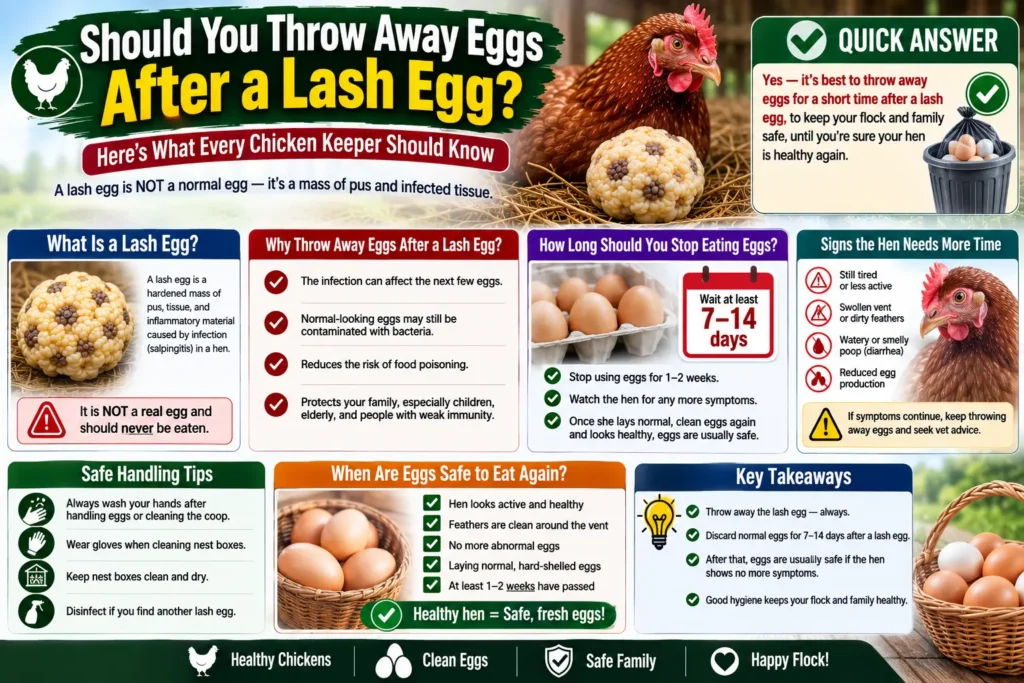
What About Eggs From Infected Hens in General?
Eggs from infected hens are a bigger concern than eggs from a healthy flock mate sitting nearby. The risk depends on what type of infection is present and how it affects the hen’s body.
- Localized reproductive infection, like isolated salpingitis, mainly affects that one hen’s eggs.
- Systemic bacterial infection, such as widespread Salmonella, can affect eggs from multiple hens.
- Respiratory-only infections rarely contaminate eggs directly, though sick hens often stop laying anyway.
USDA and University Extension Services generally recommend discarding eggs from any visibly ill bird, regardless of the exact diagnosis, simply as a precaution.
How to Tell If an Egg Might Be Contaminated
Use your senses before you use guesswork. Warning signs include:
- Unusual smell, sour, sulfurous, or strong
- Discoloration inside the egg when cracked
- Watery or unusually thin egg white
- Blood spots larger than normal
- Cracked or soft shells laid around the same time as the lash egg
Expert Tip
Crack suspicious eggs into a separate bowl first, not directly into a pan with other ingredients. This lets you catch a bad egg before it ruins the whole dish or touches food you plan to keep.
Table: Signs an Egg Is Likely Safe vs. Likely Unsafe
| Sign | Likely Safe | Likely Unsafe |
| Smell | Neutral, mild | Sour, foul, sulfur-like |
| Shell | Clean, intact | Soft, cracked, or unusually thin |
| Egg white | Clear, firm | Cloudy, watery, discolored |
| Yolk | Normal color, intact | Streaked, ruptured, unusual color |
| Hen’s health | Appears normal | Lethargic, sick, recently had a lash egg |
Should You Stop Eating All Eggs During a Flock Illness?
Not necessarily. If only one hen shows symptoms and the rest of the flock looks healthy, most keepers safely continue eating eggs from the unaffected birds. If multiple hens show signs of illness, that is when broader caution makes sense.
Warning
If more than one hen in your flock develops symptoms, such as respiratory issues, reduced laying, or additional lash eggs, treat all eggs from that flock as eggs from infected hens until a vet confirms otherwise.
Cooking Eggs Safely Reduces Risk
Proper cooking kills most bacteria that could be present in an egg, including common culprits like Salmonella. This is one reason food safety guidance from AVMA and USDA consistently recommends:
- Cook eggs until both the yolk and white are firm.
- Avoid eating raw or runny eggs from a flock with any recent illness.
- Wash hands and utensils after handling eggs from a sick or recovering hen.
- Refrigerate eggs promptly instead of leaving them at room temperature for long periods.
Did You Know?
Egg yolk peritonitis, a related condition where yolk material leaks into a hen’s abdomen instead of forming a normal egg, can occur alongside or instead of a lash egg, and it also warrants discarding that hen’s eggs during the illness.
Common Mistakes Keepers Make With Eggs After a Lash Egg
- Throwing away the entire flock’s eggs unnecessarily
- Keeping eggs from the sick hen “just in case they’re fine”
- Not marking or separating the affected hen’s eggs during recovery
- Assuming a normal-looking egg from a sick hen is automatically safe
- Skipping veterinary confirmation before resuming full egg use
When to Call a Vet
Reach out to a poultry veterinarian if:
- The same hen produces repeated lash eggs over time
- Multiple hens show signs of illness at once
- You are unsure whether it is safe to resume eating a recovering hen’s eggs
- Egg production across the flock drops sharply and unexpectedly
A vet can confirm the underlying cause, which helps you judge with confidence whether eggs from infected hens are truly a risk in your specific case, rather than guessing.
People Also Ask
Can you eat eggs from a hen that had a lash egg? Once she has fully recovered and a vet confirms she is healthy again, her eggs are generally considered safe to eat like any other hen’s.
Is it safe to eat eggs from the rest of the flock if one hen has a lash egg? Yes, in most cases, as long as the other hens show no symptoms of illness themselves.
Can lash egg bacteria get into normal-looking eggs? It is possible in cases of systemic infection, which is why discarding eggs from the specifically affected hen during her illness is the safer choice.
How long should you wait before eating eggs from a recovered hen? Most keepers wait until the hen returns to normal laying behavior and shows no ongoing symptoms, ideally with veterinary confirmation of recovery.
FAQ
Should you throw away eggs after a lash egg? Yes, but only the eggs from the specific hen that produced the lash egg while she is symptomatic. Eggs from the rest of a healthy flock generally do not need to be discarded.
Should you throw away eggs after a lash egg if the whole flock seems fine? No, if only one hen is affected and the rest of the flock shows no symptoms, their eggs can typically be kept and cooked as usual.
Are eggs from infected hens always dangerous? Not always, but the risk is higher during active infection, which is why discarding eggs from a visibly sick hen is the standard precaution recommended by food safety authorities.
Can you tell if an egg is contaminated just by looking at it? Not always. Some contaminated eggs look normal, which is why cooking eggs thoroughly adds an extra layer of safety.
Is it safe to sell or share eggs after a lash egg in the flock? It is safer to hold off on sharing or selling eggs from the specific hen until she recovers, and to clearly monitor the rest of the flock before resuming normal distribution.