Lash Egg in Chickens: The Complete Guide

Finding a strange, rubbery, egg-shaped lump in the nesting box is unsettling, and if you’ve searched “lash egg in chickens” to figure out what you’re looking at, you’re not alone. This isn’t a normal egg. It’s a mass of infected tissue that signals something is wrong inside your hen’s reproductive tract.
This guide covers everything backyard and small-flock keepers need to know: what a lash egg actually is, what causes it, how to spot the warning signs, what treatment looks like, and how to lower the risk of it happening again. Whether this is your first lash egg or your fifth, understanding what’s really going on helps you respond the right way.
Table of Contents
What Is a Lash Egg in Chickens?
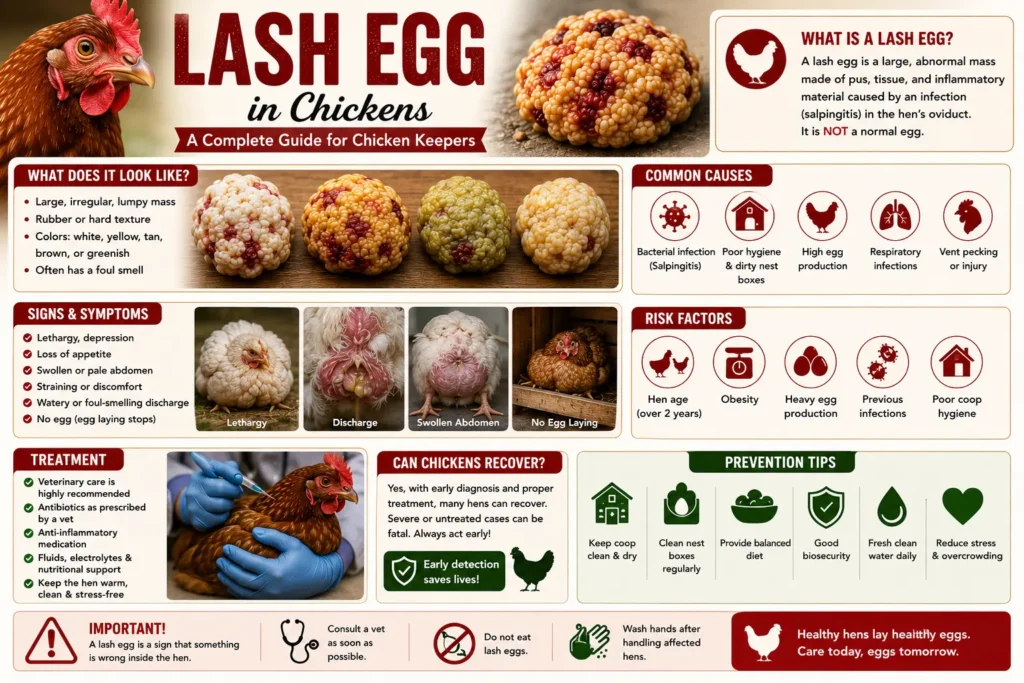
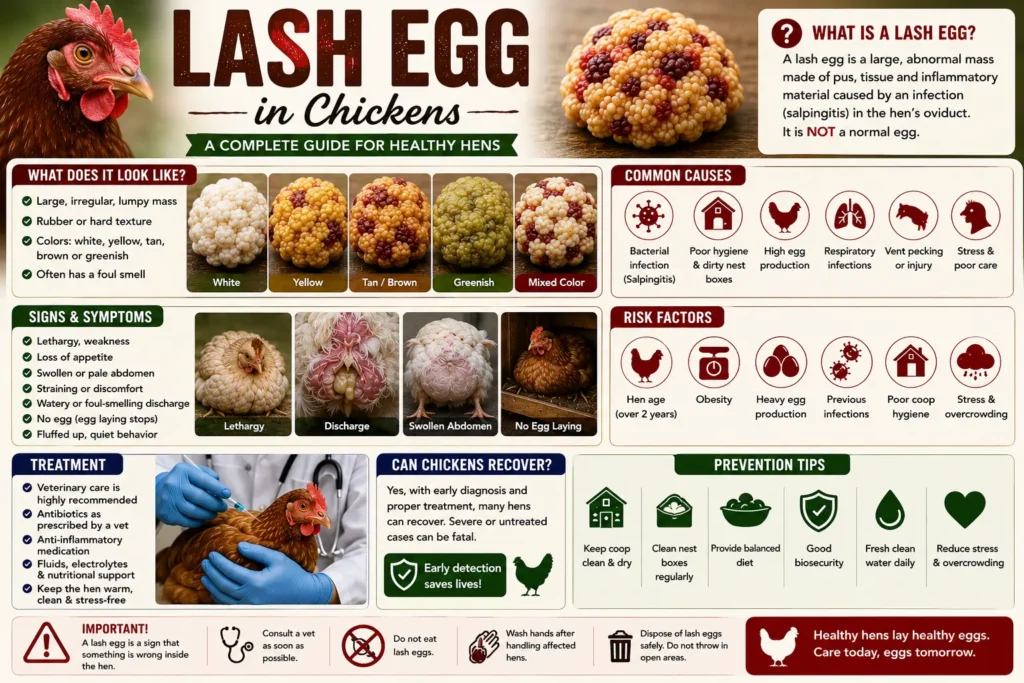
A lash egg in chickens isn’t an egg at all, despite the name and the egg-like shape. It’s a mass of pus, tissue debris, and inflammatory material that a hen’s body expels through the vent.
Veterinarians call this material caseous exudate, a thick, cheese-like discharge produced when the immune system tries to wall off an infection. The layered way it forms is exactly why it can look like a soft-shelled or malformed egg from the outside.
Read More: https://lashegg.com/lash-egg-vs-internal-laying/
Why Is It Called a “Lash Egg”?
The term “lash egg” comes from “lashing,” an older word for shedding infected tissue. It has nothing to do with eyelashes, and nothing to do with a hen laying an extra egg. A chicken lash egg is a sign of illness, not a reproductive bonus.
What Does a Lash Egg Look Like Inside?
Cut one open (with gloves on) and you won’t find yolk or egg white. Instead, most lash eggs in chickens contain rings of solid, waxy, yellowish or tan material, often layered like an onion, with a strong, sometimes foul or sulfur-like odor.
Quick Answer: A lash egg in chickens is a mass of infected tissue and discharge from an inflamed oviduct, not a real egg. It’s a visible sign of a condition called salpingitis and should prompt a vet visit, not be treated as a laying oddity.
What Causes a Lash Egg?
A lash egg forms because of salpingitis, an infection or inflammation of the oviduct, the tube that forms and moves eggs through a hen’s reproductive tract. According to the Merck Veterinary Manual, salpingitis is one of the leading causes of reproductive illness and death in laying hens, in both commercial and backyard flocks.
Common Underlying Causes
- Bacterial infection, most often E. coli, though Salmonella and other bacteria can also be involved
- Infectious bronchitis virus (IBV), a respiratory virus that can damage the oviduct lining
- Egg drop syndrome and other reproductive viruses
- Chronic stress or poor nutrition, which weaken immune defenses over time
- Age, since older hens with irregular laying cycles are more prone to reproductive tract problems
Is a Lash Egg in Chickens Common?
It isn’t extremely common, but it isn’t rare either. It shows up more often in hens over two years old, hens that have had a past respiratory illness, and high-production hybrid breeds bred for heavy egg output, since their reproductive systems tend to face more strain over time.
Symptoms That Come With a Lash Egg
A hen can look completely normal in the days leading up to passing a lash egg, since the underlying infection often develops internally before it becomes visible. Once symptoms appear, watch for:
- Reduced or picky appetite
- A pale, dull, or droopy comb
- Lethargy or reduced activity
- A drop in egg-laying frequency
- A swollen or firm lower abdomen
- A foul odor near the vent
When to Call a Vet
Contact a poultry-experienced veterinarian if your hen passes a lash egg, especially if she also shows lethargy, appetite loss, or a swollen abdomen. Salpingitis rarely resolves without treatment, and repeated lash eggs in chickens usually mean the underlying infection is ongoing rather than clearing up on its own.
How Vets Diagnose a Lash Egg and Its Cause
- Physical exam, checking the abdomen, comb color, and overall body condition
- History review, including recent laying patterns, past illnesses, and how many lash eggs have appeared
- Imaging, such as radiographs or ultrasound in some cases, to assess the reproductive tract
- Lab testing, which may include bloodwork or culturing any discharge to identify the bacteria involved
- Response to treatment, since improvement after antibiotics can help confirm a bacterial cause
Expert Tip: Keep a simple log any time a hen produces a lash egg or shows unusual symptoms, noting the date, appearance, and her behavior that day. This history gives a vet a much clearer picture than a single snapshot in time.
Treatment Options
| Treatment Approach | What It Involves | When It’s Used |
| Antibiotics | Prescribed based on a suspected or confirmed bacterial cause | Early to moderate cases with a likely bacterial infection |
| Supportive care | Fluids, nutrition support, stress reduction | Alongside other treatments, in most cases |
| Dietary adjustment | Ensuring a complete, balanced layer diet | Ongoing management and prevention |
| Surgery | Removal of the oviduct in select cases | Severe, recurrent, or non-responsive cases |
| Euthanasia | A humane option discussed with a vet | Advanced, chronic cases with poor quality of life |
There’s no reliable home remedy for the infection behind a lash egg. Any treatment plan should come from a vet familiar with poultry medicine, since the right approach depends on how advanced the condition is and the hen’s overall health.
What to Do If You Find a Lash Egg
- Remove and dispose of it safely, away from pets, wildlife, and the rest of the flock.
- Observe the hen closely for the next 24–48 hours.
- Note her appetite, comb color, and energy level.
- Isolate her if she’s showing other symptoms, to reduce stress and make monitoring easier.
- Schedule a vet visit, since salpingitis typically needs professional treatment.
Warning: Never feed a lash egg to a dog, cat, or any other animal. It’s infected material, not food, and eating it can expose a pet to the same bacteria responsible for the hen’s infection.
Lash Egg vs. Other Reproductive Issues
A lash egg often gets confused with other unusual things a hen might lay or pass. Here’s a quick overview of how it compares:
| Condition | What It Actually Is | Main Difference From a Lash Egg |
| Fairy egg | A tiny, often yolkless true egg | Has a real shell; generally harmless |
| Soft shell egg | A true egg missing its hard, calcified shell | Contains normal yolk and white inside |
| Egg binding | A real egg stuck inside the hen | Nothing is expelled; considered an emergency |
| Internal laying | Yolk material trapped in the abdominal cavity | Nothing comes out; often harder to detect early |
| Salpingitis | The underlying oviduct infection itself | A lash egg is the visible sign of this condition, not a separate one |
Each of these deserves its own closer look, since the right response depends on which one you’re actually dealing with.
Common Mistakes Chicken Keepers Make
- Assuming a lash egg is a strange but harmless laying quirk. It’s a sign of active infection and deserves follow-up.
- Leaving it in the coop or run where pets or wildlife can reach it, instead of disposing of it promptly.
- Waiting to see if the hen “gets better on her own.” Salpingitis rarely resolves without treatment.
- Not isolating the affected hen, which can make it harder to monitor her closely or reduce stress on her recovery.
- Feeding coop scraps or unusual finds to household pets without checking whether it’s actually safe first.
Did You Know?
A hen can pass a lash egg and appear behaviorally normal at first, since the underlying infection is internal and doesn’t always cause visible illness right away. That gap between “what’s happening inside” and “what you can see” is exactly why regular flock health checks matter, even when your hens seem fine.
Recovery and Outlook
| Scenario | Typical Outlook |
| Single lash egg, hen otherwise active and eating normally | Good chance of improvement with early veterinary care |
| Repeated lash eggs over time | Suggests chronic salpingitis; needs ongoing veterinary management |
| Lash egg with lethargy, appetite loss, or swollen abdomen | More advanced; needs prompt veterinary evaluation |
| Untreated, progressing salpingitis | Can lead to serious illness or death without treatment |
Early veterinary care gives hens the best shot at recovering fully. Chronic or advanced cases are harder to manage and sometimes require difficult decisions about long-term quality of life, which is best discussed directly with a vet familiar with backyard poultry.
Preventing Lash Eggs in Your Flock
- Vaccinate against infectious bronchitis where it’s a known regional risk, based on your vet’s guidance
- Feed a complete, age-appropriate layer diet to support immune and reproductive health
- Reduce flock stress through consistent routines, adequate space, and stable social groups
- Maintain good coop hygiene to lower overall bacterial exposure
- Monitor older hens more closely, since age is a known risk factor for reproductive tract disease
- Inspect the coop daily so you catch anything unusual, including a lash egg, as early as possible
- Separate any hen showing symptoms promptly, both for her care and to observe the rest of the flock
Frequently Asked Questions
What does a lash egg in chickens actually mean? It means a hen has salpingitis, an infection or inflammation of the oviduct. The lash egg itself is the visible mass of infected tissue her body has expelled, not a separate condition.
Can pets eat a lash egg? No. A lash egg is infected material, not a real egg, and it should never be fed to dogs, cats, or other pets, since it can carry the bacteria responsible for the hen’s infection.
How do I know if what I found is a lash egg and not a deformed egg? A deformed but normal egg still has a true, calcified shell along with recognizable yolk and white inside. A lash egg lacks a true shell and contains layered, waxy tissue instead, often with a strong odor.
Is a lash egg in chickens contagious to other hens? The lash egg itself isn’t directly contagious, but an underlying cause like infectious bronchitis virus can spread through a flock, meaning other hens could be at risk from the same source.
Will my hen keep laying normal eggs after a lash egg? Some hens continue laying normally afterward, while others slow down or stop, depending on how much damage the infection has caused. A vet visit is the most reliable way to get a sense of the outlook for a specific hen.
Do all lash eggs in chickens smell bad? Most do have a noticeably foul or sulfur-like odor, which is one of the clearest signs that distinguishes a lash egg from an unusually shaped but normal egg.
Should I cull a hen that produces a lash egg? Not automatically. Many hens improve with proper veterinary treatment. Culling sometimes comes up for chronic, non-responsive cases, but that decision should be made with a vet, based on the hen’s specific condition and quality of life.
Final Thoughts
A lash egg in chickens looks alarming, and for good reason. It’s a visible sign that your hen’s body is fighting an internal infection, not a strange twist on normal egg-laying. The best response is straightforward: remove and dispose of it safely, keep a close eye on the hen for the next day or two, and get a veterinary opinion, especially if she shows any other symptoms. Catching salpingitis early gives your flock the best possible chance at a full recovery, and staying alert to unusual signs is the simplest way to protect your hens long term.